
Spider Identification Guide
Spider Facts & Identification: A TIM Pest Control Expert Guide
Get a Free Quote Now!
Spiders are a common sight in and around Australian homes. While most are harmless and even beneficial by controlling other pests, a few species pose a serious risk to your family’s health.
At TIM Pest Control, we believe in informed prevention. Correctly identifying a spider is the first step in assessing the risk and taking appropriate action. This guide will help you recognise the common—and the dangerous—spiders in our area. For peace of mind and safe removal of dangerous species, trust our expert technicians.
Why Spider Identification is Critical for Your Safety
Misidentifying a highly venomous Funnel-web Spider for a harmless Black House Spider can have dangerous consequences. Understanding which spiders are dangerous and which are merely nuisance pests allows you to:
- Assess the Risk: Know when a spider sighting requires immediate caution and professional help.
- Respond Appropriately: Understand the correct first aid measures in case of a bite from a dangerous species.
- Implement Targeted Control: Take specific steps to make your property less inviting to high-risk spiders.
Meet the Spiders: A Guide to Common Australian Species
We’ve divided this guide into two key categories to help you quickly understand the level of concern.
Category 1: Highly Venomous & Medically Significant Spiders
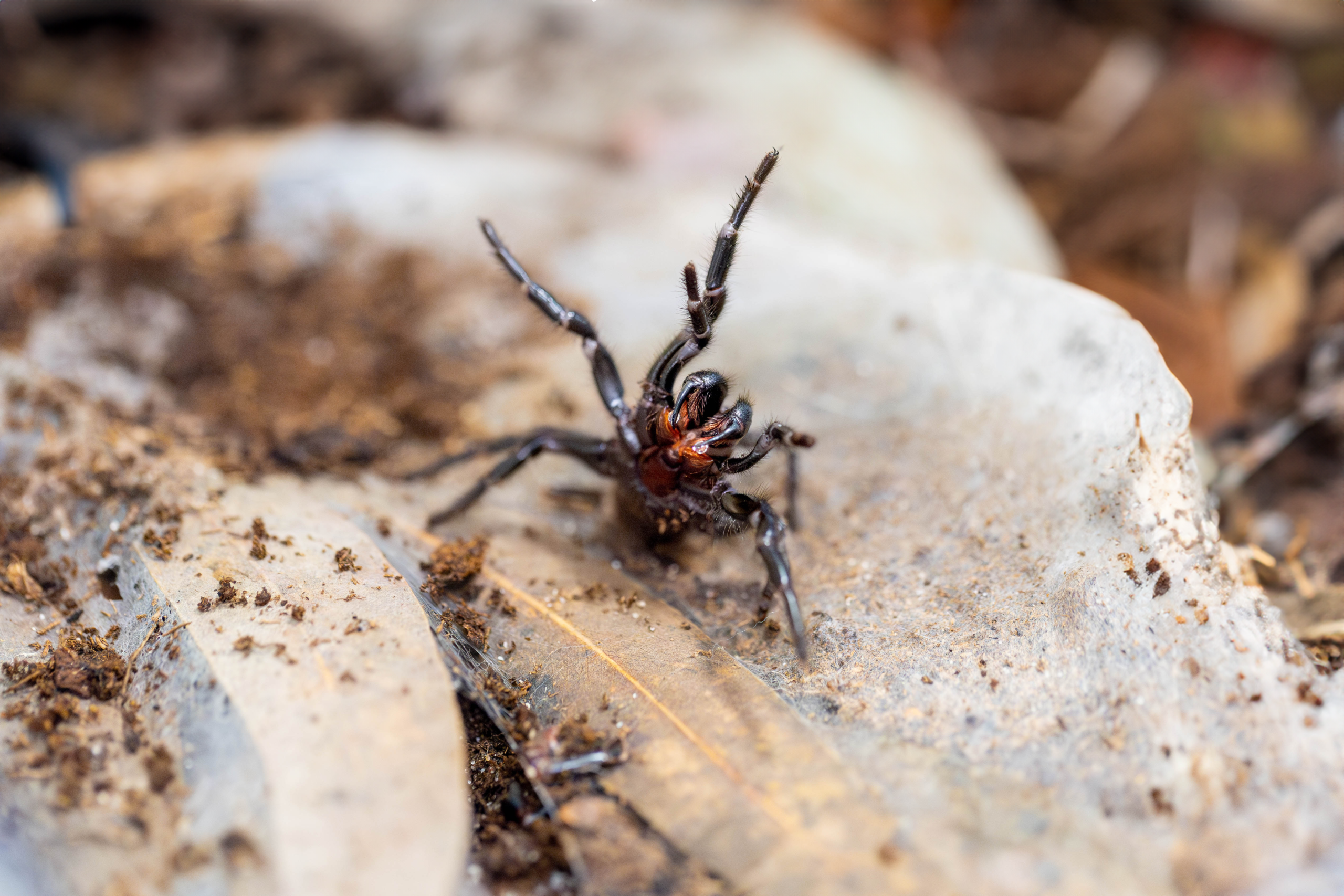
1. Sydney Funnel-web Spider (Atrax robustus)
Australia’s most dangerous spider.
- Identification: 1.5 to 5 cm long (body). Glossy, jet-black to dark brown, with a stout body and large, powerful fangs that point straight down. Males have a modified second pair of legs for mating.
- Habitat & Behavior: Builds burrows with a distinctive, funnel-shaped entrance of silk, often in moist, cool areas under rocks, logs, or in shaded soil. Males wander during summer, especially after rain, and may enter homes.
- TIM’s Insight: A Funnel-web bite is a medical emergency.
- Danger Level: Extreme. Their venom can be life-threatening. Always assume it is a Funnel-web if it matches this description. Do not attempt to handle it.
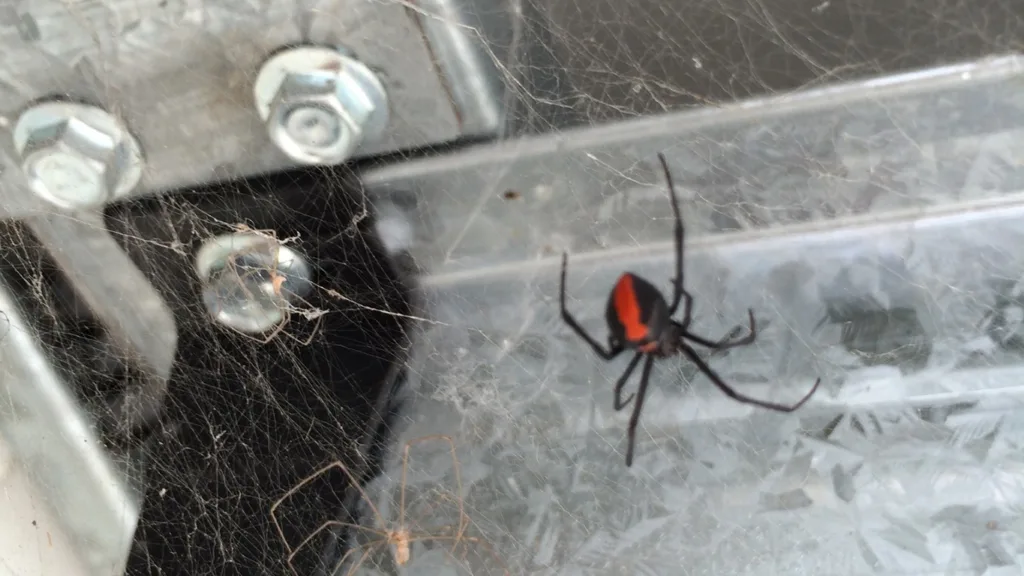
2. Redback Spider (Latrodectus hasselti)
Easily identified by its iconic red marking.
- Identification: Female: 1 cm long (body), black with a prominent, red-orange stripe on the upper abdomen. Male: Much smaller (3-4 mm) and lighter brown.
- Habitat & Behavior: Builds messy, tangled webs in dry, sheltered locations like mailboxes, under seats, in sheds, and around garbage bins. They are nocturnal.
- TIM’s Insight: Redback bites are painful and can cause severe illness, but anti-venom is available. Always check sheltered areas before putting your hands there.
- Danger Level: High. Bites require medical attention.
Category 2: Other Common Spiders (Nuisance or Mildly Venomous)
3. White-tailed Spider (Lampona spp.)
- Identification: Slender, dark grey to black spider, 1-2 cm long (body). The most distinguishing feature is the white spot at the tip of its abdomen.
- Habitat & Behavior: They do not build webs but are active hunters at night. They are often found inside homes, wandering across walls and floors, and are commonly found in bedding, towels, and clothing.
- TIM’s Insight: While their venom was once wrongly linked to severe skin ulcers, modern research shows this is very rare. Their bite can be locally painful and cause swelling.
Danger Level: Low to Moderate. A bite may cause localised pain and irritation.
4. Black House Spider (Badumna insignis)
- Identification: 1-2 cm long (body). Dark brown to black, with a stout abdomen covered in a velvety layer of grey hairs.
- Habitat & Behavior: Builds a messy, lace-like web with a funnel-like retreat, often on window frames, tree trunks, and gutters. They are shy and rarely leave their web.
- TIM’s Insight: These spiders are beneficial as they catch many flying pests. Their bite is unlikely but can cause minor local pain and nausea.
- Danger Level: Low.
5. Mouse Spider (Missulena spp.)
- Identification: 1-3 cm long (body). Stout, black or dark blue-black with a bulbous head. Males may have a red head and jaw. Can be confused with Funnel-webs.
- Habitat & Behavior: Lives in burrows in the soil with a hinged lid, similar to a trapdoor. Males wander in search of females.
- TIM’s Insight: Treat with the same caution as a Funnel-web. While their venom is potentially dangerous, they are often less aggressive. However, correct identification by a professional is essential.
- Danger Level: High. Considered medically significant.
6. Wolf Spider (Lycosidae family)
- Identification: 1-3 cm long (body). Stocky, brown or grey spiders with distinctive, large eyes and excellent eyesight. Females are often seen carrying their white, round egg sac or spiderlings on their back.
- Habitat & Behavior: Active hunters that do not build webs. They live in burrows in the lawn or ground and chase down their prey.
- TIM’s Insight: Their size and speed can be alarming, but they are not aggressive. A bite may cause short-lived pain and itching.
- Danger Level: Low.
7. Trapdoor Spider (Idiopidae family)
- Identification: 1.5-3 cm long (body). Stout, dark brown to black spiders, similar in build to Funnel-webs and Mouse Spiders.
- Habitat & Behavior: As the name suggests, they build a burrow with a perfectly camouflaged, hinged lid. They wait at the entrance for prey to walk by.
- TIM’s Insight: They are shy and rarely leave their burrow. Their bite can be painful but is not considered dangerous to humans.
- Danger Level: Low.
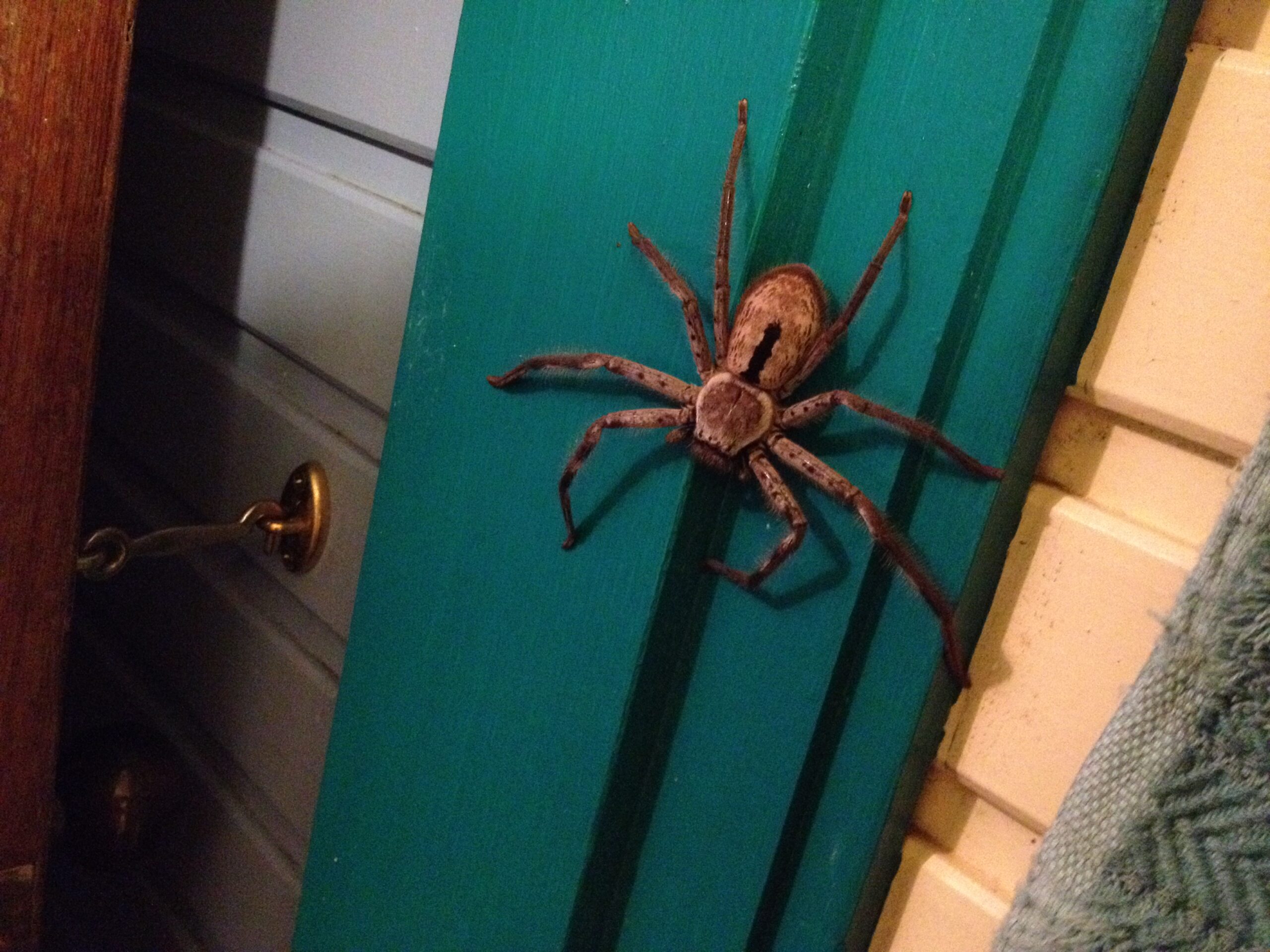
8. Huntsman Spider (Sparassidae family)
- Identification: Very large, with a legspan of up to 15 cm. Flattened body, usually brown or grey, with long, crab-like legs.
- Habitat & Behavior: They do not build webs and are nocturnal hunters. They are known for their incredible speed and are often found behind sun visors in cars or on walls inside homes.
- TIM’s Insight: Their appearance is terrifying to many, but they are not dangerous and are excellent pest controllers. They are generally timid and will flee from humans.
- Danger Level: Very Low. A bite is rare and typically only causes minor, short-lived pain.
9. Garden Orb-weaving Spider (Araneidae family)
- Identification: 1.5-3 cm long (body). Often brightly coloured with stout, bulbous abdomens. They build large, classic, circular webs.
- Habitat & Behavior: Construct their intricate, sticky webs between trees, shrubs, or house eaves at night. They usually sit in the centre of the web.
- TIM’s Insight: Completely harmless and beneficial. The main nuisance is walking into their webs. They are not aggressive.
- Danger Level: None.
Signs of a Spider Infestation
- Increased Sightings: Regularly seeing spiders, especially inside the home.
- Webs: The presence of numerous or large webs around windows, eaves, gardens, or in sheds.
- Egg Sacs: Silken, round or disc-shaped sacs in sheltered corners, under furniture, or in webs.
- Prey Activity: An abundance of other insects (their food source) can attract and support a larger spider population.
Spider Prevention Tips from TIM Pest Control Pros
- Reduce Clutter: Remove piles of wood, rocks, and debris from around your home’s perimeter.
- Seal Entry Points: Install weather stripping on doors and windows and seal cracks in the foundation.
- Manage Lighting: Use yellow insect-resistant lights outdoors, as bright white lights attract the insects that spiders eat.
- Limit Hiding Spots: Keep vegetation trimmed back from the house and store items in sealed plastic bins rather than cardboard boxes in the garage.
- Regular Web Removal: Regularly sweep away webs from corners, eaves, and around windows.
Don't Risk a Dangerous Encounter. Let the Experts at TIM Pest Control Help.
If you’ve identified or suspect dangerous spiders on your property, don’t wait for an accident to happen. Our trained technicians will provide a safe, effective, and long-lasting solution.
When to Call a Professional: The TIM Pest Control Solution
While many spiders are harmless, the risk posed by species like the Funnel-web and Redback makes professional intervention the safest choice. TIM Pest Control provides:
- Expert Identification: We can accurately identify the spider species on your property.
- Safe Removal & Control: We safely remove dangerous spiders and apply targeted, residual insecticides to key harbourage areas.
- Habitat Modification: We provide advice and services to make your property less attractive to spiders by reducing their food source and hiding spots.
- Peace of Mind: Our services are backed by a guarantee, ensuring your home is protected from dangerous pests.
First Aid for Dangerous Spider Bites
- Funnel-web or Mouse Spider Bite:
- Follow the Pressure Immobilisation Technique: Keep the patient still, bandage the entire limb firmly, and use a splint to immobilise it.
- Call 000 (AU) immediately. Get the patient to a hospital as soon as possible.
- Redback Spider Bite:
- Do NOT use a pressure bandage. It can make the pain worse.
- Apply an ice pack to the bite area to reduce pain.
- Seek medical attention for pain relief and anti-venom if necessary.
Frequently Asked Questions
Navigating the world of spiders in Melbourne can be confusing. At TIM Pest Control, we’re your local experts. Here are the answers to the most common questions we receive about spider identification, risks, and control.
Venomous Spiders & Safety
Which spiders in Melbourne are actually dangerous to humans?
Melbourne is home to two spiders whose bites are considered medically significant: the Sydney Funnel-web Spider (in specific outer-urban areas) and the Redback Spider. While other spiders like the White-tailed Spider can cause painful bites, their venom is not considered life-threatening. It’s always best to treat any spider bite with caution and seek medical attention if severe symptoms develop.
How can I identify a Redback Spider?
Redback Spiders are easily identified by the prominent, red or orange stripe on the upper side of their rounded abdomen. Females are larger (about 1cm body length) and have the classic marking, while males are smaller, lighter in colour, and less venomous. They build messy, tangled webs in dry, sheltered locations like mailboxes, under seats, in sheds, and around pot plants.
Are there Funnel-web Spiders in Melbourne?
Yes, the Sydney Funnel-web spider has been established in specific areas of Melbourne, particularly in the Dandenong Ranges. They are large, black, glossy spiders with a powerful stance. They build burrows with a distinctive funnel-shaped entrance, often in moist, sheltered soil under rocks, logs, or in dense ground cover.
What should I do if I'm bitten by a spider?
- Stay Calm. Panicking can increase your heart rate and spread venom faster.
- Identify the Spider. If it is safe to do so, try to capture the spider (even a photo or a dead specimen) for identification. This is crucial for medical treatment.
- Seek Immediate Medical Attention. Go to the nearest hospital or call 000, especially if you suspect a Funnel-web or Redback bite.
- For a Suspected Funnel-web Bite: Apply a pressure immobilisation bandage and keep the limb still.
- For a Redback Bite: Do NOT apply a pressure bandage. Redback venom moves differently through the body. Apply an ice pack to the bite area to reduce pain and swelling.
Common House Spiders
What are the most common spiders I'll find in my Melbourne home?
You will frequently encounter:
- Black House Spiders: Build dark, lacy webs in window frames, eaves, and corners.
- Daddy Long-Legs: Harmless spiders with small bodies and very long, thin legs, often found in ceiling corners.
- White-tailed Spiders: Slender, grey spiders with a distinctive white spot on the tip of their abdomen. They are nomadic hunters and do not build webs.
- Garden Orb-Weaving Spiders: Large, often brightly coloured spiders that build large, vertical, circular webs at night between trees, shrubs, or house exteriors. They are harmless and beneficial for garden pest control.
Are White-tailed Spider bites dangerous?
While a White-tailed Spider bite can be painful and may cause localised swelling, itching, or ulceration, extensive research has shown that their venom does not cause flesh-eating ulcers or other severe systemic reactions. The myth is persistent, but it is not supported by scientific evidence. Clean the bite area and monitor for signs of secondary infection.
Why do I have so many Daddy Long-Legs spiders?
Daddy Long-Legs thrive in undisturbed, sheltered areas with a good supply of other small insects for food. A large population usually indicates an abundant food source (other pests) in your home. They are excellent at controlling pests like mosquitoes and are completely harmless to humans.
Spider Prevention & Control
What are the most effective ways to prevent spiders from entering my home?
- Seal Entry Points: Check and seal gaps around windows, doors, pipes, and utility lines.
- Reduce Clutter: Eliminate hiding spots in garages, sheds, and roof voids.
- Manage Outdoor Areas: Keep vegetation trimmed back from the house exterior and remove debris like leaf litter and woodpiles.
- Control Other Pests: Reduce the spider’s food source by controlling ants, flies, and mosquitoes.
- Install Insect Screens: Ensure all windows and vents have well-fitted screens.
Are store-bought spider sprays effective?
Over-the-counter sprays can kill spiders on contact, but they offer only a temporary solution. The residue breaks down quickly and often fails to address the root cause: the egg sacs and the other insects that attract spiders. For a lasting solution, professional treatment is recommended.
When should I call a professional pest controller for spiders?
You should contact TIM Pest Control if:
- You have identified or suspect an infestation of venomous spiders (Redbacks or Funnel-webs).
- You are seeing a large and increasing number of spiders, indicating a significant infestation.
- You are allergic to insect or spider bites.
- DIY methods have failed to control the problem.
- You are buying or moving into a new property and want peace of mind.
What does a professional spider treatment involve?
TIM Pest Control provides a comprehensive, safe, and targeted approach:
- Inspection: Our technicians will conduct a thorough inspection of your property to identify spider species, nesting sites, and contributing factors.
- Treatment: We use professional-grade residual insecticides that are safe for your family and pets when applied correctly. These are applied to key areas like eaves, window frames, doorways, skirting boards, and other spider harbourages. The residue continues to work for an extended period, breaking the life cycle.
- Web Removal & Advice: We will remove existing webs and egg sacs and provide you with a detailed report and recommendations to prevent future problems.
About TIM Pest Control Services
Are your spider control treatments safe for my children and pets?
Absolutely. The safety of your family and pets is our top priority. We use products that are approved for use in domestic environments and apply them in a targeted manner to minimise exposure. Our technicians will provide specific advice on re-entry times (typically a few hours) to ensure complete safety.
Do you offer a guarantee on your spider control services?
Yes, TIM Pest Control stands by the quality of our work. We offer a service guarantee period on our spider treatments. Please contact us for the specific terms and duration of the guarantee for your situation.
I have a spider right now! How quickly can you come?
We offer prompt and responsive service for the Melbourne region. Contact our team directly, and we will do our best to schedule an appointment at your earliest convenience, often within 24-48 hours for urgent situations.