
Full-service pest protection • Clyde North to greater Melbourne
Termite Inspection and Pest Control Services Melbourne
Protect your home, rental property or business with one local team for termite inspections and treatments, general household pests, rats and mice, bed bugs, ants, wasps, wildlife, bird proofing and commercial pest management.
Clear pricing • One simple booking path
Know Your Price Before You Book
Choose the service you need. Our complete calculator will show the approved price and available booking steps. If the work needs an inspection or site-specific quote, it will clearly switch to a custom assessment request.
Start here
Select Your Service
One local team. Six core service pillars.
Complete Pest, Termite and Property Protection Across Melbourne
The name Termite Inspection Melbourne reflects one of our strongest areas of expertise, but TIM's Pest Control is a complete residential and commercial pest-management provider. We give equal attention to the urgent problems that bring Melbourne customers to us every day: termites, crawling insects, rats and mice, bed bugs, stinging pests and business-critical pest activity.
Whether you searched for local pest control near me, pest control quotes near me, a termite exterminator Melbourne, a mouse exterminator Melbourne or a commercial pest exterminator, the first step is the same: understand the evidence, property and risk, then choose a targeted response.
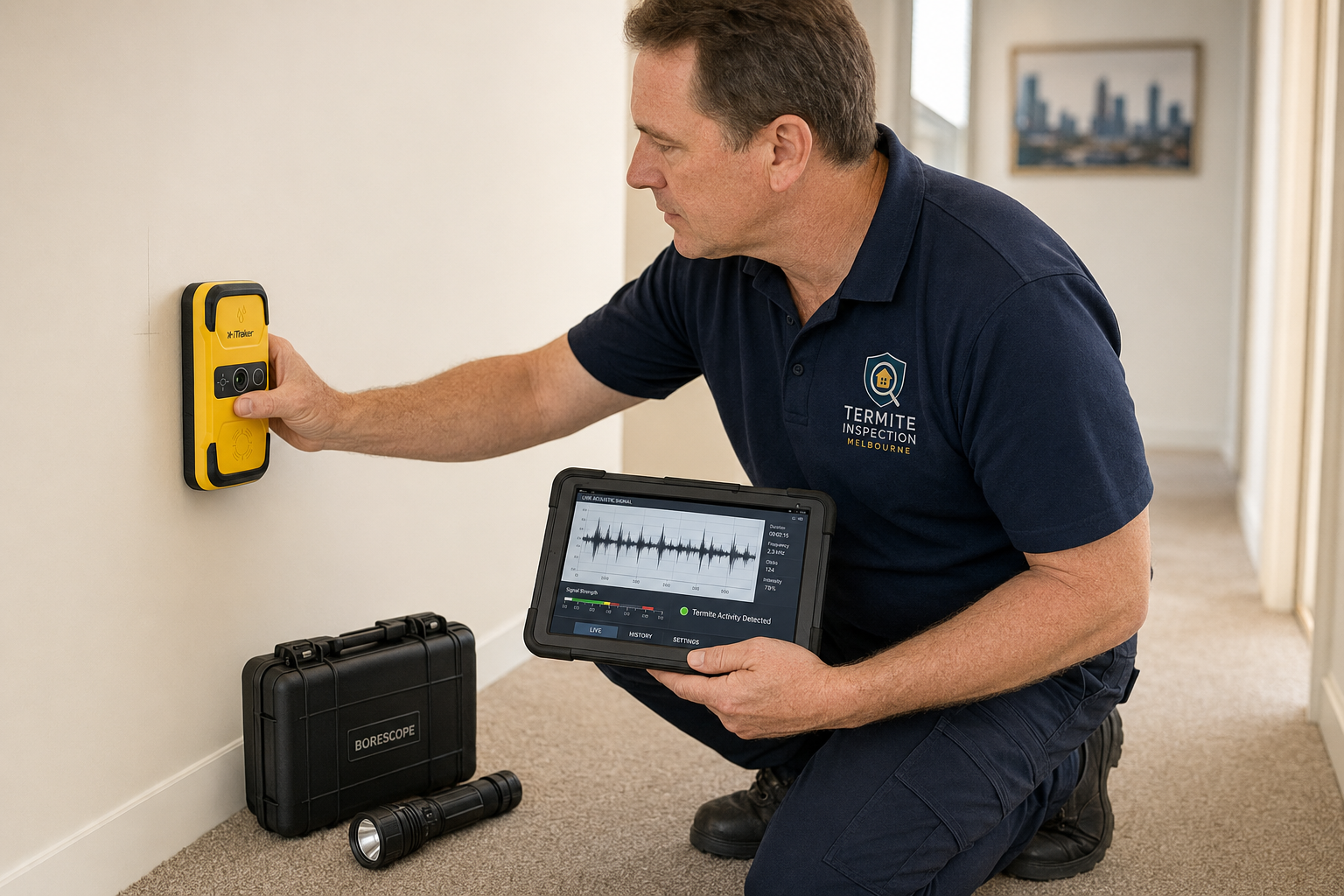
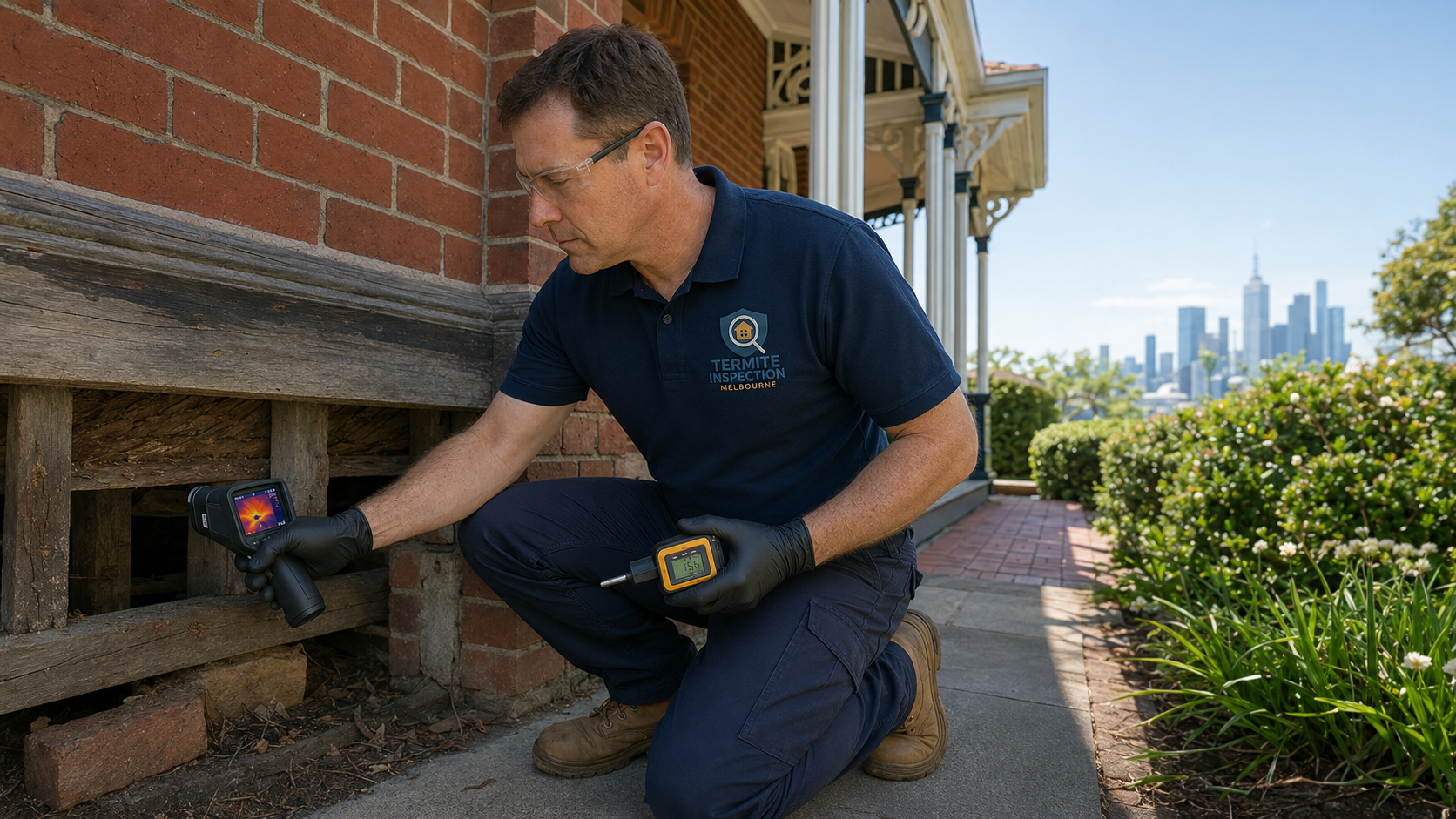
Termite Inspections & Treatments
Termite inspection near me, pre-purchase reports, annual checks, termite treatment Melbourne, Termidor termite treatment, physical barriers, baiting and Termite Reticulation Systems.
AS 3660-aligned inspections
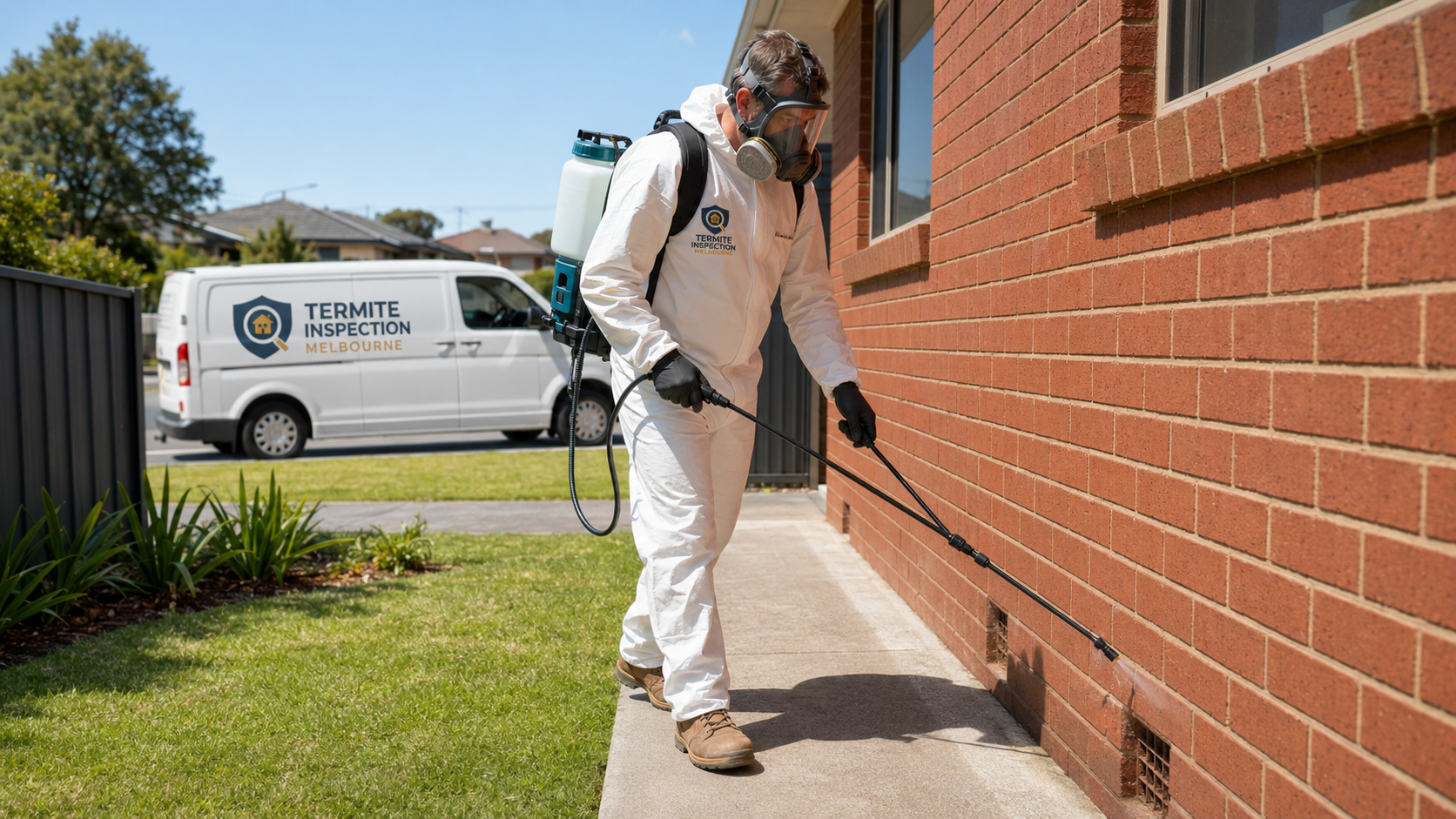
General Pest Control
Whole-home pest control for cockroaches, spiders, fleas, silverfish, mites, mosquitoes, black beetles and other common Melbourne pests, with same-day pest control options subject to availability.
Homes, rentals & businesses
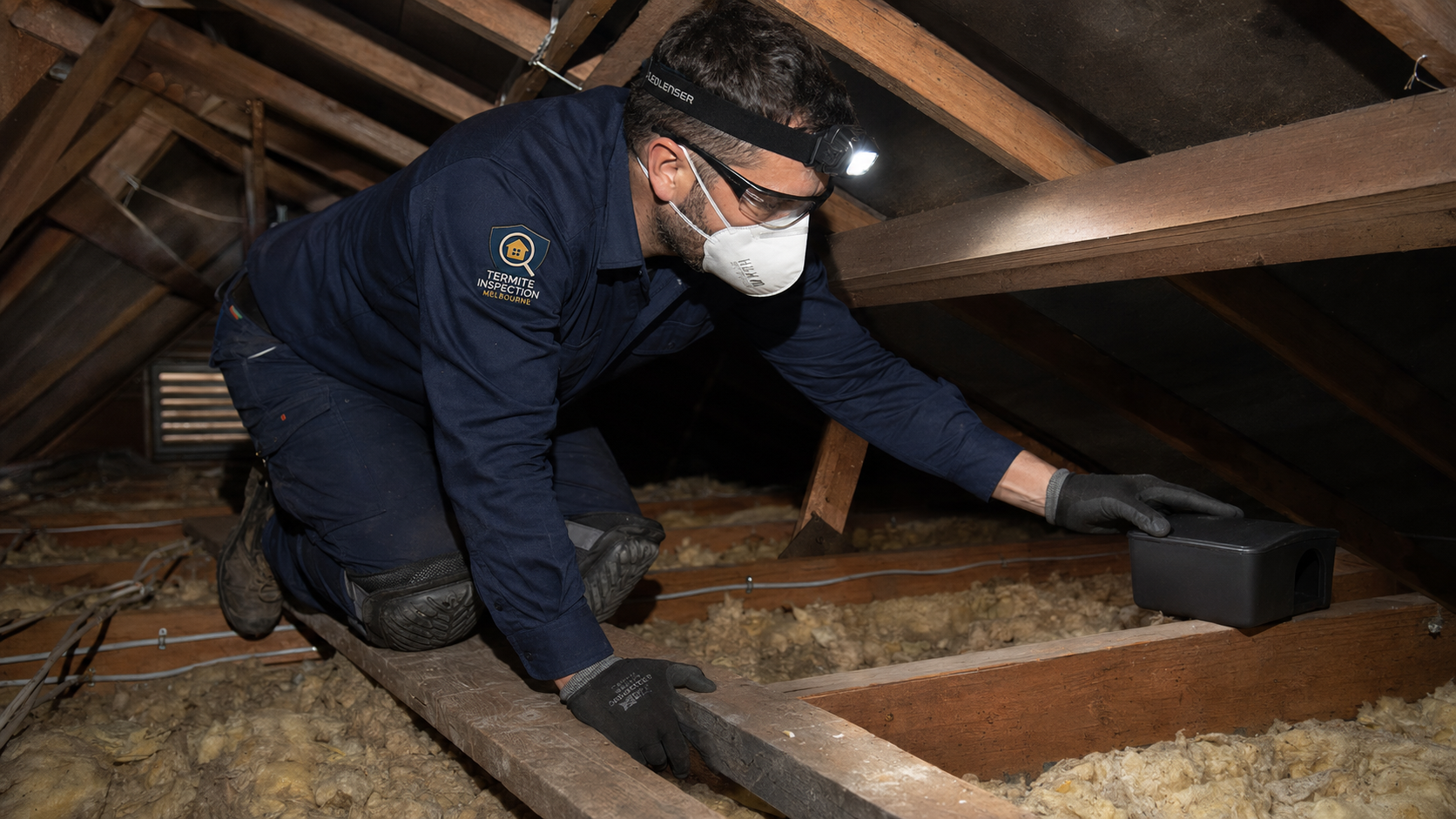
Rodent Control — Rats & Mice
Inspection-led rodent pest control near me services for roof voids, wall cavities, kitchens, garages, warehouses and commercial sites. We target current activity and explain exclusion and sanitation priorities.
Rats, mice & entry points
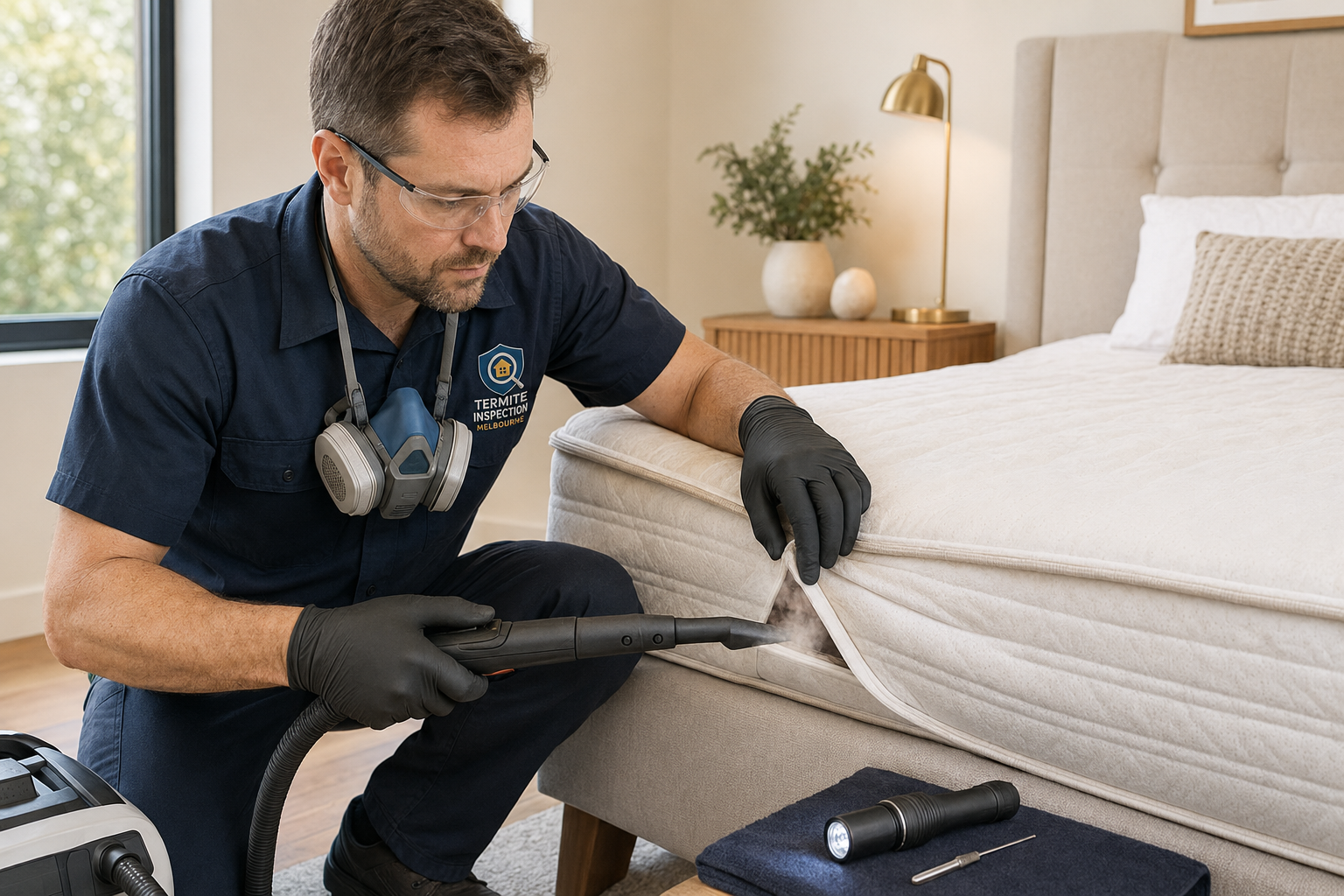
Bed Bug Treatment
Discreet bed bug inspection and treatment for homes, rentals, accommodation and occupied properties. Ask about bed bug treatment cost after the extent, rooms and preparation requirements are assessed.
Discreet treatment planning
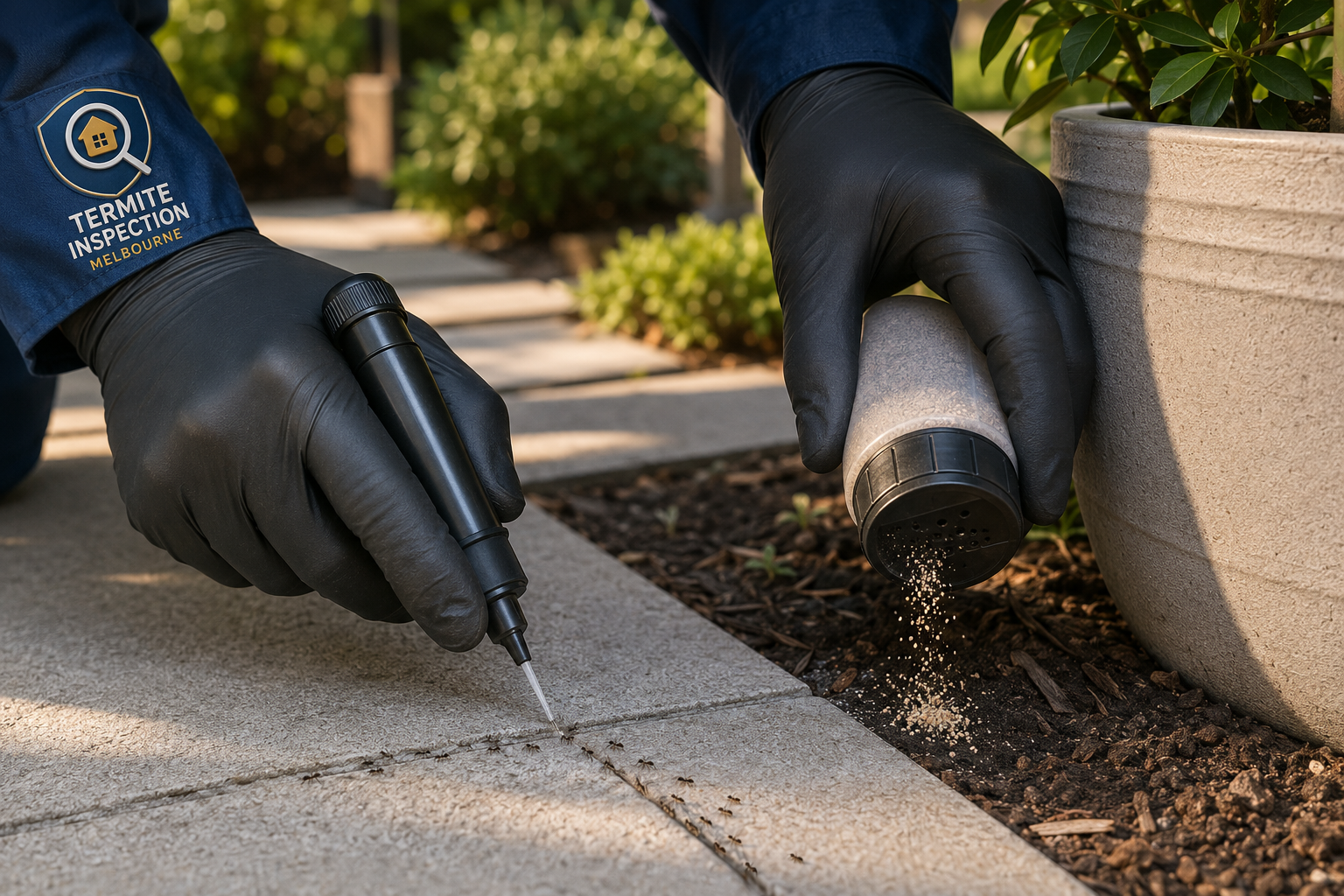
Ant, Wasp & Bee Management
Targeted ant pest control near me services plus urgent wasp exterminator near me and bee-management enquiries. We identify nesting or travel patterns before recommending treatment or appropriate removal.
Nests, trails & stinging pests

Commercial Pest Control
Planned Commercial Pest Control Melbourne programs for offices, restaurants, cafes, schools, strata, real estate, council buildings and other premises requiring reliable visits and usable service records.
Documented service programs
Melbourne pest activity through the year
Seasonal Pest Guide for Melbourne
What’s Active in Melbourne Right Now?
Melbourne’s weather can change quickly, and pest pressure changes with it. Warm periods can increase insect activity, while cooler or wetter conditions may drive rodents and crawling pests into roof voids, wall cavities, kitchens, storage areas and commercial premises.
Seasonal patterns are a useful guide, but pests do not follow a perfect calendar. If you notice droppings, gnawing, live insects, nesting, mud tubes, discarded wings or unexplained damage, request an inspection instead of waiting for the season to change.
December–February
Summer
Warm conditions can increase breeding and foraging activity for cockroaches, ants, flies and mosquitoes. Outdoor entertaining, food waste, moisture and open doors can also increase contact between pests and occupied areas.
Common calls
March–May
Autumn
As evenings cool, rats and mice may seek warmer nesting locations inside roof spaces, garages and wall cavities. Spider activity and cockroach harbourage can also remain visible around protected areas.
Common calls
June–August
Winter
Roof voids, wall cavities, storerooms and quiet commercial areas can provide shelter from cold or wet weather. Rodent evidence, silverfish and other moisture- or storage-associated pests may become more noticeable indoors.
Common calls
September–November
Spring
Warmer days and renewed growth can increase ant, spider, bee and wasp activity. Spring is also a valuable time to check termite risk before the warmer swarming period and summer pest pressure.
Common calls
More specialist services
Find the Right Pest Control Service
Already know what pest you are dealing with? Choose a specialist service below. If you are unsure, request a free quote and tell us what you have noticed—we will help identify the appropriate next step.
Integrated Pest Management
A professional pest-control strategy—not a one-size-fits-all spray
Integrated Pest Management, or IPM, combines inspection, identification, targeted treatment and prevention. It focuses on the cause of pest activity and the conditions that allow it to continue, helping reduce unnecessary chemical use while supporting reliable long-term control.
The plan can be adapted for Melbourne houses, rentals, offices, real estate portfolios, restaurants and cafes, schools, strata properties and council buildings.
Inspection
Assess pest evidence, access points, harbourage, moisture, food sources and building conditions.
Treatment Plan
Identify the pest and select methods appropriate to the property, people, pets and operating environment.
Extermination Procedure
Apply targeted professional treatments in accordance with product labels and site requirements.
Prevention Measures & Pest Control Tips
Explain sanitation, proofing, maintenance and monitoring steps that reduce the risk of recurrence.

Local pest pressure needs local decisions
Why Melbourne Homes and Businesses Need More Than a Quick Surface Spray
A pest sighting is often the visible part of a larger pattern. Cockroaches may be moving through warm service voids, rodents may be following roof and plumbing lines, ants may be travelling between outdoor nests and indoor food sources, and bed bugs may be distributed across adjoining furniture or rooms. Effective control starts by asking where activity is coming from, what is sustaining it and which treatment can reach the relevant areas without creating unnecessary disruption.
Melbourne’s changing temperatures, wet periods, dense suburban development and mix of older and newer construction influence pest behaviour. Our Clyde North pest control base gives us practical access to South East Melbourne while our service planning extends across the metropolitan area. The recommendation can include treatment, monitoring, proofing, sanitation, moisture correction and follow-up. Those components work together; none should be presented as a magic one-visit promise when the evidence indicates continuing pressure.
For families and pet owners, we explain preparation, access restrictions and post-treatment instructions before work begins. For property managers and businesses, we consider occupancy, trading hours, record keeping, sensitive zones and recurring inspection needs. If same-day pest control is available for your suburb and service type, the team will confirm the appointment window when responding to your quote request.
Cockroaches, Spiders, Fleas and Crawling Pests
General Pest Control Melbourne starts with identification and harbourage. German cockroaches in kitchens require a different strategy from larger outdoor cockroaches. Web-building spiders require attention to shelter and prey, while flea work must account for animal hosts, flooring and life-cycle stages. We match the method and preparation to the target rather than grouping every pest under one broad spray.
Pest Control for Rats and Mice
Pest control for rats should address activity, access and attractants. A rodent plan may combine monitoring, appropriately secured control measures, roof or subfloor inspection, sanitation recommendations and proofing priorities. Because gaps, doors, roof junctions and service penetrations can provide access, long-term reduction depends on more than placing bait and leaving.
Bed Bug Inspection and Treatment
A bed bug exterminator Melbourne service needs careful inspection and preparation. Mattresses are only one potential harbourage; frames, bedside furniture, skirting, luggage and adjoining rooms may matter. The bed bug treatment cost depends on the number of affected rooms, infestation extent, access, selected method and follow-up requirements. We provide preparation guidance before treatment is scheduled.
Ant Colonies, Wasps and Bee Enquiries
Ant trails can cross long distances between a nest and food or moisture. Effective ant control therefore relies on species, trail and nesting information. Wasp nests introduce a stinging risk and should not be disturbed. Bee enquiries can require a different and more considered response. Send a clear photo from a safe distance where possible and tell us where the activity is located.
End-of-Lease Pest Control Melbourne
Tenancy requirements vary, so an end-of-lease service should be booked against the actual lease or agent instruction. Tell us whether the property had pets, which pests were observed, when cleaning will be completed and when keys must be returned. We can then explain the appropriate service, preparation and documentation rather than assuming every exit treatment is identical.
Commercial Programs and Food Premises
A commercial pest exterminator must work around the site’s operating reality. Restaurants and cafes need attention to food, waste, deliveries and documentation. Offices, schools, strata and real estate portfolios need discreet scheduling and clear reporting. We build the inspection frequency, treatment method and recommendations around the premises instead of forcing residential routines onto a business.
Documented commercial programs
Commercial Pest Control Melbourne
Practical pest-management programs for organisations that need reliable scheduling, discreet service, clear documentation and treatment plans suited to occupied workplaces and regulated environments.
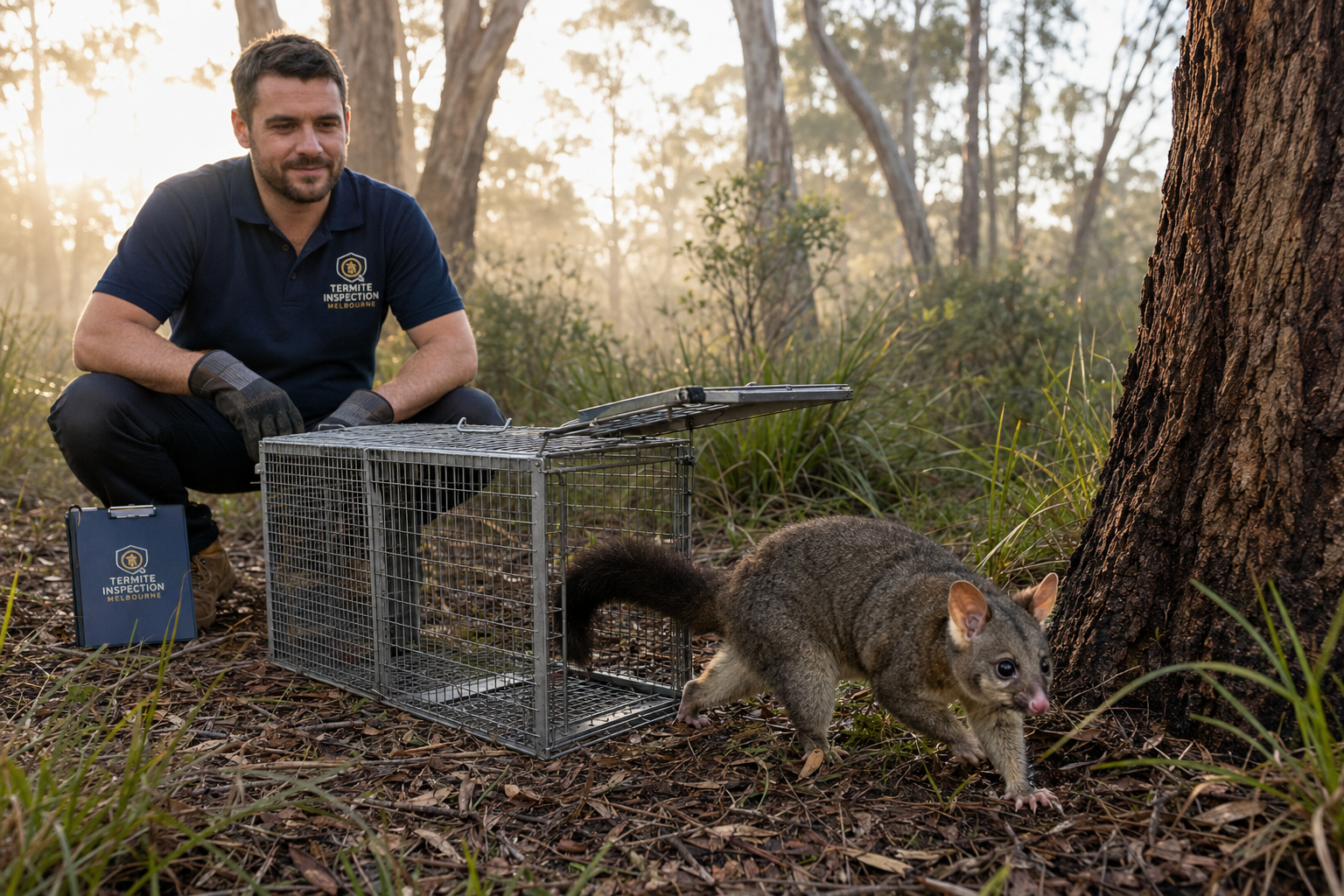

Wildlife and bird control
Possum Removal, Wildlife Relocation and Solar Panel Bird Proofing
Noises in the roof, nesting under solar panels or persistent bird debris require a different approach from insect treatment. Our specialty service directory includes possum inspection, humane exclusion planning, dead possum removal, one-way entry gate installation, bird netting installation and solar panel bird proofing Melbourne.
Possums are protected wildlife and must be managed lawfully. The property must be inspected to understand the species, access point, nesting area and repair requirements. A possum one-way entry gate can support exclusion when it is suitable and correctly managed; proofing work then helps prevent re-entry. Bird-proofing recommendations depend on roof access, panel arrangement, nesting pressure and the condition of the installation.
Get to the Right Pest or Termite Service Faster
The AI Pest and Termite Assistant will ask a small number of relevant questions, help identify the appropriate service category, check the Melbourne service area, apply approved pricing rules and offer available booking times.
- ✓ Pest and warning-sign triage
- ✓ Accurate approved pricing logic
- ✓ Inspection and treatment booking
- ✓ Human escalation when uncertain
Simple conversion paths
Choose How You Want to Proceed
Inspection and protection pathways
Termite Inspection Melbourne Services for Every Property Stage
Termite risk changes when you are purchasing, maintaining, treating or constructing a property. The inspection scope, report and next action should reflect that stage. Our termite service pathways help owners, buyers, builders and commercial managers obtain the information needed for an informed decision.

Pre-Purchase Building & Pest Inspection Melbourne
Before committing to a property, obtain an independent assessment of visible evidence, accessible timber-pest risk, conducive conditions and limitations. A pre-purchase inspection does not guarantee a pest-free building, but it can reveal information that affects further investigation, repair estimates and negotiation.
View service details →Annual and Routine Termite Inspections
Termites can remain concealed while damaging internal timber. Scheduled inspection helps identify new evidence and changes in moisture, landscaping, access or building conditions. Annual inspection is commonly recommended, with shorter intervals considered for elevated-risk or previously affected properties.
View service details →Post-Treatment Inspection and Monitoring
Treatment is followed by verification and monitoring appropriate to the selected system. Bait stations require continuing inspection and replenishment, while treated zones must remain intact and accessible. Follow-up helps the technician assess activity, maintenance needs and future protection priorities.
View service details →New-Build Barriers and Reticulation
Physical termite barriers, suitable chemical systems and Termite Reticulation Systems can form part of new-building protection when designed and installed for the construction. They support detection and management but do not eliminate the need for access, maintenance and periodic professional inspection.
View service details →Eligible Termidor treatments
Up to $2 Million Termite Warranty in Melbourne*
For eligible Australian homeowners, qualifying work completed by an accredited specialist using genuine Termidor products may be supported by the Termidor Assurance Warranty, with up to $2 million in structural damage coverage. Eligibility, conditions, renewal, inspection and product requirements apply.
*Not every property or treatment qualifies. Ask us to confirm current accreditation, product selection, eligibility and full warranty terms before proceeding.
Silent property damage
The Hidden Dangers of Termites in Your Melbourne Home
Think termites are just a nuisance? Think again. Destructive termite species can consume structural timber from the inside, allowing serious damage to develop before it becomes obvious.
- Costly structural damage: activity in frames, floors and other timber can lead to extensive repair bills.
- Electrical and fire hazards: damage around electrical services may contribute to short circuits and fire risks.
- Health triggers: debris, droppings and associated damp conditions may aggravate allergies or asthma.
- Mould and moisture: damp conditions that support pest activity can also encourage mould growth.
- Loss of property value: untreated infestation and structural damage can affect saleability and buyer confidence.
Avoid spraying, breaking mud tubes or opening damaged timber. Photograph the area and call for an assessment.
5 Key Signs of Termites
Hollow or damaged timber
Wood may sound hollow, feel papery or break easily because termites consume it internally.
Mud tubes and galleries
Pencil-thin muddy tunnels on foundations, walls or subfloors can protect termite travel routes.
Frass-like pellets
Fine gritty pellets resembling sawdust or coffee grounds may indicate activity in accessible timber.
Damaged belongings
Books, cardboard, stored documents and timber furniture can show unusual channels or surface damage.
Discarded wings
Small matching wings near windows or doors may indicate reproductive termites have swarmed nearby.
Inspection-led control
Our Proven 4-Step Termite Treatment Process
Every plan begins with evidence. We identify the problem, select an appropriate method and establish ongoing protection around the property.
Inspection & Identification
Inspect accessible areas, assess evidence and identify conditions that increase termite risk.
Customised Treatment Plan
Match the treatment method to the species, construction, access, activity and property goals.
Safe & Effective Eradication
Apply professional products and systems according to labels, standards and site requirements.
Prevention & Monitoring
Schedule follow-up inspections and maintain barriers or bait stations for longer-term protection.
Compare professional options
Termite Treatment Comparison
The right method depends on what the inspection finds. This overview explains where each option may fit.
| Treatment Method | How It Works | Best For | Key Considerations |
|---|---|---|---|
| Liquid Soil Barriers | A treated soil zone is created around foundations and likely entry points. | Long-term structural protection and many subterranean termite situations. | Highly effective when correctly installed; can involve trenching, drilling and professional application. |
| Termite Baiting Systems | Monitored stations deliver slow-acting bait that foraging termites distribute through the colony. | Less-invasive colony management and ongoing monitoring. | Control can take months and requires continuing professional inspection and maintenance. |
| Wood Treatment | Professional sprays, foams, dusts or borate products are applied to accessible timber or galleries. | Targeted accessible activity and preventive treatment during suitable construction stages. | Reach is limited by access; it may not eliminate a concealed subterranean colony by itself. |
| Professional Heat/Cold Treatment | A contained area is raised or lowered to a temperature lethal to termites. | Certain localised drywood termite situations where chemical-free treatment is suitable. | Requires specialist equipment and is generally used for contained areas, not universal whole-structure protection. |
Termite identification
What Do Termites Look Like?
Termites are frequently mistaken for ants. Their appearance changes according to their role within the colony, so identification should consider body colour, head shape, antennae, waist and wings.
Termites generally have straight, bead-like antennae and a thick waist. Ants have elbowed antennae and a narrow, pinched waist.
| Colony Role | Typical Appearance | What It May Indicate |
|---|---|---|
| Workers | Creamy white, soft-bodied and wingless. | The feeding caste responsible for timber damage. |
| Soldiers | Pale body with a larger orange-brown head and strong jaws. | A defensive caste often found with worker activity. |
| Swarmers | Dark brown or black with two pairs of similar-sized translucent wings. | Reproductive termites leaving to establish new colonies. |
Long-term defence
Ongoing Termite Prevention for Melbourne Properties
A one-off treatment is only part of the solution. TIM's Pest Control can design ongoing protection using physical barriers for suitable construction stages, professionally installed chemical barriers, monitored baiting systems and scheduled inspections.
Property maintenance that supports protection
- ✓ Improve ventilation and repair moisture problems.
- ✓ Keep garden beds, mulch and woodpiles away from the structure.
- ✓ Avoid timber-to-soil contact around decks, fences and landscaping.
- ✓ Preserve clear access to slab edges, subfloors and inspection zones.
Do not rely on DIY termite sprays
A visible group may represent only a tiny part of a concealed colony. Spraying or disturbing activity can scatter termites and make inspection more difficult. Professional treatment aims to control the source and protect likely entry routes.
Design My Prevention PlanA practical path from enquiry to prevention
What Happens After You Request a Pest Control Quote?
A useful quote begins with enough information to identify the correct service—not a number generated without context. Your answers help us separate an inspection request from a treatment request, understand access and urgency, and decide whether photos or a site assessment are needed before pricing can be confirmed.
Describe the property and evidence
Tell us the suburb, property type, pest or warning sign, affected rooms or areas and when the problem was first noticed. For a commercial property, include the business type, trading constraints and any documentation expectations. For termites, do not disturb mud tubes, damaged timber, wings or suspected entry points. Safe, clear photographs can help the team understand the enquiry, but they do not replace an inspection where concealed activity is possible.
Confirm scope, preparation and price
The team confirms whether the job is a general pest service, focused treatment, termite or pre-purchase inspection, rodent program, bed bug service, commercial visit, wildlife assessment or bird-proofing project. The scope may depend on property size, infestation level, construction, access, safety requirements and follow-up. You receive preparation instructions relevant to the selected service so rooms, storage, pets, occupants or business areas can be managed before arrival.
Treat, report and reduce recurrence
After inspection and treatment, we explain the work completed, relevant observations, restrictions and recommended next actions. Those actions may include sealing access points, correcting moisture, improving storage or sanitation, maintaining bait stations, preserving termite inspection zones, arranging repair work or scheduling monitoring. Pest-free outcomes depend on the biology of the target, the building and continuing conditions, so follow-up is planned from evidence rather than promised as an unrealistic universal instant cure.
Need immediate assistance?
Call if you have visible termite activity, a dangerous wasp nest location, a rodent inside an occupied area or another urgent pest problem. We will explain what not to disturb and confirm whether a same-day option is available.
Local Melbourne coverage
Termite and Pest Control Service Areas
Based in Clyde North, we provide inspection and pest-management services across Melbourne. Availability varies by service, property and appointment schedule.
Find Your Service AreaProfessional assessment
Not sure which pest, termite or wildlife service you need?
Tell TIM's Pest Control what you have noticed, where it is happening and what type of property is affected. We will route your enquiry to the appropriate termite inspection, general pest, rodent, bed bug, ant, wasp, commercial, possum or bird-proofing service and explain the next step.
Expert answers
Termite Inspection & Treatment FAQs
Detailed answers to the termite questions Melbourne homeowners, buyers and property managers ask before they inspect, treat or purchase.
Should I cover termite holes?
The short answer is no: never cover suspected termite holes yourself.
Sealing exit or “kick-out” holes with caulk, wood filler or paint does not kill the colony. It can trap termites inside the timber and cause them to begin eating in another direction, creating new hidden damage that is harder to detect.
These openings are also valuable evidence. Their condition, location and the presence of frass can help a qualified technician determine whether activity is current, identify the likely termite type and locate galleries within the timber. Professional treatment may require dust, foam or another approved product to be applied directly through these access points. Leave the area undisturbed and arrange a professional termite inspection.
What is the most effective termite treatment?
There is no single “most effective” termite treatment for every property. The right method depends on the termite species, the scale and location of the infestation, construction type, access and the surrounding risk factors.
Following a professional assessment, the recommendation may be a liquid soil barrier, a professionally monitored termite baiting system, targeted timber treatment or a combination of methods. Severe or structural infestations require professional treatment so that the colony and likely entry routes are addressed—not only the termites that can be seen.
What is the fastest way to get rid of termites naturally?
Truly fast, complete eradication of a large hidden colony using only natural methods is very difficult. Natural options generally affect the termites they directly contact rather than the source of the infestation.
Orange oil, whose active ingredient is D-limonene, can kill termites on contact and may suit a small, accessible and localised drywood-termite problem in an item such as furniture, a beam or a door frame. It is biodegradable and acts within the treated gallery, but it does not create a protective barrier and may not reach the queen or the wider colony. It is not a reliable solution for subterranean termites or concealed whole-property activity. Obtain professional identification before treating or disturbing the area.
Is termite damage covered by an insurance policy?
Termite damage is usually not covered by a standard home insurance policy. Insurance is generally designed for sudden and accidental events such as fire or storm damage, while termite infestation is commonly classified as a gradual, preventable maintenance issue.
Policies and exclusions differ. Read the Product Disclosure Statement for your policy and ask your insurer for written confirmation. Scheduled termite inspections and preventive maintenance remain important even when the property is insured.
How quickly does termite treatment work?
Liquid termiticides begin acting immediately by creating a treated zone, but complete colony control can take several days or weeks.
Termite baiting systems are intentionally slower. Worker termites must find the bait, consume it and share it through the colony. Depending on species, colony size, weather and feeding activity, this may take three to six months or longer. Monitoring continues until the technician can assess the result.
Should I avoid buying a house with termites?
Not necessarily. The decision depends on whether activity is current, the extent of damage and the cost of treatment and structural repairs.
Commission an independent pre-purchase building and pest inspection, obtain repair estimates from appropriately licensed contractors and use the findings when negotiating with the seller. A house with minor, professionally treated and repaired damage can still be a reasonable purchase. Major structural damage or uncertain access may materially affect the price and whether you proceed.
What is the best time of year to treat termites?
Spring is often a useful time for preventive work because it is before the late-spring and summer period when termite activity and swarming can become more visible.
However, termites can remain active throughout the year. If you find evidence of activity, do not wait for a “better” season. Arrange a professional inspection immediately so that the risk can be assessed and treatment can begin when required.
How long does termite treatment last?
Professionally installed liquid soil treatments may provide approximately five to ten years of protection, depending on the registered product, soil conditions, installation quality, drainage and later disturbance of the treated zone.
Termite bait stations require continuing professional inspection, maintenance and replenishment. Some properties benefit from a combination of methods. Always follow the product label, service agreement, warranty conditions and the inspection schedule recommended for your property.
How does termite treatment work?
A liquid barrier treatment creates a continuous treated zone in soil around foundations and likely entry points. Depending on construction, installation may involve trenching, treating soil and carefully drilling through suitable hard surfaces.
A bait station system uses discreet monitored stations around the property. Foraging termites consume a slow-acting bait and share it through the colony. The appropriate method—or combination—is selected only after the property, activity, access and risk factors have been assessed.
How often should I have a termite inspection?
For most homes, an annual professional termite inspection is strongly recommended. This regular check helps identify activity and conducive conditions before damage becomes extensive.
Properties with previous termite activity, high moisture, construction vulnerabilities or elevated termite pressure may require inspections every six months. The correct frequency depends on the building, location, treatment system and previous findings.
What is the difference between a termite and an ant?
Ants are commonly visitors looking for food such as crumbs or sugar. Termites consume cellulose and can damage the timber structure of a building.
At a glance, ants have a clearly pinched waist and bent or elbowed antennae. Termites have a straighter, more uniform body with a thick waist and straight, bead-like antennae. Winged termites normally have two pairs of similarly sized wings, while flying ants have unequal wing pairs. If insects appear to be emerging from timber, leave them undisturbed and request professional identification.
Do DIY termite treatments work?
For an active infestation, DIY treatments are unreliable and can make the problem harder to assess. Homeowners can reduce moisture, remove timber-to-soil contact, maintain ventilation, seal appropriate cracks and regularly check for mud tubes or hollow timber.
Eradication is different. Termites can live deep in soil, wall cavities and structural timber beyond the reach of store-bought products. Spraying visible insects may scatter activity while leaving the colony intact. A professional plan identifies the species and source, uses correctly selected products and establishes longer-term protection and monitoring.
Where can I buy termite chemicals or baits?
We do not recommend purchasing or applying termite chemicals or bait systems yourself. Effective termite control depends on correct species identification, locating activity, selecting an approved product, precise placement, label-compliant dosage, monitoring and safe handling.
Many professional termiticides and monitored systems have licensing, label or accreditation requirements. Incorrect placement can scatter termites or leave gaps in protection. A qualified technician can recommend a strategy appropriate to the building, family, pets and surrounding environment.
What are the types of termite treatment?
Two primary professional-grade strategies are used to protect many Melbourne homes:
1. Liquid soil barrier: a continuous treated zone is formed around foundations and likely termite entry points. It can provide robust, long-lasting defence when correctly designed and installed.
2. Termite baiting systems: discreet stations are installed and monitored around the property. Termites feed on a slow-acting bait and distribute it through the colony.
Targeted timber, dust or foam treatments may also form part of the plan for accessible activity. The inspection determines whether one method or a combination is appropriate.
How do termite baiting systems work?
Following inspection, discreet monitoring stations are installed in soil around the property. They are initially checked for termite activity. Once active feeding is confirmed, an appropriate slow-acting bait is introduced.
Worker termites consume the bait and share it with soldiers, reproductives and other colony members. Because it works slowly, termites have time to distribute it before the colony declines. The process may take weeks or months and depends on precise installation, regular inspection, feeding activity and professional replenishment.
How can I protect my home from termites?
Reduce the conditions that attract termites and the pathways they can use:
- Repair leaking taps and pipes, clear gutters and improve drainage and ventilation.
- Keep firewood, timber and heavy mulch away from exterior walls.
- Avoid timber-to-soil contact around decks, fences and landscaping.
- Maintain clear access to slab edges, subfloors and inspection zones.
- Seal suitable cracks and penetrations without hiding suspected activity.
Maintenance is important but not complete protection. Combine it with scheduled inspections and, where recommended, a professionally installed barrier or monitored baiting system.
What do termites look like?
Termites are soft-bodied and range from creamy white to dark brown depending on their role in the colony.
- Workers: pale, soft-bodied and wingless; they feed the colony and damage timber.
- Soldiers: pale body with a larger orange-brown head and strong jaws used to defend the colony.
- Swarmers: reproductive termites that can be dark brown or black with two pairs of similar-sized translucent wings.
Unlike ants, termites have straight bead-like antennae and a thick waist. If you see swarmers or discarded matching wings, arrange professional identification.
What are the signs of a termite infestation?
Common warning signs include pencil-sized mud tubes on foundations or walls, hollow or papery skirting boards and floorboards, frass that resembles fine coffee grounds, discarded matching wings near windows, and visible damage to timber or the paper backing on plasterboard.
Termites may also affect stored books, cardboard and documents, and activity near electrical wiring can create an additional hazard. If you notice any of these signs, do not break open mud tubes, seal holes or spray the area. Photograph the evidence and contact Termite Inspection Melbourne for a professional assessment.
Protect your property, people and operations
Get Clear Answers and the Right Pest Control Service
Do not wait for termites, rats, cockroaches, bed bugs, ants, wasps or wildlife activity to become harder and more expensive to manage. Request a quote, describe the evidence and let our Melbourne team plan the appropriate inspection or treatment.
Serving Clyde North, South East Melbourne, greater Melbourne and the Mornington Peninsula. Same-day options are subject to availability.