
☰ Explore Services & Menu
Pest Control
Termite Services
Commercial
Wildlife & Bird Control
Professional Termite Treatment Melbourne | #1 Termite Eradication & Barrier Experts
Stop active subterranean termites from continuing to feed through structural timber. TIM's Pest Control maps the infestation, selects an evidence-led eradication pathway and designs long-term protection around your building—not a generic spray around the skirting. Options include non-repellent chemical soil barriers, replenishable reticulation systems, monitored baiting stations and targeted treatments for accessible active workings.
Request a same day termite quote subject to route availability. Every approved scope states the product, application zones, access assumptions, safety directions, monitoring schedule and qualifying warranty. Relevant work references AS 3660—not the commonly searched but incorrect “AS3650”—with up to eight-year protection available only on eligible written plans.
Transparent high-ticket treatment planning
Termite Treatment Melbourne Packages
These indicative packages help you plan the likely investment before the site assessment. Final pricing depends on measured perimeter, active workings, soil and concrete interfaces, product selection, trenching, drilling and access. The exact specification and GST-inclusive total are confirmed in writing before treatment begins.
*Prices shown before GST. Final inclusive total and site-specific specifications are confirmed upon physical inspection. The booking calculator displays the selected planning package, optional specialist add-ons and GST before submission. Work outside the approved written scope requires separate customer authorisation.
Eradication, engineered barriers and ongoing protection
Complete Termite Treatment Melbourne Services
A competent inspection is the starting point, but the treatment page must answer the next commercial question: how will active termites be managed and how will future concealed entry be reduced? TIM's Pest Control combines colony control, chemical barrier installation, reticulation or monitored baiting with documented annual inspection requirements.
Active Colony Eradication
Evidence-led dusting, foaming, baiting or non-repellent treatment selected for the active infestation
Check price & book →Chemical Soil Barriers
Trenching, rodding and drill-and-inject treatment designed around slab edges and soil entry zones
Check price & book →Reticulation Systems
Purpose-designed replenishable delivery networks for suitable new or existing building configurations
Check price & book →Monitored Baiting Programs
Strategically placed interception stations with scheduled inspection, baiting and colony-response tracking
Check price & book →Thermal & Radar Mapping
FLIR thermal imaging, moisture meters and Termatrac radar used to support treatment decisions
Check price & book →Physical Barrier Advice
Assessment of exposed slab edges, service penetrations, construction joints and compatible barrier options
Check price & book →Damage & Moisture Priorities
Visible timber damage, active workings, drainage defects and conducive conditions documented before installation
Check price & book →Warranty & Annual Reviews
Written treatment records, monitoring schedules and qualifying warranty conditions clearly explained
Check price & book →Accountable high-value treatment work
Licensed, Insured and AEPMA-Certified Termite Treatment Specialists

TIM's Pest Control operates from Clyde North and services Melbourne Metropolitan Area, South East Melbourne, Eastern Melbourne, Northern Melbourne, Western Melbourne and the Mornington Peninsula. Our process is built around competent inspection, traceable evidence, measured treatment zones and a clear written scope that matches the building. Customers should verify the current licence, insurance certificate and any professional accreditation before relying on a provider.
The business represents its timber-pest work as supported by up to $10 million liability cover for the applicable insured activities. Insurance does not make inaccessible cavities inspectable or turn a visual inspection into a structural guarantee. Ask for the current certificate of currency and written warranty conditions. A responsible inspector explains both protection and limitation instead of hiding qualifications in fine print.
Police-checked local personnel, AEPMA certified timber pest specialists and current verified customer feedback are valuable trust signals only when they can be substantiated. We do not invent review quotations or freeze a rating forever in code. Visitors are encouraged to check the live Google Business Profile for current reviews from Clyde North, Melbourne CBD, South East Melbourne and Mornington Peninsula customers.
Clyde North
Local South East Melbourne response for active termites, barriers, baiting and annual maintenance.
Melbourne CBD
Apartment, terrace and shared-building treatment scopes with access and ownership limits documented.
Mornington Peninsula
Coastal moisture, decks, subfloors and variable soils considered in the management design.
South East Melbourne
New estates, established homes, concrete paths and concealed slab-edge risks mapped before installation.
Delay can turn a controllable infestation into major repair work
Why Delaying Termite Treatment Can Cost Tens of Thousands
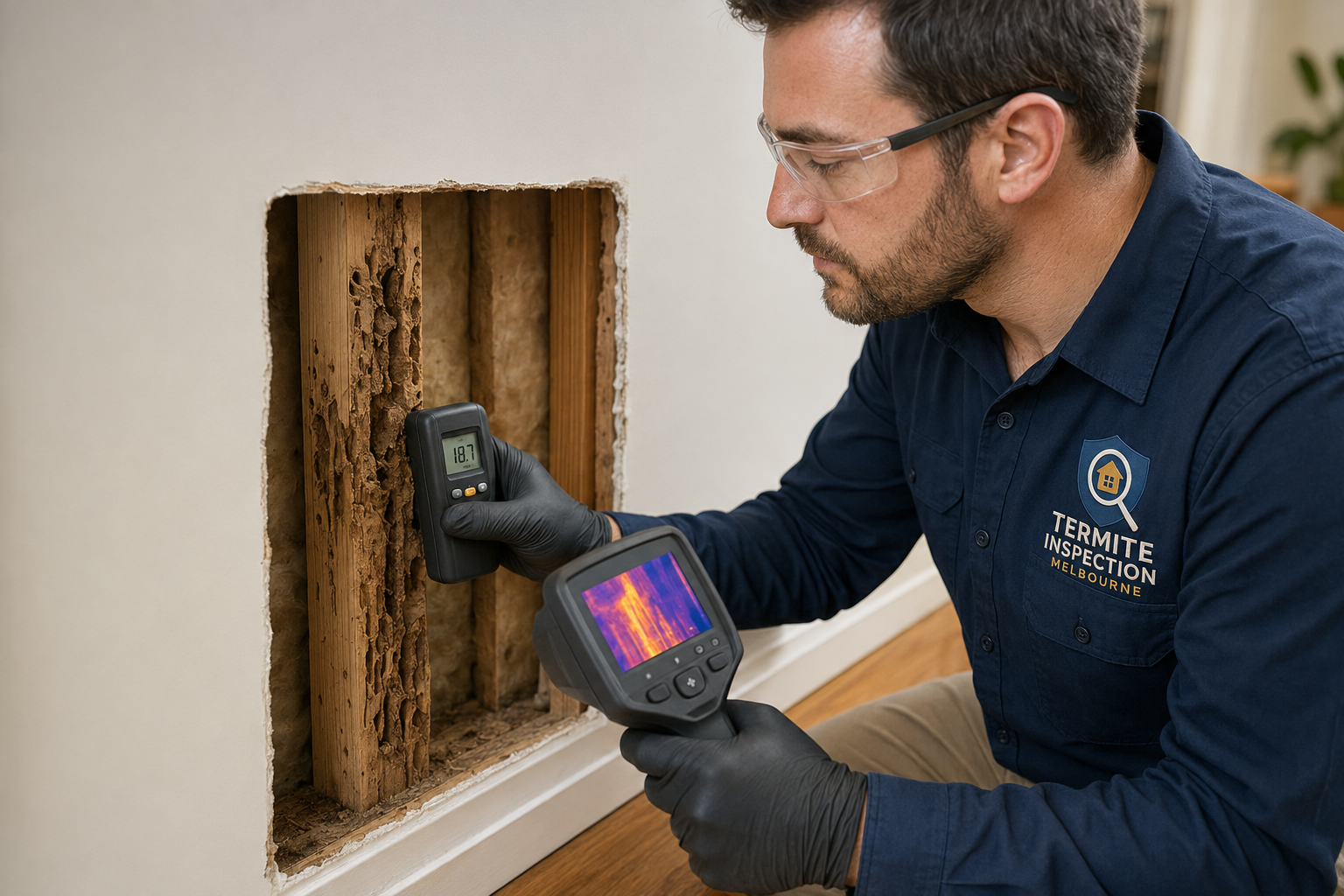
Subterranean termites live within organised colonies and forage through soil, concealed joints and protected mud galleries. Workers can remove cellulose from framing, flooring, skirtings and joinery while leaving a thin outer surface that still appears intact. Fresh plaster, paint or renovation finishes may hide previous repairs and active entry routes. By the time doors distort, floors soften or paint blisters, damage may extend well beyond the first visible location.
Coptotermes species are among the most destructive structural termites in Australia. Schedorhinotermes—often misspelled “Shedrinotermes”—can also cause serious damage and may present soldiers of more than one size. The activity of either group must be managed according to evidence, construction and colony behaviour. Spraying a visible tube can kill exposed individuals while disturbing the colony and making professional tracing more difficult. Contact aerosols rarely reach the nest; they can interrupt the visible gallery while workers redirect through another concealed route.
Many standard Australian home insurance policies exclude gradual termite or insect damage, although each Product Disclosure Statement is different. This is why annual termite inspection is commonly recommended and why higher-risk homes may need shorter monitoring intervals. An inspection cannot prevent entry between visits, but it can identify evidence, damaged timber and conducive conditions before they become more expensive. Property value can also be affected when unresolved active activity, incomplete treatment records or widespread damage appears in a future timber-pest report.
Species, caste and colony behaviour
Termite Identification for Melbourne Buildings
Correct identification matters because termite groups differ in moisture needs, nesting, foraging behaviour and treatment strategy. A qualified inspector uses specimens where available, mud-work characteristics, damage patterns and site context rather than guessing from one photograph.
Subterranean Termites
Subterranean colonies generally maintain contact with soil or another reliable moisture source. Workers forage through underground galleries and protected mud tubes, locating cellulose in buildings, fences, stumps and landscaping. They can cross small gaps, exploit cracks, travel through service penetrations and bridge physical systems when inspection zones are concealed.
Coptotermes acinaciformis, Schedorhinotermes, Nasutitermes and Heterotermes groups may be encountered in Australian timber-pest work. Species certainty requires suitable evidence. The report should state whether identification is confirmed, probable or unavailable.
Dampwood Termites
Dampwood termites are associated with timber containing high moisture and are more likely in decayed logs, stumps, leaking structures or persistently damp timber than in dry sound framing. Their presence can signal a moisture or decay problem that needs repair even when the colony is not behaving like a major subterranean species.
Management may require removal of the moisture source, replacement of decayed timber and targeted pest advice. Simply treating insects without correcting the leak, drainage or ventilation problem can leave the property vulnerable to continuing decay and other timber pests.
Drywood Termites
Drywood termites can live within timber without regular soil contact. They are much less common in Melbourne than subterranean termites, but unusual imported timber, furniture or local evidence still requires competent identification. Dry pellet-like frass and contained gallery patterns may justify specimen collection or specialist confirmation.
The correct response is not to assume every hole or pellet is drywood termite evidence. Wood borers, ants and ordinary debris can be misidentified. Treatment scope depends on confirmed activity, affected items and the extent of accessible timber.
Workers, Soldiers, Reproductives and the Queen
Workers perform most foraging, feeding and construction. Soldiers defend the colony and can provide important identification features. Winged reproductive alates leave mature colonies during suitable weather to establish new colonies; discarded wings near windows can be an early warning. The primary queen can live deep within the nest and produce large numbers of eggs, while supplementary reproductives may support growth in some colonies.
Killing visible workers does not prove colony elimination. Professional treatment seeks to exploit termite behaviour, create a continuous treated zone or maintain an effective monitored system. Follow-up evidence and annual checkpoints are therefore essential parts of a defensible plan.
Mud Tubes, Foraging Galleries and Timber Sounding
Termites construct protected tubes and packed workings that help conserve humidity and shield movement from light and predators. Inspectors examine slab edges, foundation walls, piers, ant caps, plumbing penetrations, subfloor timbers, skirtings and other junctions for these signs. Sounding can identify timber that has lost internal substance while retaining an outer veneer.
Sounding is an indicator, not a complete diagnosis. Timber can sound hollow because of construction, delamination or old damage. Findings are combined with moisture readings, thermal patterns, radar where appropriate and direct evidence before a conclusion is reported.
From active-colony evidence to a documented protection system
Our Proven Four-Step Termite Treatment Execution Framework
Effective termite management is a sequence—not a single spray. Diagnosis comes first, active-colony treatment follows where required, the building receives an appropriate management system, and scheduled inspections verify that the plan remains intact.

Pre-Treatment Building Audit & Colony Mapping
The inspector examines accessible interiors, exteriors, roof voids, subfloors, outbuildings and relevant grounds. FLIR thermal imaging maps surface-temperature differences; a moisture meter identifies unusual dampness; Termatrac radar may detect movement or moisture patterns within suitable materials. These tools do not see through every wall and must be interpreted with physical evidence.
Findings include active termites, previous workings, damaged timber, mud leads, conducive moisture, concealed slab edges, bridging, restricted access and other timber pests. The written report separates confirmation from suspicion and explains when invasive investigation or structural advice is justified.
Custom Engineering & Treatment Selection
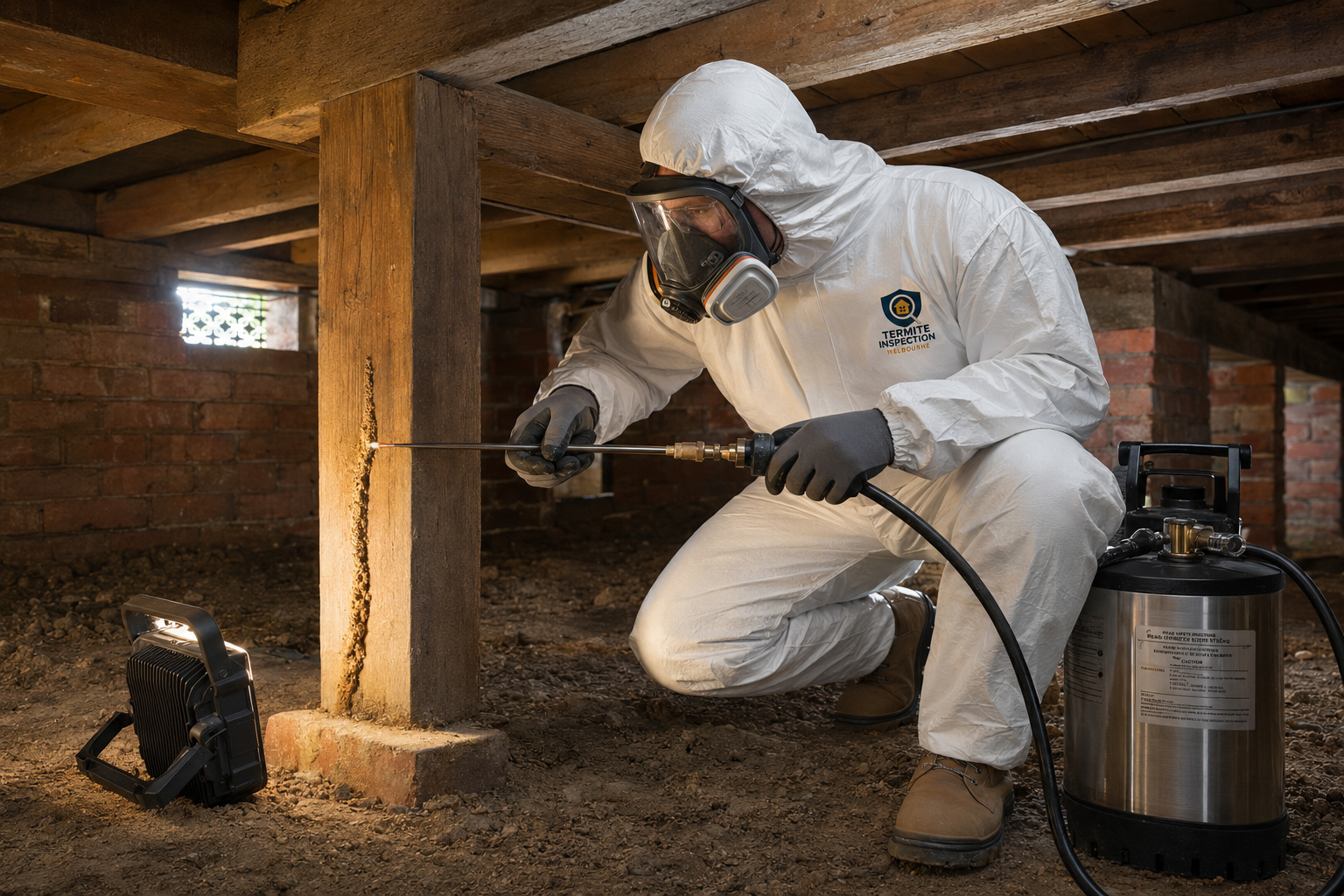
The treatment design separates immediate subterranean termite eradication from the long-term management system. Active termite work may use a registered dust, foam, bait or another targeted method designed for the species, location and behaviour. Transfer-based treatments rely on termites continuing normal contact, which is why owners should not disturb galleries before assessment. The objective, follow-up interval and evidence used to judge progress are documented.
A targeted treatment of active workings is not automatically a complete perimeter protection system. Once activity is controlled or the treatment sequence is established, the technician assesses broader soil access, building vulnerabilities and whether liquid, baiting, physical or combined management is appropriate.
Professional Application & Barrier Installation
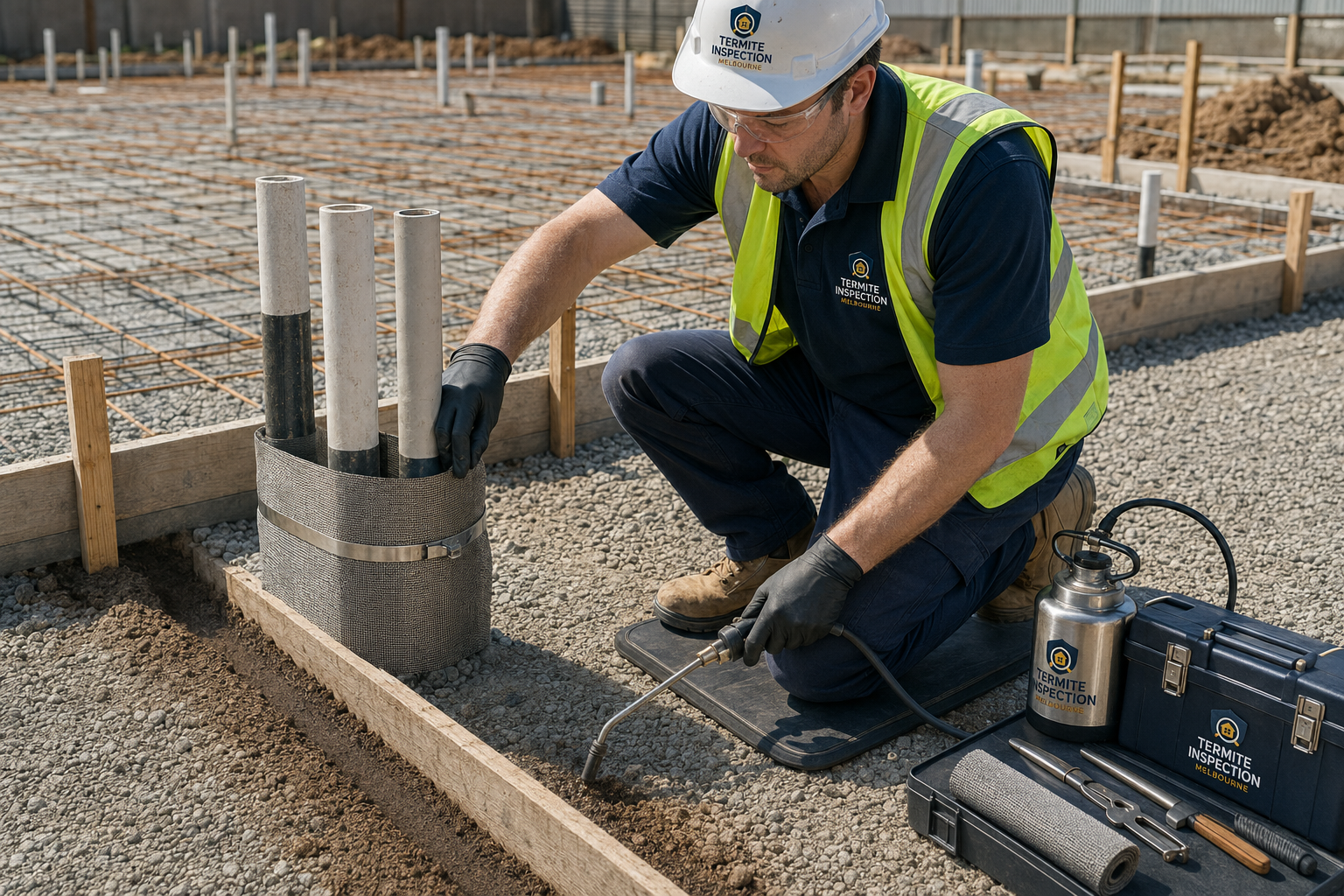
Subterranean termite barrier installation may involve an AS 3660-aligned liquid soil treatment, physical termite-management components, monitored bait stations, reticulation delivery lines or a site-specific combination. Construction joints, service entries, attached paths, decks, drainage and accessible perimeter length all affect design and termite barrier cost Melbourne owners receive.
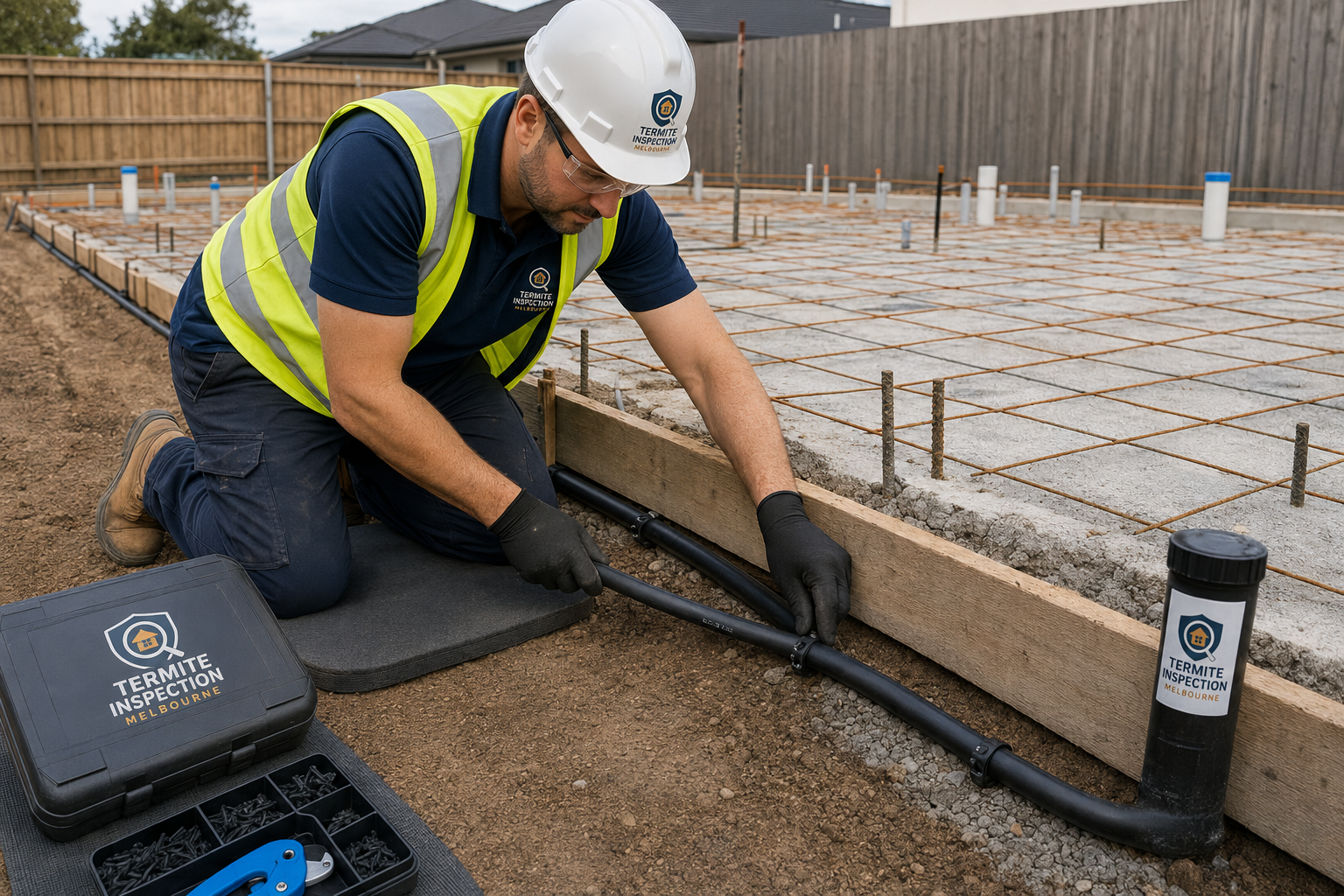
A termite reticulation system installation can support future replenishment without repeating every drill or trench, but only when the design, chemical, delivery rate and maintenance schedule are suitable. The proposal identifies treated zones, inaccessible gaps, warranty conditions and responsibilities for future renovations.
Post-Treatment Verification, Documentation & Warranty Activation
Post-treatment inspections review accessible evidence, monitoring stations, inspection zones, moisture conditions and any building or landscaping changes that could compromise management. Some plans require checks more often than annually during active-colony treatment, followed by a regular annual termite inspection once the system is stable.
Written warranty protection depends on compliance with inspection, maintenance, access and conducive-condition requirements. A qualifying eradication or structural warranty is never an unconditional promise that no termite can approach the property. The customer receives the applicable terms before relying on the coverage.
Local treatment routes from Clyde North
Termite Treatment Across Melbourne
Customers search for termite treatment Melbourne, local termite control, termite exterminator near me, chemical barriers in Berwick and Cranbourne, baiting in Ringwood, reticulation in Werribee and termite control across Mornington Peninsula. Every site is still designed around construction, evidence and access rather than a suburb label.
Melbourne CBD & Inner City
Inner-city terraces, apartments and converted warehouses can have shared walls, concealed plumbing, paved boundaries and owners-corporation interfaces. A termite treatment Melbourne CBD plan must identify which soil, wall and service-entry zones can legally and safely be treated. Where trenching is impossible, targeted active-colony work or monitored baiting may be more practical. Written scopes distinguish private property from common property and record any inaccessible areas that could interrupt a complete management zone.
South East Melbourne
From our Clyde North base, South East Melbourne is a core route for active termite and same day termite quote enquiries. New estates often combine concrete paths, concealed slab edges, garden beds and later landscaping that bridges inspection zones. Established houses may add suspended subfloors, extensions, wet areas and mature vegetation. Clyde North pest control recommendations are engineered around actual perimeter length, access, soil and evidence—not a postcode-only package.
Eastern Melbourne
Leafy eastern suburbs frequently combine mature trees, sloping sites, retaining walls, garden timbers and older suspended-floor construction. These features can complicate chemical termite barrier installation because soil levels, drainage and perimeter access change around the structure. Treatment design may divide the site into trenchable soil zones, concrete drill zones and monitored points, with active-colony control completed before long-term protection is commissioned.
Northern Melbourne
Northern Melbourne includes Victorian timber homes, post-war brick veneer houses, renovated dwellings and new infill construction. Subfloor clearance, ant caps, masonry joins and later additions vary widely. A professional termite exterminator maps active workings first, then chooses between localised treatment, external soil zones, baiting and access improvements. Annual inspection and protection plans must also account for renovation joins, plumbing upgrades and concealed cavities.
Western Melbourne
Western Melbourne properties range from new slabs to weatherboards, warehouses and industrial conversions. Lower regional rainfall does not mean zero subterranean termite risk. Irrigation, plumbing leaks, garden changes and concealed slab edges can create localised moisture. Treatment specifications consider soil characteristics, wind-exposed gardens, paved perimeters and commercial access so the selected chemical, reticulation or baiting program can be installed and monitored correctly.
Mornington Peninsula
Mornington Peninsula homes can combine coastal moisture, decks, holiday-property vacancy, vegetation, outbuildings and humid subfloors. Timber decay may accompany termite activity, and sandy or variable soils influence installation planning. A termite reticulation system Melbourne assessment, liquid soil treatment or monitored baiting program is chosen only after the technician maps the dwelling, detached structures, perimeter surfaces, drainage and practical maintenance requirements.
What happens after activity is confirmed
Termite Treatment and Barrier Installation Timeline
The timing below is a framework, not a guarantee. Baiting, dust transfer, liquid treatments, physical work and reticulation each have different sequences. Your written proposal controls the actual method, safety directions and verification dates.
Day 1: Full Property Audit and Tactical Setup
The technician confirms activity, maps accessible entry routes, reviews construction and selects the immediate treatment. Active workings may receive a targeted transfer treatment or bait placement. If a soil barrier or reticulation installation is approved, service locations, trenching, drilling, obstacles and safety controls are marked before work begins.
Occupants receive preparation and re-entry instructions. Areas that cannot be treated continuously are documented. The first visit may stop short of a permanent barrier when disturbing the colony would reduce the effectiveness of the active treatment.
Days 2–7: Transfer, Feeding and Early Monitoring
Depending on the method, termites may continue contacting treated individuals or consuming bait. Visible activity can fluctuate and should not be disturbed. The team reviews monitoring evidence at the scheduled interval rather than declaring colony elimination from the disappearance of one mud tube.
A liquid soil treatment can begin protecting completed zones once correctly applied, while active-colony bait or dust programs may require more time. Rain, drainage, access and building works can affect site scheduling but do not change label requirements.
Days 14–30: Verification and Management-Zone Completion
Follow-up checks assess whether activity has reduced, shifted or ceased in monitored locations. Additional bait, dust or investigative access may be required. Approved trenching, injection, drilling, station installation or reticulation work is completed and recorded according to the management plan.
“Chemical zone saturation” should not mean excessive or uncontrolled product use. The goal is the correct registered volume and distribution for the soil, construction and label—not more chemical than required. Treated areas are documented for future maintenance.
Annual Checkpoints and System Maintenance
Annual inspections review accessible timber, barrier zones, monitoring stations, moisture and changes such as new paths, garden beds, plumbing, decks or extensions. Reticulation may require replenishment at a product- and system-specific interval. Bait stations require their own monitoring schedule.
Warranty continuity may depend on completing these checks on time and correcting conducive conditions. The property owner should keep reports, treatment diagrams, product records and invoices together for future trades, buyers and warranty claims.
Compare investment, longevity and construction suitability
Termite Treatment Options Compared
A low initial price is poor value if the method cannot form a continuous zone, reach the colony or be maintained around the building. This matrix compares professional non-repellent barriers, reticulation, monitored baiting and DIY aerosols at decision level; the approved proposal still controls product, term, access, safety and warranty.
| Decision factor | Non-repellent chemical barrier | Reticulation system | Monitored baiting stations | DIY aerosol |
|---|---|---|---|---|
| Initial investment | Medium to high; driven by perimeter, trenching and drilling | Higher installation or upgrade cost, then planned replenishment | Moderate setup plus recurring monitoring fees | Low retail purchase price but no building-wide design |
| Expected longevity | Potentially multi-year under the registered label and undisturbed conditions | System hardware remains while chemical is replenished at specified intervals | Protection continues only while stations are accessible and monitored | Short-lived contact effect on exposed individuals |
| Whole-colony pathway | Non-repellent contact and transfer can contribute to colony suppression while the zone protects entry interfaces | Depends on the termiticide delivered; primarily provides a maintainable treated zone | Designed for slow transfer through feeding termites and monitored colony decline | Fast contact kill can disturb visible termites without reaching the colony |
| Speed of visible response | Completed zones begin functioning once properly applied; colony evidence still requires follow-up | Comparable to the approved chemical after correct charging and distribution | Usually slower because interception and feeding must occur | Fast on directly sprayed termites only |
| Concrete slab compatibility | Compatible where planned drilling and sub-slab injection can create a continuous zone | Excellent when installed in suitable slab/perimeter zones or when an existing network is serviceable | Useful where drilling or continuous trenching is restricted | Cannot create a compliant sub-slab or perimeter soil zone |
| Maintenance | Annual inspections and re-treatment when the zone expires or is disturbed | Annual inspection plus scheduled testing and replenishment | Frequent station checks during active work, then ongoing monitoring | No professional verification or documented continuity |
| Warranty pathway | Potential qualifying written product or service warranty | Potential system and treatment warranty subject to installation and refill conditions | Service agreement depends on continued monitoring and subscription terms | No structural or whole-property warranty |
Three premier professional treatment pathways
Chemical Barriers, Reticulation and Baiting Systems
The best termite treatment Melbourne solution is property-specific. Construction, soil, drainage, access, activity, renovation plans and the owner's ability to maintain inspections all influence the recommendation.
Option A: Non-Repellent Chemical Soil Barriers
A professional liquid soil treatment establishes a treated zone around relevant interfaces using trenching, rodding, injection or drilling as permitted by the registered label. Fipronil-based Termidor or another approved non-repellent product may allow termites to contact treated soil without immediate avoidance, supporting a transfer effect while the continuous zone reduces concealed entry. The design must account for attached paving, construction joints, service penetrations, drainage, garden soil and inaccessible sections.
This pathway is usually strongest when the perimeter can be treated continuously and the owner accepts planned drilling through adjoining concrete. The proposal should state lineal metres, trench depth, hole spacing, product, dilution, volume, inaccessible gaps, inspection schedule and maintenance. A quoted chemical termite barrier installation is not comparable with a spot spray around one wall.
Option B: Termite Reticulation Systems
An Altis-type or other registered reticulation network distributes termiticide through purpose-installed lines beneath or around selected zones. This can make replenishment faster and reduce repeated drilling or excavation. Design requires correct zoning, pressure and flow testing, accessible fill points, chemical compatibility and accurate calculation of delivery volume for each circuit.
Reticulation is particularly valuable when installed during construction, but some existing properties or systems can be assessed for extension, repair or recharge. Kordon is a physical termite-management product rather than a rechargeable pipe network, so it belongs in physical-barrier planning. The final termite reticulation system Melbourne quote depends on zones, perimeter, access and product.
Option C: Interception & Baiting Systems
Sentinel, Sentricon, Trelona or another professional baiting platform uses monitored in-ground and, where appropriate, above-ground stations. Once termites intercept and feed on an approved bait, the slow-acting chemistry is transferred through social contact and grooming. The aim is queen-and-colony elimination, not a repellent ring that encourages termites to forage elsewhere.
Baiting can suit properties where continuous trenching or concrete drilling is impossible, where access changes around the perimeter or where the treatment strategy prioritises colony interception. It requires disciplined monitoring, station access, bait replacement and continued fees. The agreement must define inspection frequency, colony-elimination evidence and the response if a station becomes inaccessible.
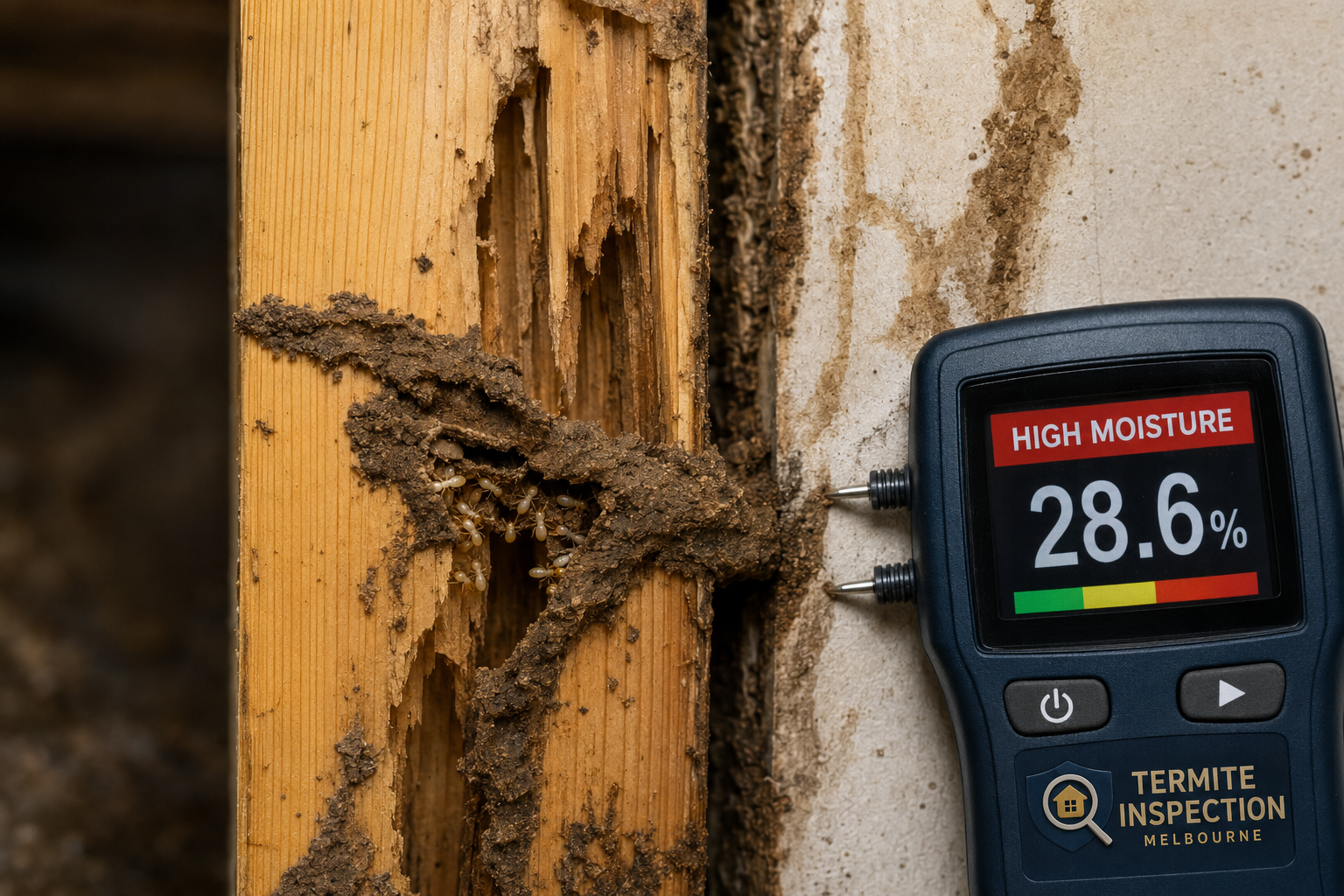
Supporting Physical Barriers & Inspection Zones
Physical barriers, graded particles, mesh and service-penetration systems are most commonly installed during construction or accessible renovation stages. They are intended to block concealed entry or force termite movement into an inspectable zone. They do not poison the surrounding colony and do not replace annual inspection.
Later paving, render, insulation, garden soil, plumbing or renovations can conceal the inspection edge or bridge the system. Existing homes may need a combined plan: retain and document serviceable physical components, restore visible inspection zones, control active termites and install chemical, reticulation or baiting protection where the original system does not provide complete coverage.
Clear engineering before a major treatment investment
Why Melbourne Property Owners Choose TIM’s Pest Control
Searches for termite treatment Melbourne, termite treatment cost Melbourne, local termite control and white ant treatment can return national call centres, referral directories and providers quoting incomparable scopes. TIM's Pest Control provides visible planning prices and a direct local booking pathway. Customers can choose a property band, add a treatment upgrade and see GST before requesting the physical assessment.
Our audit-first method avoids prescribing a barrier before the building has been measured. Thermal cameras, moisture meters and radar can focus investigation; safe access, species knowledge and physical evidence remain the foundation. The written proposal then separates active-colony treatment, long-term protection, building repairs and moisture corrections so the customer understands which trade is responsible for each outcome.
Same day termite quote availability depends on postcode, property size, safe access and technician routing. Call early and explain whether you have visible activity, weakened timber, a recent treatment, an existing reticulation system or an annual warranty deadline. Urgent enquiries are triaged, but no arrival time, price or eradication timeframe is final until evidence and site conditions are confirmed.
Direct answers before you book
Termite Treatment Melbourne FAQs
Detailed answers about termite treatment cost Melbourne, barrier longevity, reticulation, baiting station termite control, concrete drilling, household safety, documentation and written warranty conditions.
How much does termite treatment cost in Melbourne?
The indicative termite treatment cost Melbourne figures displayed here are $1,850 plus GST for a small property, $2,450 plus GST for a medium standard house and $3,450 plus GST for a large property. Inclusive planning totals are $2,035, $2,695 and $3,795. A physical site assessment is essential because perimeter metres, soil type, concrete, active-colony work, drainage, construction and access determine the final specification. You receive the exact inclusive price and scope before treatment begins.
How long do professional termite treatments last in Melbourne soils?
The useful life of a chemical zone depends on the registered product, application rate, soil composition, drainage, construction, exposure and later disturbance. Some eligible professional systems may offer multi-year protection or an up to eight-year product warranty, but only the written proposal and warranty govern the actual term. Excavation, new paving, plumbing, landscaping and missed inspections can compromise protection. Annual inspection remains necessary even while a warranty is active.
What is the difference between a chemical barrier and a termite reticulation system?
Chemical termite barrier installation forms a treated soil zone around relevant entry interfaces by trenching, rodding and drill-and-inject application. A termite reticulation system uses a purpose-designed network of delivery lines to distribute and later replenish an approved termiticide. Reticulation can reduce repeated excavation at suitable sites, but it is not automatically the right choice for every existing building. Access, slab design, perimeter surfaces, product registration, refill interval and future maintenance must be documented.
Are termite treatments safe for household pets and children?
A licensed technician selects and applies registered products according to the label, Safety Data Sheet and property conditions. Before the appointment, disclose children, pregnancy, asthma, pets, birds, reptiles, aquariums, edible gardens and other sensitivities. Follow every preparation, exclusion, ventilation and re-entry instruction. No pesticide is described as completely harmless. Professional risk control comes from accurate placement, correct dose, secure stations and preventing access until the advised re-entry time.
Will drilling through concrete damage my driveway or patio?
Drill-and-inject treatment uses planned holes through concrete adjoining the building so the soil below can be treated continuously. The technician checks likely service routes, controls drill depth, contains dust and seals completed holes. Small plugs may remain visible, especially in aged, coloured, tiled or decorative surfaces. Before approval, the treatment drawing should show proposed drill lines, spacing, sensitive finishes and any areas requiring a different method.
How fast does subterranean termite eradication work?
Timelines vary. Direct foam or dust can affect accessible activity quickly, while non-repellent transfer and baiting rely on termite movement and feeding and may take days or weeks to produce colony-level decline. Immediate visible knockdown is not the same as whole-colony management. Do not disturb workings before assessment. The technician sets monitoring checkpoints and confirms whether activity has ceased before relying on the long-term management zone.
Are bait stations better than a Termidor chemical barrier?
Neither pathway is universally better. A complete non-repellent liquid soil zone can provide broad entry protection where soil and concrete interfaces are accessible. Monitored baiting can suit complex sites, environmentally sensitive decisions or buildings where continuous trenching and drilling are impractical. Some properties use both. Brand, active constituent, station layout, monitoring schedule and warranty must match the site and current Australian registration; the proposal should explain why the selected method is appropriate.
What does AS3650 compliant termite management mean?
Customers often search for AS3650 compliant termite management, but the applicable termite-management series is AS 3660. AS 3660.1 relates to new-building work, while AS 3660.2 addresses management in and around existing buildings. TIM’s Pest Control references the applicable AS 3660 framework, the registered product label and the actual construction. An accurate scope should never cite the wrong number simply because it appears in a search phrase.
Do you provide formal treatment documentation for council or insurance?
Where the approved service requires it, documentation can record the inspection basis, product and active constituent, application zones, installation date, site plan, limitations, safety requirements, monitoring schedule and warranty conditions. This is evidence of completed work, not an unconditional guarantee that inaccessible termites can never enter. Council, surveyor, insurer, builder and conveyancer requirements differ, so provide any requested form or wording before treatment is quoted.
What is included in an up to eight-year termite warranty?
Coverage depends on the selected product, construction and written plan. An up to eight-year warranty is available only for an expressly qualifying installation and may require annual inspections, moisture correction, accessible inspection zones and notification before renovations or excavation. It may exclude pre-existing damage, inaccessible areas and treatment-zone disturbance. The signed warranty—not page advertising—defines duration, re-treatment obligations, limitations and any structural component.
Sunday priority treatment assessments may still be available
Stop Active Termites Before More Structural Timber Is Lost
Call 0466 929 533 for priority on-site termite treatment assessment across Melbourne, subject to technician availability. Ask about the $250 seasonal discount for eligible complete barrier installations. We confirm access, treatment zones, products, warranty conditions and the final GST-inclusive price before any high-value work begins.