Commercial Partnership Offer — Book an eligible on-site commercial pest audit this week & receive a tailored IPM proposal + 20% OFF the first month of service — offer ends 15th September 2026 · Call 0466 929 533
Serving Melbourne from Clyde North Same-Day Options Subject to Availability
Call 0466 929 533
☰ Explore Services & Menu
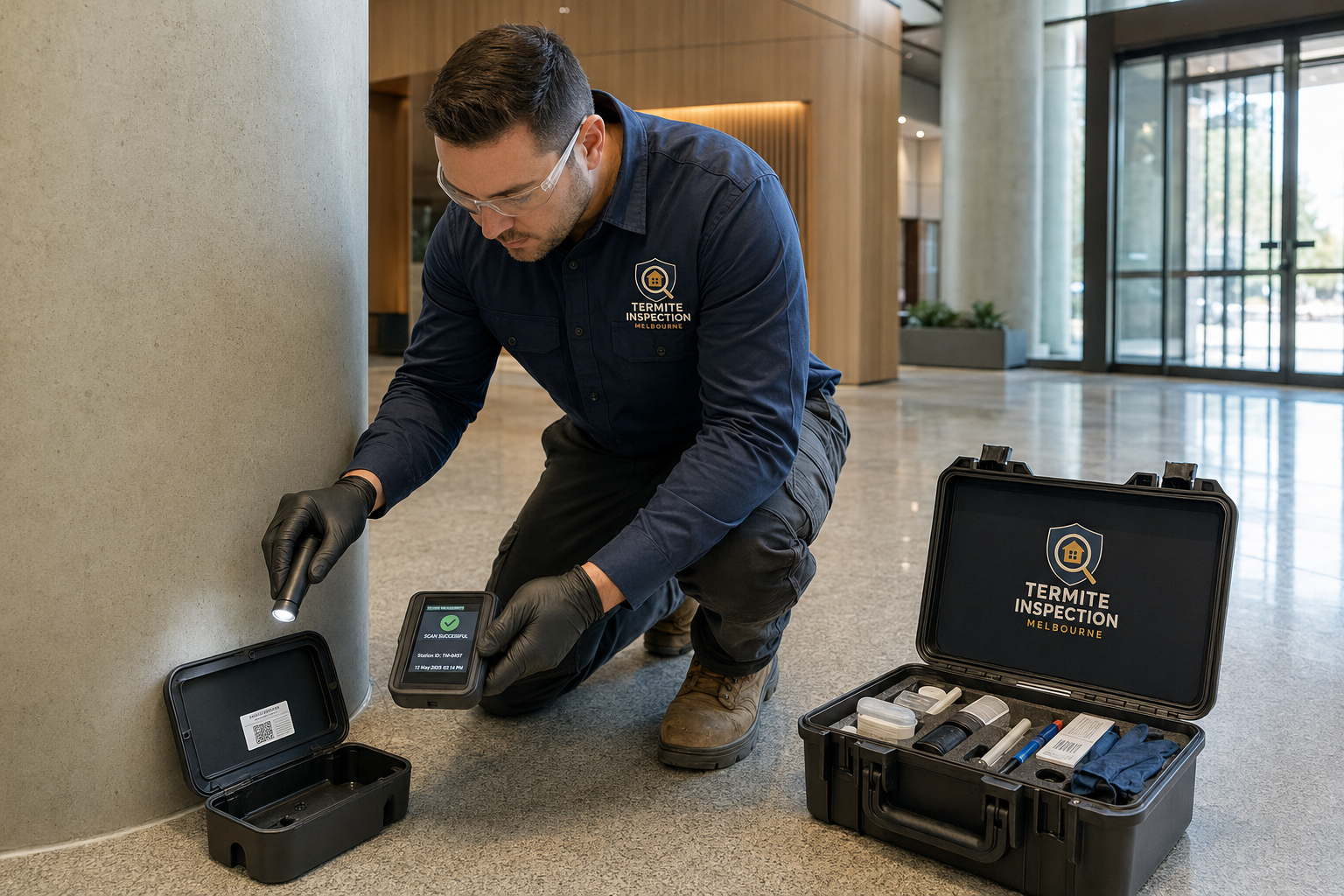
Professional commercial pest-control technician servicing a Melbourne business facility
Enterprise IPM, compliance reporting and discreet commercial response across Melbourne

Commercial Pest Control Melbourne | Enterprise Timber & Pest Management

Protect your facility, inventory, staff and reputation with a commercial pest management program engineered around your site. TIM's Pest Control combines risk-based inspections, monitored devices, targeted treatments, proofing priorities, trend analysis and digital service records for warehouses, offices, hospitality, retail, strata and industrial premises.

Our Integrated Pest Management approach supports food-safety, workplace and facility audit preparation without pretending one treatment creates compliance. Programs are designed around operational hours, sensitive zones, pest pressure and documented corrective action, with separately scoped AS 3660-aligned termite management when structural timber protection is required.

Commercial public-liability documentation available
Licensed, insured & police-checked technicians
HACCP-supporting digital service records
After-hours scheduling subject to availability
Site-Specific IPMBuilt around risk and operations
Digital Audit RecordsClear findings and actions
Discreet SchedulingLow-disruption service windows
Melbourne CoverageSingle and multi-site programs
Transparent ScopeInclusions confirmed in writing
Operational, audit and reputation risk

Why Commercial Properties Cannot Afford Pest-Control Audit Failures

A commercial pest problem is rarely limited to the insect or rodent that was seen. One cockroach in a customer area can indicate harbourage inside equipment, service voids or adjoining tenancies. A rodent dropping near stock can trigger quarantine, cleaning, disposal and investigation. Flies in a food facility may point to drainage or waste failures. Termite activity can threaten framing, records, fit-out and expensive repairs while remaining concealed. The business impact can include product loss, interrupted production, complaints, failed customer audits and damage to brand confidence.

Regulators, auditors, landlords, insurers and major clients may expect evidence that pest risk is actively managed. A receipt saying “sprayed premises” is not a complete IPM record. Facility teams need a defined service scope, site map, device register, findings, product information, trend history, corrective actions, completion responsibility and escalation path. If a problem returns, those records show whether the source was building access, sanitation, supplier activity, drainage, neighbouring property or a treatment gap.

Food businesses face particular scrutiny because pests can contaminate food, packaging and contact surfaces. Pest records can support a HACCP-based food-safety plan, but pest technicians do not certify the entire facility as HACCP compliant. The operator remains responsible for food safety, cleaning, stock rotation, waste, building maintenance and corrective actions. Our role is to make the pest-management component clear, traceable and useful during reviews.

Delaying response often increases cost. A small rodent ingress point can become a repeated trap-and-remove cycle if proofing is ignored. A few German cockroaches can spread through warm equipment and service channels. Stored-product insects may move with raw materials. Birds can foul loading areas and roof assets. Early inspection preserves evidence, identifies the likely source and allows the least-disruptive effective response.

Immediate commercial action: isolate affected stock where your procedure requires it, preserve pest evidence, record the exact location and time, avoid unapproved sprays near food or sensitive equipment, and contact the facility decision-maker and pest provider. Urgent safety, food or structural issues may also require the relevant regulator, contractor or building professional.
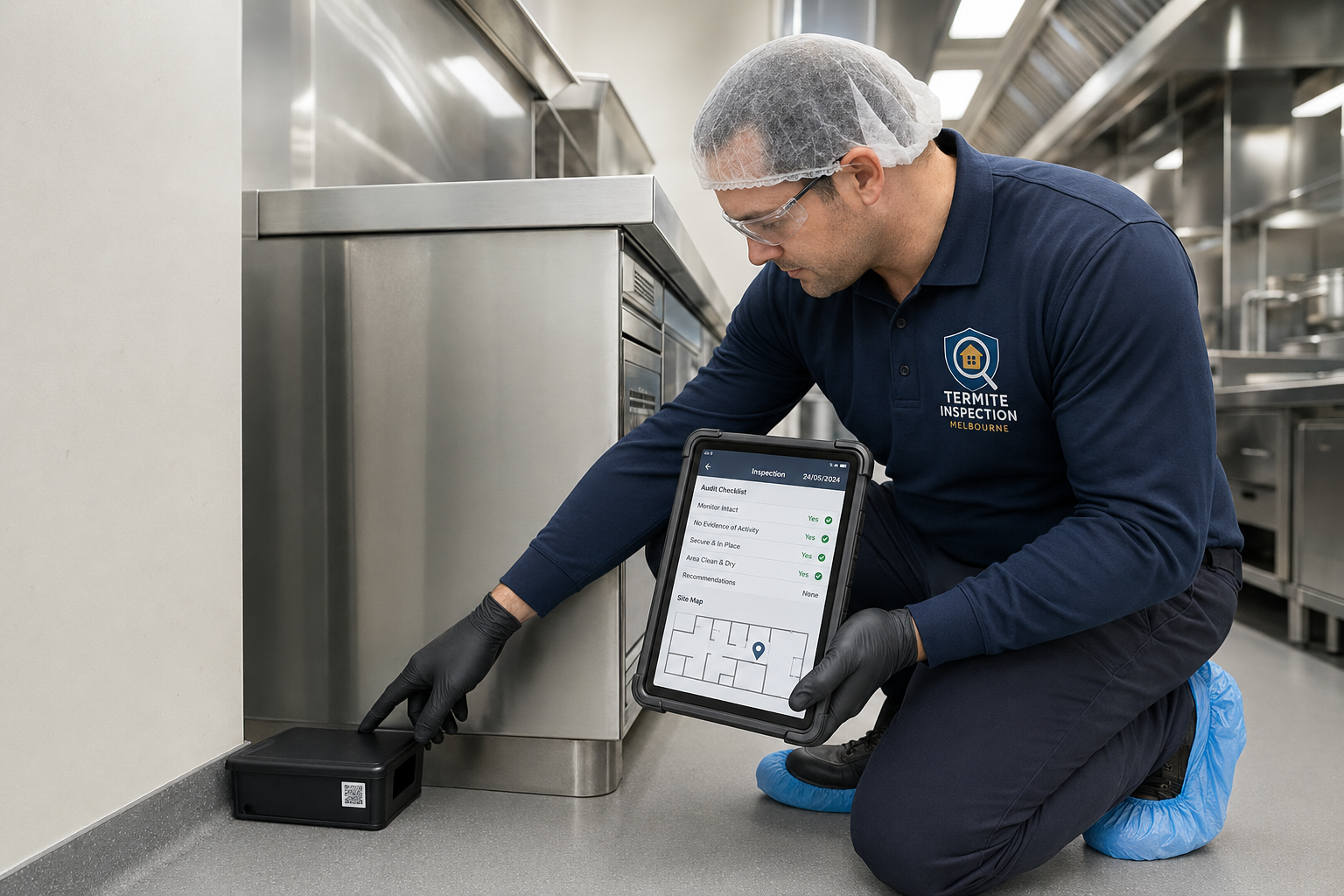
Commercial pest-control risk assessment at a Melbourne public and business facility
Programs matched to commercial operations

Commercial Pest-Control Sectors We Service Across Melbourne

Every facility has different pest pathways, evidence requirements and service windows. The following programs establish a starting framework before the on-site audit confirms the exact scope.

Warehouses & Logistics Hubs

Warehouse pest management services address loading docks, roller doors, pallet racking, battery rooms, drains, perimeter vegetation, waste areas and stock movement. External rodent stations, internal monitoring, insect light-trap review, stored-product pest checks and structural observations are mapped to operational zones. Device placement must protect product and avoid forklift or cleaning conflicts. High-risk findings are escalated with practical proofing and stock-handling actions rather than treated as a permanent trapping problem.

Hospitality, Cafés & Restaurants

Restaurant and café programs focus on German cockroaches, rodents, drain flies, fruit flies, ants and stored-product pests around kitchens, bars, cool rooms, grease systems, deliveries and waste. Service is coordinated with cleaning and food handling, and products are selected for the actual environment. Reports can support HACCP-based procedures by documenting observations, device activity and corrective actions, while the operator retains responsibility for food-safety compliance.

Office Complexes & Corporate Parks

Office pest control combines discreet monitoring with targeted response around kitchens, break rooms, basements, plant rooms, loading areas, landscaped perimeters and ceiling services. Ants, rodents, cockroaches, spiders, wasps and occasional stored-food pests are common concerns. Programs minimise interruption, protect staff privacy and create a simple process for logging sightings so isolated reports can be separated from repeating building pathways.

Retail Stores & Shopping Precincts

Retail pest control must account for public trading, stock rooms, food tenancies, shared malls, waste docks and adjoining businesses. One tenant may have limited control over common risers, roof spaces or drainage. Our inspection identifies what sits within the tenancy scope and what requires centre management or landlord action. Low-visibility devices and after-hours access can be planned to protect presentation without hiding unresolved risk.

Body Corporate & Strata Properties

Body corporate pest inspection programs define common property, private lots, basements, gardens, bin rooms, roof areas and service penetrations. Managers receive documentation that separates building defects from tenant conditions and routine service from specialist work. Multi-unit termite inspections, rodent monitoring, cockroach response and wasp or bird concerns can be coordinated through approved access and communication protocols.

Manufacturing & Industrial Sites

Industrial pest management Melbourne facilities may involve production lines, raw materials, plant rooms, chemical stores, wash-down areas, drains, compressed-air services and restricted zones. The audit identifies hazards, permits, hygiene boundaries and shutdown windows before devices or treatments are specified. Trend review and corrective actions are essential because repeated pesticide application cannot compensate for open doors, structural gaps, uncontrolled waste or contaminated incoming goods.

Health, Care & Sensitive Environments

Clinics, allied-health offices, aged-care common areas and similar premises require careful communication, sensitive product selection and controlled access. Pest evidence, occupant vulnerability, medical equipment, food preparation and ventilation are considered before treatment. We do not apply a general spray merely because a site is due for service; monitoring, exclusion and targeted methods often provide a better fit.

Real Estate & Multi-Site Portfolios

Property managers and corporate portfolios need consistent scope without losing site-specific detail. We establish contacts, approved authorities, response priorities, tenant communication and reporting expectations. Portfolio summaries can identify recurring pest categories and overdue building actions, while individual reports preserve the evidence and access limitations of each property.

Threat-specific commercial controls

The Commercial Pests an Enterprise IPM Program Must Address

Rodents and Mice

Rats and mice exploit doors, wall penetrations, drains, rooflines, vegetation and goods movement. A commercial rodent program maps exterior pressure, internal evidence and food or water sources. Locked stations, traps and non-toxic monitors are selected for the risk zone, then activity is trended. Proofing recommendations specify the gap and responsibility because bait alone does not close an entry route.

Cockroaches

German cockroaches favour warm equipment, motors, cabinetry and service voids; larger species can enter through drains, loading areas and external services. Inspection, monitors, targeted gel, dust or approved residual treatment may be combined. Aerosol fogging without source control can scatter activity and create contamination concerns, so method selection must match the species and facility.

Flies and Drain-Associated Pests

Flying-insect pressure may originate from doors, waste, drains, organic residues, external breeding or incoming produce. Light traps provide useful monitoring only when correctly positioned, maintained and interpreted. Drain cleaning, waste timing, door management and source removal are often more important than repeated knockdown applications.

Stored-Product Insects

Beetles, moths and weevils can arrive in raw ingredients, pet food, grain, packaging or stock. The investigation traces product, batch, storage and spill zones. Affected goods may require segregation or disposal under the client’s procedure. Cleaning, stock rotation and supplier review are central; treating a room without identifying the commodity source is rarely sufficient.

Ants, Spiders and Occasional Invaders

Ant trails, exterior spiders and seasonal invaders often expose landscaping, lighting, moisture and structural access issues. Species and pathway determine whether baiting, targeted residual treatment, web removal or exclusion is appropriate. Treatments are prioritised around risk and customer areas rather than broad routine spraying of every surface.

Birds, Wasps and Roofline Activity

Bird fouling, nesting and wasp activity can affect roofs, loading areas, signage, solar panels and outdoor dining. Nest removal, exclusion mesh, spikes or netting are specialist scopes requiring access and animal-welfare considerations. These works are quoted separately after the location, species, height and building interface are assessed.

Commercial pest-control inspection and monitoring at a Melbourne warehouse or industrial facility
Industrial and warehouse inspection

Building a Facility Map Before Placing Devices or Applying Treatment

A commercial inspection begins with flow. We review how people, stock, waste, water and vehicles enter and leave. Loading doors, dock levellers, roller-door seals, roof penetrations, drains, fence lines, landscaping, utility corridors, staff kitchens and storage practices all influence pest movement. Existing devices are checked for identification, condition, access and whether their placement still matches risk.

Inside warehouses, monitors should not be placed simply at equal distances. High-value positions include transition points, quiet edges, wall penetrations, warm plant, food or packaging zones and known ingress. Outside, rodent stations require secure placement and a service route that does not interfere with traffic or present avoidable risk. Device numbers, type and service frequency are justified by the facility rather than sold as a generic package.

The audit also records constraints: high racking, inaccessible roof space, hazardous plant, security zones, wash-down timing, forklifts, temperature-controlled rooms and landlord-controlled areas. These limitations influence what can be inspected and treated. Where a building repair, drainage contractor, cleaner, waste provider or tenant must act, the report identifies the recommendation without representing it as completed pest work.

Enterprise principle: a pest program is strongest when site management closes the corrective-action loop. Monitoring can identify a repeating door or waste issue, but only the responsible facility action removes that operational cause.
Compare program depth, not only callout price

Commercial Pest Management Service Comparison

The table separates an enterprise IPM program from residential-style treatment, unmanaged DIY products and basic reactive extermination.

Service modelRisk assessment and IPMAudit documentationScheduled monitoringAccount coordinationCommercial liability evidence
TIM's Enterprise IPM ProgramSite-specific inspection, prevention, monitoring, treatment and corrective actionsDigital service records, device information, findings and recommendationsFrequency matched to pest pressure and contractDefined contacts, escalation and multi-site optionsCurrent certificates available for verification
Standard Residential TreatmentDesigned for household areas and domestic riskResidential service record, not a facility audit systemOften one-off or seasonalNo enterprise reporting structureMay not match contract requirements
DIY Store ProductsNo independent facility assessmentNo professional findings, trend or corrective-action recordUnstructured applicationInternal responsibility onlyProduct user carries application responsibility
Basic Reactive ExterminatorResponds to visible pest, source analysis variesMay provide invoice onlyCallout after complaintsLimited continuityMust be checked before engagement
A controlled commercial execution framework

Our Proven 4-Step Commercial IPM Process

1

Facility Audit & Risk Assessment

We confirm business type, layout, operating hours, pest history, sensitive areas, food or stock risk, access, waste, deliveries, existing devices and required reporting. Visible entry points, harbourage, moisture and structural vulnerabilities are mapped. The audit establishes what is included, what is inaccessible and which responsibilities sit with the client, landlord or another contractor.

2

Tailored IPM Program Design

The proposal defines target pests, zones, device types, frequency, response process, preparation, reporting and separately quoted work. Preventative actions and thresholds are prioritised before routine chemical use. Food-safety or audit documentation is aligned with the client’s own system without falsely promising external certification.

3

Discreet Execution & Implementation

Devices are identified and placed according to the approved plan. Treatments follow product labels and site controls. Where agreed, visits are scheduled during low-traffic or after-hours windows to reduce interruption. Technicians communicate urgent findings and preserve evidence required for source tracing, stock decisions or structural assessment.

4

Digital Reporting & Continuous Review

Each service records activity, findings, products, corrective actions and next due dates. Trend review checks whether risk is improving or shifting. Facility managers can use the records for internal review and audit preparation, while unresolved maintenance or sanitation actions remain visible until the responsible party confirms completion.

Transparent enterprise starting points

Commercial Pest Control Melbourne Pricing & Service Tiers

Monthly prices are indicative starting rates before GST. Final frequency, inclusions, device quantities and response terms are confirmed after the physical facility audit.

Small Retail / Office

Low-complexity single site
$150
From $165 incl. GST / month
+$15 GST · monthly equivalent
  • Routine bi-monthly service schedule
  • Digital service logbook records
  • Rodent monitoring stations as scoped
  • General pest inspection and targeted treatment
Optional specialist services

Warehouse & Industrial

Large or operationally complex facility
Custom Facility Quote
Scope based on risk, area and access
GST-inclusive proposal supplied
  • Perimeter and loading-zone protection
  • Heavy-duty rodent monitoring network
  • Stored-product and flying-insect review
  • Optional annual timber-pest audit

Enterprise Multi-Site / Strata

Portfolio-wide management contract
Custom Contract
Single or consolidated reporting
Site-specific GST-inclusive proposal
  • Portfolio onboarding and site scopes
  • Defined contacts and escalation process
  • Common-property and tenancy coordination
  • Management reporting and service calendar

Commercial pricing note: Prices shown before GST. Custom commercial proposals are tailored following physical facility inspection. “From” rates assume a low-complexity scope and do not guarantee every pest, device, callout or specialist treatment is included. The 20% first-month partnership offer applies only to eligible new recurring agreements under current written promotional terms. Emergency attendance, termite work, major proofing, bird systems, fumigation and access equipment are quoted separately unless expressly included.

Audit-ready evidence without overclaiming

Commercial Compliance Documentation and Digital Pest Records

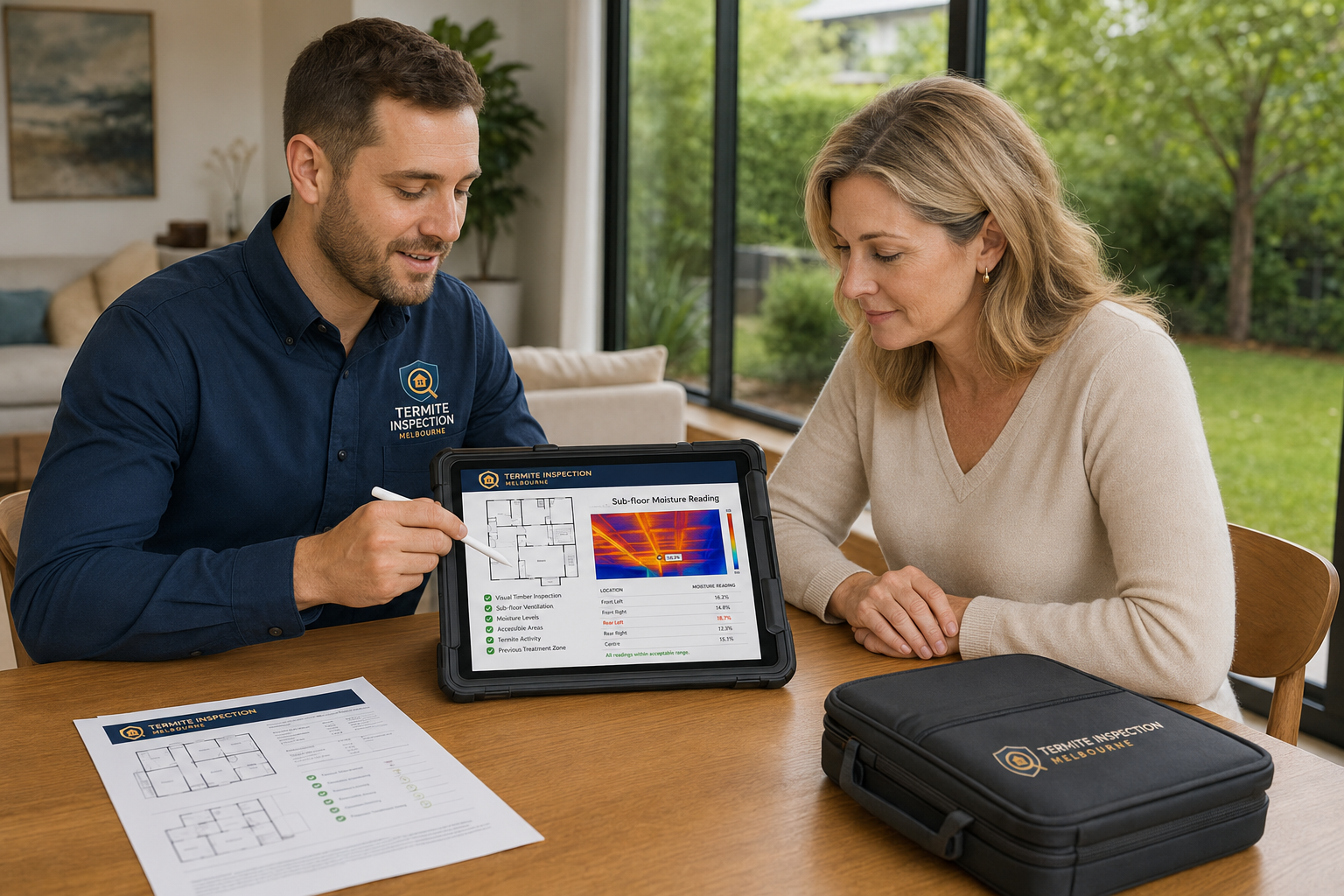
Useful commercial records answer five questions: what was inspected, what evidence was found, what action was completed, what remains outstanding and when the next review is due. Our reporting can include the service date, technician, facility zones, device activity, products, photographs, pest sightings, risk observations and corrective actions. Site maps and registers are agreed according to program complexity.

Businesses searching for HACCP compliant pest control generally need a pest-management component that supports their own documented food-safety program. For food businesses, our records can be organised around HACCP-based plans and council or customer audits. This does not mean the pest provider certifies the facility or controls every food-safety requirement. Cleaning verification, temperature control, supplier approval, stock rotation, allergen management and staff practices remain within the operator’s system.

For offices, retail, strata and industrial sites, documentation helps managers communicate with landlords, tenants, cleaners and maintenance contractors. A report can identify a damaged door seal, leaking service, waste issue or open penetration, but the record is not the repair. The responsible party should close the action and retain evidence. Follow-up then checks whether pest activity changed.

Product and safety records are supplied as relevant to the work performed. Clients should advise us of sensitive occupants, production restrictions, site induction, permit and contractor-management requirements before service. Digital reporting improves traceability, but the approved contract and site procedures remain the controlling documents.

Digital commercial pest-control inspection report and audit documentation for a Melbourne facility
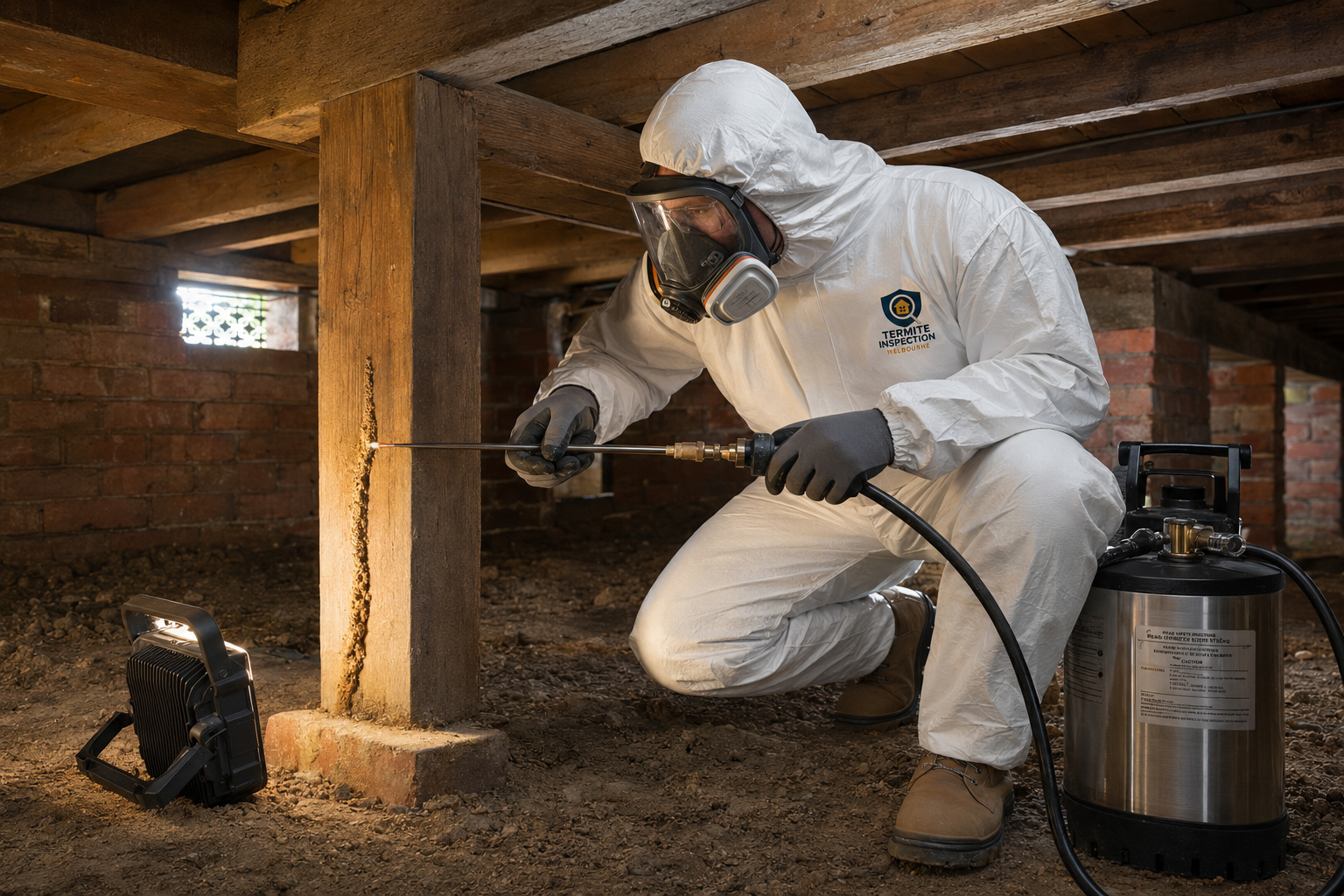
Commercial termite treatment and timber-pest protection in Melbourne
High-value structural asset protection

Commercial Termite Treatment and Timber-Pest Protection

Commercial termite risk can affect warehouses, offices, retail centres, childcare and community facilities, strata common property and older mixed-construction buildings. Concealed subterranean activity may damage framing, fit-out, stored records, doors, flooring and service areas. The operational cost can exceed repair cost when affected zones must be isolated or tenants relocated.

A commercial termite inspection defines the accessible building scope, construction, previous systems, moisture, perimeter access and visible evidence. Thermal imaging, moisture measurement, sounding and other tools may support the inspection, but no device independently certifies concealed spaces as clear. Suspected structural damage requires appropriate building or engineering assessment.

Where active termites are confirmed, treatment is designed separately from the routine general-pest contract. Options may include targeted colony-management measures, baiting, non-repellent treatments, chemical soil zones or monitoring, depending on species, access and construction. Occupants should not spray or break workings before assessment because disturbance can destroy evidence and change activity.

The applicable Australian termite-management framework is the AS 3660 series, not “AS 3650.” The correct part and documentation depend on the building and work. AEPMA certified commercial technicians and timber-pest specialists should be supported by current credential, licence and insurance evidence; customers can request those records before high-value work proceeds.

Perimeter defence and serviceable infrastructure

Commercial Termite Barriers, Reticulation and Ongoing System Management

Large facilities often combine soil, concrete, loading aprons, internal service penetrations and landscaped perimeter zones. A continuous termite-management design may therefore require more than one access method. Chemical soil treatment can involve trenching beside footings and drill-and-inject work through concrete. Reticulation uses an installed pipe network that can distribute registered termiticide during future recharge without repeating all original excavation.

Reticulation is not a set-and-forget lifetime chemical. The pipe infrastructure may remain, but the chemical protection has a registered life and requires inspection and recharge according to the product, installation and site conditions. Ports, zones and application records should be mapped so future contractors understand what was installed. Paving, drainage, renovations and new penetrations can affect the system and must be reviewed.

Physical barriers and graded-particle or sheet systems are generally installed at construction or during suitable structural work. They are designed to manage concealed entry and facilitate detection; they do not make inspection unnecessary. Existing commercial buildings may need a combination of inspection zones, chemical treatment, monitoring and building correction rather than a single universal product.

Barrier, reticulation and baiting projects are quoted after measuring lineal metres, concrete, soil, access, drainage, product compatibility and safety requirements. The commercial IPM page shows recurring general-pest starting prices, not a concealed fixed price for structural termite work.

Documentation matters: retain system plans, product details, application volumes, service dates, warranties and inspection records with the property asset file. Missing system history increases uncertainty and may require further investigation before recharge.
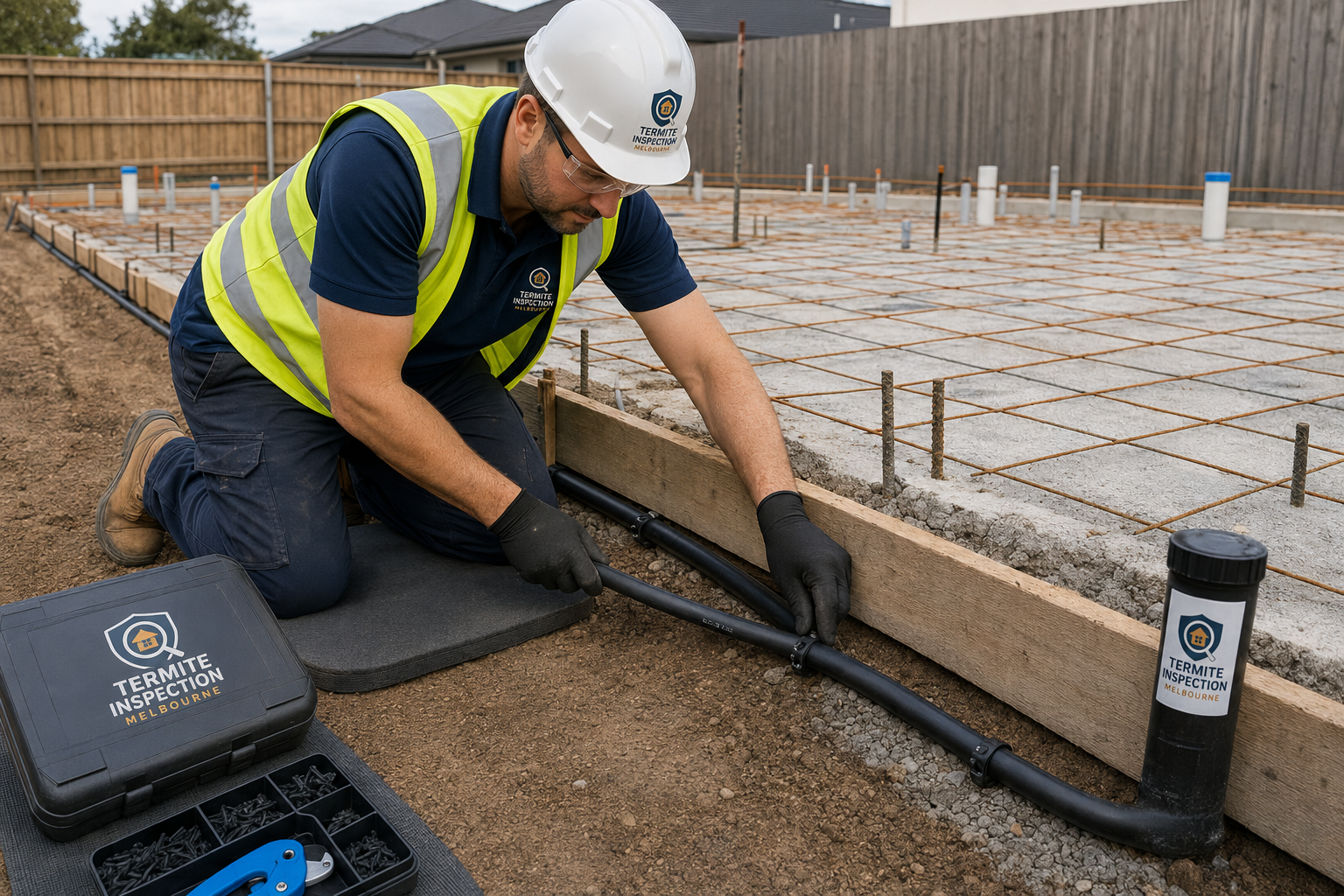
Commercial termite reticulation system installation Melbourne
Commercial coverage from Clyde North

Commercial Pest Control Across Melbourne Service Areas

Routes and program design account for local industry, building type, transport, operating hours and shared property responsibilities.

South East Melbourne & Clyde North

Operating from 38 Graziers Crescent, Clyde North, our commercial pest control Melbourne routes cover Cranbourne, Berwick, Narre Warren, Officer, Pakenham, Dandenong, Hallam, Keysborough and Frankston. The corridor includes food manufacturing, bulky-goods retail, medical suites, logistics depots, offices and fast-growing industrial estates. Programs account for loading docks, shared tenancy walls, stormwater, landscaping, waste compounds and after-hours access. A Clyde North pest control account can combine scheduled monitoring with rapid response and separately scoped termite or bird-proofing work.

Eastern Melbourne

Ringwood, Bayswater, Scoresby, Croydon, Doncaster, Box Hill and Glen Waverley combine retail centres, offices, hospitality strips, warehouses and older commercial buildings. Mature vegetation, sloping sites, mixed construction and service alleys create varied pest pathways. We map deliveries, waste, roof spaces, subfloors and tenancy interfaces, then schedule monitoring around operating hours. Property managers receive clear records distinguishing pest activity, maintenance defects, tenant housekeeping and building-level corrective work.

Northern Melbourne

The northern industrial and commercial belt around Campbellfield, Thomastown, Epping, Preston, Reservoir, Coburg and Brunswick includes manufacturing, food handling, warehousing, offices and dense mixed-use premises. Rodents can travel along drainage, fence lines and adjoining tenancies, while cockroaches exploit warm plant rooms and service penetrations. Industrial pest management Melbourne programs use risk-based device placement, delivery-area checks, trend review and practical proofing priorities rather than relying on repeated blanket spraying.

Western Melbourne

Truganina, Laverton North, Derrimut, Sunshine, Werribee, Point Cook and surrounding areas contain major freight, cold-storage, logistics and manufacturing facilities. Large perimeters, pallet movement, container arrivals, open docks and drainage networks require scalable monitoring and clear escalation. Warehouse pest management services may combine external rodent defence, internal non-toxic monitoring, flying-insect review, stored-product pest inspection and annual structural timber-pest assessment according to the approved facility scope.

Melbourne CBD & Inner Suburbs

CBD towers, restaurants, hotels, retail arcades, offices and body corporate properties often involve common risers, basements, loading bays, grease systems, shared waste rooms and restricted access. A single tenancy cannot control every building pathway, so responsibilities must be defined with owners corporations, building management and contractors. Discreet service windows, device registers and concise digital reporting help minimise disruption while keeping unresolved common-property issues visible.

Mornington Peninsula

Mornington, Frankston South, Mount Eliza, Rosebud, Dromana and surrounding Peninsula locations include hospitality venues, wineries, accommodation, retail, health services and light industrial premises. Seasonal visitor demand, outdoor dining, coastal moisture and landscaped grounds change pest pressure through the year. Programs can increase monitoring around peak trading, coordinate service with kitchen cleaning and deliveries, and address rodents, flies, ants, wasps, birds and timber-pest risks without applying a city warehouse template to a coastal venue.

From first call to stable monitoring

Commercial Onboarding, Response and Review Timeline

Initial Enquiry and Triage

We record facility type, suburb, contact authority, pest concern, operational impact, sensitive zones and access. Urgent requests are prioritised according to evidence and availability. The caller receives immediate containment guidance where appropriate, but unapproved chemical advice is not substituted for site assessment.

Facility Audit and Proposal

The audit maps risk, current devices, sanitation, waste, structural access and reporting needs. A proposal then confirms frequency, target pests, inclusions, exclusions, response process, price, GST and promotional eligibility. Specialist termite, bird, fumigation or major proofing work remains separate unless written into the scope.

Program Installation

Devices are labelled and positioned, initial treatment is completed where authorised, and facility contacts receive preparation and communication instructions. Baseline activity is documented so later trends can be compared. High-priority building or hygiene actions are escalated rather than buried in a generic report.

Routine Service Visits

Technicians inspect agreed zones, check devices, respond to recorded sightings, complete targeted work and update findings. A quiet device is still reviewed for condition and relevance. A repeating hotspot triggers source analysis, not automatic repetition of the same method.

Corrective-Action Follow-Up

Facility actions such as proofing, cleaning, drainage, stock disposal or waste changes are tracked according to the reporting arrangement. The pest provider verifies visible outcomes during service but does not certify repairs outside its competence. Unresolved items remain visible for management action.

Quarterly or Contract Review

Trend summaries compare activity by pest, zone and time. Device placement, frequency and thresholds can be adjusted as operations change. Multi-site managers can use the review to identify portfolio patterns, while each property retains its own evidence and limitations.

Records facility managers can use

Twelve Components of a Strong Commercial Pest Logbook

The exact format varies by contract, but a mature program should make pest decisions traceable rather than dependent on memory.

1. Defined Scope

Lists buildings, floors, tenancies, common areas, target pests, frequency and exclusions so a service visit is not mistaken for whole-site coverage.

2. Site and Device Map

Shows agreed monitor and station locations, identifiers and zone context. Maps are updated when layouts or risk change.

3. Pest-Sighting Register

Captures date, time, exact location, pest description, reporter and action. Specific records are more useful than “pest seen somewhere.”

4. Service Reports

Record inspected areas, findings, device status, treatment, limitations, recommendations and the next due date.

5. Product Records

Identify products used, relevant quantities or application details and safety information as required for the service and client system.

6. Trend Analysis

Compares activity over time by zone and pest so a hotspot or seasonal pattern can be recognised before complaints escalate.

7. Corrective Actions

Assigns proofing, cleaning, waste, drainage, stock or contractor recommendations to a responsible party with a target date.

8. Completion Evidence

Records when responsible parties report an action completed and allows the next pest visit to assess the visible outcome.

9. Escalation Rules

Defines who is contacted for food contamination, structural pests, multiple captures, customer-facing activity or after-hours emergencies.

10. Access Limitations

Lists locked, obstructed, hazardous or excluded zones. Uninspected areas should not be silently described as pest-free.

11. Contractor Credentials

Keeps current licensing, insurance and relevant professional evidence available for procurement and audit checks.

12. Review and Renewal

Documents performance review, scope changes, pricing updates and renewal dates so the program remains aligned with operations.

People, products and operations

Commercial Treatment Safety and Business Continuity

Product selection begins with the site, not a preferred spray. Food, packaging, staff, customers, children, animals, medical sensitivity, ventilation, water, drains and equipment all affect method. Inspection, monitoring, exclusion, cleaning and targeted baiting can reduce the need for broad surface treatment. Where pesticide use is justified, label directions and site controls govern preparation, application and re-entry.

After-hours work can reduce contact and disruption but does not remove the need for communication. A responsible contact must arrange access, alarms, permits, shutdowns and affected-area controls. Cleaning teams need to know which devices should remain undisturbed. Food operators must protect exposed ingredients and contact surfaces according to the agreed preparation.

“Zero downtime” is a planning objective, not an absolute promise for every infestation. Severe contamination, active termites, unsafe structures, extensive bird fouling or legally controlled products may require isolation, specialist cleaning, stock decisions or temporary closure. We explain likely operational impact before approved work wherever the evidence allows.

Procurement and governance

What to Verify Before Appointing a Commercial Pest Provider

Request the current business and technician licences relevant to the proposed work, public-liability insurance evidence, safety documentation, product information and reporting examples. If AEPMA membership or certification is part of procurement, verify the current credential rather than relying on a logo or search phrase. High-value termite work may require additional timber-pest competence and product accreditation.

Review the contract for included pests, callouts, device ownership, replacement, access equipment, after-hours fees, response targets, exclusions, renewal and termination. Confirm who owns the service data and how reports are supplied. A low monthly figure can be misleading if critical pests, emergency visits or device quantities are excluded.

Any advertised $10 million commercial public-liability cover is subject to the current certificate, policy terms, exclusions and work category. Customers can request current evidence before engagement. Insurance does not replace safe method selection or the client’s own duty to maintain a safe workplace and compliant operation.


TIM's Pest Control commercial team serving Melbourne
Local accountability with enterprise discipline

Why Melbourne Businesses Choose TIM's Pest Control

Commercial clients need a provider that communicates clearly when no pests are found, when evidence is inconclusive and when the building or operating process must change. We focus on traceable findings, targeted work and practical corrective actions rather than using fear to sell unnecessary treatment.

From our Clyde North base, we service Melbourne Metropolitan Area, South East Melbourne, Eastern Melbourne, Northern Melbourne, Western Melbourne and the Mornington Peninsula. Businesses searching for commercial pest control near me, office pest control near me or industrial pest control services near me can request a route assessment and same day commercial quote where availability permits.

Customers may request current evidence supporting licensed, insured and AEPMA certified commercial technicians, police checks and public-liability statements before contract approval. The exact credentials, insurance and product accreditations must match the work being proposed.

  • Site-specific IPM proposal and transparent exclusions
  • Commercial, hospitality, warehouse and strata experience
  • Digital records designed for management review
  • Discreet servicing and escalation planning
  • General pest, rodent, bird and timber-pest pathways
Detailed B2B answers

Commercial Pest Control Melbourne FAQs

What industries do you service across Melbourne?

TIM’s Pest Control provides commercial pest control Melbourne businesses can tailor for warehouses, logistics facilities, manufacturing sites, offices, retail stores, restaurants, cafés, body corporate and strata properties, real-estate portfolios, schools and selected public facilities. The service schedule, monitoring equipment, treatment method and reporting format are adjusted to the building, operating hours, pest pressure and client compliance requirements rather than copied from a residential treatment.

Do you provide HACCP-compliant documentation for food businesses?

We can provide pest-management records designed to support a food business’s HACCP-based food-safety program, including site maps, device registers, service reports, pest-sighting trends, corrective actions and product records. HACCP certification applies to the customer’s documented food-safety system; a pest-control visit alone does not certify a venue. We align the pest component with the facility plan, auditor expectations and applicable council or food-safety requirements.

Can commercial treatments be performed outside normal business hours?

Yes, after-hours and low-traffic servicing can be arranged where technician availability, building access and safety controls allow. During the site audit we identify production windows, cleaning schedules, deliveries, sensitive occupants, security requirements and areas that must remain operational. The written service plan explains access, isolation, re-entry and communication requirements so treatment can be completed with minimal disruption.

What is an Integrated Pest Management program?

Integrated Pest Management, or IPM, combines inspection, proofing, sanitation, stock and waste controls, monitoring devices, trend analysis and targeted treatment. Chemical application is one tool rather than the entire program. The objective is to reduce pest access, food, water and harbourage, detect activity early, use products only where justified and document whether corrective actions are working over time.

How do you manage multi-site and body corporate contracts?

We begin with a portfolio and responsibility review covering common property, individual tenancies, site contacts, access, billing, escalation and reporting. Each property receives an agreed scope and device plan while portfolio-level summaries can highlight recurring risk and overdue corrective actions. Strata managers and facility teams receive clear separation between routine program work, tenant-caused conditions, building repairs and separately quoted specialist treatments.

How much does commercial pest control cost in Melbourne?

Indicative routine plans start from $150 per month before GST for a small retail or office program and from $250 per month before GST for hospitality and restaurant programs. Warehouses, industrial facilities and multi-site portfolios require a physical facility assessment because floor area, operating risk, pest pressure, device quantity, access, frequency and reporting needs materially affect price. Final GST-inclusive proposals are confirmed in writing.

What pests are covered by a commercial IPM plan?

Coverage can include rodents, cockroaches, ants, flies, stored-product insects, spiders, mosquitoes, wasps, birds and selected timber pests, depending on the approved scope. Not every pest or treatment is automatically included. Termite barriers, bird-proofing installations, fumigation, major proofing and emergency callouts are normally specified and priced separately so responsibilities and response times remain clear.

Do you provide digital reports for audits and facility managers?

Yes. The reporting scope can include dated service records, findings, device activity, product use, safety information, photographs, pest-sighting trends, corrective actions and recommended due dates. Documents can be organised for facility management, food-safety reviews and internal audits. Reporting supports compliance evidence but does not replace the client’s legal, food-safety or workplace obligations.

How quickly can you respond to an urgent commercial pest problem?

Same-day commercial response can be requested and is subject to technician availability, site location, access, pest type and safety requirements. When a same-day visit is not possible, we triage containment actions and provide the earliest suitable time. Out-of-hours emergency attendance carries the stated additional callout where applicable and must be approved before dispatch.

Are treatments safe around staff, customers and food areas?

Commercial treatments are selected after considering occupancy, food handling, sensitive equipment, pets, ventilation and operating processes. Technicians follow product labels, safety data and site controls, and explain preparation, isolation and re-entry requirements. Food-contact areas, exposed products and sensitive zones require specific controls. No pesticide should be described as universally harmless; safety depends on correct product selection and application.

Do you provide commercial termite inspections and AS 3660 management advice?

Yes. Commercial termite inspection, timber-pest reporting, treatment assessment, chemical barriers, baiting and reticulation advice can be incorporated or quoted separately. AS 3660 is the relevant Australian termite-management standards series; the correct part and documentation depend on whether the work concerns new construction, existing buildings or ongoing management. Structural adequacy and repair design remain the responsibility of an appropriately qualified building professional or engineer.

What happens during the free commercial site audit?

The initial audit reviews the facility layout, operating zones, pest history, waste and deliveries, structural access, sensitive areas, existing devices, reporting requirements and desired response times. It is used to prepare an IPM proposal and is not a promise of free treatment, certification or invasive investigation. Eligibility, travel, access and promotional conditions are confirmed when the appointment is arranged.

Protect operations before the next sighting becomes an incident

Book Your Free Commercial Pest-Control Site Audit

Give your facility team a defined commercial pest-management scope, practical prevention priorities and records they can use. Call TIM's Pest Control now to request a site audit, discuss urgent evidence or prepare an enterprise IPM proposal for one Melbourne facility or a multi-site portfolio.

Free audit and same-day response are subject to location, access, technician availability and promotional eligibility. The 20% first-month discount applies only to eligible new recurring contracts confirmed in writing. Treatment, specialist access and installation work are not automatically included.