1
Identify
Record what was seen, where it was seen and when it occurs. A clear photo, droppings description, bite pattern, noise location or insect sample can prevent the wrong service being dispatched.

One accountable local team for property managers, leasing agents and landlords: rapid tenant triage, end-of-lease flea services, general pest treatments, termite inspections, key collection coordination and property-specific digital reporting across Greater Melbourne.
Protect the asset without creating avoidable tenancy friction. TIM's Pest Control plans access, communicates preparation clearly and records what was inspected, treated, excluded and recommended—so your agency can act on evidence rather than vague pest complaints.
The quick answer for Melbourne property managers
A capable real estate pest-control service does more than spray a visible insect. It identifies the complaint, separates urgent health or asset risks from routine maintenance, coordinates lawful access, chooses a method suitable for the occupants and building, documents limitations, and gives the authorised manager a practical next action.
Whether an owner searches for a real estate pest inspection, a renter looks for end of lease pest control near me, or an agency needs a multi-property program, the booking must still identify the client, property, purpose and pest scope. Matching those details at the start produces a more useful quote and a report that belongs in the correct property file.
Module 1 • Portfolio protection
A real estate portfolio is a collection of different buildings, occupants, owners, access arrangements and maintenance histories. Treating every report as the same problem creates unnecessary cost and repeat complaints. A German cockroach report in an apartment kitchenette is not managed like scratching in a roof void, fleas after a pet tenancy, ants entering around a leaking window, or suspected termites behind a skirting board. Each requires a different inspection path, preparation notice, treatment choice and follow-up threshold.
For a property manager, the real cost of a pest issue is rarely just the technician's attendance. Time is lost collecting incomplete details, calling tenants, asking owners for approval, rearranging access, interpreting an unclear invoice and responding again when the root cause was not addressed. Effective property management pest control compresses that administrative cycle. The first triage should establish the pest or signs observed, exact room or building zone, duration, frequency, photos where safe, relevant pets or occupants, recent plumbing or construction changes, common-property involvement and access availability.
Agencies comparing property management pest services Victoria providers should look beyond the first attendance fee. The useful measure is how quickly the supplier turns an incomplete complaint into a safe appointment, a property-specific record and a clear recommendation that the owner can approve.
Rental pest work sits at the intersection of occupant comfort, asset preservation and clear communication. A tenant who sees rodents, cockroaches, fleas, bed bugs or wasps wants a fast response. An owner needs the problem defined before approving expense. The property manager needs a reliable record showing what information was received, what was authorised, what the technician found and what must happen next. Our role is to make that chain easier to manage without making promises that evidence cannot support.
A good inspection also looks beyond the pest itself. Food residue, overflowing bins, leaking taps, broken vents, damaged door sweeps, open pipe penetrations, garden contact, stored cardboard, inaccessible subfloors and gaps around roof services can sustain activity. Chemical treatment alone may suppress visible pests while the access point or habitat remains. The report should therefore separate the treatment performed from maintenance recommendations, proofing work and occupant housekeeping actions.
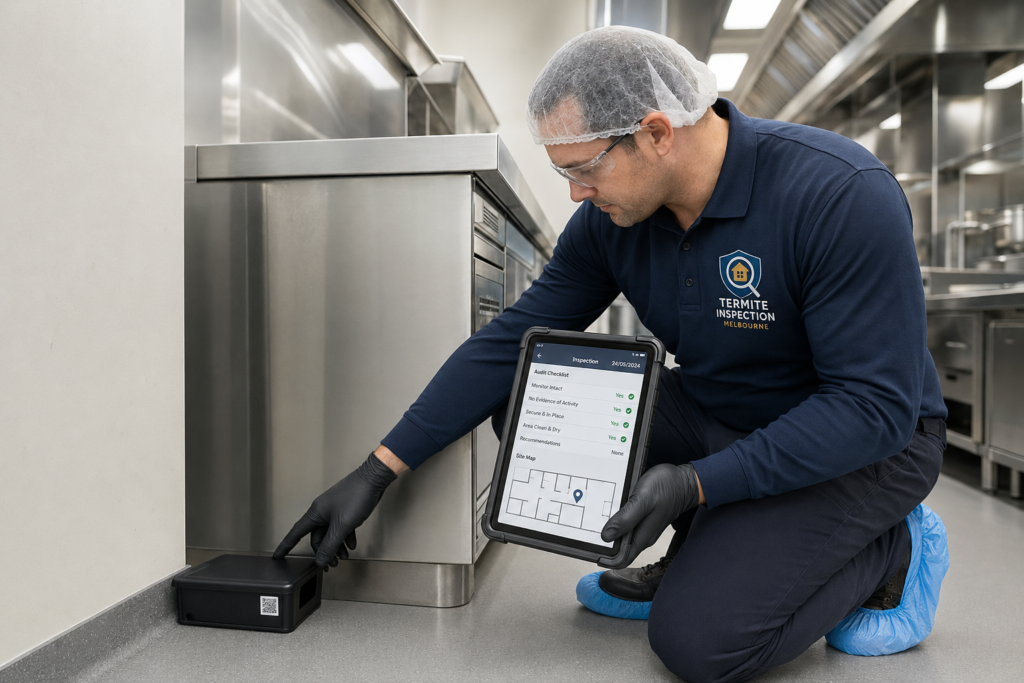
Record what was seen, where it was seen and when it occurs. A clear photo, droppings description, bite pattern, noise location or insect sample can prevent the wrong service being dispatched.
Consider occupant vulnerability, possible electrical or structural exposure, common-property pathways, active swarms, aggressive nests, food contamination and whether the building remains safe to occupy.
Confirm who can approve the inspection, spending threshold, service scope and any notice or access requirement. Treatment should not silently expand beyond the authorised task.
Send preparation instructions, confirm tenant or key access, identify pets and children, and note parking, alarm, concierge, lift or common-property constraints before attendance.
Use targeted methods appropriate to the pest and site. Record accessible areas, evidence, treatment points, products or devices, limitations and immediate safety instructions.
Distinguish expected post-treatment activity from treatment failure. Close the job only when follow-up criteria, proofing tasks and owner or tenant responsibilities are understood.
In detached homes, pest pathways often involve the roof, subfloor, garden, garage, drainage, doors and service penetrations. In apartments and mixed-use buildings, the source may be outside the managed lot. Cockroaches can move along plumbing and electrical risers. Rodents can travel through shared ceiling spaces, basements and loading zones. Stored-product insects can originate in a neighbouring pantry or commercial tenancy. Fleas can persist in soft furnishings or sheltered external areas. Ants may follow moisture lines across façades. When common property is implicated, the technician should say so rather than repeatedly treating one apartment as an isolated source.
This distinction protects the management relationship. It prevents the renter from being blamed without evidence, prevents the owner from funding repetitive internal treatments that cannot address a shared source, and gives the owners corporation or building manager a defined area to investigate. Our rental-property reports use plain language: observed evidence, conducive conditions, treatment performed, inaccessible areas, recommended maintenance and whether broader building assessment appears reasonable.
A vacant property can allow broad access but may have no occupant available to describe the activity. An occupied property provides useful history but requires careful preparation, privacy and re-entry communication. A newly acquired investment may need a baseline pest and termite review so future changes can be compared against a documented starting point. A property between tenancies may benefit from inspection before cleaners or trades disturb pest evidence. Scheduling the right sequence can improve diagnosis and reduce duplicated visits.
We encourage agencies to separate three concepts in their work orders: the complaint to investigate, the treatment authorised if evidence supports it, and the maximum spending approval. This protects everyone when the reported pest differs from the actual finding. For example, a “mouse” complaint may turn out to be roof-rat activity requiring roof access and external bait stations; “flea bites” may have no flea evidence and require monitoring before pesticide use; “white ants” may be termites and should not be disturbed before a suitable inspection.
Module 2 • Tenancy changeovers
End of lease pest control Melbourne searches often assume that one generic spray or “certificate” automatically satisfies every lease. That is not a sound starting point. The correct service depends on the agreement, whether pets were kept, the property condition, evidence of fleas or another pest, the target areas and any agency instruction. A service record can prove that a defined treatment occurred; it cannot guarantee bond release, override Victorian tenancy law or certify that reinfestation is impossible.
When someone requests an end of lease flea pest spray Melbourne service, we first confirm that flea work is actually the authorised requirement. This prevents a vague “pest spray” order from being recorded as a flea treatment when the complaint or lease instruction concerned another pest.
When a flea service is appropriate, we ask about pets, carpet and flooring types, internal and external pet resting areas, recent cleaning, vacancy status, access and any observed flea activity. Flea eggs, larvae, pupae and adults occupy different microenvironments. Pupae can remain protected and emerge in response to heat, vibration and carbon dioxide after a quiet vacancy. That is why activity can be noticed after cleaners, inspectors or new occupants enter, even when adult fleas were not obvious earlier.
The property must be ready for the booked scope. Excessive stored items, unvacuumed floors, inaccessible rooms, active cleaning, unsecured pets, construction activity or missing keys may limit or prevent treatment. We record any limitation rather than representing incomplete work as complete. If external areas are requested, the approved quote must identify them; an internal-only service should not be assumed to cover every yard, shed or common area.
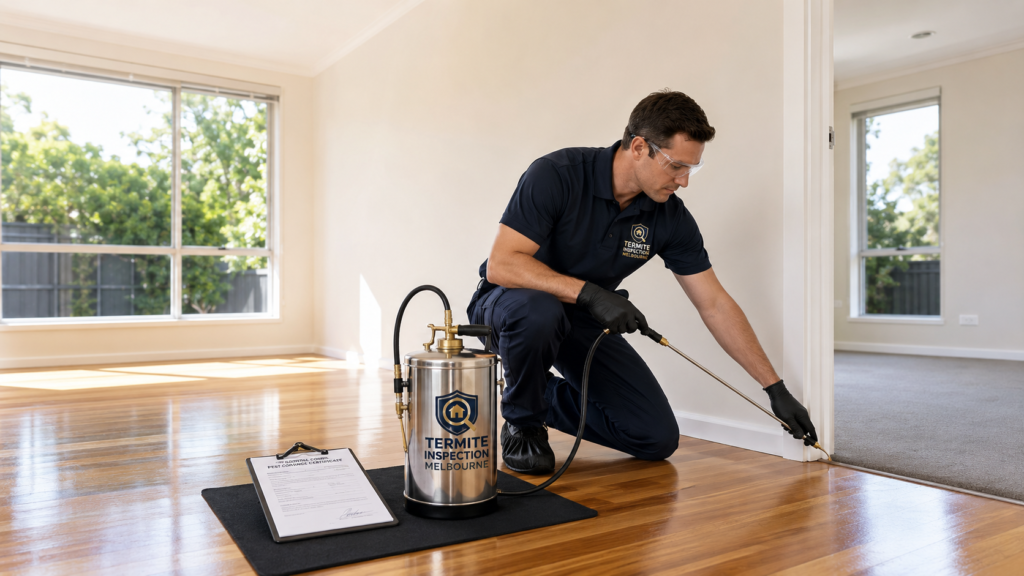
Where a flea treatment is required, the usual sequence is to remove personal belongings, have the property cleaned, vacuum carpets and edges thoroughly, dispose of vacuum contents outside, wash or remove pet bedding, mow or clear nominated pet zones if external work is included, and keep occupants and animals out for the instructed period. The exact preparation can vary with the product and site, so the booking confirmation—not a generic internet checklist—controls the job.
Property managers should avoid booking pest treatment at the same time as cleaners, carpet technicians, removalists or maintenance trades. Wet cleaning after application can remove treatment from surfaces. Open doors during a busy handover can allow pests to re-enter. Trades can disturb monitoring points or create new penetrations. A short scheduling gap makes the service safer, easier to document and less likely to be compromised.
Itching or bites alone do not confirm fleas. Mosquitoes, bed bugs, mites, carpet beetle hairs, skin irritation and environmental causes can produce confusing symptoms. If no flea evidence is found, indiscriminate treatment may add cost without solving the issue. We may recommend monitoring, inspection of sleeping areas, veterinary treatment for animals, medical advice for health symptoms, or a different pest service. Pest technicians identify pest evidence; they do not diagnose medical conditions.
Bed bug work in particular requires a separate assessment. It usually involves detailed room inspection, preparation, possible multiple visits and treatment of harbourages that differ from flea zones. A basic end-of-lease spray should never be marketed as a complete bed bug program. Likewise, carpet moths, silverfish and fabric pests require identification and a review of stored textiles or moisture conditions rather than a flea-labelled attendance.
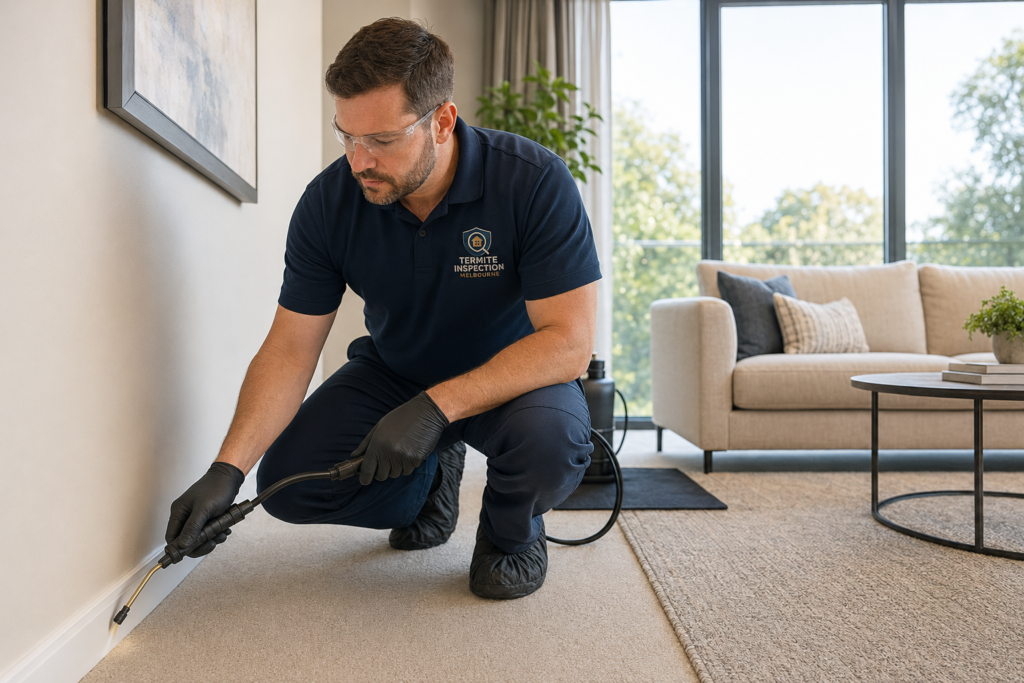
Send the property address, dwelling type, approximate size, pet history, internal or external scope, vacancy date and preferred attendance time. We can confirm whether the published flea-service starting rate applies or issue a written variation before work begins.
Our digital record is written for practical file use. It can include the agency reference, property address, attendance date, target pest, areas accessed, methods or products used where appropriate, preparation observations, limitations, safety advice and follow-up recommendation. If a key was collected, the access notes can identify the collection and return arrangement. The report does not present a pest-free warranty beyond any written service warranty and does not assign legal responsibility between the parties.
If an agency requires particular wording or invoice fields, provide the template before the portfolio program begins. We can usually include owner name or code, property manager, job number, purchase order, service category and invoice recipient. Consistency is most useful when agreed once and then applied across properties; asking for a new document structure after every visit creates delays and increases the chance of mismatched records.
Module 3 • Landlord asset protection
Termites can remain concealed behind wall linings, beneath floors, inside roof or subfloor timbers and around service penetrations. A renter may first report a soft skirting board, stuck door, bubbling paint, fine mud leads, discarded wings or unusual timber damage. Those signs should be triaged carefully. Disturbing suspected termite activity, spraying household chemicals or opening the area can cause termites to retreat and make the extent of activity harder to assess.
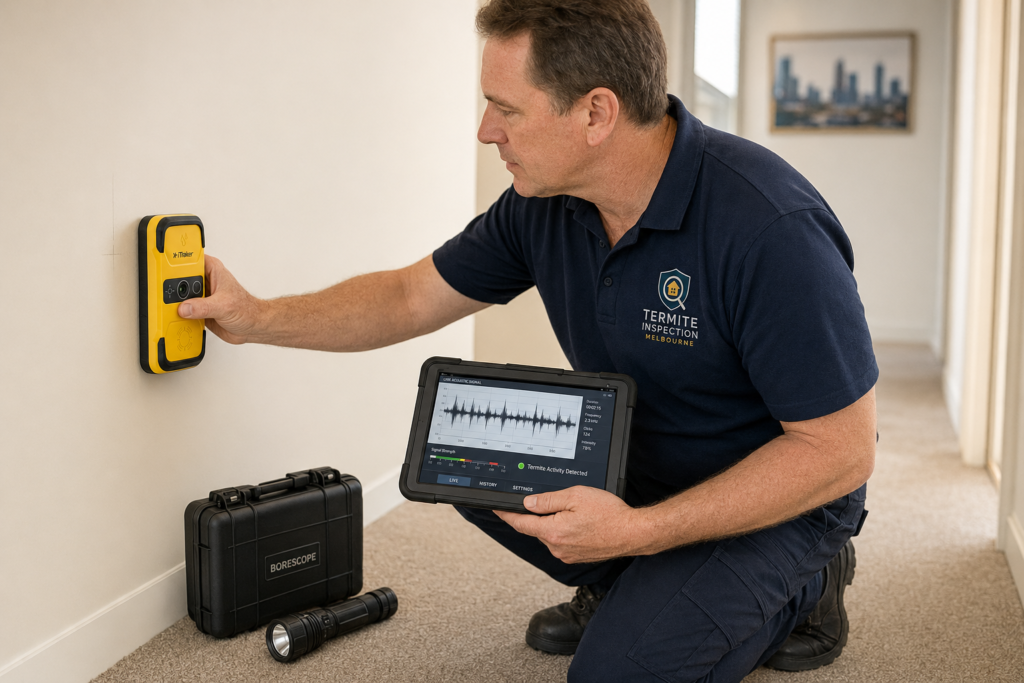
A professional real estate termite inspection is a visual assessment of accessible areas using suitable tools and a defined reporting scope. It is not an invasive demolition exercise and cannot make concealed areas visible. The technician should inspect the building interior, exterior, accessible roof space, accessible subfloor, outbuildings and relevant grounds when the agreed scope and safe access allow. Evidence of active termites, previous activity, damage, conducive conditions and inspection limitations should be clearly separated.
For a rental property termite inspection, tenant communication is especially important: roof and subfloor access points must be clear, stored belongings should not obstruct inspection zones, and suspected termite evidence should remain undisturbed until attendance.
Many owners use an annual termite-inspection cycle as a practical portfolio reminder, but the appropriate frequency depends on property risk, construction, previous reports, existing management systems, environmental conditions and the technician's recommendation. An inspection only represents conditions observed at the time in areas that could be accessed. Termites can enter later, and they can be concealed in areas that were obstructed or outside a visual inspection.
For property managers, the value of a scheduled review is administrative as well as technical. A recurring reminder reduces reliance on a tenant noticing subtle signs. It keeps previous limitations visible, such as a subfloor hatch blocked by stored goods, heavy garden contact, leaking plumbing, timber stored against the building, inaccessible roof zones or missing barrier documentation. The owner can then decide whether access, maintenance or a termite-management proposal is required.
A timber-pest report is not a structural engineering assessment. Where damage may affect structural performance, the owner may need advice from a suitably qualified building professional or engineer. Pest treatment stops or manages pest activity; it does not repair damaged timber. Good reporting makes that boundary explicit.
Melbourne's rental stock includes heritage terraces, weatherboard homes, slab-on-ground townhouses, brick veneer dwellings, apartments and large new estates. Older buildings can contain concealed subfloors, additions, damp masonry, ageing drainage and timber elements close to soil. Renovations may cover earlier evidence or interrupt inspection zones. Newer properties may have physical or chemical termite-management provisions, but landscaping, paving, render, stored items or later building work can bridge inspection zones and make the system difficult to assess.
In Clyde North, Cranbourne, Berwick, Pakenham and other growth areas, owners should retain construction and termite-management documents and ensure any required inspection zones remain visible. A product label or barrier installation does not eliminate the need for ongoing observation. In the inner and eastern suburbs, mature trees, sloping blocks, subfloor moisture and attached structures may change the risk profile. The inspection report should describe the actual property instead of relying on suburb-wide assumptions.
A landlord maintenance inspection focuses on present timber-pest evidence and conditions under a defined scope. A pre-purchase building and pest inspection supports a prospective buyer's due diligence and may involve a different report, timing, client relationship and contractual context. A pre-listing review helps a vendor understand visible issues before sale but does not transfer the purchaser's duty to arrange independent advice. Agencies should book the service that matches the client's purpose and never reuse an old report as if it describes current conditions.
Where a sales agent or buyer searches for a real estate termite inspection near me, we first confirm who the client is, who may receive the report, the property access authority and the inspection purpose. This avoids confidentiality problems and ensures the report is addressed to the appropriate party. If combined building and pest work is requested, the building component must be performed and reported by an appropriately qualified provider under the confirmed arrangement.
Non-destructive diagnostic support
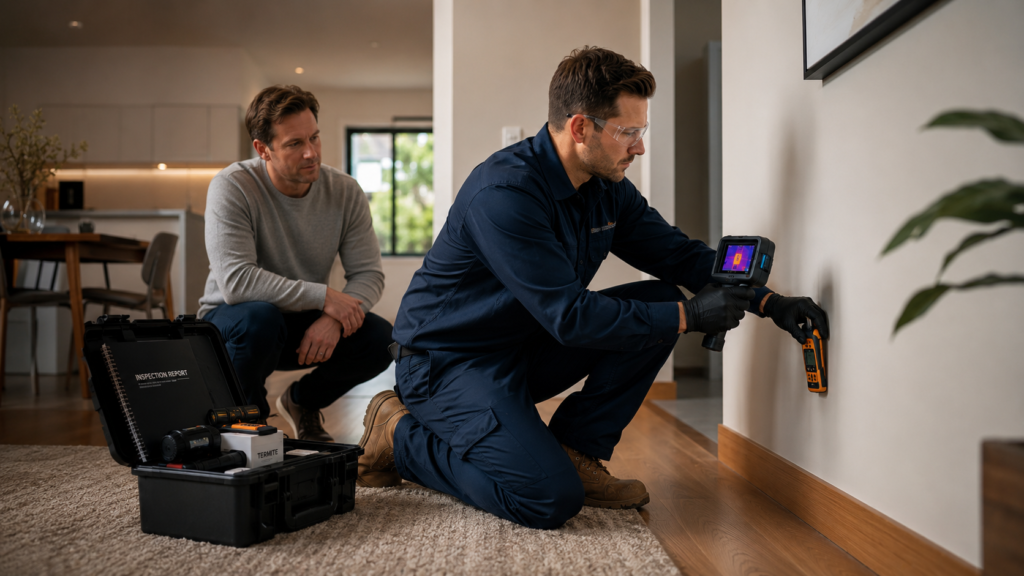
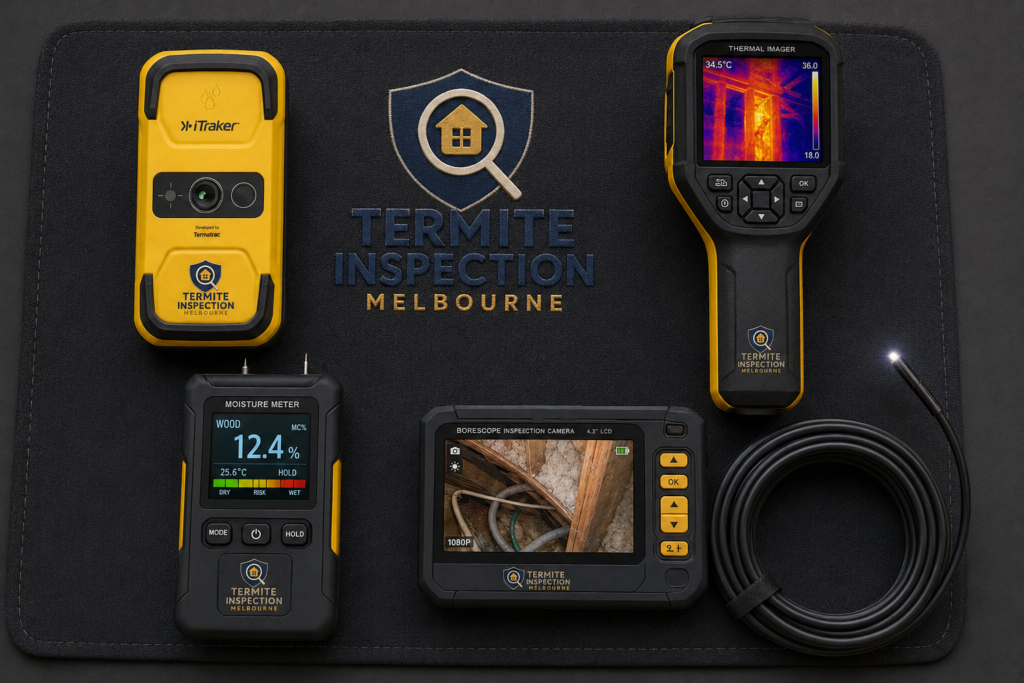
Thermal imaging can help a trained technician identify temperature patterns that justify closer investigation. Moisture meters can identify elevated readings in accessible materials. Sounding, tapping, torches, mirrors and careful visual inspection can reveal surface changes and pest evidence. These tools strengthen an inspection, but none can see through every wall or independently prove that termites are present.
A thermal anomaly may relate to moisture, insulation, air movement, electrical components, plumbing, sunlight or building construction. For that reason, we interpret the pattern in context and seek corroborating evidence. We do not present a colourful camera image as a definitive termite diagnosis. Where reasonable, the report explains why an area attracted attention and what further access or investigation may be needed.
Property managers need useful information without unnecessary damage to walls, cabinetry or floors. Non-destructive tools support targeted assessment while respecting the occupied home. If invasive access is necessary, the owner or authorised manager can consider it separately, arrange a suitable trade and obtain permission. A pest technician should not create unapproved openings simply to make a visual report appear more complete.
Thermal scanning is subject to site conditions. Recently heated or cooled rooms, direct sun, wet weather, appliances and restricted access can affect results. Our promotional complimentary scan is an adjunct to an eligible inspection or barrier consultation, not a standalone whole-building guarantee and not a substitute for the agreed timber-pest inspection.
Module 4 • Tenant pest complaints
Fast attendance matters, but sending the wrong treatment wastes more time. Our triage asks enough questions to send the right technician, preparation and equipment while giving genuinely urgent risks priority.
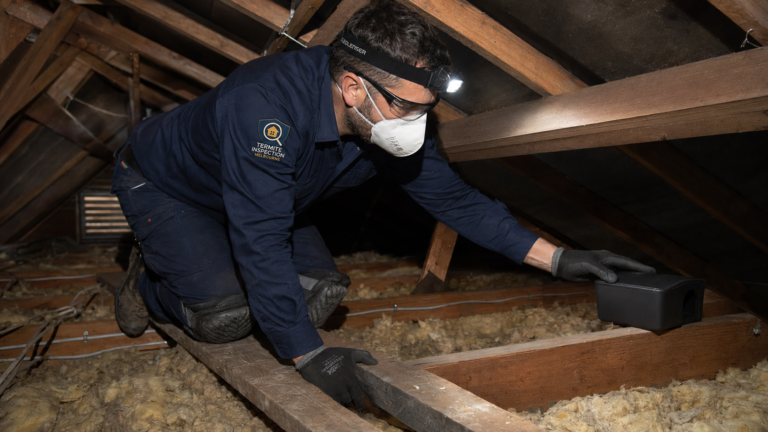
Scratching, droppings, gnaw marks, odour or sightings are mapped to roof, subfloor, kitchen, garage, garden and service pathways. The plan may combine secure stations, monitoring, sanitation and proofing recommendations.
View Rodent Control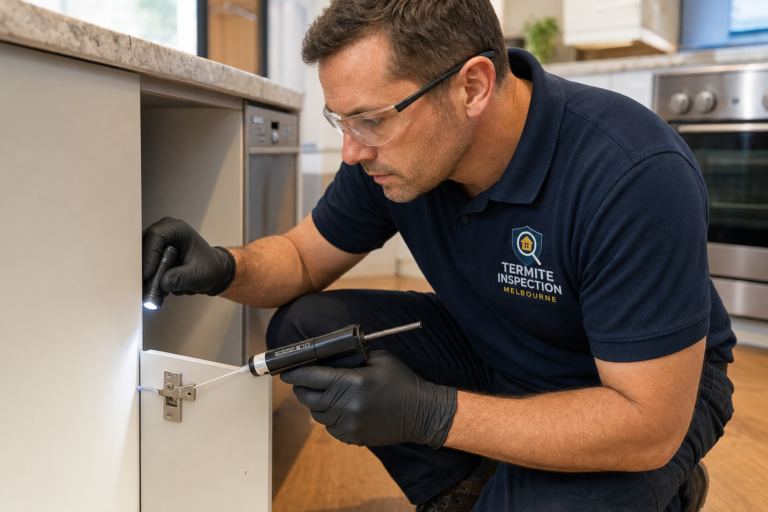
Species and distribution matter. German cockroaches around appliances and cabinetry often need detailed gel-bait and monitoring work; occasional outdoor species require a different response.
View Cockroach Control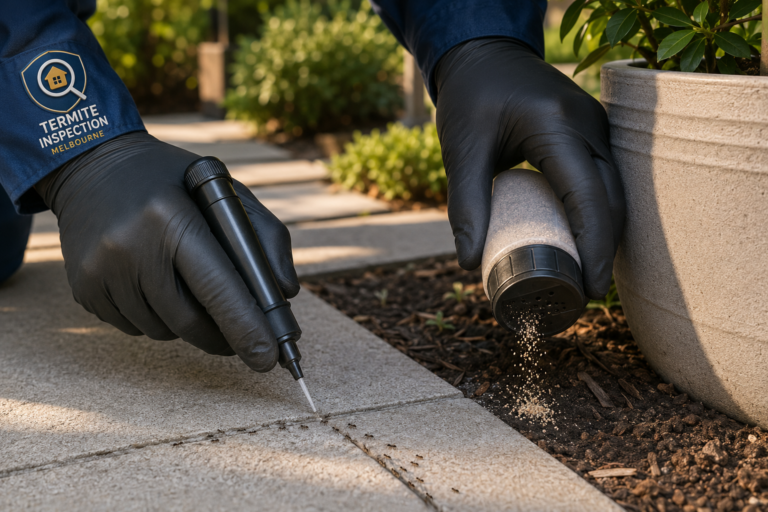
Ant trails are traced to food, moisture, wall voids and entry points. Repellent aerosol applied by occupants can scatter some colonies, so we ask what has already been used before selecting bait or targeted treatment.
View Ant Control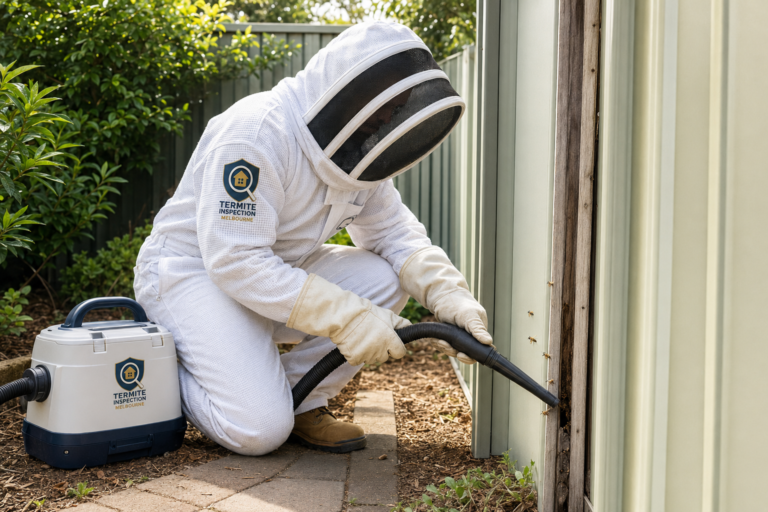
Active nests near doors, paths or play areas require location and access details. Occupants should keep clear and avoid blocking the nest entrance. Bee issues may need a suitable relocation pathway.
View Wasp & Bee Service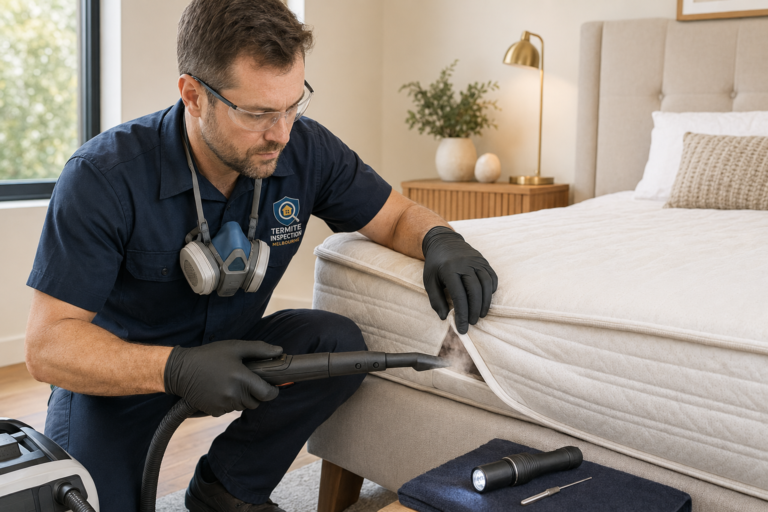
Bed bugs require confirmation, detailed preparation and often staged work. We do not represent a general spray as a complete bed bug solution. Photos and room history help the initial triage.
View Bed Bug Treatment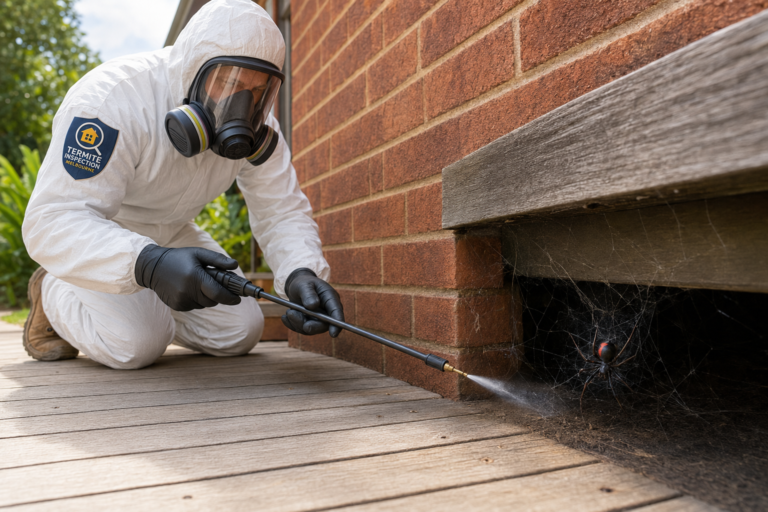
Webbing, harbourage, landscaping, lighting and gaps around doors or eaves influence activity. Treatment is paired with practical prevention rather than promising an insect-free property forever.
View Spider ControlThe same principles used in commercial pest management—inspection, monitoring, targeted application, documented devices and trend review—can improve rental outcomes. However, the occupied home needs different communication. Children, pets, pregnancy, respiratory sensitivity, aquariums, food preparation, mobility limitations and work-from-home arrangements may affect preparation and method selection. We ask about these factors instead of assuming the property is empty.
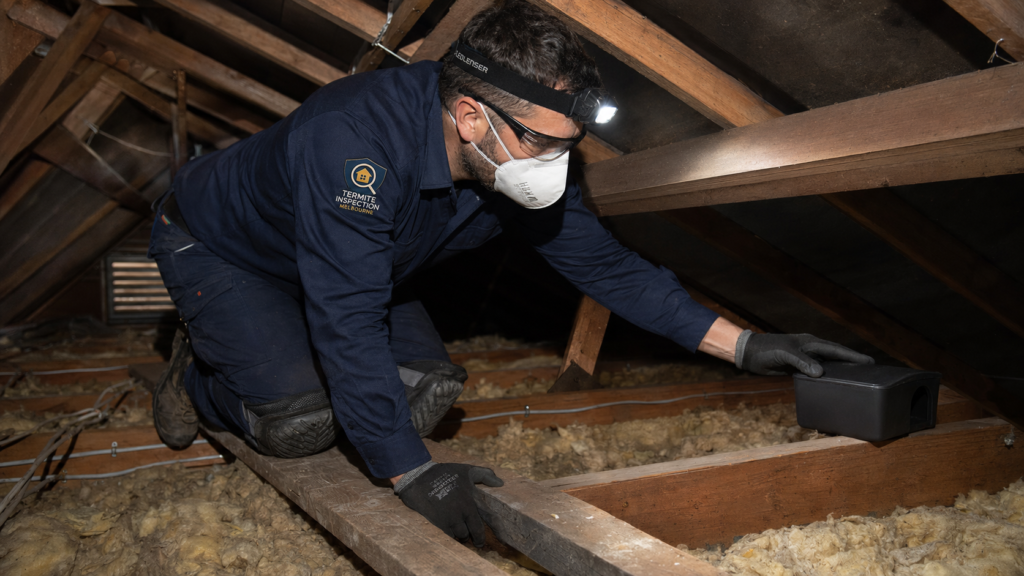
For rodent work, baits and traps must be placed with occupant and non-target safety in mind. Stations do not repair openings, and treatment may fail if food waste, pet feed, fruit, compost or roof access continues to sustain activity. Proofing should be based on observed or likely entry points and completed with suitable materials. Blocking a hole without assessing whether animals remain inside can create odour, damage or new escape routes.
Priority rises where pests are associated with exposed food, electrical damage, repeated bites, aggressive nests in a high-traffic area, vulnerable occupants, extensive cockroach contamination or evidence that may indicate active termites. Suspected gas, electrical, structural or sewage hazards should be directed to the relevant emergency or qualified trade service; pest control is not a substitute for those repairs. If someone has a serious allergic reaction or medical emergency, contact emergency services.
Same-day pest quote language is common in advertising, but rental access can be more complex. A same-day quote may be possible from clear information; same-day treatment still depends on technician capacity, tenant notice or consent, key availability, preparation, pest type and safe access. We give a realistic window rather than label every enquiry an emergency.
An urgent property manager pest quote is fastest when the form includes the full property address, pest evidence, occupied or vacant status, access authority, preferred date and approval limit. Missing information creates avoidable calls and can turn a same-day possibility into a later appointment.
German cockroaches favour warm, protected locations close to food and moisture: appliance motors, cabinetry hinges, sinks, dishwashers, refrigerators, coffee machines and service voids. A small visible population can indicate deeper harbourage. Effective work may involve inspection, gel baits, insect growth regulators, monitoring traps, targeted dusts where appropriate and follow-up. Broad wet spraying can contaminate bait placements or push activity deeper into inaccessible areas.
In multi-unit properties, repeated activity may involve adjoining units, shared ducts, risers or waste areas. The report should identify whether the inspected tenancy alone can reasonably be managed or whether building management should investigate adjacent areas. Occupants also need practical food-storage and cleaning guidance, but sanitation advice should be evidence-based and respectful; cockroaches can arrive in deliveries, second-hand appliances or through shared structures even in tidy homes.
Ants commonly enter during weather changes or when colonies exploit moisture, food and protected voids. The visible trail is only part of the colony. We identify likely species and routes, then use suitable baiting or targeted methods where possible. Leaking taps, failed sealant, vegetation contact, gaps around windows and food residue can undermine control. Maintenance recommendations are documented so the property manager can direct them to the owner or trade separately.
Silverfish, carpet beetles, clothes moths and stored-product insects often point to humidity, stored paper, natural fibres or infested food goods. Their management may require decluttering, disposal, laundering, humidity correction or stock inspection in addition to pesticide use. A rental property pest reset therefore begins with identification, not a promise that one treatment covers every insect named by a tenant.
Module 5 • Transparent agency pricing
These published prices make routine approvals faster. Every card shows the base price, GST and inclusive total. Final scope is confirmed before attendance; complex infestations, inaccessible properties, large sites, specialist work and multi-property programs require a written quote.
Tenancy changeover
$150
$165 incl. GST • $15 GST
Standard rental property
$180
$198 incl. GST • $18 GST
Landlord asset review
$250
$275 incl. GST • $25 GST
Multi-property agencies
Custom
Written service agreement
Wholesale or agency pricing should reward predictable volume and efficient administration, not hide the true scope. We consider the number and location of managed properties, expected service mix, appointment lead time, key collection distance, parking, reporting format, invoice consolidation, after-hours requirements, authorisation limits and response expectations. Ten properties clustered in one municipality can be more efficient than ten urgent jobs spread across Greater Melbourne on different days.
A portfolio proposal can set fixed rates for clearly defined services and a quote pathway for exceptions. It may include a standard flea service, general pest reset, rodent initial visit, termite inspection, emergency attendance fee and approved add-ons. It should also state cancellations, failed access, excessive preparation problems, return visits, warranty conditions and work excluded from the agreement. Transparent exceptions prevent tension when a routine work order turns out to involve a severe infestation or inaccessible multi-storey building.
For agencies that need owner approval, we can provide a concise finding and proposal before further work. For agencies with an authorised spending threshold, the agreement can define what may proceed without another email. Either model can work; the critical point is that the authority is documented. TIM's Pest Control does not treat an old verbal instruction as permanent approval for unrelated properties or services.
Module 6 • Coordination and audit trail
A treatment can be technically correct and still become a management problem if nobody confirms access, preparation, authority or what happened on site. Our workflow makes those handoffs visible.
We record agency, property, authorised contact, tenant or key pathway, requested service, urgency, invoice reference and spending authority.
We clarify pest evidence, site type, included zones, preparation, price, exclusions and whether inspection may lead to a separate treatment proposal.
With agency authority, we confirm the appointment with the tenant or arrange key collection, parking, alarms, concierge and return deadline.
The agency receives completed scope, findings, limitations, treatment details, safety information and next actions tied to the property reference.
Agency key collection is useful for vacant properties, but it needs a defined chain. The work order should identify the agency office, collection hours, authorised release process, key tag or code, parking availability, return deadline and after-hours contingency. We do not write a full property address on an unattended key. Keys are not copied, passed to unrelated contractors or retained beyond the agreed job without authorisation.
Travel for key collection is part of the service logistics and may attract a fee when it sits outside the scheduled route. The most efficient arrangement is often a property lockbox controlled by the agency, direct tenant access, or grouping multiple keys at one office. Whatever method is chosen, the property manager should know whether a failed visit arose from a missing key, non-working lock, unconfirmed tenant or technician delay.
Where the agency authorises direct contact, we can arrange timing and preparation with the tenant. We keep the conversation focused on access, service safety and the approved scope. We do not negotiate owner liability, approve additional repairs, disclose unrelated owner information or change the treatment budget with an occupant. Any variation goes back to the authorised property manager.
Appointment communication does not replace any legally required notice, consent or agency process. The property manager remains responsible for confirming the authority to enter and share contact details. This separation protects tenant privacy and prevents a convenient scheduling message from being mistaken for formal tenancy advice.
Generic multi-page instructions are often ignored. We tailor the key steps to the pest: clear kitchen cupboards only if necessary, secure food, remove pets, cover aquariums, vacuum for fleas, avoid disturbing termite evidence, maintain access to roof or subfloor hatches, and advise about occupants who may need special planning. The booking confirmation specifies what must happen before arrival and what can remain in place.
If preparation is incomplete, the technician assesses whether a safe and useful service can continue. Some work can be adapted; other work should be rescheduled. The report records the limitation so the agency is not left wondering why a room or external zone was excluded. We will not apply products contrary to label instructions simply because a tenant or manager has a tight deadline.
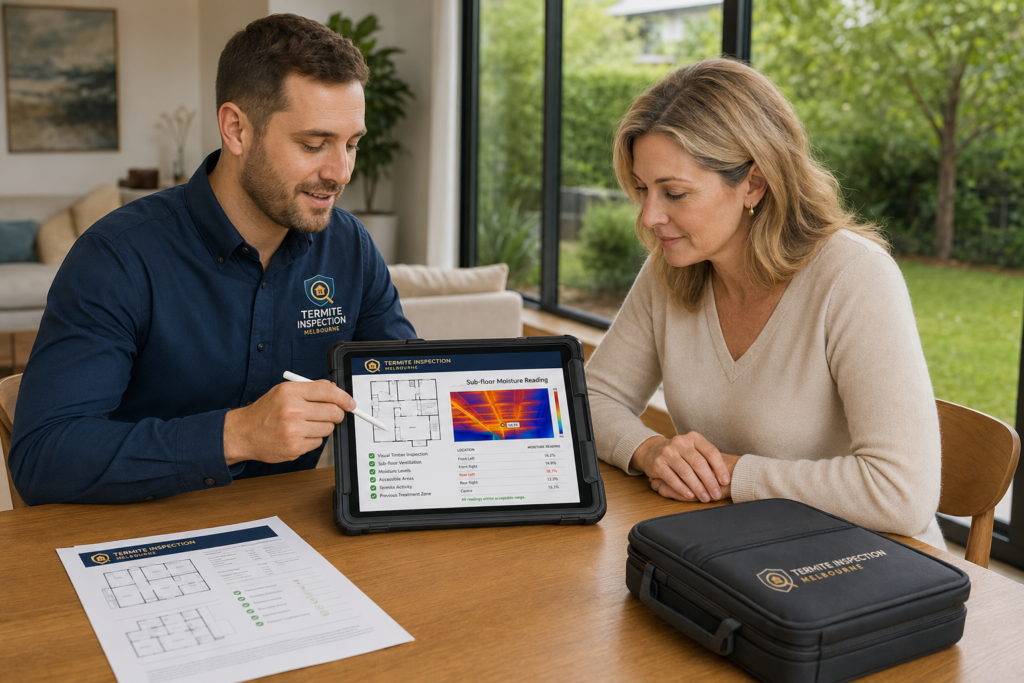
A pest report real estate teams can use should answer six questions: Which property and client does the record relate to? What service was authorised? Which areas were accessible? What evidence or conducive condition was observed? What treatment or inspection occurred? What should happen next, and who needs to consider it? A glossy document that omits those answers is less useful than a concise, accurate service record.
Photographs can support a finding, but they should be relevant and handled with respect for occupants. We avoid unnecessary images of personal belongings and do not treat photographs as a replacement for written context. Where a limitation is important—such as an obstructed hatch, heavy stored goods or inaccessible common property—the report should say why it affects confidence or recommended follow-up.
We can map the invoice and report to an agency work-order number, property code, owner surname or purchase order supplied at booking. The agency should use a consistent identifier and advise whether split billing, owner approval or tenant reimbursement documentation is required. We provide factual service information, not a determination that one party must pay. If responsibility is disputed, the parties should use current Victorian guidance and the appropriate dispute process.
Where multiple properties are serviced, consolidated invoicing can be considered under a portfolio agreement. Each line still needs a unique property and service reference. This preserves an audit trail and makes it possible to identify recurring activity by suburb, building type or pest without mixing evidence from different tenancies.
Service comparison
Property managers need an access process, evidence trail and escalation pathway. Price alone cannot show whether a service is suitable for a rental portfolio.
| Capability | TIM's Real Estate Service | Standard residential spray | DIY hardware product | Large interstate franchise |
|---|---|---|---|---|
| Property-manager work-order references | Yes | Sometimes | No | Varies by branch |
| Tenant or key-access workflow | Defined at booking | Basic appointment | No | May use call centre |
| Property-specific pest diagnosis | Inspection-led | Depends on scope | No professional diagnosis | Depends on technician |
| Written limitations and actions | Included in service record | Often invoice notes | No | System dependent |
| Termite and timber-pest pathway | Dedicated inspection scope | No | No | Separate division |
| Transparent GST-inclusive pricing | Published for defined services | Quote dependent | Retail price only | Quote or call centre |
| Portfolio agreement option | Local written program | No | No | Usually available |
| Local escalation contact | Melbourne team | Operator dependent | No | May be centralised |
Comparison describes typical service structures, not every provider. Ask any provider to confirm its current inclusions, licence, insurance, reporting, warranty and local capacity in writing.
Module 7 • Risk and compliance
Commercially responsible pest management is not created by adding compliance logos to a proposal. The agency should be able to verify who is attending, whether the person is appropriately authorised for the work, what insurance applies, how products are selected and how incidents or complaints are escalated. Current documents should be provided on request rather than relying on old website claims.
Before appointing any contractor, property managers should confirm the provider's current pest-management licensing or authorisation relevant to the job, public liability cover, workers arrangements, safe-work practices and any site-specific requirements. If your agency or landlord requires a certificate of currency, supplier induction, contractor registration or particular safety documentation, advise us before the first booking so availability can be confirmed.
If procurement specifically requires $20 million public liability insurance or AEPMA certified timber pest inspectors, request the current policy and credential evidence for the proposed work rather than relying on a website phrase. Industry membership, technician qualification, insurance limit and authorised treatment category are different things; the documents supplied for onboarding should show which requirement is actually met.
Products are selected according to the identified pest, site, occupants and approved scope. Label directions govern application, preparation, personal protective equipment and re-entry. Safety Data Sheets can support workplace or contractor records, but they do not replace property-specific instructions. More chemical is not automatically better; targeted baits, monitors, traps, exclusion and sanitation can reduce unnecessary application.
“Eco-safe,” “pet-safe” and “family-safe” are often used too loosely. No professional should imply that a pesticide has no hazard in every circumstance. We explain preparation and re-entry requirements and use products in accordance with their approved directions. The safest plan is one that identifies the pest, limits exposure, protects non-targets and addresses the conditions supporting the activity.
A rental property is someone's home. Technicians should arrive within the agreed window, identify themselves, focus on authorised areas, avoid unnecessary handling of personal belongings and communicate before moving items or opening private storage. If a child is home without an authorised adult, an aggressive animal is unsecured or a safety concern prevents entry, the technician should not improvise around the risk.
Reports should remain within the authorised client relationship. Occupant details, photos and access information are not marketing material. If an owner, tenant, sales agent, owners corporation or insurer requests a report prepared for someone else, the release should be considered by the client and any applicable agreement rather than assumed.
Public liability insurance responds according to its policy terms; it is not a warranty that pests will never return. A service warranty, where offered, has a defined target pest, period, property conditions and follow-up process. It may exclude new introductions, untreated areas, common-property sources, failed preparation, building defects, sanitation conditions, weather, inaccessible zones and work altered by another party. We provide the applicable warranty terms with the service rather than using a vague lifetime claim.
Termite-management warranties are particularly scope-specific. An inspection is not a barrier warranty. A treatment proposal may require ongoing inspections, maintenance of inspection zones, correction of conducive conditions and compliance with system documentation. Property managers should store the installation record and future inspection reports together so a change of owner, renter or agency does not break the documentation chain.
The enquiry reference generated by this page establishes the first record. The agency work order then confirms service and authority. If site conditions require a variation, we document the issue and seek approval. The completed report and invoice close the service loop. This simple sequence helps resolve common questions: Was the service requested? Which property was attended? What price was accepted? Was extra work approved? Did access limit the result?
Every online enquiry is saved privately in the WordPress admin under Real Estate Enquiries before email is attempted. This means a successful on-screen reference corresponds to a stored lead even if an email provider is delayed. WP Mail SMTP with Brevo then routes the notification to info@termiteinspectionmelbourne.com.au, while the database record remains the operational backup.
Module 8 • A local accountable team
Agencies do not need exaggerated guarantees; they need calls returned, access handled, scope confirmed and reports that make sense. TIM's Pest Control combines local route knowledge from Clyde North with Greater Melbourne service capability. We can discuss an isolated rental complaint, a landlord inspection or a repeat portfolio process without forcing every agency into the same contract.
Our approach is evidence-led. If the problem appears to involve plumbing, roof damage, a broken vent, structural movement, common property, animal removal or another trade, we say so. If a treatment needs follow-up, we explain the trigger and timing. If a quoted service is not appropriate to the evidence, we do not pretend that spraying will solve it. This protects the owner from unnecessary work and gives the manager a defensible next step.
National systems can be useful for large portfolios, but property managers often experience multiple call-centre contacts and inconsistent local notes. Our model keeps the property, service request and report under one Melbourne workflow. When a technician needs approval, the request goes to the nominated agency contact. When an occupant needs preparation instructions, those instructions are tied to the booked service.
For urgent activity, call 0466 929 533. For work requiring multiple details, the form on this page creates a reference and private record. Agencies can include that reference in later communication. This reduces duplicate jobs and helps us locate the original scope when a tenant, owner and property manager contact us separately.
We aim to respond to online agency enquiries within two business hours. Attendance depends on suburb, preparation, access, pest and technician capacity. A portfolio agreement can define response categories such as emergency triage, occupied-property priority, routine turnover, termite inspection and planned preventive service. Response time should be measured from receipt of complete authorisation and access information, not from an unverified message with no address.
Police checks, construction induction or other site credentials may be relevant to particular properties and should be confirmed for the assigned technician before attendance. Rather than publishing an unqualified claim about every person forever, we provide current evidence when the agency requires it. The same principle applies to industry memberships, insurance and licensing.

Send a sample of your current work order and reporting needs. We can define standard service names, pricing rules, access instructions, owner approval limits, emergency pathways, invoice fields and exceptions before the next pest complaint arrives.
Greater Melbourne portfolio coverage
Melbourne weather, construction and land use create different pest pathways across a rent roll. We plan by the property evidence—not by assuming one treatment fits an entire postcode.
Warm periods can increase ant trails, wasp activity, flies, mosquitoes, spiders and cockroach movement. Hot, dry conditions may drive pests toward indoor water sources. Rain can flood nests, increase moisture and expose drainage or building defects. Cooler months often bring rodent activity into roof voids, garages, wall spaces and warm appliance zones. Termite risk is not confined to one season; concealed activity and conducive moisture conditions require year-round attention.
Property managers can use service history to anticipate pressure without scheduling unnecessary blanket treatments. Repeated rodent reports at the same group of townhouses may indicate shared waste or proofing issues. Recurring ants after rain may point to moisture and entry gaps. Cockroach trends in one apartment stack may justify common-property investigation. Annual termite reports can reveal unresolved access limitations or landscaping that repeatedly obstructs inspection zones.
A heritage brick terrace with a damp subfloor behaves differently from a modern sealed apartment, even when the properties are on the same street. Slab-on-ground homes may have perimeter inspection-zone issues. Weatherboards can provide subfloor access but also numerous service penetrations. Apartments share risers, waste rooms, loading areas and adjacent occupants. Townhouse developments combine private lots and common property, making the source and authorisation pathway important.
Commercial interfaces also matter. Rentals above restaurants, near food precincts, beside warehouses or within mixed-use buildings can experience pest pressure from external operations. Treatment inside the dwelling may form only one part of the solution. Our report identifies when building management, an owners corporation, landlord maintenance or another trade should consider the wider pathway.
Clyde North, Cranbourne, Narre Warren, Berwick, Pakenham, Dandenong, Casey and Cardinia growth corridors combine new estates, clay soils, drainage reserves and continuing construction. Rental portfolios here benefit from documented termite-risk reviews, rodent proofing priorities and consistent handover records.
View Area Pest Control
Ringwood, Box Hill, Doncaster, Burwood, Glen Waverley and surrounding suburbs contain mature gardens, older subfloors and mixed construction. Moisture, stored goods, roof access and concealed timber interfaces should be assessed property by property.
View Area Pest Control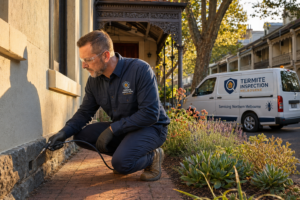
Brunswick, Coburg, Preston, Reservoir, Epping and northern growth areas include terraces, apartments and expanding estates. Shared walls, food businesses, ageing drains and building works can influence cockroach, rodent, ant and termite pathways.
View Area Pest Control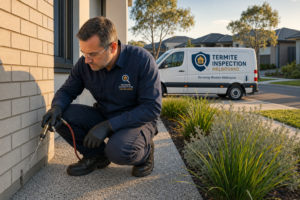
Footscray, Sunshine, Werribee, Truganina, Point Cook and western rental corridors mix apartments, warehouses and detached homes. Open grassland, logistics movement, roof voids and shared bin zones can increase seasonal rodent and spider pressure.
View Area Pest Control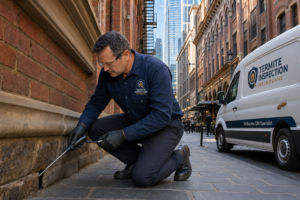
Inner-city rentals often share risers, basements, waste rooms and adjoining tenancies. A pest sighting inside one apartment may originate in common property, so the report must distinguish the inspected lot from building-wide pathways and strata responsibilities.
View Area Pest Control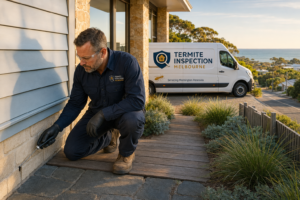
Mornington, Frankston, Mount Eliza, Dromana and peninsula holiday rentals face coastal moisture, vegetation, seasonal vacancy and roofline wildlife pressure. Access planning and realistic follow-up are important when properties are occupied intermittently.
View Area Pest ControlCBD towers and inner-city apartment buildings often depend on concierge access, booked lifts, contractor induction and controlled loading areas. A technician may need access to a basement, refuse room, service riser or common corridor to understand the complaint, but a property manager for one lot may not have authority over those areas. Before attendance, confirm whether the owners corporation or building manager must approve access. Treating only the apartment can reduce visible activity while a shared source continues.
Heritage buildings in Carlton, Fitzroy, Richmond, South Melbourne and nearby suburbs may have cellars, subfloors, solid masonry additions and old service openings. Moisture, ageing drains and hidden voids complicate pest diagnosis. Inspection limitations should be recorded rather than concealed behind a generic completion statement. Where fragile materials or unsafe access are present, specialist building or trade support may be necessary.
New homes in Clyde North, Cranbourne, Officer, Pakenham, Tarneit and other growth areas can still experience pests. Earthworks, vacant land, drainage reserves and continuing construction disturb rodents and insects. New landscaping and irrigation can alter moisture around the building. Cardboard and construction storage can introduce cockroaches or silverfish. A new building warranty does not identify or treat every pest pathway, and a termite-management system still requires its documented conditions to be maintained.
For Clyde North pest control, our local base supports practical route planning across Casey and Cardinia. Property managers should still provide complete details: estate access, parking, occupancy, keys, pets, property size and pest evidence. Proximity improves responsiveness but does not remove preparation or safe-access requirements.
Established areas such as Glen Waverley, Mulgrave, Dandenong, Doncaster, Ringwood and surrounding suburbs often include mature vegetation, mixed-age extensions, sloping blocks and older drainage. Overhanging branches can create roof access for rodents; dense gardens can conceal termite inspection zones; subfloor dampness can support timber decay and pest risk. The treatment plan should distinguish vegetation maintenance and building repair from the pest service itself.
Business parks and mixed commercial-residential precincts may also influence rentals. Deliveries, dumpsters, loading docks and food tenancies can sustain rodents and cockroaches. If activity crosses property boundaries, coordinated monitoring is more effective than repeated reactive treatment within a single dwelling.
Northern and western portfolios often mix older homes, apartments, large new estates and properties near industrial or logistics zones. Open land and warehousing can influence seasonal rodents; shared walls and dense occupancy can influence cockroaches and bed bugs; dry summers can increase ant entry around moisture sources. Building condition and occupant movement are more useful than stereotypes about a suburb.
For agencies managing properties across distant zones, route grouping can reduce key-collection travel and improve appointment reliability. Planned termite inspections or vacancy services can be grouped by area, while urgent occupied-property work remains triaged by risk. A portfolio agreement should state whether a promised response time applies to all suburbs or only a defined operating area.
Coastal and holiday properties may sit vacant between occupancies. Quiet periods can allow rodents, ants, spiders or fleas to remain unnoticed until cleaners or guests arrive. Moisture, vegetation and roofline wildlife pressure can differ from metropolitan apartments. Access often relies on lockboxes or local agents, so the booking must confirm who can respond if a key fails or an alarm activates.
Seasonal vacancy is not a reason for indiscriminate pesticide application. Monitoring, exclusion, waste control, garden management and scheduled inspection may deliver better long-term value. Where wildlife or protected species are involved, the property may require an appropriately authorised specialist rather than routine pest treatment.
Property manager questions
These answers are written for quick owner approvals and tenant communication. Site findings and the confirmed quote always control the individual job.
Published starting prices on this page cover defined initial services: an end-of-lease flea treatment and service record from $150 before GST, a rental-property general pest reset from $180 before GST, and a landlord termite inspection from $250 before GST. Final pricing depends on property type, size, access, target pest, infestation severity, preparation, travel, specialist reporting and whether follow-up or exclusion work is required. Multi-property agencies receive a written portfolio proposal rather than an unclear blanket discount.
No. There is not one blanket rule making a professional flea treatment mandatory for every Victorian tenancy. The appropriate action depends on the rental agreement, the condition of the property, whether pets occupied the premises, whether flea activity exists and who contributed to the problem. Consumer Affairs Victoria explains that responsibility for pests can depend on the cause. Property managers and renters should check the signed agreement and current Victorian guidance before ordering a service.
After an eligible completed service, we can provide a dated digital service record identifying the property, attendance date, target pest, areas treated, products or methods used where appropriate, technician details and preparation or re-entry instructions. It records the work actually completed; it is not a guarantee of bond release, a legal compliance certificate or proof that pests can never re-enter.
Key collection and return can be arranged when the agency confirms authority, identification, office hours, key tag controls, travel and the return deadline. Availability and any collection fee depend on route and distance. We record who released and received the key, never place a property address on an unattended key tag, and do not copy keys. Tenant access can be coordinated instead when that is more practical.
Yes, after the property manager supplies the tenant contact details with appropriate authority and confirms the approved service scope. We can arrange access and preparation directly, but pricing changes, extra work and sensitive tenancy decisions remain with the authorised property manager or rental provider. Appointment messages do not replace any legally required notice of entry.
Responsibility is not always automatic. Consumer Affairs Victoria states that it may depend on the rental agreement and who contributed to the problem. A renter may be responsible where their actions attracted pests or fleas resulted from an untreated pet. A rental provider may be responsible where pests existed at move-in or entered because of a building defect. Disputed responsibility may require advice from Consumer Affairs Victoria or a VCAT decision.
Same-day and next-day options may be available depending on suburb, technician route, pest type, preparation, property access and safety. We first triage the evidence, occupants and access constraints. Active wasp nests, suspected bed bugs, widespread German cockroaches, rodent activity around wiring and suspected termites require different responses, so an accurate phone or form description is important.
Inspection frequency should follow the property risk, existing termite-management documents, previous findings, building construction, environmental conditions and the inspecting technician's written recommendation. Annual review is a common portfolio planning interval, but it is not represented here as a universal legal requirement. Higher-risk properties or sites with limitations may require a shorter interval.
Where the booked scope is an appropriate timber-pest inspection, reporting can be aligned with the relevant visual timber-pest inspection framework and clearly state accessible areas, limitations, evidence and recommendations. A pest report is not a structural engineering report, does not guarantee concealed areas are pest-free and does not replace a building inspection or legal due diligence.
Accessible roof voids and subfloors can be included when the scope, access opening, clearance, lighting and safety conditions permit. We never claim an inaccessible area was inspected. Restricted access, insulation, stored goods, low clearance, unsafe electrical conditions, moisture or fragile materials are recorded as limitations and may require a separate visit or specialist access.
An agency agreement can define approved services, starting rates, authorisation limits, key handling, tenant communication, response categories, preparation notices, after-hours rules, reporting format, invoicing references, service warranties, escalation and exclusions. The goal is consistent instructions and fewer approval delays, not a one-size-fits-all spray program.
Yes. Routes cover Melbourne Metropolitan Area, South East Melbourne, Eastern Melbourne, Northern Melbourne, Western Melbourne and Mornington Peninsula from our Clyde North base. Exact attendance times depend on technician capacity, property access and the required service. Multi-site mobilisation is planned by region so property managers receive realistic timeframes.
One reference. One property. One clear next action.
Speak directly with TIM's Pest Control about an urgent tenant complaint, end-of-lease service, landlord termite inspection or a documented program for your rent roll. Clear scope and transparent pricing begin before the technician is dispatched.