
Evidence-Led Inspection
Species, routes and entry points
Melbourne rat, mouse and roof-void control specialists
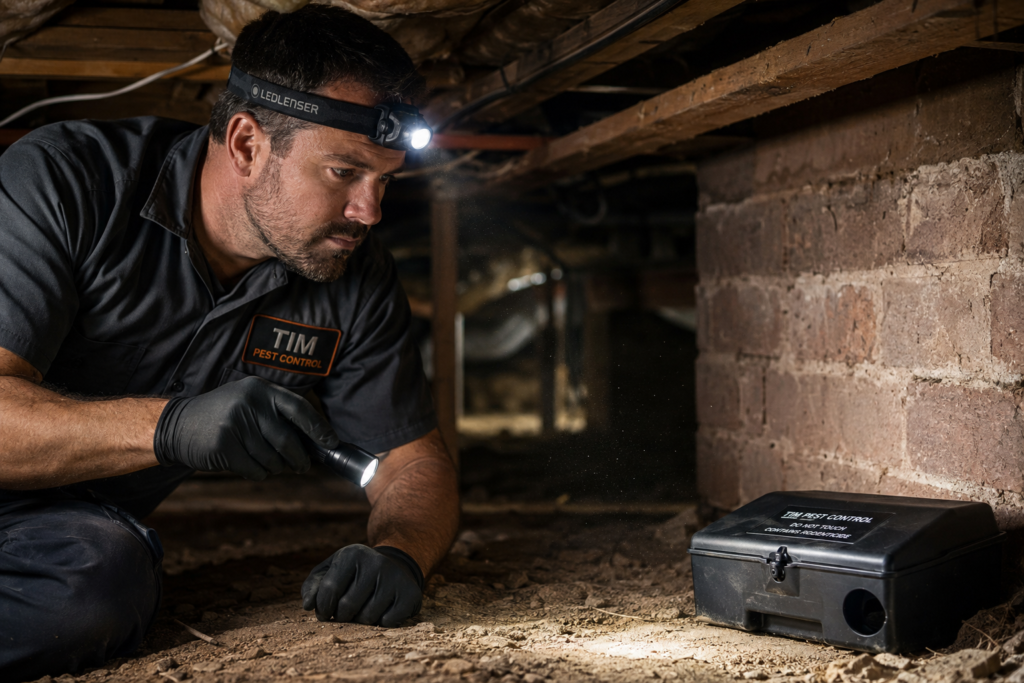
Stop Norway rats, roof rats and house mice from contaminating food, nesting in insulation and damaging accessible wiring or building materials. TIM’s Pest Control combines evidence-led inspection, targeted trapping or baiting, monitored devices and staged entry-point exclusion for Melbourne homes, rentals and businesses.
Offer eligibility, proofing scope, thermal-scan suitability and any written warranty are confirmed before work begins. No rodenticide is risk-free.
Species, routes and entry points
Recorded placement and checks
Current credentials on request
Non-target risk considered
GST shown before booking
Clyde North to Peninsula
Why prompt investigation matters
A visible rat or a scratching sound is only one part of the problem. Reliable rodent pest control Melbourne work connects population reduction with food and water correction, device monitoring and the repair of confirmed access routes.
Rats and mice gnaw to manage continuously growing incisors. That behaviour can mark timber, plastic, stored goods, pipe insulation and accessible electrical cable. Gnawing does not prove that a cable is unsafe, but flickering circuits, burning odour, tripping breakers, exposed conductors or unexplained faults require immediate isolation and a licensed electrician—not a pest technician working around an energised hazard.
An inspection maps droppings, rub marks, nesting material and travel lines so devices are positioned on likely routes. The pest plan and electrical repair then support each other: reducing rodents without repairing access invites reinvasion, while closing openings too early can trap animals beside wiring or force them into another void.
Rodents move between waste, drains, roof spaces, storage and food areas. Droppings, urine, hair and gnawed packaging can make stock unsuitable and create concern for households and food businesses. Cleaning visible evidence without correcting the source may briefly improve presentation while the population continues to feed at night.
The response should isolate affected food, clean safely, remove accessible feeding opportunities and establish monitored control. Restaurants and cafes need a documented commercial rodent management Melbourne program aligned with their food-safety responsibilities, not unsecured bait scattered behind appliances. Device maps, trend notes and corrective actions make the process auditable.
A single sighting does not reveal population size. House mice can use very small gaps, roof rats climb vegetation and services, and Norway rats often exploit ground-level shelter, drainage and burrows. Food abundance, nesting space and adjoining properties can support activity even after several animals are removed.
That is why a rat exterminator Melbourne visit should not be judged only by how much bait is placed. The better questions are where activity was confirmed, how devices will be checked, what sanitation changes are required, which entries can be closed, and how success will be verified. The inspection produces those answers before a durable prevention claim is made.
Transparent residential rodent-control pricing
The three residential prices match the existing TIM booking calculator. They cover the selected accessible treatment scope; structural proofing, destructive access, specialist cleaning and commercial programs are assessed separately. Prices and add-ons below are before GST.
Pricing scope: Add-ons and package figures are before GST. The connected booking calculator keeps the package and checked add-ons selected and displays the updated GST-inclusive total. Roof opening, wall cutting, electrical or plumbing repairs, contaminated-insulation removal, major carcass recovery, elevated proofing, construction defects and ongoing commercial monitoring are excluded unless included in a written quotation. The advertised $250 proofing saving and thermal scan apply only where eligibility and technical suitability are confirmed in writing.
Module 1 — local ecology and building pressure
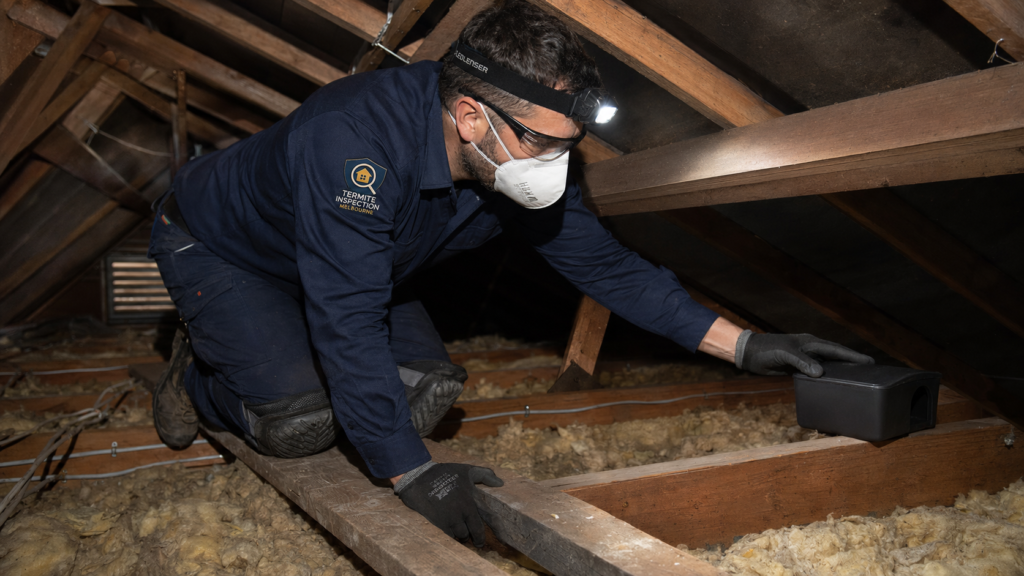
Rodent activity is not created by one season or one suburb. Rats and mice exploit reliable food, water and harbourage: overflowing bins, pet food, bird seed, compost, dense groundcover, stored cartons, leaking pipes, warm plant rooms and protected roof voids. Melbourne weather can change how those resources are used. Cold or wet periods may increase movement into dry structures, while construction, demolition, drainage work or vegetation clearing can displace established populations. A sudden sighting after nearby building work does not necessarily mean the infestation began that day; it may mean a long-used route has changed.
Urban density also matters. Terraces, apartments, shopping strips and industrial units share walls, service lines, loading areas and waste zones. One tenant can improve hygiene while activity continues from a neighbouring tenancy or communal bin room. Detached houses face a different pattern: climbing roof rats may use fences, trees and overhead services, while Norway rats favour ground-level shelter and house mice exploit tiny openings around doors, cladding and service penetrations. A useful inspection distinguishes the property’s internal problem from the wider environmental pressure.
Customers often search for emergency rodent control after one loud night in a roof. The sound is important, but it is not species identification. Possums, birds, heating ducts, plumbing and building movement can produce similar noises. Rodent evidence becomes stronger when several signs connect: droppings of consistent size and location, gnawing, rub marks, tracks, damaged food, nesting material, odour and monitored captures or consumption. The technician maps those signs to likely routes before choosing a method.
This prevents two expensive mistakes. The first is treating a non-rodent noise with bait. The second is scattering devices without understanding where animals travel. Rats frequently move beside walls, beams, fences and service edges; mice exploit covered micro-routes near food and shelter. Placement, quantity, device type and check frequency should follow that behaviour and the product label. The goal is not to fill a roof with poison. It is to control the population with the least unnecessary hazard and build a defensible path to exclusion.
A complete program has four connected parts: inspect and identify, reduce resources, control the active population, then close confirmed access points and monitor. Hygiene alone may not remove an established nest, and trapping or baiting alone cannot repair a gap. Proofing alone can fail if it traps animals inside. The order matters, particularly in multi-level houses, restaurants and sites with native wildlife. TIM’s process records what is known, what remains inaccessible and what must happen before the next stage.
That is the core of reliable mice control services Melbourne residents and businesses can maintain. Success is measured by declining evidence, stable monitoring, corrected food and water conditions and a building that is harder to re-enter. Seasonal pressure and new defects can still create future activity, so “permanent” should describe the durability of a properly installed material—not a promise that the entire property will never face another rodent.
Module 2 — species-led control
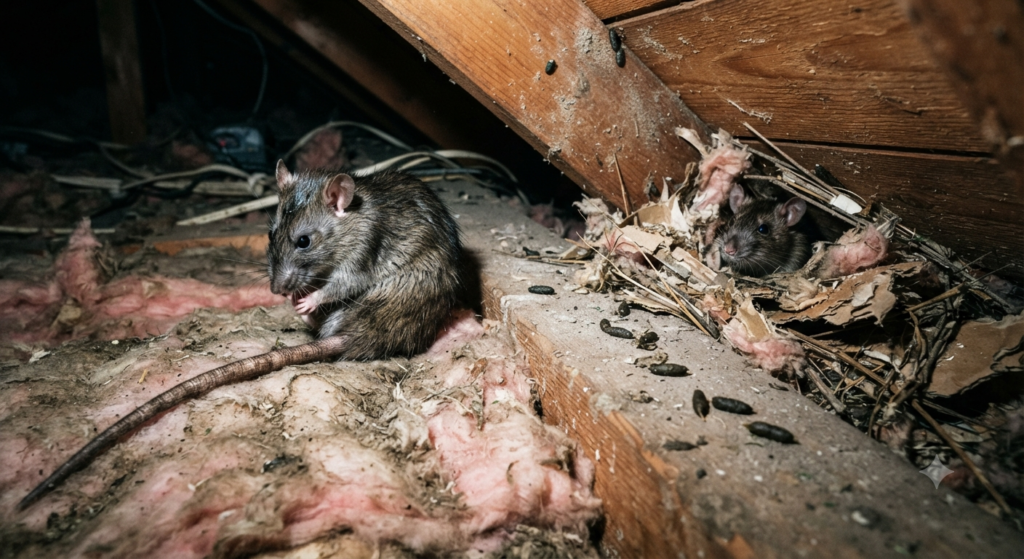
The Norway rat, also called the brown rat, is a heavy-bodied introduced pest rodent. It commonly uses ground-level shelter, drainage environments, subfloors, embankments, waste zones and burrows. Evidence can appear around bin enclosures, sheds, foundations, loading docks and low service penetrations. Its movement pattern often makes exterior inspection as important as the roof. Large droppings, strong rub marks, ground runs and burrow openings can support identification, but size varies and old evidence should not be confused with current activity.
Control may require protected exterior stations, trapping in appropriate interior zones, drainage or waste correction and proofing at low-level openings. A single indoor trap cannot resolve a population maintained by unsecured commercial waste or a neighbouring harbourage. Likewise, blocking a burrow opening without checking activity and connected routes may simply move animals to another exit. A staged plan reduces the population, confirms route change and then addresses the structure.
The roof rat, also called the black rat, is typically more slender than the Norway rat and is an accomplished climber. It may travel along fences, branches, vines, cables, rafters and building services, then nest in roof voids, wall cavities, dense vegetation or elevated storage. Sounds above bedrooms, gnawed fruit, droppings in the ceiling and rub marks near rafters can indicate activity. However, a roof noise alone is not proof, especially in suburbs where possums and birds also use rooflines.
Roof rat removal Victoria work must consider entry height and route continuity. Trimming a branch may reduce one bridge but leave a gap beside tiles, a broken vent, an open eave or a service conduit. Accessible roof inspection, exterior observation and monitoring help establish the active path. Proofing follows only after the team is satisfied animals are not trapped inside. Elevated access and roof repairs must also be safe; specialist roofing or access equipment may be required.
House mice are smaller and can exploit openings that look insignificant to an owner. They nest close to food and shelter in cupboards, wall voids, garages, storerooms, insulation, appliances and cartons. Fine droppings, shredded material, gnawed packets and a musky odour are common clues. Their small home range can mean several localised nesting pockets within one building rather than a simple route from the garden.
Mouse control needs dense, precise monitoring around edges and harbourages. Widely spaced rat-sized devices may miss local movement. Food competition matters: spilled grain, pet bowls and unsealed stock can reduce engagement with control devices. Good service therefore combines placement with storage changes, cleaning and gap assessment. Glue traps are not a routine option: Victoria restricts their sale and use for animals, and rodent control must follow current legal and welfare requirements.
Module 3 — hidden damage and contamination
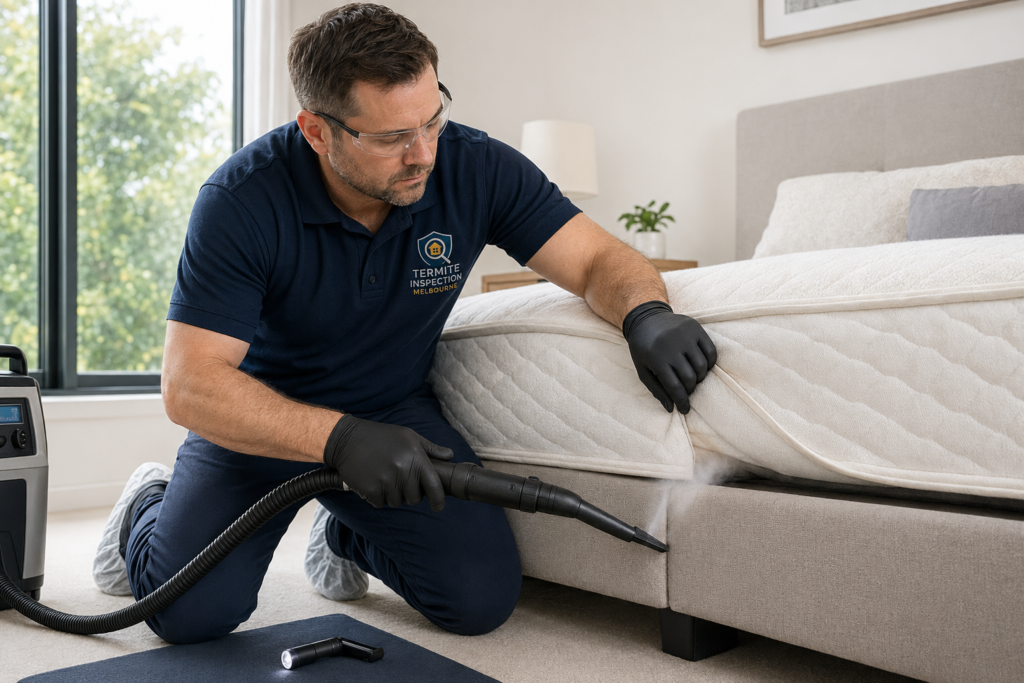
Rodents gnaw wood, plastics, packaging and accessible cable sheathing. A pest inspection can identify signs and likely routes, but it cannot certify electrical safety. If a circuit trips, lights flicker, a burning smell is present or cable damage is visible, occupants should keep clear, isolate the area where safe and contact a licensed electrician. Pest work should be coordinated around that hazard. The same principle applies to damaged water lines, gas services, roofing and structural elements: the relevant trade diagnoses and repairs the service while rodent control addresses the cause of repeated access.
Insurance and repair evidence can be easier to manage when observations are recorded. Photographs, device locations, affected zones and access limitations create a clearer chronology than a general statement that rats were present. TIM’s service record focuses on accessible pest evidence and recommended next actions; it is not an engineering, electrical or building-compliance report unless a suitably qualified professional separately provides one.
Rodents can contaminate food and surfaces through droppings, urine, hair and contact. Victorian health guidance identifies the Norway rat, roof rat and house mouse as common pest rodents and emphasises hygiene plus removal of food, water and shelter. That means pest treatment is only one part of the response. Damaged food packaging should be isolated and assessed, food-contact surfaces cleaned appropriately and waste systems corrected so the population is not continuously fed.
Dry sweeping or aggressive vacuuming of heavy droppings can spread dust. Do not handle carcasses, nesting material or contaminated insulation with bare hands. The correct cleaning pathway depends on area, material, moisture, ventilation and the presence of other hazards. Small accessible contamination may be managed with specific instructions and protective equipment; extensive insulation, mould, sewage, sharps or confined spaces need specialist remediation. Medical symptoms or suspected infectious exposure belong with a health professional, not a marketing promise from a pest company.
A dead-animal odour can travel through wall and ceiling spaces, making the apparent source misleading. Accessible inspection may locate a carcass, but no device guarantees an exact position behind plaster. Thermal cameras show surface temperature differences, not a transparent view through the structure, and decomposing material may not produce a distinct thermal pattern. Destructive access should only occur with owner approval and an understanding of repair responsibility.
When a carcass cannot be safely accessed, ventilation, time and odour-management options may be discussed, while entry prevention reduces repeat incidents. Carcass recovery and sanitisation are not automatically included in the basic $150, $180 or $210 package. They are confirmed after access, contamination and safety are assessed.
Module 4 — property construction and access
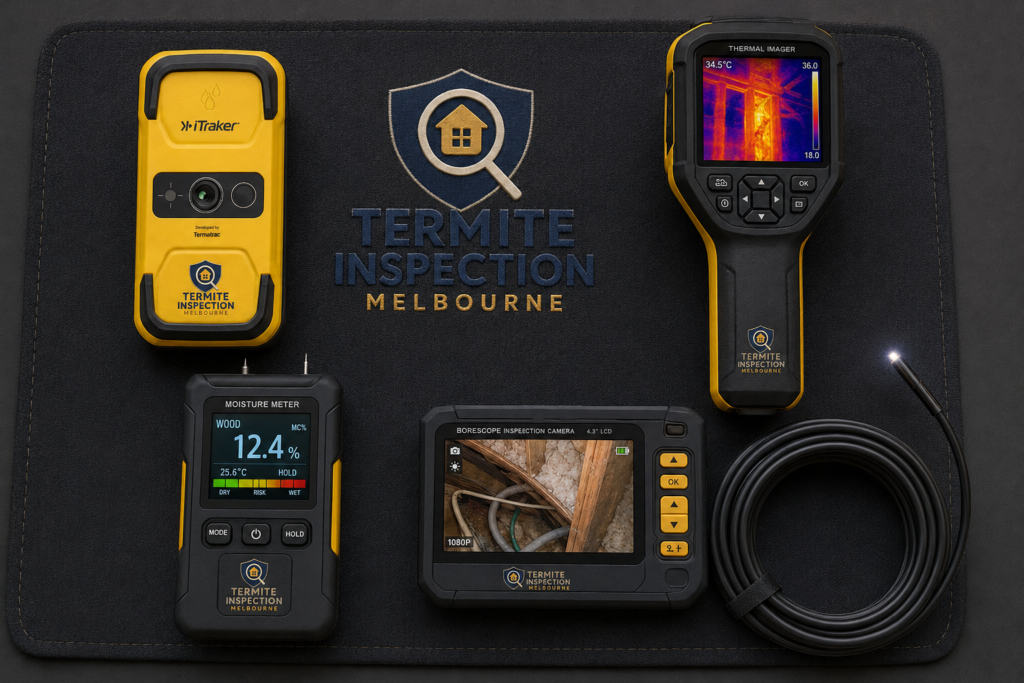
A single-storey house may offer a straightforward ceiling hatch, yet its pest pathways can include a tiled roof, wall cavities, attached garage, subfloor, deck, shed, pergola and fence line. An inspector reviews the accessible roof and perimeter in context. Droppings in the ceiling do not mean every rat entered through the roof; animals may climb inside a wall from a low service gap. Equally, an exterior burrow may be unrelated to the noise above a bedroom. Evidence has to connect.
The small and medium packages provide a starting price for eligible standard properties. Roof Void and Exterior add-ons extend the agreed scope. They do not authorise removal of tiles, entry into unsafe voids, work beside unprotected edges or repairs to electrical and plumbing systems. The technician records inaccessible areas and explains how those limits affect the treatment and warranty.
Multi-level construction may contain a main roof, lower roof, inter-floor cavity, boxed eaves, service risers and inaccessible junctions between extensions. A ceiling hatch can expose only one section. Roof rats may move between levels along pipes, brick cavities and framing, while sound transfers through the building. That makes a one-location bait placement poor evidence of complete coverage.
A double story rat proofing cost cannot be responsibly fixed from bedroom count alone. Safe access, roof pitch, gap type, scaffold or elevated-work needs, solar panels, brittle tiles, fire-rated penetrations and the number of confirmed entries all change the scope. The $210 large-property treatment price is a pest-control starting package, not a promise that elevated proofing is included. After activity mapping, TIM can quote accessible exclusion or recommend an appropriate roofer, builder, electrician or other trade.
Restaurants beneath apartments, warehouses beside grassland and retail tenancies sharing a loading dock can experience activity from common infrastructure. The program must identify who controls bins, drains, external vegetation, ceiling access and shared walls. Without that ownership, each contractor may treat only the visible tenancy while the population survives elsewhere.
Commercial assessment records the site type, operating hours, food zones, customer exposure, device restrictions, documentation needs and escalation contacts. It then proposes a frequency and corrective-action process. This is why the commercial card uses a site-specific quote instead of forcing a residential price onto a complex building.
Module 5 — non-destructive diagnostic support
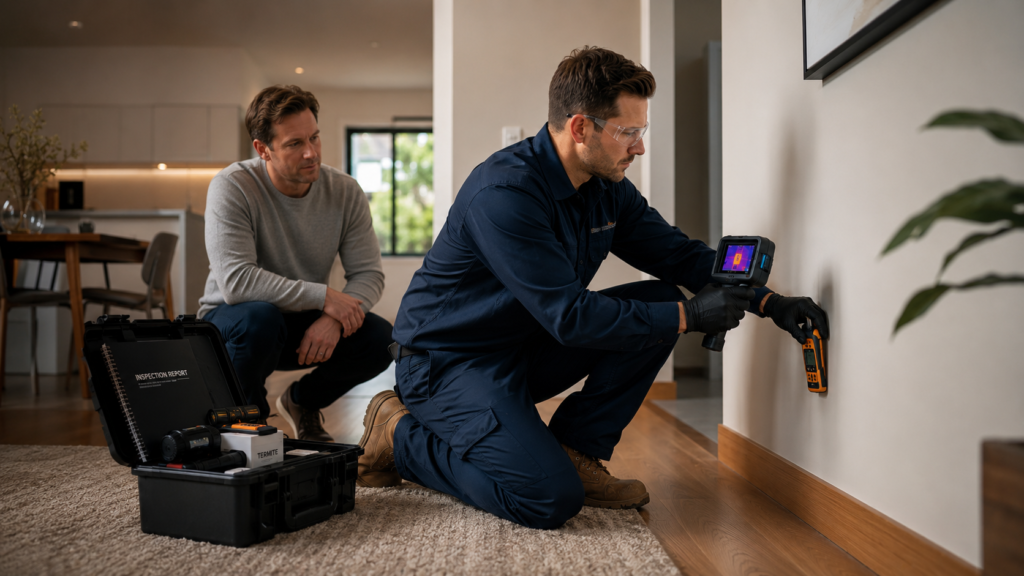
A thermal camera measures surface temperature patterns. It may help an experienced inspector identify anomalies near a ceiling, wall, appliance or service route, particularly when conditions create enough temperature contrast. It does not see through plaster, identify a rat by shape, count a population or prove that every anomaly is biological. Sun exposure, insulation gaps, plumbing, electrical loads, heating and moisture can create similar patterns.
TIM uses thermal observations as one layer of an evidence stack. A useful anomaly is compared with sound history, droppings, rub marks, gnawing, odour, access geometry and monitoring. If those indicators do not align, the technician should explain uncertainty rather than sell wall opening. This protects the customer from unnecessary damage and protects the treatment plan from false confidence.
Non-toxic monitoring blocks, cameras, track indicators and traps can clarify whether a route is active and when. Device location and date matter. Consumption or capture in one zone can justify treatment or exclusion there; a clean device does not automatically prove the whole building is clear if placement, food competition or check interval was unsuitable. Commercial programs use repeated records to show changes over time.
Moisture readings may also help explain supporting conditions such as leaks, condensation or damp service zones, but a moisture meter does not diagnose the plumbing defect. Where dampness attracts pests or damages materials, the right trade must identify and repair the source. Pest control then verifies whether rodent evidence reduces after the environment changes.
The promoted thermal cavity scan is available only where the property, surfaces, access and environmental conditions make it useful and where the written offer applies. Its stated value is not a guaranteed saving on every booking and it cannot replace an invasive building investigation where one is genuinely needed. Customers receive the best value when the scan answers a defined question—such as prioritising a wall route or checking an accessible ceiling area—rather than being treated as a universal detector.
For suspected chewed wiring or an active fire hazard, do not wait for thermal pest mapping. Isolate the risk where safe and contact emergency services or a licensed electrician as appropriate.
Module 6 — targeted population control
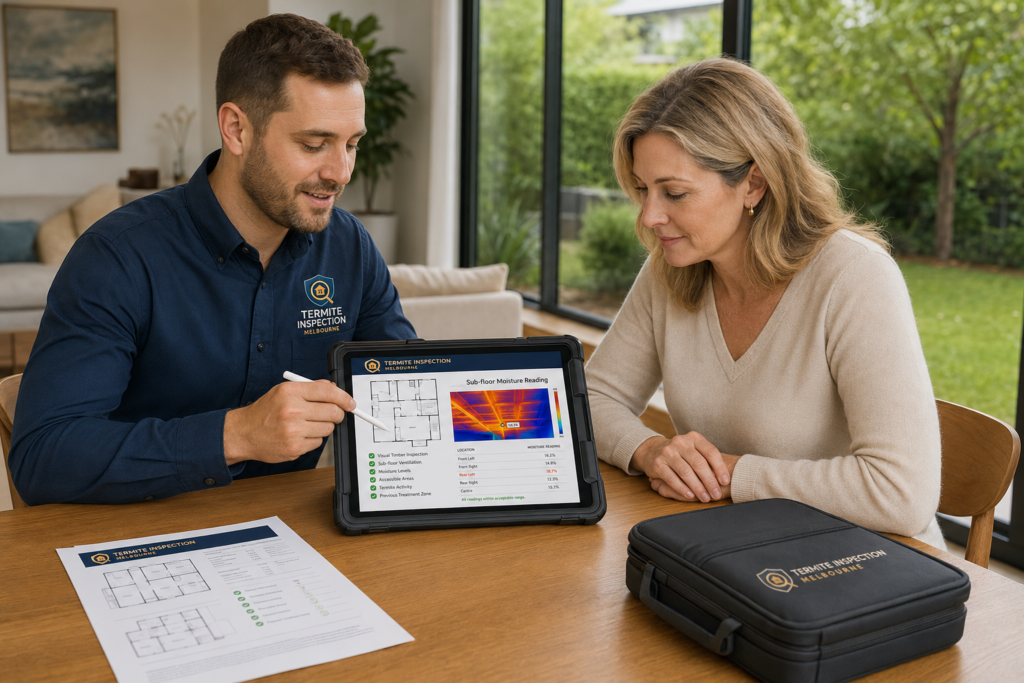
Appropriate traps can provide immediate confirmation of species and location. They are particularly useful where toxic bait is unsuitable, carcass recovery is important or a sensitive interior zone requires tight control. Trap type, position, concealment, anchoring, protection and check frequency matter. Rats can be cautious around unfamiliar objects, while mice may investigate quickly but use narrow local routes. A trap in open floor space may perform poorly and expose occupants or pets.
Victoria restricts glue traps for animals. TIM’s program does not treat adhesive boards as a casual household rodent solution. Mechanical traps and other devices are selected with legal, welfare and safety considerations. Occupants must not move, open or reset secured devices unless the written plan assigns that responsibility.
Professional baiting is not simply stronger supermarket poison. The active ingredient, formulation, station, placement, quantity, inspection interval and retrieval plan should reflect the target rodent and the risk to people, pets, livestock and wildlife. The APVMA’s current anticoagulant rodenticide controls highlight why secondary poisoning and non-target exposure must be considered. A tamper-resistant station helps control access, but it does not eliminate all risk.
Product labels and regulatory conditions can change. The technician follows the current registered label, records the product and gives the customer relevant safety information. Cats and dogs can be poisoned by direct bait access, and some products present secondary exposure risk if a pet or predator eats an affected rodent. Report any suspected exposure urgently to a veterinarian or poison-information service and provide the product label or service record.
Low consumption can mean the device is poorly positioned, alternative food is abundant, the route is inactive or the target is cautious—not that the solution is to scatter more bait. Cleaning spills, closing stock, controlling waste and adjusting device placement may be more effective than increasing product. Commercial programs use thresholds and trend review to decide whether to change method.
Follow-up is therefore part of the control logic. The team checks signs, consumption or capture, searches for accessible carcasses, updates the map and decides when exclusion can proceed. A written warranty, if offered, depends on those agreed checks and customer actions.
Module 7 — durable prevention
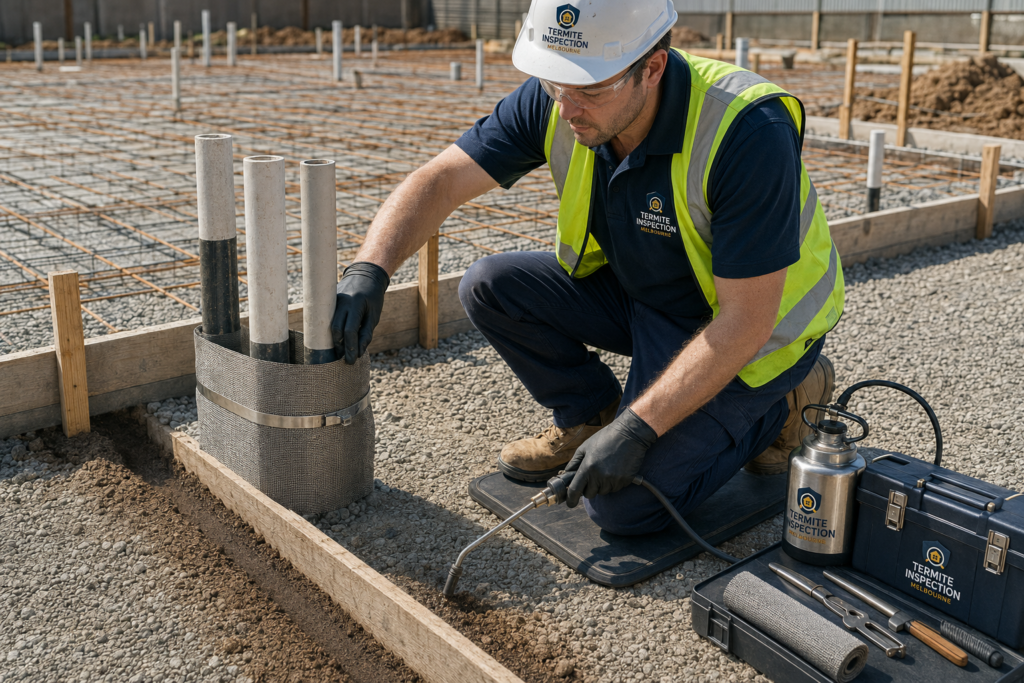
An entry-point survey reviews gaps around doors, vents, eaves, roof tiles, penetrations, cladding interfaces, drains, garages and subfloors. It also considers climb routes such as vegetation, fences, cables and stored materials. Evidence helps prioritise which openings are active and which are simply construction features. Blocking ventilation, drainage or weep functions can create moisture and building problems, so compatible guards and materials are essential.
Suitable exclusion may use corrosion-resistant mesh, formed guards, pest-rated sealants, door sweeps and repair of damaged components. Loose steel wool by itself can rust, be pulled out or fail around moisture; material selection should suit the opening and exposure. Fire-rated, waterproofed, structural, electrical and plumbing penetrations need products and trades appropriate to those systems.
Population control and monitoring normally precede final closure. One-way approaches are not automatically appropriate for rats and mice in complex cavities, and sealing every gap on day one can trap an animal. The plan identifies primary routes, controls activity, verifies decline and then closes openings in a documented sequence. Continued monitoring after proofing helps detect missed or newly created access.
This is the difference between entry-point advice and a complete exclusion contract. A basic rodent package can identify priorities; labour-intensive roof, subfloor, cladding or commercial work receives its own written scope, materials, access requirements and warranty. The advertised $250 barrier discount applies only to eligible complete proofing quotations and cannot reduce a smaller job below its actual approved scope.
Vegetation grows, doors shift, trades open penetrations and storms damage roofs. Owners and facility managers should review high-risk areas after renovations, solar work, air-conditioning installation, plumbing changes and major weather. Bins need intact lids, food storage must remain sealed and pet or bird feed should not be left available overnight.
Commercial sites benefit from assigning corrective actions by person and due date. “Seal gap” is not enough; the record should identify the location, material or trade, urgency and completion status. Residential customers can use the same discipline with a simpler checklist. Durable rodent control is a maintained building process, not a one-day chemical event.
Module 8 — accountable residential and commercial service
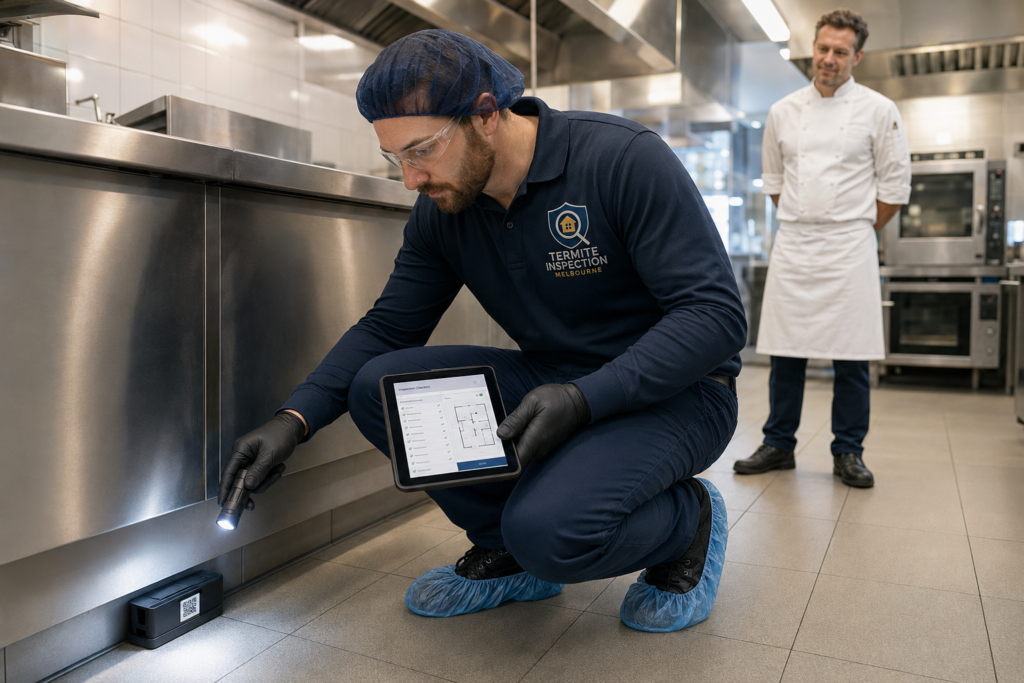
Restaurants, cafes, food warehouses and mixed-use buildings need a rodent program that supports their food-safety system. That includes an accurate site plan, numbered internal and external devices, restricted baiting choices in sensitive areas, service records, trend observations, evidence photographs and corrective actions for hygiene, waste, storage and proofing. Service frequency reflects risk, operating hours, findings and external pressure. A fixed residential visit cannot replace this system.
Victorian food-safety guidance requires pests to be kept out of food preparation and handling areas. When droppings, gnawed stock or a live rodent is found, the operator must also assess affected food and cleaning—not wait for pest control to make every decision. TIM documents pest findings and recommended actions while the business remains responsible for its food-safety procedures and regulator requirements.
A homeowner should know what was inspected, where devices were placed, what must be kept away from children and pets, when checks occur and which gaps are priorities. A landlord or property manager should know whether access, tenant preparation, neighbouring conditions or building repairs limit the result. This information reduces disputes and prevents a “bait was placed” invoice from being mistaken for complete proofing.
Customers searching for AEPMA certified rodent technicians should ask for current evidence of the relevant individual and business credentials rather than relying only on a logo or keyword. Victorian pest-control licences can be checked through the Department of Health register. Insurance, police checks, association membership and any claimed $20 million public-liability cover should also be confirmed from current documents before publication or before a high-risk contract is awarded.
TIM’s booking page shows the standard residential price before personal details. The technician then confirms access, infestation evidence, product or device plan, preparation, follow-up and exclusions. If the work expands into proofing, commercial monitoring, sanitation or a specialist trade, the customer receives a separate approval step. No treatment should silently grow beyond the authorised task.
This accountable approach is more valuable than a universal 100% eradication slogan. Eligible work may carry a written service warranty, but the document defines duration, areas, visits and customer duties. New entry, open food sources, inaccessible shared cavities and uncompleted repairs can fall outside it. Clear terms create a result that can be evaluated rather than a promise that cannot.
Inspection, control, exclusion and verification
Each stage produces information needed for the next. This keeps proofing from trapping animals, keeps devices away from unsuitable locations and gives the customer a measurable definition of progress.
Record sounds, sightings, droppings, damage, food sources, water, harbourage, access routes and non-target risks. Confirm which roof, wall, subfloor, kitchen, waste or exterior zones are safely accessible and which need another trade or access method.
Select traps, secured stations or monitoring based on species behaviour, location and safety. Record device positions and instructions. Reduce alternative food and water so the program is not competing with an unlimited resource.
After monitoring shows the correct stage has been reached, close agreed gaps with compatible durable materials. Preserve drainage, ventilation, fire rating and weatherproofing, and refer specialist repairs to the relevant trade.
Review captures, consumption, fresh signs and access points. Remove devices where appropriate, maintain permanent stations only under an agreed program, complete corrective actions and record any conditions that limit the warranty.
Compare the complete management pathway
The right comparison is not the price of one bait box. Compare inspection, non-target planning, population control, entry-point work, documentation and follow-up.
| Option | Species and route assessment | Child, pet and wildlife planning | Single and double-storey scope | Structural exclusion | Documentation and warranty |
|---|---|---|---|---|---|
| TIM professional rodent program | Evidence-led inspection and monitored placement | Site-specific method and secured-device controls | Accessible zones recorded; elevated limits disclosed | Survey and separate proofing scope where required | Service record and eligible written terms |
| DIY supermarket traps or poison | Owner must identify route and method | Misplacement can expose people, pets or wildlife | Often limited by access and safe placement | No building repair | No professional site record or service warranty |
| General handyman sealing only | May not assess active population or species | No pesticide plan; trapping risk depends on scope | Construction skill and access vary | Can repair gaps but may seal animals inside | Building-work warranty only if provided |
| National aggregator or call centre | Depends on assigned local contractor | Confirm actual technician and product plan | Inclusions may differ from advertised package | Often quoted separately | Check who owns follow-up and warranty |
Local architecture changes the route
Rodent pressure is local to food, vegetation, drainage, construction and shared infrastructure. These examples guide inspection; they are not a claim that every property in a suburb has the same problem.
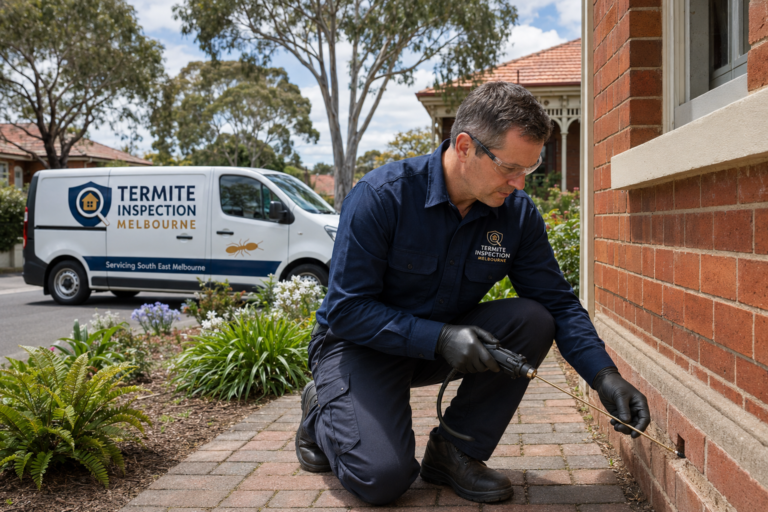
Clyde North, Cranbourne, Berwick, Narre Warren, Officer, Pakenham and Dandenong combine new estates, established homes and construction interfaces. Inspection distinguishes a building opening from broader food, vegetation or drainage pressure before control and proofing are recommended.
View South East Melbourne & Clyde North Area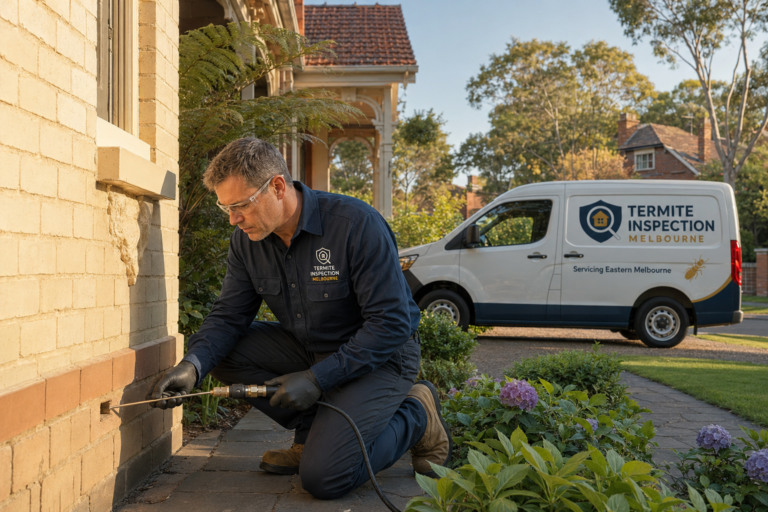
Box Hill, Doncaster, Ringwood, Croydon and Glen Waverley contain mature trees, tiled roofs, chimneys and older additions that can create climbing and cavity routes. Evidence freshness and route continuity are checked before a treatment claim is made.
View Eastern Melbourne Area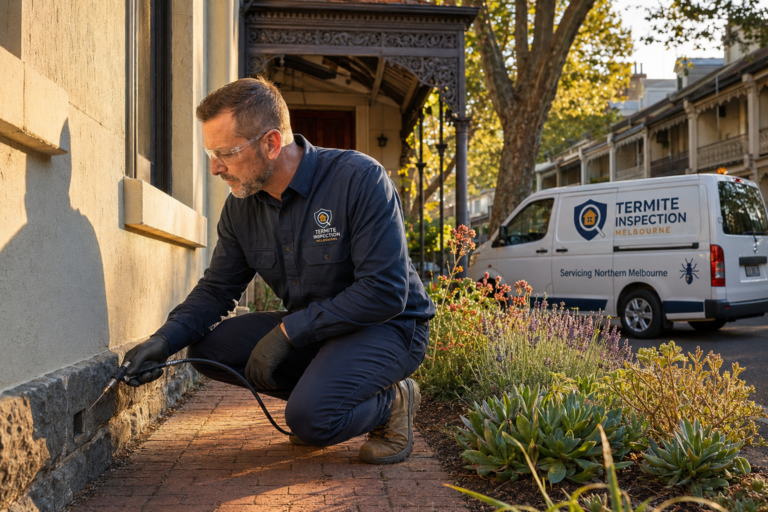
Heidelberg, Preston, Coburg, Reservoir and Epping include terraces, apartments and expanding estates. Shared walls, ageing drains, vegetation and building work can influence rat and mouse pathways between properties.
View Northern Melbourne Area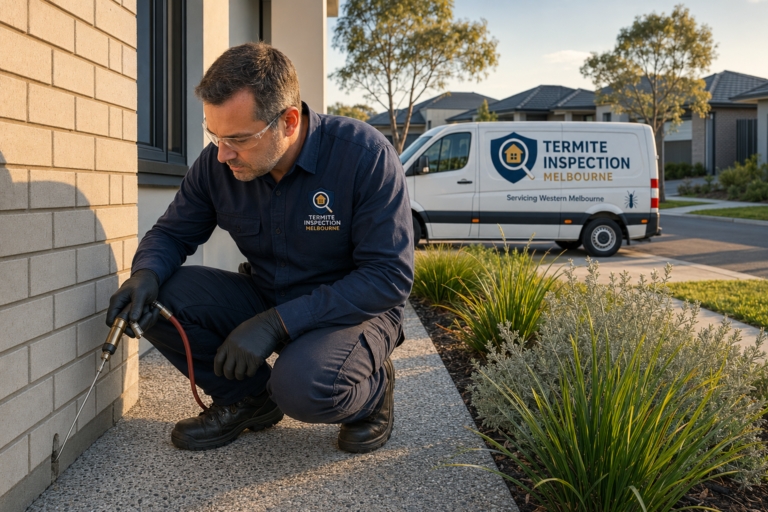
Footscray, Sunshine, Werribee, Point Cook, Altona and Williamstown mix detached homes, warehouses and dense activity corridors. Open grassland, waste movement, roof voids and shared bin areas can increase seasonal pressure.
View Western Melbourne Area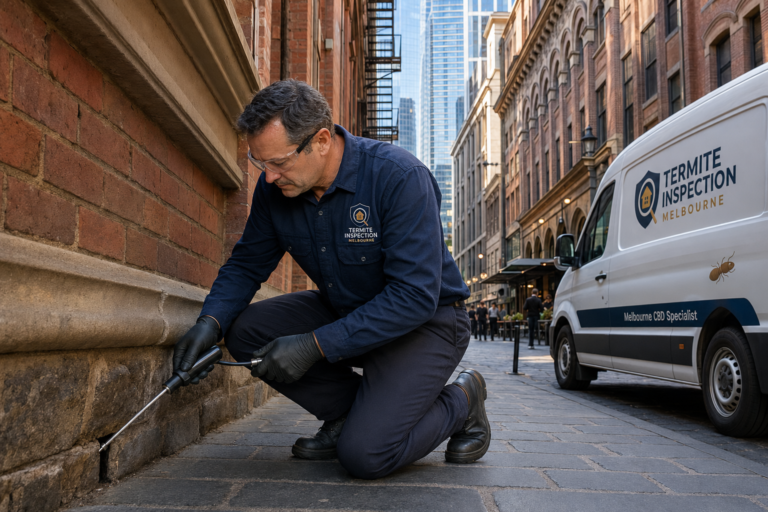
CBD, Docklands, Richmond and nearby inner suburbs often share walls, risers, loading docks, bin rooms and drainage. Device maps and clear corrective-action ownership matter where the source may sit outside one occupancy.
View Melbourne CBD & Inner Suburbs Area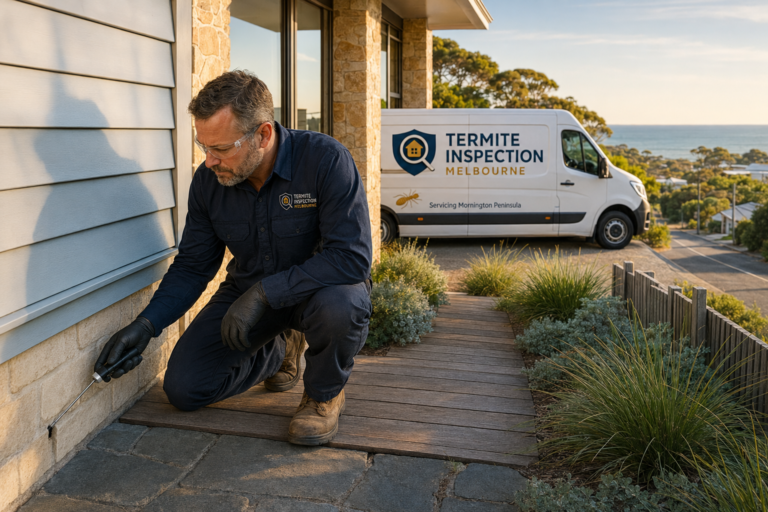
Frankston, Mount Eliza, Mornington, Rosebud, Dromana and Hastings combine coastal properties, hospitality venues, larger blocks and seasonal vacancy. Planning considers access dates, pets, wildlife, waste and the interval between visits.
View Mornington Peninsula Area
Local team, verifiable credentials
TIM’s Pest Control operates from Clyde North and services Melbourne homes, rentals and businesses. A professional claim should be verifiable. Victorian customers can check a pest-control operator’s current licence through the Department of Health register. For commercial or high-risk work, request current insurance, association credentials, police-check availability and the name of the technician who will attend.
Our page intentionally avoids inventing review quotations or publishing an unverified $20 million insurance claim as fact. If those documents are current, they can be added after the business supplies evidence. Until then, the conversion promise is practical: transparent standard prices, a direct booking pathway, a written service record and clear separation between rodent treatment, proofing, cleaning and other trades.
Customers searching for a rat exterminator Melbourne, roof rat removal Victoria or mice removal Melbourne can use the same booking system. The selected service, property size, activity level and checked add-ons pass to the booking page, where the final price or commercial assessment pathway is reviewed before contact details are submitted.
Check the Victorian pest-control licence register · Read APVMA rodenticide information
Real social proof, no invented testimonials
Use current published reviews to assess communication, punctuality and follow-up. This page does not fabricate customer names, star counts or service claims.
★★★★★
Read current customer feedback and confirm service availability for your property before booking.
View verified reviews★★★★★
Read current customer feedback and confirm service availability for your property before booking.
View verified reviews★★★★★
Read current customer feedback and confirm service availability for your property before booking.
View verified reviewsProfessional safeguards
The written plan should identify the method, locations, safety controls, follow-up and customer responsibilities. Product labels and current Victorian rules take priority over generic website copy.
Confirm current Victorian licensing for the technician and relevant authorisation.
Any rodenticide is selected and placed only within its registered directions and risk controls.
Victoria restricts animal glue traps; control methods must meet current legal and welfare rules.
Locations, instructions, checks and corrective actions support safe, accountable follow-up.
Safety note: suspected bait ingestion, damaged electrical wiring, fire, gas or severe illness requires the relevant veterinarian, poison service, emergency service or licensed trade. Do not rely on a website booking for an immediate emergency.
Clear answers before you book
Pricing, roof rats, mice, pets, proofing, thermal imaging, commercial programs, dead rodents and written warranty conditions.
Eligible standard residential rodent-control packages on this page are $150 before GST for a small one- to two-bedroom unit, $180 before GST for a medium three-bedroom home, and $210 before GST for a large four-bedroom or multi-zone property. Those totals are $165, $198 and $231 including GST. The booking calculator keeps the selected package and add-ons, then shows the final GST-inclusive total before customer details are submitted. Commercial premises, inaccessible roof or wall activity, severe contamination, carcass recovery, elevated work and structural proofing may require an inspection and a separate written quotation. A low headline price should always be compared against the number of visits, monitored devices, accessible zones, proofing materials, follow-up and warranty conditions actually included.
There is no honest zero-risk rodenticide claim. A safer professional plan begins by identifying likely rat or mouse activity, mapping access and considering non-target animals. Depending on the property, it may combine correctly positioned traps, tamper-resistant stations, monitoring, sanitation and staged exclusion. Any rodenticide must be registered for the intended use and applied strictly to its label. Baits and captured rodents must be inaccessible to children, pets and wildlife, and owners should follow the written monitoring and carcass-check instructions. The APVMA has strengthened risk controls around anticoagulant rodenticides, so product choice and placement must reflect current labels. Tell the technician about cats, dogs, birds, reptiles, poultry, wildlife visitors and any neighbour concerns before devices are installed.
Common warning signs include scratching or running sounds after dark, droppings, gnaw marks, oily rub marks, shredded insulation or paper, damaged food packaging, unexplained odour, nesting material and pet attention directed at one wall or ceiling area. Daytime sightings can indicate disturbance or heavy pressure, but no single sign identifies species or population size. Electrical faults, water leaks, birds, possums and building movement can also cause noises or damage. A professional inspection connects the sign to travel routes, food and water sources, access points and building zones. Thermal imaging may reveal temperature anomalies in some conditions, but it does not see through walls or prove that a warm area is a rodent nest; findings need visual or monitoring confirmation.
Our preferred rodent-management pathway combines population control with entry-point assessment and practical prevention. Minor advice may be included in the inspection, while physical exclusion is quoted according to the number, location and construction of gaps. Proofing can involve compatible vent and weep-hole guards, durable mesh, door seals and repair of service penetrations or roof defects. Sealing must be staged: closing every suspected opening before active rodents are removed can trap animals inside, create odour and damage, or move them into occupied rooms. Structural, electrical, plumbing, roofing and fire-rated penetrations may require the relevant licensed trade. No building remains rodent-proof forever without inspection and maintenance.
An initial residential inspection and device placement often takes about one to two hours, but clearance time depends on species, population pressure, food competition, device acceptance, roof and subfloor access, neighbouring sources and whether exclusion is completed. Mice may respond differently from wary roof or Norway rats, and a heavily supplied food environment can slow bait or trap engagement. Activity should be reviewed against monitoring evidence rather than a promise that every job ends after one visit. The written plan should state the first service, check intervals, device responsibilities, follow-up conditions and the point at which entry gaps can be closed. Urgent same-day attendance is subject to suburb, preparation and technician availability.
The standard package is selected by overall property size, while storeys, access and risk are confirmed before attendance. A single-storey house may allow direct roof-void, perimeter and subfloor inspection; a double-storey property can have separate roof planes, inter-floor voids, inaccessible eaves and service risers. The service reviews accessible evidence, likely travel routes, food and water sources and suitable device locations. Roof-void and exterior extensions can be selected as add-ons where applicable. Difficult elevated access, removal of roof materials, wall opening, extensive proofing or specialist trades are outside a basic treatment unless stated in writing. Ask for a documented double story rat proofing cost after the entry-point survey rather than assuming that baiting includes building repairs.
Accessible carcass recovery can be assessed, but a dead rodent may be inside a sealed wall, deep under insulation or in another unsafe or inaccessible location. The technician will explain what can be reached without destructive work. Odour does not reveal an exact position, and thermal imaging is not a guaranteed carcass locator. Droppings, urine and nesting material should not be swept or dry-vacuumed casually because dust can spread contamination. Small accessible areas may receive controlled clean-up advice; widespread soiling, damaged insulation, mould, sewage, sharps or confined-space conditions may require a specialist remediation contractor. Electrical damage or exposed wiring must be isolated and assessed by a licensed electrician.
Safety depends on the method, product, placement, property and compliance with instructions. Professional service reduces avoidable exposure by choosing methods after inspection, securing devices, recording locations and explaining what occupants must not touch or move. Rodenticides can poison pets and wildlife through direct access and, with some products, through secondary exposure. A locked station reduces access but does not make a pesticide harmless. Inform us about children, pets, assistance animals, aviaries, poultry, wildlife, food gardens and known sensitivities. If ingestion is suspected, contact a veterinarian or the relevant poison-information service immediately and provide the product information; do not wait for symptoms.
Yes. Commercial rodent management Melbourne programs can be designed for restaurants, cafes, warehouses, offices, retail sites and managed properties. A suitable program maps internal and external risk zones, assigns numbered devices, records findings and corrective actions, reviews sanitation and proofing, and sets a service frequency based on risk rather than a residential one-off assumption. Victorian food businesses must keep pests out of food preparation and handling areas, so urgent sightings, droppings or damaged stock require both pest control and food-safety action. Commercial pricing is site-specific because floor area, operating hours, waste, deliveries, adjoining tenancies, reporting requirements and device numbers vary.
A written service warranty may apply to an eligible defined treatment when all required areas are accessible, monitoring and follow-up are completed, sanitation and proofing instructions are followed and no uncontrolled neighbouring or structural source defeats the work. It should never be read as a promise that any building will remain permanently rodent-free regardless of new entry, open doors, food waste or unrepaired gaps. The written scope—not an advertising headline—defines the target pest, service period, included visits, treated zones, customer obligations and exclusions. Commercial maintenance programs and extensive exclusion work have their own review and warranty terms.
Sunday dispatch windows may still be available
Choose the correct residential package or request a commercial assessment. The booking page will keep your rodent service, property size, activity level and add-ons, then show the final GST-inclusive price before submission.