“Smell had been getting worse for four days and they found it same-day using a thermal camera, no guessing. Gone within hours of the call.”
Same-day emergency dispatch • $20M public liability
Dead Possum Removal & Odor Neutralization Services Melbourne
Rapid emergency response, safe physical extraction of decomposing carcasses from impossible-to-reach roof and wall spaces, complete biochemical sanitization, and permanent odor eradication — all with transparent flat-rate pricing you see before you book, not after.
- ✓ Same-day emergency dispatch
- ✓ Fixed upfront pricing, no surprises
- ✓ Molecular odor neutralization included
- ✓ 100% odor elimination guarantee
Emergency dispatch request
Get an Instant Estimate & Book
Same-day emergency dispatch, fixed upfront pricing, 100% odor elimination guarantee.
Estimated Price
Select details below
Final price confirmed on-site before any work begins
Prefer our full quote calculator instead? Use it here.
⚡
Same-Day Dispatch
Emergency response
🌡️
Thermal Location
No blind cutting
🧪
Molecular Neutralization
Not just masking
💲
Fixed Flat Rates
No surprises
📍
199+ Suburbs
Clyde North to CBD
⭐
4.9 Rating
2,000+ reviews
Eight modules, everything you need to know
Understanding & Resolving a Dead Possum Emergency
A dead animal in roof smell Melbourne homeowners describe as unbearable is one of the most urgent pest issues we handle — not because it's dangerous in the way termites or a wasp nest can be, but because it makes a home genuinely unlivable until it's resolved. This guide covers everything from recognising the warning signs through to permanent odor elimination, so you know exactly what to expect before we arrive.
Module 1
The Biohazard Reality of a Decomposing Possum in Your Roof
Recognising the warning signs early is what turns a manageable same-day fix into a manageable same-day fix — waiting rarely makes it better, and almost always makes it worse before it's over.
Overpowering Sweet-Putrid Odor
A distinct, sickly-sweet rotting smell that's noticeably different from mustiness or damp — usually concentrated in one room or area rather than spread evenly through the house.
Swarms of Blowflies
Flies clustering on windows or in a specific room, drawn directly to decomposition fluids — one of the clearest confirming signs an active carcass is nearby.
Dark Ceiling Staining
A brownish or dark stain spreading across a ceiling panel, caused by decomposition fluid soaking through insulation and plaster from above.
Bacterial Health Risks
Decomposition fluids can carry harmful bacteria, and contaminated insulation can retain both odor and bacterial risk long after the smell seems to fade on its own.
The timeline: odor and blowfly activity typically peak 3 to 7 days after death, then gradually decline over several weeks as decomposition completes — which is exactly why professional extraction beats waiting it out, since the affected insulation and cavity remain contaminated well after the smell itself starts to fade.
Module 2
Why Carcasses End Up Trapped in Walls and Ceilings
Understanding how a possum ends up dying inside a roof void or wall cavity explains why professional location and extraction genuinely requires specialised equipment, not just a ladder and a torch.
Old Baiting Programs
Where poison baiting has been used historically (now rare given possums are protected), affected animals often retreat into the deepest, most inaccessible part of a roof void before dying, well beyond where a torch beam or a homeowner's reach can find them.
Blocked Entry Points
A possum that enters through a gap that later gets blocked — by falling debris, another animal, or accidental sealing during other roof work — can become trapped with no way out, eventually dying inside the cavity it entered to shelter in.
Exhaustion or Injury
An injured, sick or elderly possum may retreat into the deepest, warmest part of a roof or wall cavity to shelter before dying naturally, often in a spot chosen specifically because it's hard to reach.
Why This Matters for Location
Because carcasses end up in the least accessible part of a structure almost by definition, a visual search alone frequently fails — which is exactly the gap thermal imaging and acoustic techniques in Module 3 are built to close.
Module 3
Advanced Thermal & Acoustic Location Techniques
Pinpointing the exact carcass location before any cutting or drilling happens is what separates a targeted, minimally invasive extraction from guesswork that damages a wall or ceiling unnecessarily.
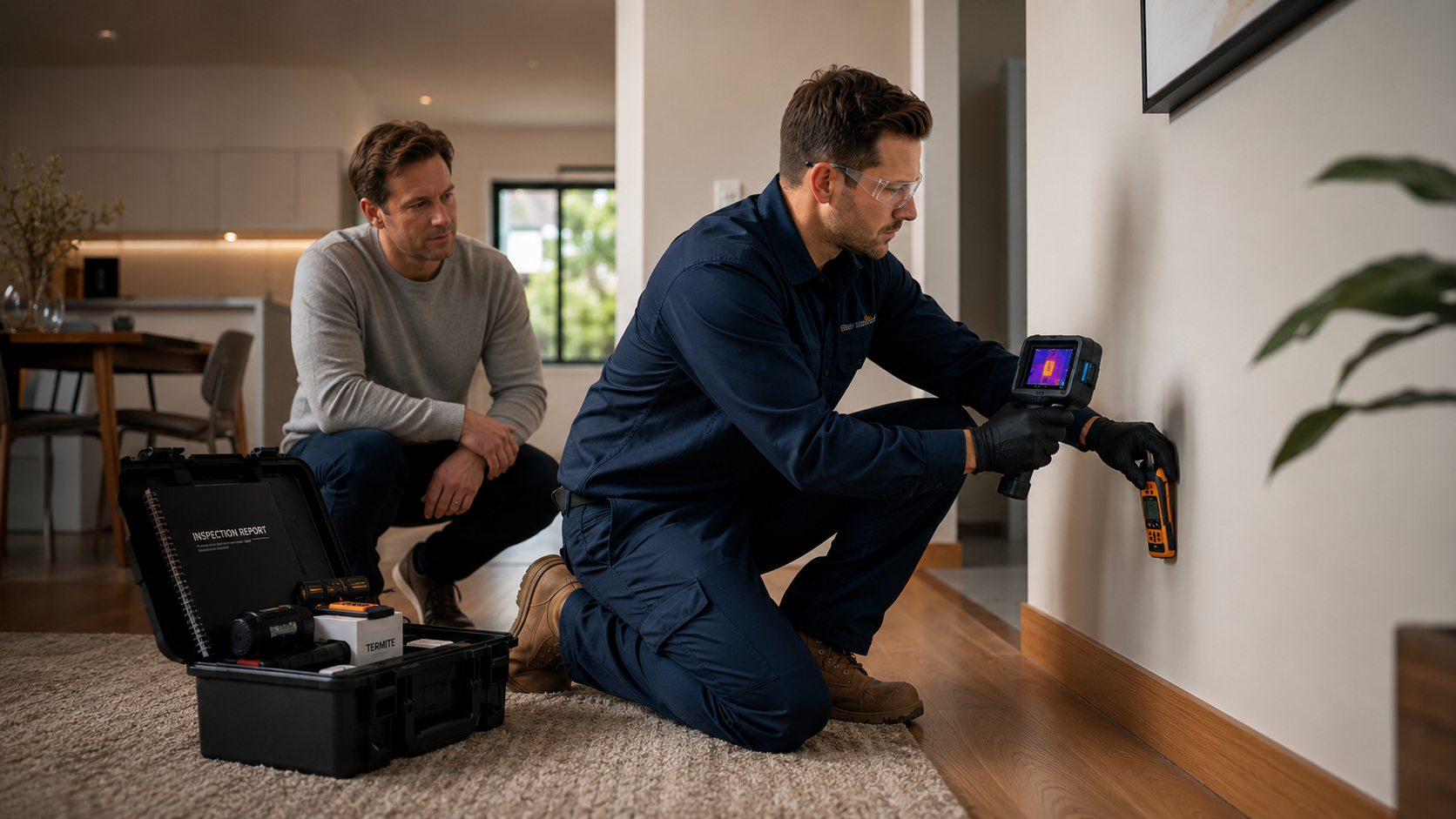
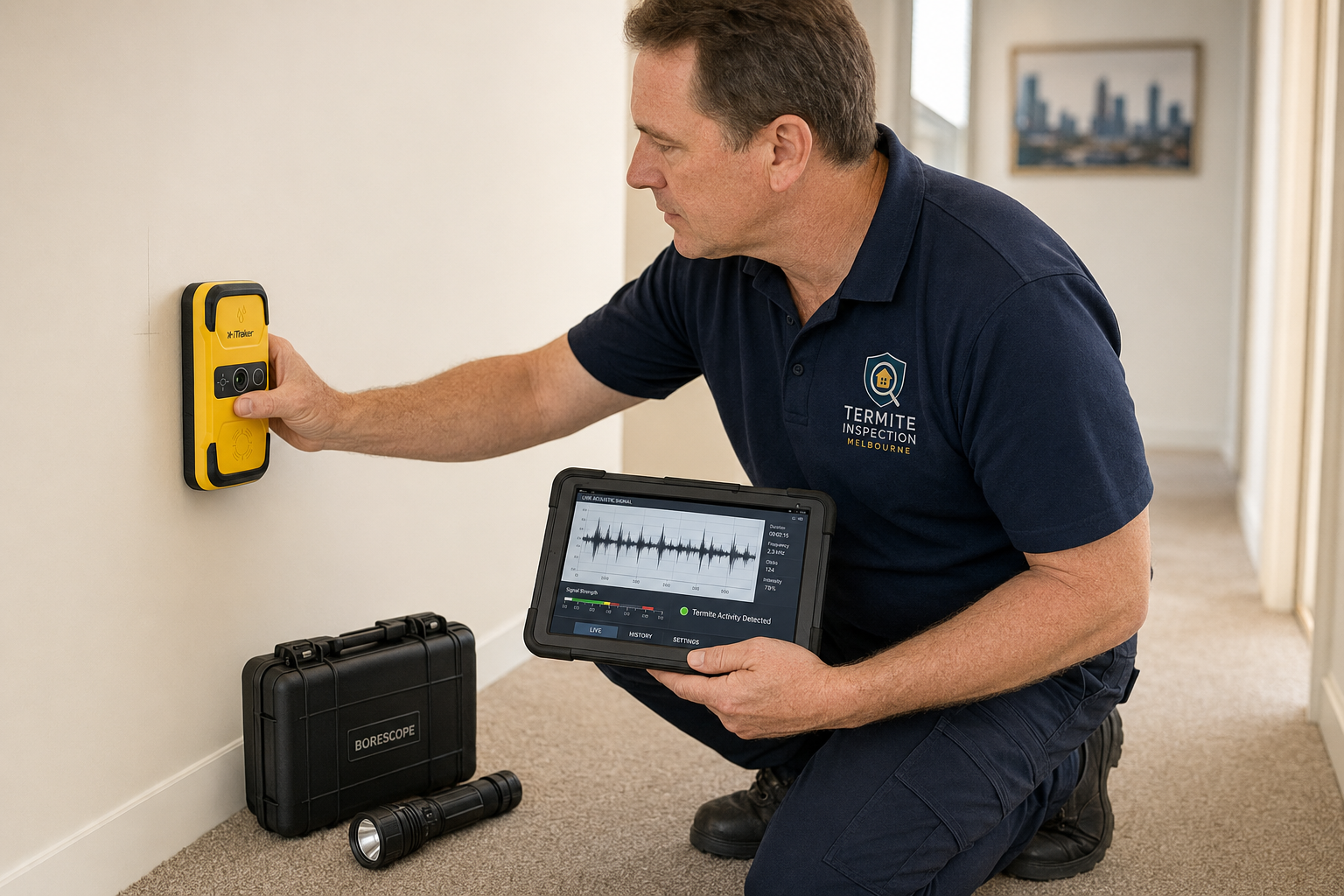
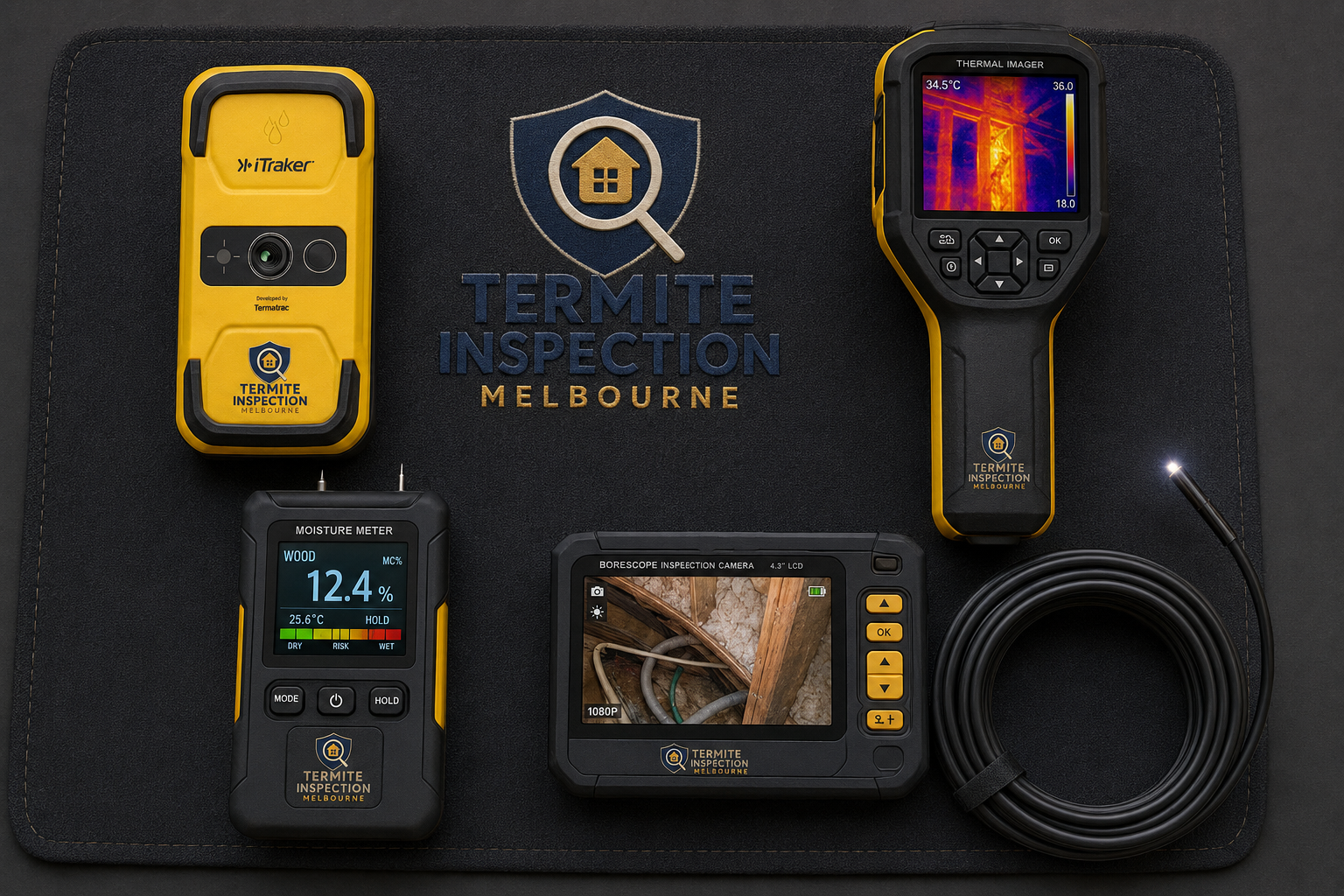
🌡️ FLIR Thermal Cameras
Decomposition produces a distinct heat and moisture signature that shows up clearly on a thermal scan, letting our technician narrow down the exact cavity section without any exploratory cutting.
💧 Moisture Meters
Elevated moisture readings corroborate a thermal finding, since decomposition fluid raises local moisture levels in surrounding timber and insulation.
🔎 Acoustic & Odor Triangulation
Comparing odor intensity and, where relevant, faint blowfly sound across multiple points helps triangulate a precise location, especially useful in larger roof voids spanning several rooms.
Module 4
Safe Extraction Protocols & PPE Standards
Once located, retrieval follows a strict biohazard-safe protocol designed to protect both the technician and your household from any risk during the process.
Minimal Access Cutting
Where an existing manhole or vent doesn't provide access, the smallest practical opening is cut, always explained and approved before work begins.
Full PPE Standards
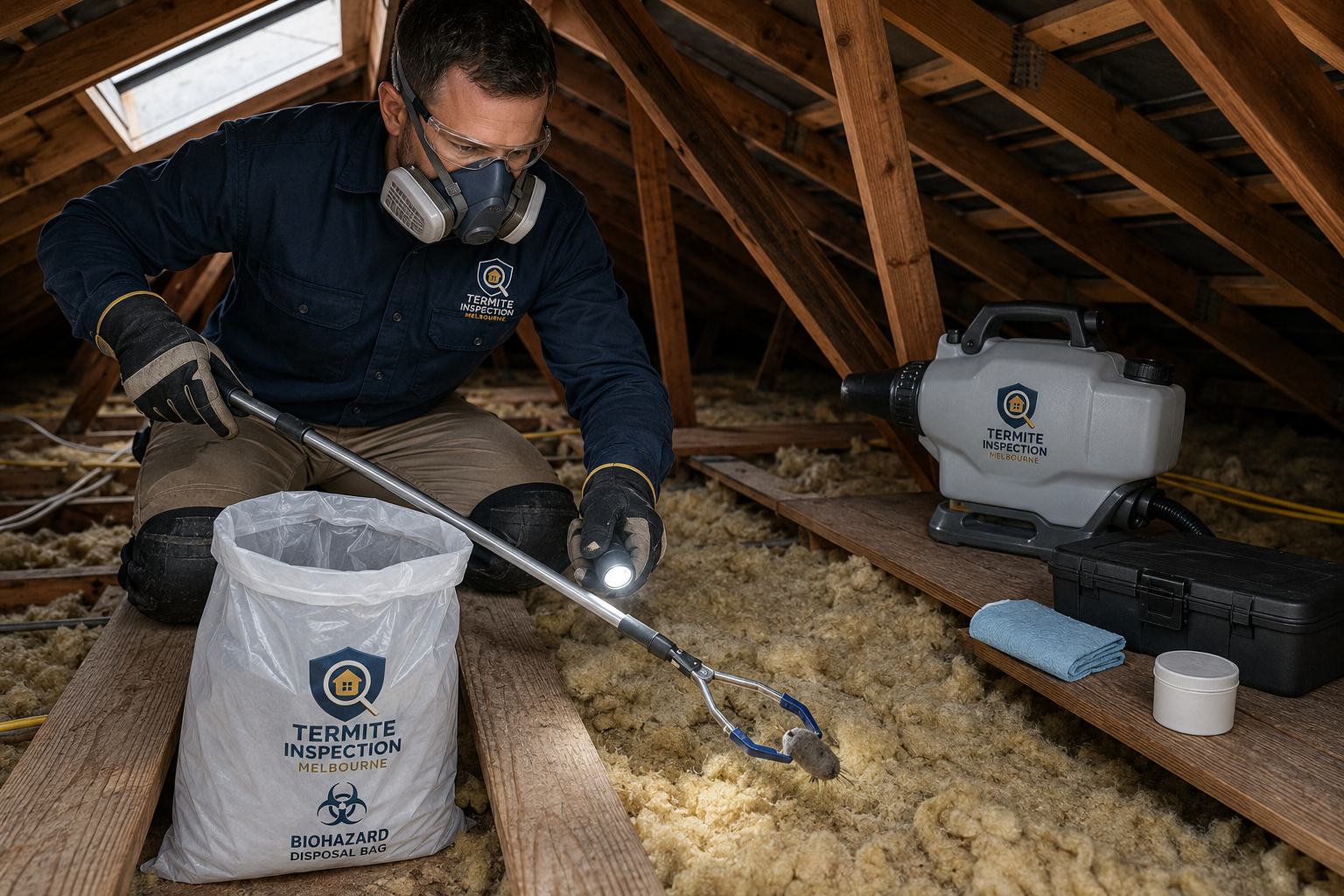
Technicians wear medical-grade gloves, respirators and protective coveralls throughout retrieval, given the genuine bacterial exposure risk decomposition presents.
Careful Removal
The carcass and any heavily contaminated material is removed intact where possible and double-bagged for compliant disposal, minimising further contamination during removal.
Sealing Against Scavengers
The access point is temporarily sealed after extraction to prevent secondary scavenger entry — flies, rodents or other animals drawn to lingering odor residue.
Module 5
Medical-Grade Odor Neutralization & Enzymatic Treatment
Removing the carcass is only half the job — the odor compounds left behind in insulation, timber and surrounding materials need to be genuinely broken down, not just covered up.
Enzymatic Neutralizing Agents
Applied directly to the affected cavity and surrounding materials, these agents chemically break down the specific organic decay proteins responsible for the odor, rather than masking them with fragrance.
Hydroxyl Generators
Used in more severe cases, hydroxyl generators produce hydroxyl radicals that break down odor molecules in the air and on porous surfaces, safe to run in occupied areas of the home.
ULV Fogging
Ultra-low volume fogging disperses a fine treatment mist that penetrates insulation and hard-to-reach cavity surfaces a surface spray alone can't fully cover.
Family & Pet-Safe Formulations
All products used are selected for safety around occupied homes, with clear re-entry guidance provided for any treated area before you're asked to resume normal use of the space.
Why this matters: a regular deodorizer or air freshener only masks a smell temporarily — the underlying odor compounds are still present and the smell returns once the fragrance fades. Molecular-level neutralization is what actually delivers a lasting result.
Module 6
Transparent Pricing & Service Tiers (Clear Melbourne Rates)
Emergency dead possum removal cost shouldn't be a mystery you only find out after the job is done — every tier below is a fixed flat rate confirmed before work begins.
Open Roof Void
$250
+ GST, single accessible carcass
Subfloor
$280
+ GST
Chimney
$380
+ GST
Sealed Wall Cavity
$450
+ GST, access cutting required
Odor Neutralization Add-On
+$180
Enzymatic treatment & hydroxyl/ULV as needed
Entry Point Proofing
+$150
Heavy-duty mesh sealing
Same-Day Emergency Dispatch
+$90
Subject to route availability
All prices confirmed before work begins — waste disposal and standard sanitization are included in every tier above, not billed as separate extras.
Module 7
Post-Removal Prevention & Entry Point Proofing
Resolving the current emergency without addressing how the possum got in leaves the door open, literally, for the same thing to happen again with a different animal.
Roofline & Vent Sealing
Heavy-duty mesh is fitted over roofline gaps, damaged flashing and vent penetrations — the most common entry points for a possum seeking shelter in a roof void.
Chimney Capping
An unused or infrequently used chimney is a surprisingly common entry point — a properly fitted cap prevents repeat access while still allowing appropriate ventilation.
Module 8
Why Melbourne Homeowners Call TIM's Emergency Team
Rapid SLA Dispatch
Same-day emergency response across all Melbourne metropolitan zones, subject to route and time of booking.
$20M Public Liability
Full protection for any work performed inside your home, certificates available on request.
Discrete, Professional Execution
Unmarked or subtly branded vehicles available on request for privacy-conscious clients.
100% Odor Elimination Guarantee
If the treated odor genuinely returns from the same source within the guarantee period, we return to resolve it at no extra charge.
Why the provider matters
Dead Possum Removal Providers Compared
| Provider | Exact Carcass Retrieval | Molecular Odor Neutralization | Wall Cavity Cutting/Repair | Health Hazard Compliance |
|---|---|---|---|---|
| TIM's Professional Extraction Service | ✓ Thermal-located, PPE-standard | ✓ Enzymatic + hydroxyl/ULV | ✓ Minimal, approved before cutting | ✓ Full biohazard protocol |
| DIY Air Fresheners & Sprays | ✗ None | ✗ Masking only | ✗ None | ✗ None |
| General Handyman Services | ⚠️ No location equipment | ✗ None | ⚠️ Uncontrolled cutting risk | ✗ No PPE standard |
| Standard Pest Exterminators | ⚠️ Variable equipment | ⚠️ Often surface spray only | ⚠️ Not always offered | ⚠️ Variable |
Local conditions, local risk
Melbourne Suburbs & Seasonal Emergency Vectors
From Victorian terraces in Fitzroy with original, hard-to-access roof cavities, to brick-veneer homes across the Mornington Peninsula and Clyde North, Melbourne's diverse housing stock and seasonal weather both shift when and where dead possum emergencies spike.
Inner Melbourne Terraces
Fitzroy, Carlton, Richmond
Original, tightly-built roof cavities with limited access points make location genuinely harder without thermal equipment.
Established Suburban Homes
Box Hill, Camberwell
Mature trees overhanging rooflines increase possum traffic and, correspondingly, emergency call volume.
South East Growth Corridor
Clyde North, Cranbourne
Newer construction with more accessible roof spaces generally means faster extraction once located.
Mornington Peninsula
Mornington, Frankston
Coastal humidity accelerates decomposition odor spread, making early professional response particularly valuable.
Seasonal note: warmer months accelerate decomposition and odor spread significantly faster than winter, meaning summer emergency calls tend to be more urgent and same-day dispatch more valuable.
Credentials you can verify
Certified Melbourne Wildlife Emergency Technicians
Every technician dispatched to a dead animal emergency is trained specifically in biohazard-safe extraction and odor neutralization protocols.
Fully Licensed & Insured
Current pest-management licence and $20M public liability cover, certificates on request.
Biohazard-Trained Technicians
Specific training in safe carcass handling, PPE standards and enzymatic treatment application.
Same-Day Emergency SLA
Rapid dispatch commitments confirmed at time of booking, not a vague best-effort promise.
Police-Checked Local Experts
Every technician is background-checked and Melbourne-based.
Trusted across Melbourne
What Melbourne Homeowners Say
4.9
Rated on Google
from 2,000+ local Melbourne properties
“Blowflies everywhere in the spare room. Technician located it in the wall cavity, minimal cutting, fully sanitized. Would not hesitate to call again.”
“Called in the morning, had someone out same afternoon. Fixed price confirmed before anything started, no surprises on the invoice.”
“Chimney smell we could not figure out for a week. Turned out to be exactly what they suspected on the phone. Professional and fast.”
Answers before you book
Dead Possum Removal FAQs
How quickly can you remove a dead possum from my roof?+
Same-day emergency dispatch is available in most of our service area when booked before early afternoon — call 0466 929 533 or use the form on this page and select Same-Day Emergency Dispatch. Next-morning appointments are available for less urgent cases where the smell has just started and no blowflies are present yet. Response time depends on your suburb and current technician routes, so the earlier in the day you call, the better your same-day chances.
How do I know if the smell in my house is actually a dead possum?+
A dead possum smell is typically described as a strong, sickly-sweet, rotting odor that gets noticeably worse over 3 to 7 days after death before beginning to fade over several weeks as decomposition completes. It is usually strongest in one specific room or area rather than spread evenly through the house, often near a roof void, wall cavity or subfloor. Active blowfly presence around a specific spot on a ceiling or wall is one of the clearest confirming signs, since flies are drawn directly to a carcass and its early decomposition fluids.
Can you find a dead possum without cutting into my ceiling or walls?+
In many cases, yes. Our technicians use thermal imaging to detect the distinct heat and moisture signature decomposition produces, often locating a carcass in a roof void or wall cavity without needing to cut an access point at all. Where the carcass is in a genuinely sealed cavity with no existing access, minimal, targeted cutting is sometimes unavoidable — we always explain this clearly and get your approval before any cutting work begins, and can advise on the smallest, least disruptive access point available.
Why does the smell get worse before it gets better?+
Decomposition follows a predictable pattern: gas buildup and fluid release typically peak around days 3 to 7 after death, which is when odor intensity is at its worst and blowfly activity is most visible. After this peak, the smell gradually declines over the following weeks as decomposition completes and the carcass dries out. This is a normal biological process, not a sign that anything has gone wrong — but it is also exactly why waiting it out is rarely the right call, since professional extraction and enzymatic treatment addresses both the source and the residual odor immediately rather than over several more weeks.
What is molecular odor neutralization and is it different from a regular deodorizer?+
Regular deodorizers and air fresheners simply mask a smell with a stronger competing scent — the underlying odor compounds are still present and the smell returns once the fragrance fades. Molecular odor neutralization uses an enzymatic treatment that chemically breaks down the specific organic compounds decomposition produces, genuinely eliminating the odor at a molecular level rather than covering it up. This is applied directly to the affected cavity, insulation and surrounding materials after extraction, which is why it delivers a lasting result rather than a temporary improvement.
Do you disinfect the area after removing the carcass?+
Yes — decomposition fluids can carry bacteria and pose a genuine biohazard risk, so every extraction includes biohazard-grade sanitization of the affected area, not just removal of the carcass itself. Contaminated insulation is identified and, where needed, replacement is recommended as part of the service, since insulation can retain odor and bacterial contamination even after the carcass itself is gone.
Is it legal to remove a dead possum myself in Victoria?+
Removing an already-deceased possum yourself is not the same legal issue as live possum removal, which is strictly regulated since possums are a protected native species. That said, handling a decomposing carcass without proper protective equipment carries a genuine health and biohazard risk, and locating it without professional equipment (thermal imaging, confined-space access tools) is often far harder than it sounds — which is why most Melbourne homeowners call a professional rather than attempt it themselves.
How much does dead possum removal cost in Melbourne?+
Pricing depends on where the carcass is located: open roof void extraction starts from $250, subfloor extraction from $280, chimney extraction from $380, and sealed wall cavity extraction requiring access cutting from $450 — all plus GST. Molecular odor neutralization treatment and entry-point proofing are available as optional add-ons. Every price is confirmed before work begins, and the estimate calculator on this page gives you an indicative price before you even submit your request.
What happens if you cannot find the carcass during the visit?+
This is uncommon given our thermal imaging equipment, but if a carcass genuinely cannot be located or accessed during the visit, we will explain exactly why and discuss options — this might include a follow-up visit once the smell has developed further and become easier to pinpoint, or, in rare cases involving fully inaccessible cavities, a referral for the cavity to be professionally opened. We do not charge full price for a visit that could not resolve the issue.
Do you also handle possum entry-point proofing after the smell is gone?+
Yes — once the immediate odor issue is resolved, we can identify and seal the entry point the possum used to access the roof void or wall cavity, preventing a repeat problem from a different animal down the track. This is offered as an add-on to the removal service and is genuinely worth considering, since an unproofed entry point is an open invitation for the next possum looking for shelter.
Don't Wait for the Smell to Get Worse
Speak directly with our emergency wildlife team and book same-day dispatch today — fixed pricing, molecular odor neutralization, and a 100% elimination guarantee.