How can I tell the difference between a flying termite and a flying ant?
+
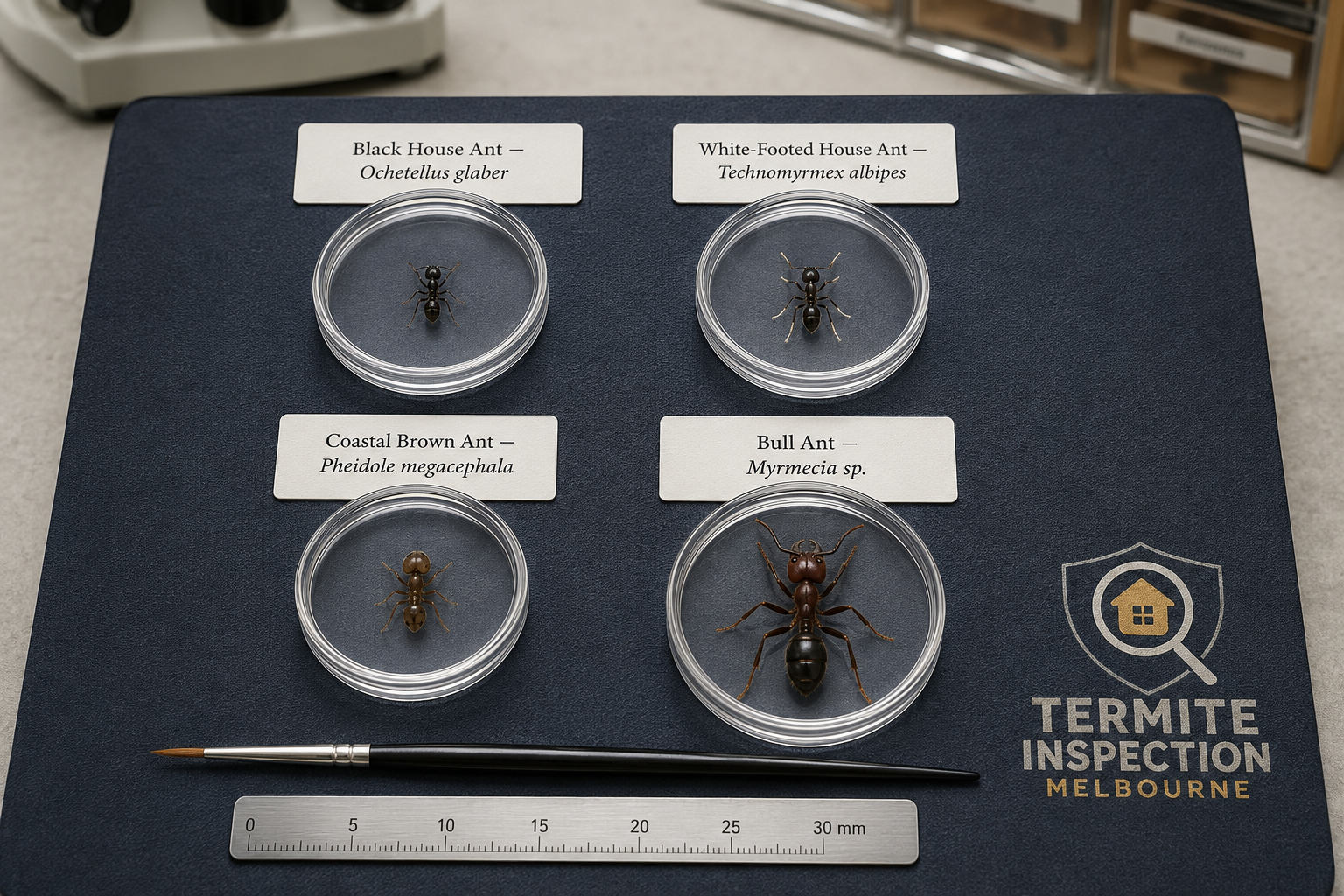
Four visual checks settle it every time. Antennae: termites have straight, bead-like antennae; ants have distinctly bent, elbowed antennae. Waist: termites have a broad waist with no pinch between thorax and abdomen; ants have a narrow, pinched waist. Wings: termite wings are equal in length and roughly double the body length; ant wings are unequal, with the front pair noticeably longer than the back pair. Behaviour: termite swarmers (alates) are weak, clumsy fliers often found near timber, mud tubes or shed wings close to a wall or window after a warm, humid evening, while flying ants tend to swarm more energetically and are less tied to a single structure. If you're unsure after checking all four, a photo sent to a licensed technician is usually enough for a fast identification.
What are the key visual differences between German cockroaches and native wood cockroaches?
+
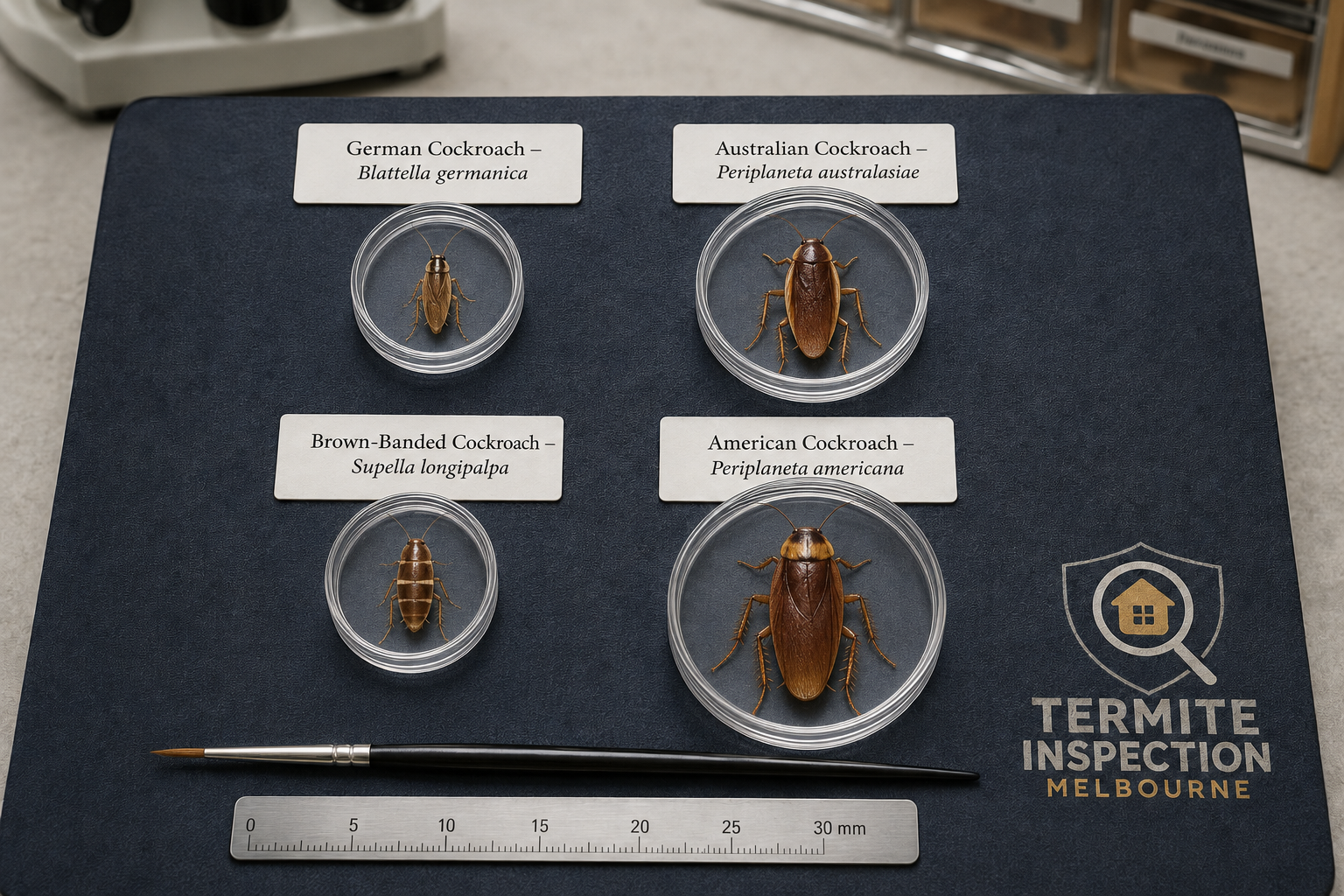
German cockroaches are light tan to medium brown, roughly 12-15mm long, with two dark parallel stripes running from head to wing base, and are almost always found indoors near warmth, moisture and food — kitchens, bathrooms and commercial food-prep areas. Native wood cockroaches (commonly seen in Melbourne gardens) are typically larger, darker, glossier, and lack the German cockroach's parallel stripes; they live outdoors in leaf litter, garden mulch and under bark, and rarely establish an indoor colony the way German cockroaches do. Seeing a large, dark cockroach once in the garden isn't cause for treatment — a small, striped cockroach spotted repeatedly indoors, especially in a kitchen, is.
Why do roof rats invade Melbourne ceilings during autumn?
+
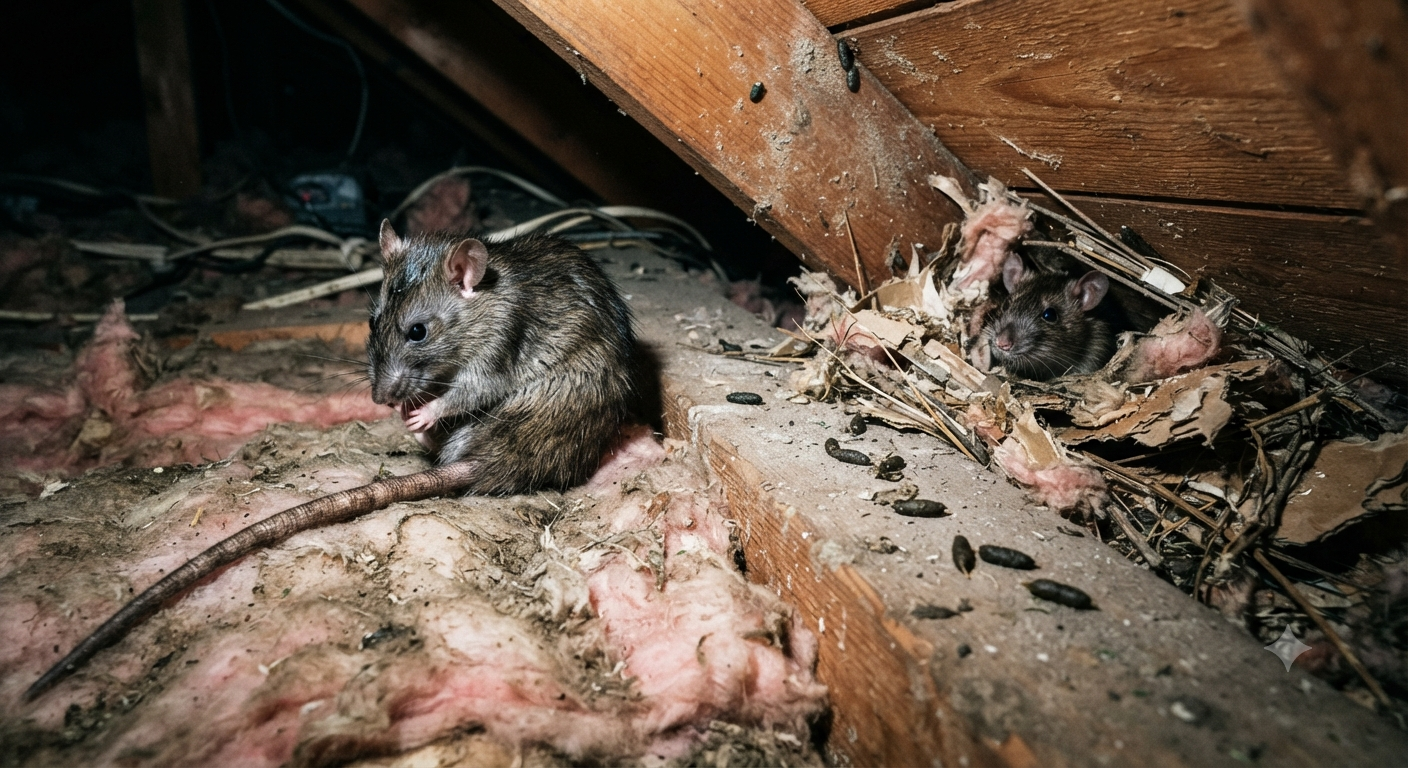
As daytime and overnight temperatures drop through autumn, roof rats (black rats) move from garden vegetation, fence lines and neighbouring properties into roof voids seeking warmth, shelter and a dry nesting site ahead of winter. Ceiling cavities offer insulation, protection from predators, and easy access to structural timber for gnawing and nest-building material, all within a short climb of an outdoor food source. Scratching sounds overhead in the evening, particularly around dusk when roof rats become active, are the most common autumn warning sign reported to us.
How do restaurants and cafes eliminate German cockroaches without closing their doors?
+
Treatment is designed around continued trading. Non-repellent gel baiting is placed in cracks, voids and behind fixed equipment — coolroom motors, dishwasher surrounds, wall cavities behind cooking lines — well away from food-contact surfaces, so service continues uninterrupted during and after application. This is combined with insect growth regulators to break the breeding cycle over subsequent weeks, and a documented monitoring schedule with written reports after each visit, satisfying HACCP and council audit requirements without a closure ever being necessary for a standard infestation.
How quickly can TIM's Pest Control identify and treat an unknown infestation?
+
Same-day and urgent appointments may be available depending on your suburb and technician route — call 0466 929 533 before 9am for the fastest availability check. Most unknown infestations are correctly identified on-site during the initial inspection using visual assessment plus, where relevant, thermal imaging and moisture detection equipment, meaning identification and a treatment recommendation typically happen in the same visit rather than requiring a separate follow-up appointment.
What's the difference between a huntsman spider and a funnel-web spider?
+
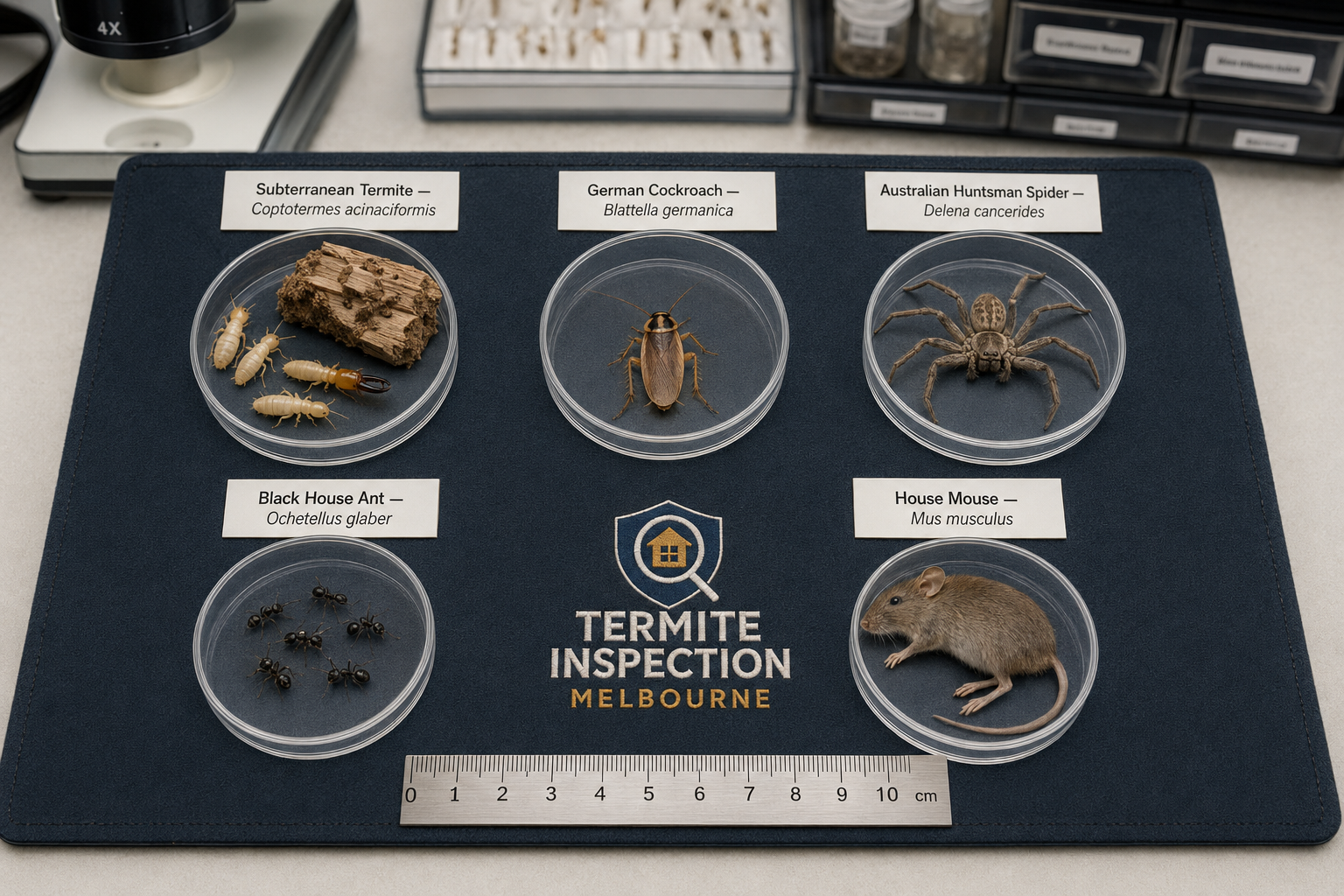
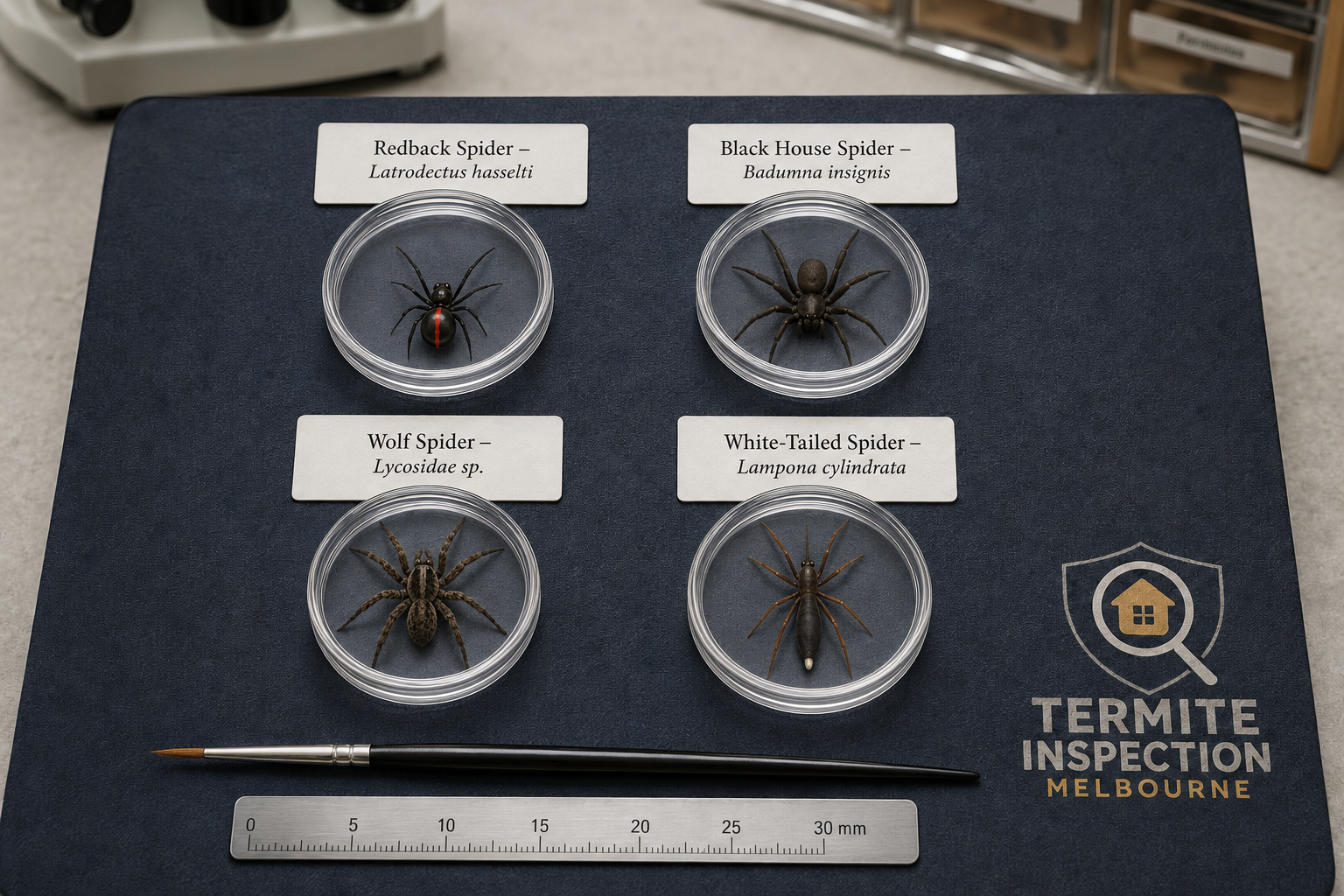
Huntsman spiders are large, flat-bodied, greyish-brown spiders with a distinctive crab-like sideways leg posture, commonly found on walls, ceilings, in cars and under bark — they are not aggressive and their bite, while it can happen, is not medically significant. Funnel-web spiders are heavier-bodied, glossy, dark brown to black, with large front fangs, and are ground-dwelling, typically found in burrows in moist, sheltered garden areas rather than climbing walls. A genuine funnel-web sighting in the Melbourne metro area is uncommon but should always be treated with caution and reported to a professional rather than handled — if there's any doubt, treat it as the more dangerous species until confirmed otherwise.
Are white-tailed spiders as dangerous as their reputation suggests?
+
White-tailed spiders are slender, dark reddish-grey with a pale tip on the abdomen, commonly found indoors under clothing left on the floor, in bedding and inside shoes overnight. Their bite is painful and can cause localised swelling and redness, but the widely circulated claim that they cause severe skin necrosis has been discredited by Australian medical research — most bites resolve with standard first aid. That said, any bite that shows signs of infection, spreading redness or doesn't improve within a couple of days should be checked by a doctor, as with any spider bite.
How does thermal imaging actually confirm pest activity behind a wall?
+
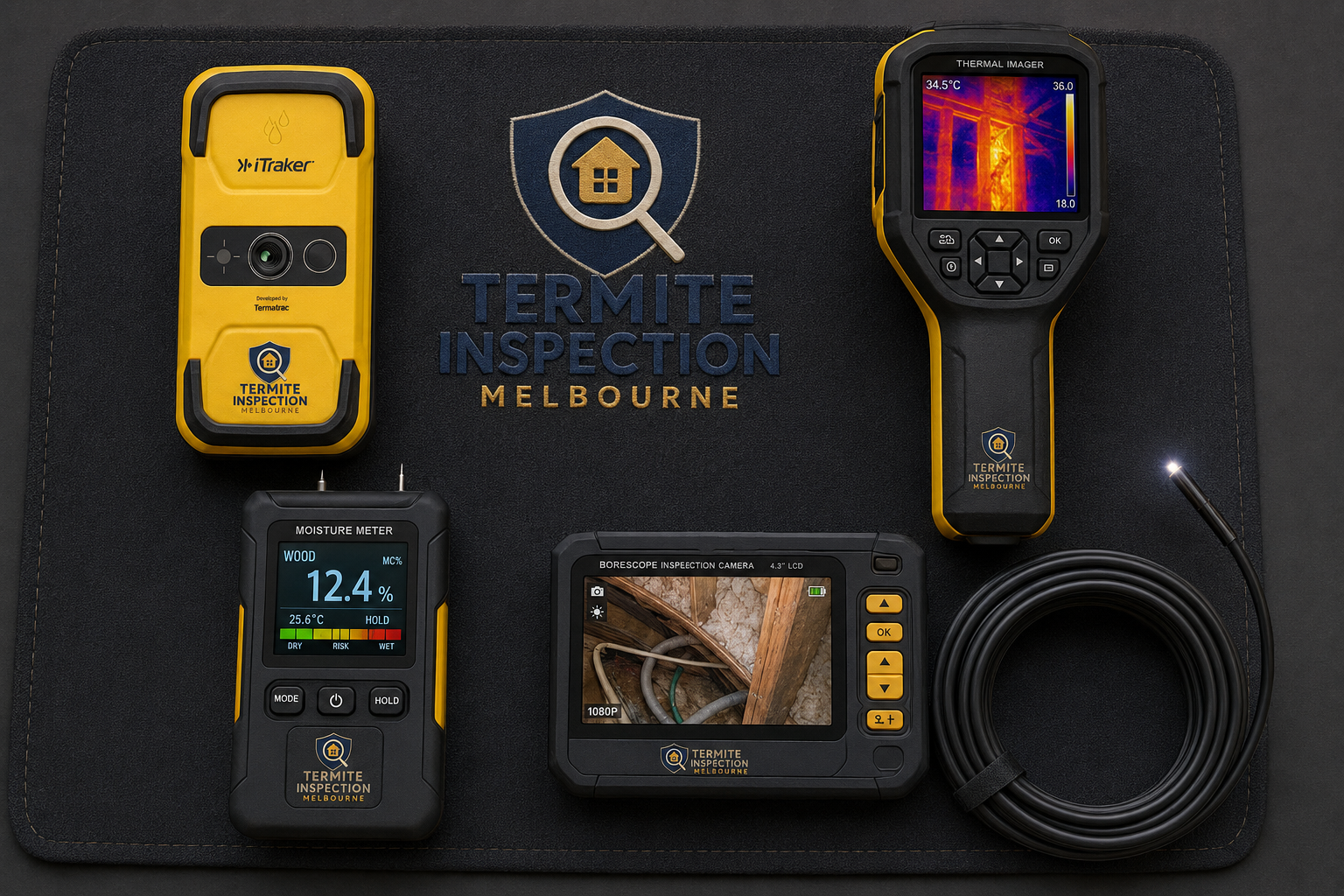
A FLIR thermal imaging camera reads subtle surface temperature variations across a wall, ceiling or floor and displays them as a colour-mapped image. Termite galleries, elevated moisture and insulation gaps behind an intact surface all show up as thermal anomalies compared with the surrounding material, directing our technician to the exact spot that needs a closer physical check with a moisture meter or Termatrac radar rather than guessing where to probe or cut into a wall unnecessarily.
Can supermarket sprays actually make a cockroach or ant infestation worse?
+
Yes, in specific ways. Repellent sprays can cause an ant colony to "bud" — splitting into multiple smaller, harder-to-treat satellite nests instead of being eliminated. With cockroaches, some retail aerosols trigger a stress response that scatters the population deeper into wall voids and inaccessible areas rather than killing the source colony. Neither product reaches a queen or breeding colony hidden behind plaster, under flooring or inside commercial kitchen equipment — which is exactly why a population that seemed to disappear after a spray often returns, sometimes larger, within a few weeks.
Are brushtail and ringtail possums a pest control matter, or something else?
+
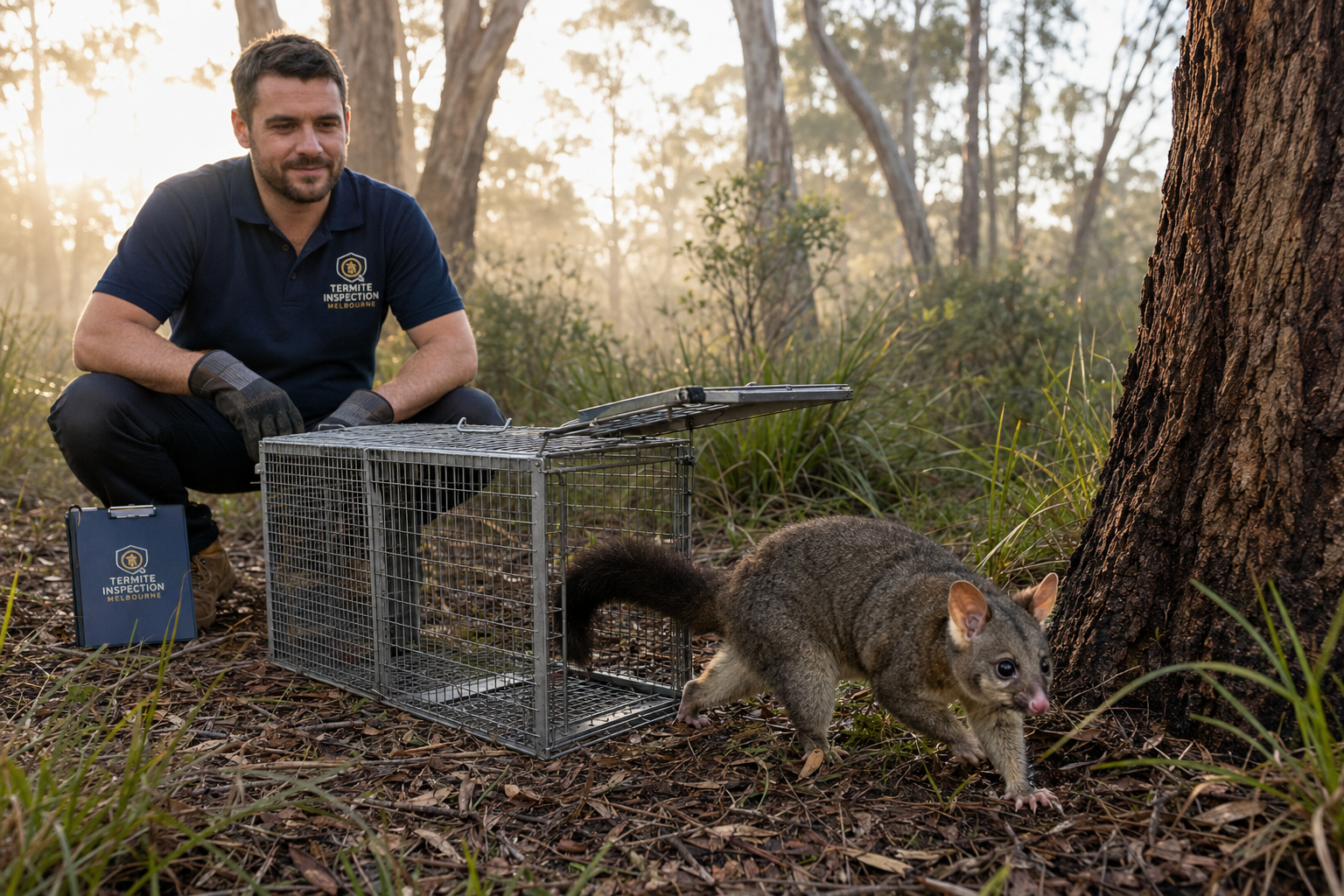
Possums are a native protected species in Victoria, so removal is a humane wildlife exclusion matter, not a standard pest treatment — they cannot be trapped, harmed or relocated without following strict regulations. The compliant approach is a one-way exclusion gate fitted to the roof entry point, letting the possum leave to forage at night while preventing re-entry, followed by permanently sealing the access point once it has vacated the roof void.
How do I identify whether I have a bed bug problem or just skin irritation?
+
Bed bug bites typically appear as small, itchy, red welts in a line or cluster, usually on skin exposed while sleeping, and are often accompanied by physical evidence — tiny rust-coloured spotting on sheets or mattress seams (digested blood), pale, discarded exoskeletons, or a faint musty odour in a heavily infested room. Skin irritation from other causes (allergies, other insect bites, dermatitis) typically won't come with that physical evidence trail. If you find even one live bed bug or the tell-tale spotting pattern on a mattress seam, that's enough to warrant a professional inspection rather than waiting for more bites to confirm it.
How do I identify a drywood termite infestation versus a subterranean one?
+
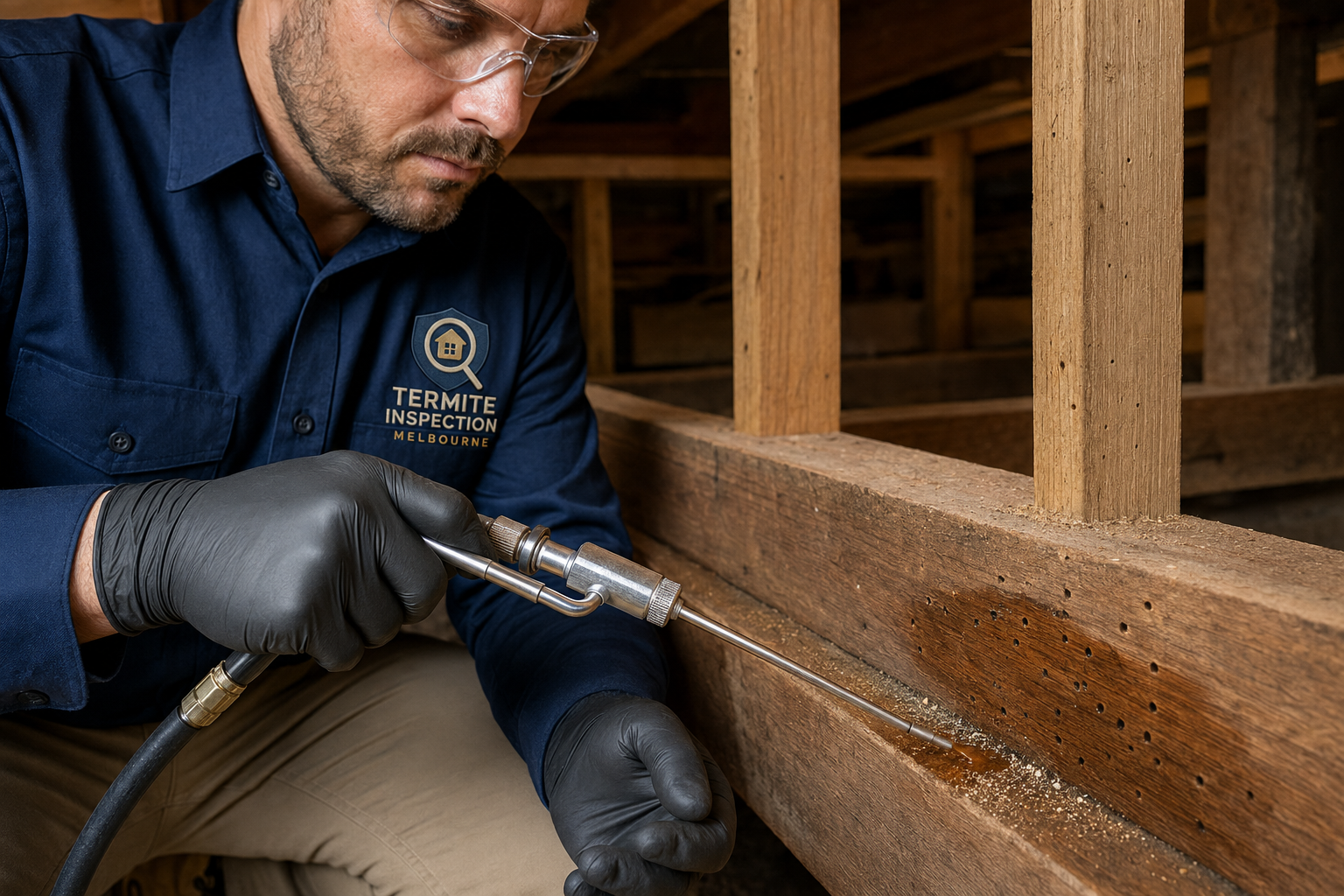
The clearest sign is the location and the evidence type. Subterranean termites always need soil contact or a moisture source, so mud shelter tubes across brick, concrete or stumps are the giveaway. Drywood termites need no soil contact at all — instead, look for small hexagonal faecal pellets pushed out through tiny "kick holes" in furniture, skirting or roof timbers, with no mud tubes present anywhere nearby. Correct identification matters because the treatment differs significantly: subterranean colonies need a soil or barrier-based treatment, while drywood infestations are usually treated with localised timber injection or, in severe cases, whole-structure fumigation.
What's the difference between a wasp nest and a bee hive, and does it change how it should be removed?
+
A European wasp nest has a distinctive grey, papery, layered exterior (made from chewed wood pulp) and is usually found in a cavity — roof void, wall space, underground burrow — rather than in the open. A feral bee hive shows visible golden-brown wax comb, often with individual bees clearly visible entering and exiting a small gap. The removal approach differs: wasp nests are treated and removed given the aggression risk and no ecological benefit to preserving them, while feral bee hives are, where practical, removed live by a beekeeper rather than exterminated, given their pollination value.
How can I tell if scratching in my ceiling is a rat, a mouse, or a possum?
+
Sound and timing are the fastest clues. House mice produce fast, light scurrying, often audible during the day as well as at night. Roof rats produce heavier, faster scratching concentrated at dusk and through the night as they become active. Possums produce the heaviest sound of the three — distinct thumping or bumping as they move — and are also the only one of the three that may growl or hiss, a harsh territorial sound unmistakable once you've heard it. If in doubt, a professional inspection using a borescope or simply checking the roof void from an access point will confirm which of the three you're dealing with before any treatment or exclusion work begins.
Does the location where I find a pest change what it likely is?
+
Significantly, and it's one of the fastest identification shortcuts available. A crawling insect found in a bathroom or laundry is more likely silverfish or a drain-associated cockroach given the moisture; something found on a mattress seam is far more likely bed bugs than any other pest in this guide; a mud-like tunnel on an external brick wall is almost always termite shelter tubing rather than anything else; and a large spider found on a car or under bark is overwhelmingly more likely a huntsman than a more dangerous species. Location alone won't give you a certain identification, but combined with the appearance checks in each module above, it narrows the list dramatically before you even need to call for confirmation.
What information should I have ready when calling to identify an unknown pest?
+
A clear photo is the single most useful thing you can provide — even a slightly blurry phone photo is usually enough for a preliminary identification over the phone before a technician attends. Beyond that, note where you found it (room, height, indoor or outdoor), what time of day you noticed activity, whether you've seen one instance or a recurring pattern, and any physical evidence nearby (droppings, webbing, mud tubes, exit holes, discarded wings). This context, combined with a photo where possible, usually lets us give you a confident preliminary identification and next-step recommendation before we've even attended the property.
Is it worth getting a pest identified if I'm planning to sell or I'm buying a property?
+
Yes, significantly so. An undisclosed or unresolved termite or pest issue can complicate a sale, affect a building inspection result, or become a point of dispute after settlement — and for buyers, a pre-purchase pest and termite inspection is one of the few checks that can genuinely save tens of thousands of dollars in avoided structural repair costs. If you've identified even a minor sign — a mud tube, hollow timber, old borer exit holes — before a sale or purchase, getting it professionally assessed and documented protects both parties and is standard practice across most Melbourne property transactions.