
☰ Explore Services & Menu
Pest Control +
Termite Services +
Commercial +
Wildlife & Bird Control +
Service Areas +
Pricing & Booking +
About Us +
Melbourne backyard, foliage & breeding-source specialists
Professional Mosquito Control and Treatment Melbourne
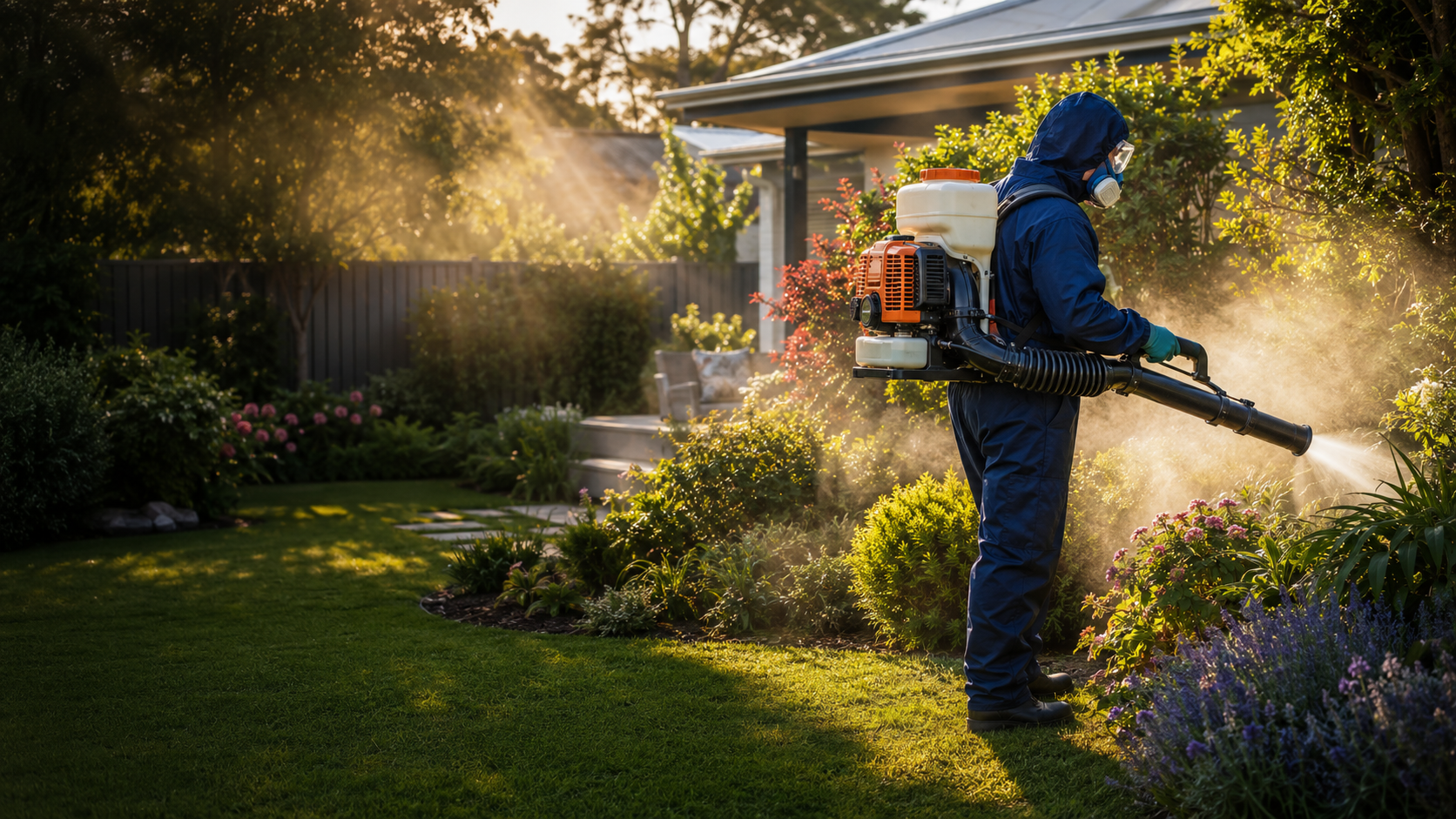
Rapid adult mosquito knockdown, targeted residual foliage barrier protection and practical breeding-source control for Melbourne homes, gardens and businesses. We inspect standing water, shaded vegetation, gutters, drains and outdoor entertaining zones, then build a treatment plan around site conditions, weather and non-target safety. Eligible services are supported by a written outdoor protection warranty.
- ✓ Same-day mosquito control options
- ✓ Standing-water and larvae inspection
- ✓ Foliage barrier and larvicide options
- ✓ Clear pricing before customer details
Same-day dispatch is subject to technician availability, access and safe treatment conditions.
Detailed Mosquito Inspection
Foliage, water and resting zones
Outdoor Protection Guarantee
Eligible written service scopes
AEPMA-Certified
Mosquito treatment specialists
Police-Checked Local Team
Melbourne property specialists
Zero Hidden Fees
GST total shown before booking
Melbourne-Wide
South East to Peninsula
Why increasing mosquito pressure deserves prompt attention
Why Mosquito Infestations Can’t Wait
Mosquitoes can move from egg to biting adult quickly when warm weather and standing water coincide. A few evening bites may indicate larvae developing in gutters, pot saucers, drains or neighbouring water while adult females rest in dense shaded foliage. Early inspection reduces breeding opportunities before the next generation expands.
Biting pressure ruins outdoor living
Female mosquitoes seek blood meals to develop eggs. Activity can peak around dusk and dawn, precisely when families use patios, barbecues, pools and play areas. Repeated bites cause itching, swelling and disturbed sleep, while sensitive people can experience stronger local reactions.
A professional mosquito exterminator does more than spray the open air. The inspection identifies shaded resting surfaces and nearby breeding water, allowing treatment to be placed where mosquitoes actually land and where immature stages develop.
Victoria has mosquito-borne disease risks
Ross River virus and Barmah Forest virus are established Australian mosquito-borne diseases. Property treatment can reduce local mosquito activity, but it cannot guarantee disease prevention because adults may arrive from beyond the boundary. Customers should also follow current Victorian public-health advice, use suitable repellent, wear protective clothing and maintain screens.
Pest technicians do not diagnose illness. Fever, rash, joint pain or concerning symptoms after bites require advice from a qualified healthcare professional.
Small water sources create the next generation
Blocked gutters, pot-plant saucers, buckets, bird baths, toys, tarpaulin folds, drains and neglected pool edges can retain enough water for larvae. The water source can be easy to miss because adults may rest several metres away in cool shrubs or under decks.
Our Melbourne mosquito inspection maps water, checks accessible sites for wrigglers and explains which sources can be emptied, screened, drained or treated with a label-approved larvicide. Source reduction and foliage treatment work together; either one alone may leave part of the life cycle untouched.
Transparent Melbourne mosquito treatment prices
Choose Your Property Size and See the Price
Customers comparing backyard mosquito barrier spray prices or Ross River virus mosquito treatment cost can see the standard rates before entering customer details. Prices below are before GST, and the connected booking calculator displays the final GST-inclusive total. Weather, water features, sensitive pollinator zones, unusual access and commercial operating conditions can change the final scope.
Pricing disclaimer: Prices and add-ons are shown before GST. The connected booking calculator keeps the chosen package and selected add-ons, then displays the final GST-inclusive total before customer details are submitted. Package inclusions apply to accessible areas and the written treatment scope. Wetlands, neighbouring breeding sources, extensive water features, bee-sensitive zones, weather delays, difficult access or separately licensed drainage work may require a different plan. Warranty conditions apply only where stated in writing.
Defined scope, responsible claims
Outdoor Protection Warranty, Licensing and Treatment Accountability
A strong guarantee is useful only when its scope is clear. TIM’s Pest Control documents the accessible treatment zones, preparation, weather conditions, source-reduction responsibilities, re-entry directions and warranty exclusions before relying on an outdoor protection promise.
100% Outdoor Protection Guarantee for Eligible Work
Where accessible resting zones and breeding sources can be treated, preparation is completed and source-reduction instructions are followed, a written outdoor protection warranty may be included. The service document—not a headline—defines the period, treated zones, included response and exclusions.
Mosquitoes can fly in from neighbouring land, wetlands and untreated water, so no ethical provider can promise a permanently mosquito-free boundary. Heavy rain, irrigation, pruning, washing treated foliage and newly formed standing water can also affect performance. The guarantee applies to the eligible service and documented areas.
Licensed, Insured and Evidence-Led
Treatment selection is based on mosquito biology, foliage density, water, weather, property access, pollinator risks and occupant sensitivity. Products are used according to their registered label, with documented preparation and re-entry directions. Police-checked local technicians can be requested where available.
Customers searching for AEPMA certified pest specialists can ask for confirmation of the technician’s current licence, training, insurance and relevant association credentials. TIM’s Pest Control explains where treatment will be applied, why each target zone matters and which practical changes will protect the result.
Identification and biological behaviour
Mosquito Species, Life Stages and Backyard Hotspots
Effective mosquito control Melbourne programs distinguish breeding water from adult resting habitat. Species identification can also change the inspection focus because container breeders, freshwater mosquitoes and saltmarsh species respond to different environmental conditions. A specimen, clear photograph and activity pattern help the technician plan responsibly.
A widespread inland and freshwater-associated mosquito
Common Banded Mosquito — Culex annulirostris
Culex annulirostris is a widespread Australian mosquito associated with fresh water and is an important vector in public-health discussions. Adults may travel beyond the place where they emerged, which means a property can experience pressure even when its own yard appears tidy. Local inspection is still worthwhile because water-holding drains, neglected containers and sheltered garden edges can increase the number resting close to occupants.
Adult females use heat, body odour and carbon dioxide to locate hosts. During daylight they often shelter on the undersides of leaves, beneath decks, around sheds and in other cool, humid places protected from wind. A backyard mosquito barrier spray targets selected resting surfaces instead of trying to fill the open air with chemical.
Larval control depends on finding water. The technician checks containers, gutters, drains and suitable permanent water features, then recommends emptying, screening, drainage or a registered larvicide where removal is not practical. Fish ponds, rainwater systems and waterways require special label checks and may be excluded.
- Adult hotspots: shaded shrubs, fence lines, under decks, sheds and dense groundcover.
- Larval hotspots: stagnant freshwater, drains, gutters and overlooked containers.
- Control focus: source reduction, targeted larvicide and residual foliage interception.
Coastal and wetland-driven mosquito pressure
Southern Saltmarsh Mosquitoes — including Aedes camptorhynchus
Saltmarsh mosquitoes develop in coastal and brackish habitats after flooding, tides or rain. Melbourne bayside districts and the Mornington Peninsula can experience sudden waves of biting adults even when individual yards contain little standing water. These mosquitoes may fly significant distances, so residential treatment reduces resting activity at the property but cannot control an entire wetland or prevent every new arrival.
The property strategy therefore combines realistic layers. Dense shaded foliage near doors, patios and play areas is inspected and treated where the label, weather and non-target risks allow. Screens are checked, outdoor use patterns are discussed and customers are reminded to use personal protection during strong regional activity. Public land and protected wetlands are not privately treated.
Ross River virus and Barmah Forest virus risk reinforces the need for responsible messaging. Pest management can lower local contact pressure, while government health guidance, repellents, clothing and screens remain essential. Treatment is not a medical guarantee.
- Activity pattern: seasonal surges following suitable coastal flooding and warm weather.
- Property impact: large numbers may arrive from beyond the site boundary.
- Control focus: adult resting-zone barriers, screens, personal protection and realistic maintenance.
Asian tiger mosquito accuracy note
Aedes albopictus, the Asian tiger mosquito, is a serious container-breeding species internationally. It has been detected in the Torres Strait, but it is not treated as an established routine Melbourne backyard species. Advertising it as a common Melbourne mosquito would be misleading.
If an unusual black-and-white striped mosquito is suspected, retain a safe photograph or specimen and contact the relevant Victorian biosecurity or health authority. Our inspection can assess ordinary property breeding sources while official authorities determine reportable exotic-species concerns.
Eggs, wrigglers, pupae and adults
Mosquitoes pass through four distinct stages. Eggs are laid on water or on surfaces that later flood, depending on species. Larvae—commonly called wrigglers—live in water and feed before becoming aquatic pupae. Adults emerge from the pupal case, rest while their bodies harden and then disperse.
Warm conditions can accelerate development. Emptying water once is helpful, but recurring irrigation or rainfall can restart the habitat. Professional treatment aims to interrupt several stages: remove water, manage larvae where appropriate and intercept adults at resting surfaces.
The inspection follows the entire life cycle
Breeding Sources, Resting Zones and Biting Behaviour
Adult mosquitoes are often blamed on the nearest large pond, yet very small containers can be productive. A pot saucer, bucket, blocked roof gutter, wheelbarrow, discarded cup, toy or fold in a tarpaulin may hold water long enough for development. Bird baths and pet water require regular management without compromising animal welfare.
Vegetation matters even when it contains no water. Mosquitoes avoid heat and drying by resting in shaded foliage, groundcover, hedges and damp corners. Barrier products are applied to selected label-approved surfaces where adults are likely to land. Open lawn and high-traffic contact surfaces are not automatically sprayed.
Biting activity varies by species and weather. Still, humid evenings can feel dramatically worse than windy or cool periods. The technician considers recent rain, irrigation, drainage, neighbouring vegetation and the time bites occur. That information guides placement and helps set realistic expectations for same day mosquito control.
- A few millimetres of persistent water can matter when a container repeatedly refills.
- Dense foliage beside patios and doors can concentrate resting adults close to people.
- Source reduction must continue after treatment because new water appears after rain.
Property-wide source control
Comprehensive Mosquito Detection and Outdoor Protection
A mosquito service should protect more than the patio where bites occur. The inspection follows water, shade, vegetation, drainage and human activity across the property, then matches source reduction, larval control and adult interception to the actual risk.
Standing Water, Containers and Drainage
Breeding-source inspection begins with the obvious water—bird baths, ponds, rainwater tanks and pools—but continues into the small places residents often overlook. Pot saucers, buckets, toys, wheelbarrows, blocked channel drains, tarpaulin folds, discarded packaging and roof gutters can all retain water. The technician checks accessible sources for larvae and records whether water can be emptied, drained, screened or must remain for an essential purpose.
Water is never treated casually. A label-approved larvicide may be suitable for selected non-drinking water that cannot be removed, but fish ponds, waterways, rainwater systems and animal drinking water require product-specific assessment. The professional objective is the smallest effective intervention with clear records, not adding chemical to every wet place.
Customers support control by tipping out movable containers, keeping gutters clear, correcting drainage and renewing bird-bath water on a suitable schedule. Because rainfall and irrigation create new sources, this inspection must become a repeated household habit rather than a one-time clean-up.
Dense Foliage, Hedges and Fence Lines
Adult mosquitoes need cool, humid shelter between flights. Dense shrubs, ivy, groundcover, hedge interiors, shaded fence lines and the underside of broad leaves create resting sites protected from wind and direct sun. Foliage beside doors, patios, pools and children’s play spaces deserves special attention because it positions mosquitoes close to people.
Professional foliage treatment is controlled placement, not indiscriminate garden saturation. The technician identifies label-approved surfaces, checks wind and rain, notes flowering plants, edible gardens, ponds and beehives, and excludes areas where non-target risk cannot be managed. Spraying open flowers while bees are actively foraging is avoided.
Garden maintenance influences durability. Heavy pruning immediately after service removes treated leaves, while sprinklers and pressure washing can shorten the residual. The written advice explains which areas were treated, when normal access resumes and how to preserve the barrier without compromising garden care.
Gutters, Drains and Rainwater Systems
Roof gutters can hold shallow water when leaves block outlets or sections sag. The source is above normal eye level, so residents may treat the garden repeatedly while larvae continue developing overhead. Accessible gutters are visually assessed from safe positions; cleaning or roof access outside the pest scope must be completed by an appropriately equipped provider.
Stormwater pits, grated drains and poorly graded paving can also retain organic water. The technician distinguishes a removable blockage from infrastructure that requires drainage repair. Rainwater tanks should have intact screens and sealed entry points. Water intended for household use is never treated unless the product is specifically registered and every label condition is met.
This systems approach helps prevent recurring call-outs. A backyard mosquito barrier spray can reduce resting adults, but persistent gutters or drains will keep producing new insects. Correcting the source makes the chemical component more focused and supports longer practical relief.
Pools, Ponds, Bird Baths and Pot Plants
A well-maintained chlorinated pool with working circulation is different from a neglected pool, stagnant cover or water trapped around equipment. Ornamental ponds may contain fish and beneficial organisms that make insecticide placement inappropriate. Bird baths and pet water are managed through cleaning and renewal rather than casual dosing.
Pot-plant saucers deserve special attention because irrigation refills them. Emptying water at inspection helps only if the routine changes. The technician may recommend removing saucers, improving drainage, adding inert material that prevents open water, or adopting a regular empty-and-scrub schedule suitable for the plant.
The property plan protects people without sacrificing every garden habitat. Permanent wildlife water can often be managed with circulation, habitat design, biological balance or a specifically approved larval control. The correct answer depends on the water’s purpose and the registered label.
Homes, Rentals, Strata and Outdoor Events
Homeowners can coordinate source reduction and garden access directly. Rental and strata properties may involve common gutters, drainage, landscaped areas and neighbouring balconies, so responsibility cannot be determined from one bite complaint. The technician records observed sources and treated zones without making legal findings.
For an outdoor event, timing matters. Treatment needs a suitable weather window and enough drying time before guests arrive. The plan prioritises foliage around gathering areas and removes accessible breeding water, but customers should still provide repellents, fans, screens or suitable clothing when regional mosquito pressure is high.
Our small, medium and large packages provide clear starting rates for accessible residential areas. Same day mosquito control is subject to technician availability, wind, rain and safe preparation. A rushed application during unsuitable weather is not responsible service.
Commercial Venues and Integrated Pest Management
Restaurants, accommodation, childcare sites, retirement communities, warehouses, event venues and industrial properties have different operating hours, public access and recordkeeping needs. Large landscapes may contain irrigation, drains, loading zones and stormwater infrastructure across multiple responsibility areas. A single fixed residential spray cannot define that complexity.
The commercial inspection maps breeding sources, adult resting zones, sensitive areas and staff reports. The resulting IPM plan can combine drainage correction, container management, vegetation work, targeted treatment, monitoring, staff education and scheduled reviews. Product records, re-entry controls and communication support site governance.
The $300 commercial price on this page is explicitly for the initial inspection and IPM planning visit, plus $30 GST. It is not a promise to treat a large industrial property for $300. A separate scope is provided after access, area, water systems, operating hours and maintenance requirements are documented.
Our evidence-led treatment framework
Our Proven 4-Step Mosquito Eradication Method
The method follows mosquito biology rather than relying on one blanket spray. We map standing water and adult resting zones, interrupt aquatic development, create a targeted foliage barrier and explain the habitat changes needed to reduce the next generation.
Property & Breeding-Source Inspection
We record bite times and activity, inspect accessible standing water, gutters, drains, pots, garden features, fence lines and shaded foliage, and identify sensitive areas such as flowering plants, edible gardens, ponds and beehives. The map separates larval sources from adult resting zones.
Foliage Barrier & Larvicide
A registered residual is applied to agreed mosquito resting surfaces according to label, weather and non-target restrictions. Suitable water that cannot be removed may receive a label-approved larvicide. Open flowers, drinking water, fish habitats and excluded contact surfaces are protected.
Water Elimination & Habitat Modification
We explain container removal, drainage, gutter cleaning, tank screening, irrigation changes and vegetation priorities. Sources requiring plumbers, roof workers, landscapers or body-corporate approval are documented separately rather than hidden inside a pesticide promise.
Verification & Warranty Activation
Customers receive re-entry, garden-care and monitoring instructions. Where the written scope includes verification, we review activity, new water and weather impacts before deciding whether adjustment is required. The eligible warranty depends on maintaining source reduction and treated foliage.
What to expect after treatment
Day-by-Day Mosquito Treatment Timeline
Day 1 — inspection, larvicide and foliage barrier
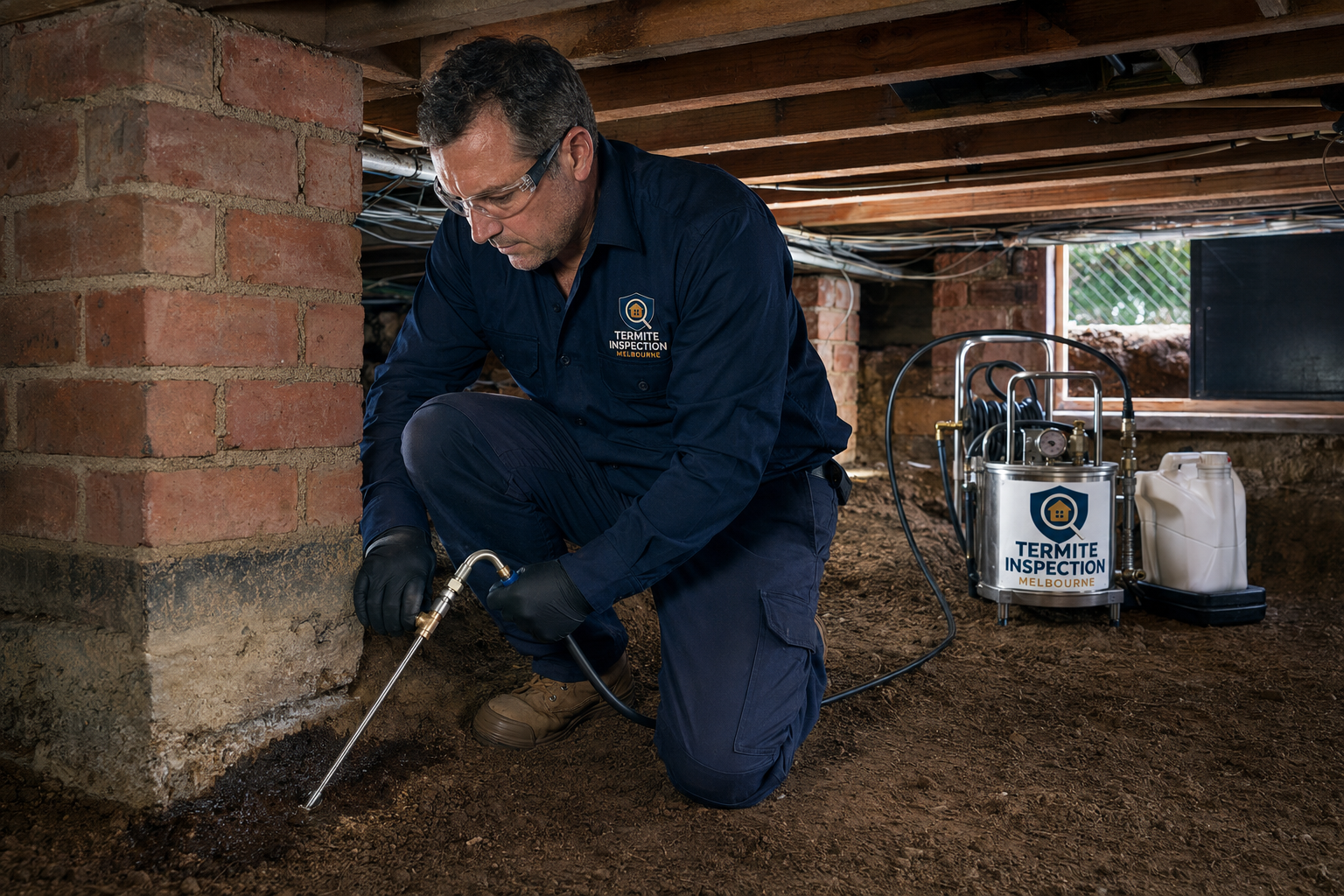
The technician maps water and resting zones, removes or recommends correction of accessible sources, doses suitable water where authorised and applies the agreed barrier to label-approved vegetation and surfaces. Occupants observe the stated drying and re-entry period.
Days 2–4 — knockdown of resting adults
Adults landing on treated surfaces begin contacting the residual. Activity should reduce, although mosquitoes can still arrive from neighbouring land. Avoid washing, heavy pruning or irrigating treated foliage unless the technician’s directions allow it.
Days 7–14 — breeding-cycle interruption
Managed larval sites should produce fewer emerging adults. Reinspect the yard after rain and irrigation, empty new containers and report persistent concentrated activity. Regional or wetland pressure may require a maintenance schedule rather than a one-off visit.
Day 30 — clearance review and warranty activation
Eligible services are reviewed against documented zones and conditions. Continuing source reduction, intact treated foliage and disclosure of new water support the written outdoor protection warranty. The review is not a guarantee that no flying mosquito can cross the boundary.
Treatment option comparison
Professional Mosquito Treatment vs DIY Products
Professional control combines breeding-source inspection, label-compliant larval management and correctly placed residual foliage treatment. A product used without understanding water and resting behaviour may affect a few adults while leaving larvae and protected populations unchanged.
| Method | Source control | Effectiveness | Child & pet planning | Speed | Long-term result |
|---|---|---|---|---|---|
| Professional foliage barrier & larvicide | Inspection maps standing water, larvae and adult resting zones | High local reduction when source and adult stages are both addressed | Documented pollinator, pond, preparation and re-entry controls | Adult knockdown begins quickly; breeding interruption develops over days | Strongest with repeated source reduction and barrier maintenance |
| Supermarket aerosol foggers | Usually no property inspection or larval-source correction | Variable brief contact with exposed adults | Drift and misuse may expose people, pets and non-target insects | Temporary reduction may be noticed | Poor when water and resting foliage remain |
| DIY citronella torches | No control of eggs, larvae or resting populations | Limited short-range repellency in favourable wind conditions | Flame, smoke and oil require careful placement | Effect exists only while vapour reaches the user | No residual source control after use ends |
| Electronic bug zappers | No standing-water or habitat management | Often kills many non-target insects and relatively few host-seeking females | Electrical siting and cleaning are required | Immediate killing of insects attracted to the light | Weak property-wide mosquito control |
Local inspection and treatment coverage
Mosquito Pest Control Across Melbourne
Our mosquito control Melbourne service covers the metropolitan area and Mornington Peninsula. If you searched for same day mosquito control, a professional mosquito exterminator or Melbourne mosquito inspection, our Clyde North team services the south east, eastern, northern and western suburbs. Local drainage, wetlands, garden density and coastal conditions shape every plan.
South East Melbourne & Clyde North
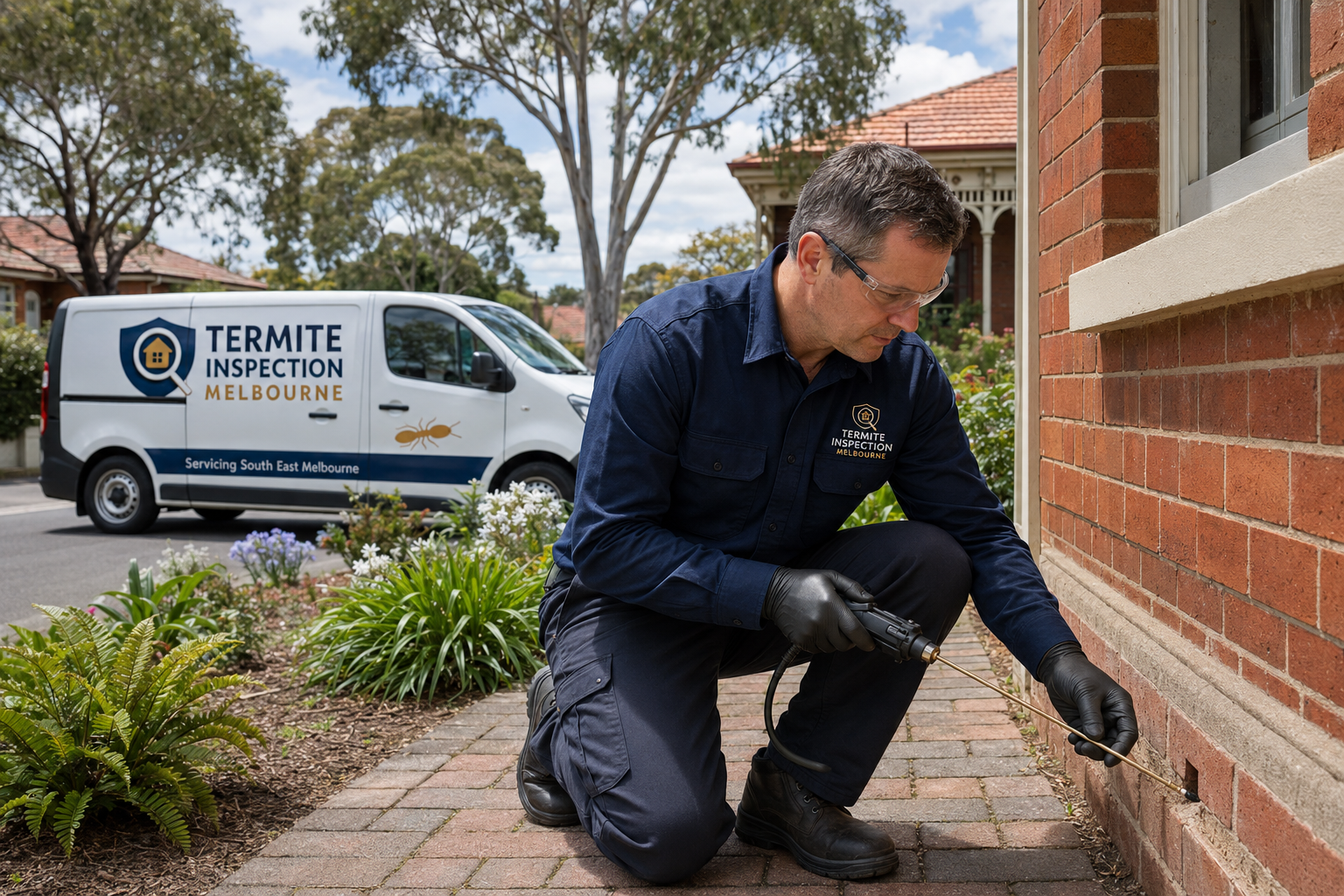
Clyde North pest control calls often involve new-estate drainage, wetlands, construction swales, irrigated gardens and water retained in pots or gutters. We service Clyde, Cranbourne, Berwick, Narre Warren, Pakenham, Officer, Dandenong, Keysborough and surrounding suburbs. Inspection prioritises water-holding containers, fence-line vegetation and shaded outdoor areas. Same-day mosquito treatment is offered when scheduling, wind and rain allow.

Eastern & Northern Melbourne
Mature gardens, creek corridors, leaf-filled gutters and dense hedges can create strong seasonal pressure across Ringwood, Croydon, Doncaster, Box Hill, Glen Waverley, Heidelberg, Preston, Brunswick, Coburg, Epping and nearby districts. The plan maps irrigation, drainage and foliage near patios rather than assuming one spray pattern suits every established garden.

Western Melbourne & Melbourne CBD
Western suburbs and inner-city sites range from exposed new estates to apartment courtyards, warehouses and hospitality venues. We service Melbourne CBD, Docklands, Footscray, Sunshine, Werribee, Point Cook, Altona, Williamstown and surrounding areas. Stormwater pits, rooftop planters, loading zones and shared landscaping may require coordinated IPM rather than a single-tenancy treatment.
Mornington Peninsula
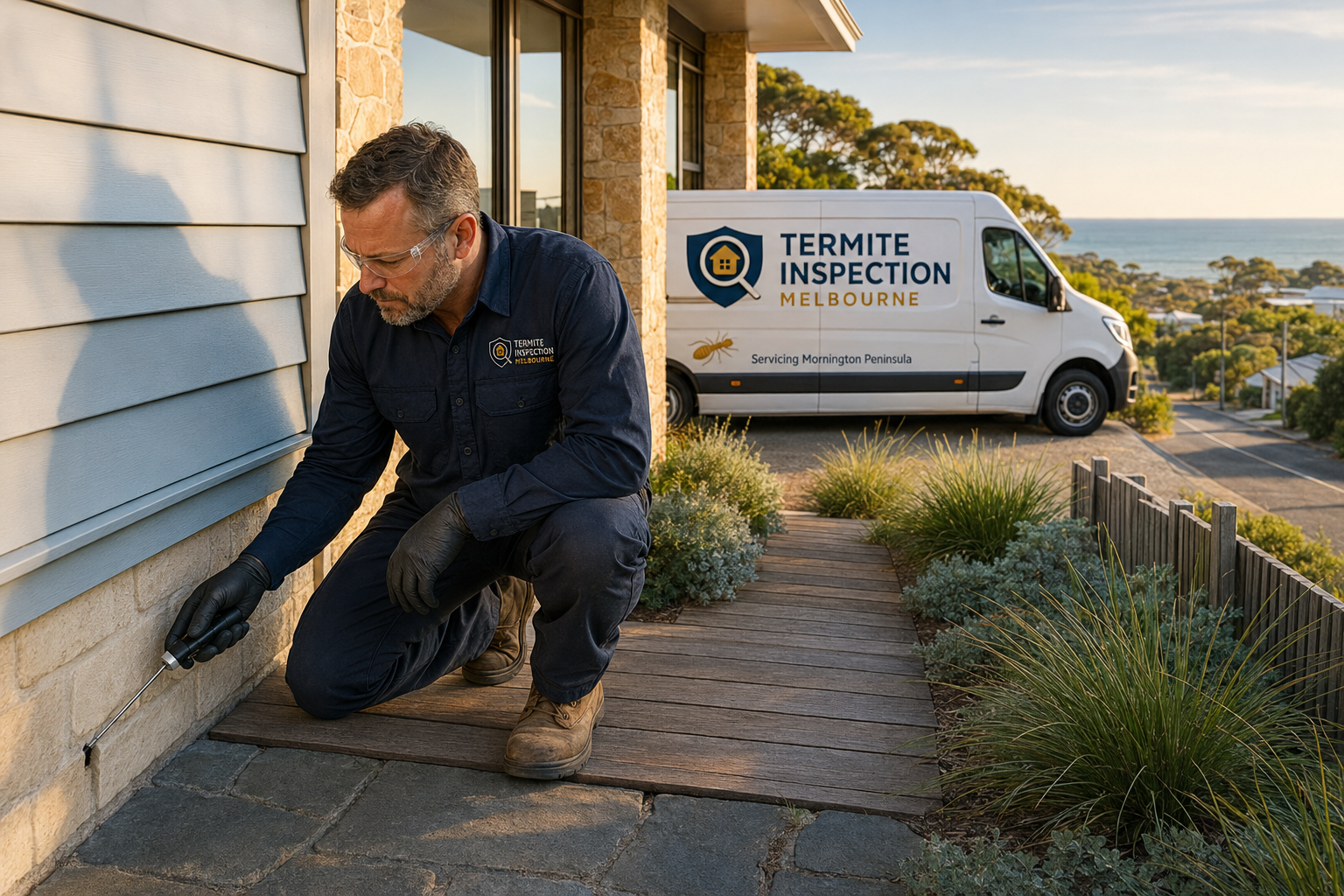
Coastal wetlands, saltmarsh habitat, garden water features and holiday-property vacancy can drive major mosquito pressure around Frankston, Mount Eliza, Mornington, Rosebud, Dromana, Hastings and nearby communities. Adults may arrive from beyond the boundary, so treatment combines property barriers and source reduction with realistic seasonal maintenance and personal protection advice.
Seasonal prevention and responsible application
How to Keep Mosquito Pressure Lower After Treatment
Repeat the Water Check Every Week and After Rain
A professional visit can remove water that exists on treatment day, but Melbourne weather, sprinklers and everyday household activity can create new breeding sites within hours. Walk the property on a regular schedule. Tip water from buckets, toys, pot saucers and furniture covers; inspect drains and gutters; keep pool equipment operating; and check that rainwater-tank screens remain intact. Scrubbing containers matters because some mosquito eggs can adhere to the sides above the waterline and survive until reflooding.
Ask everyone in the household to return items upside down after use. Store wheelbarrows, tubs and watering cans so they cannot collect rain. Fill ground depressions or improve drainage where puddles persist. If a water feature must remain, discuss circulation, habitat design and registered larval-control options instead of adding an unapproved household chemical. Oil, bleach and improvised mixtures can harm wildlife, damage equipment and breach label requirements.
Neighbouring water and public wetlands cannot be controlled from one property. If mosquito numbers rise regionally, continue source reduction while strengthening personal protection. Screens, suitable clothing, fans and registered repellents used as directed reduce exposure when adults arrive from beyond the treated boundary.
Preserve the Barrier Without Sacrificing Garden Safety
Residual foliage treatment works when adults rest on treated surfaces. Its performance is influenced by ultraviolet light, rainfall, irrigation, plant growth, pruning and surface type. Follow the technician’s instructions about watering and avoid pressure washing treated fence lines or shrubs during the stated protection period. Schedule major hedge trimming before service where practical; cutting treated growth away immediately afterwards removes part of the barrier.
Responsible mosquito control also protects bees, butterflies, fish and other non-target organisms. Tell TIM’s Pest Control when flowering patterns change, a beehive is installed or a pond is added. Do not ask a technician to spray open flowers during pollinator activity. Some zones may be excluded or treated at a different time, and those exclusions should appear in the written scope so expectations remain honest.
Monitor results by recording the time and exact place bites or adults are noticed. A cluster beside one drain suggests a different response from broad evening activity following regional rain. Useful records allow the technician to investigate an overlooked source, altered irrigation, newly dense foliage or outside pressure. They also prevent unnecessary blanket reapplication when habitat correction is the safer answer.
Plan Around Melbourne’s Weather and Outdoor Use
Mosquito activity changes with temperature, humidity, rainfall and wind. Warm, still evenings commonly produce more noticeable biting than cool or windy periods. Treatment timing follows the same environmental reality: strong wind increases drift, rain can wash fresh application away, and extreme heat may make work unsafe or reduce practical placement. Same-day mosquito control therefore depends on a suitable weather window as well as technician availability.
If treatment is being arranged before a party, wedding, inspection or commercial event, book early enough to allow preparation, drying and assessment. A single visit can reduce local pressure, but it cannot create a sealed outdoor room. Use fans around seating, keep doors screened, provide guests with suitable repellent and remove water well before the event. These layers improve comfort and reduce dependence on chemical treatment alone.
Seasonal maintenance is especially important beside creeks, wetlands, coastal saltmarsh or heavily irrigated landscapes. The service interval should be based on actual activity, weather and barrier condition—not an automatic promise that one application lasts indefinitely.
Understand What Professional Mosquito Control Can Achieve
The realistic goal is a substantial reduction in mosquitoes resting, breeding and biting within the accessible serviced area. Professional work adds value through inspection, correct product selection, measured application, safety controls and a documented maintenance pathway. It does not control every mosquito in Melbourne, change a wetland ecosystem or replace public-health precautions.
Customers should receive the final GST-inclusive price, preparation requirements, treated zones and exclusions before authorising work. Commercial customers should receive a separate treatment proposal after the $300 plus GST IPM inspection. Residential add-ons should appear in the booking summary so roof void, exterior, large-area, spider, ant or rodent work is not assumed or hidden.
After service, contact the office if activity remains concentrated in a treated zone or if a new source is discovered. Keep medical questions separate from pest management: technicians can explain mosquito biology and treatment, while a doctor or public-health authority must assess symptoms and disease risk. Clear boundaries make the service safer, more useful and more trustworthy.
Real social proof, no invented quotations
Check Verified Local Customer Feedback
We do not manufacture customer names or review quotes for a landing page. Use the links below to review current published feedback and service information for the area relevant to your booking.
★★★★★
Clyde North & South East Melbourne
Read current verified customer feedback, confirm service availability and judge our responsiveness before booking.
View verified reviews★★★★★
Melbourne CBD & Inner Suburbs
Read current verified customer feedback, confirm service availability and judge our responsiveness before booking.
View verified reviews★★★★★
Mornington Peninsula
Read current verified customer feedback, confirm service availability and judge our responsiveness before booking.
View verified reviewsProfessional safeguards
Licence, Insurance and Chemical Compliance
Every proposed treatment should be traceable to evidence, label directions and a written scope. Ask questions before work begins—especially where children, pets, asthma, food areas or occupied bedrooms are involved.
Licensed pest technicians
Request confirmation of the technician’s current Victorian licensing or authorisation relevant to the work.
Fully insured service
Appropriate business insurance supports accountable work in homes, rentals and commercial premises.
APVMA-registered products
Chemical products are selected and applied only within their registered label directions and approved use.
Police-check availability
Police-checked local technicians can be requested where available for occupied and managed properties.
Health note: mosquito treatment can reduce local activity but cannot guarantee prevention of Ross River virus, Barmah Forest virus or any illness. Follow current Victorian health advice and seek medical care for concerning symptoms.
AEO and voice-search answers
Mosquito Pest Control Melbourne FAQs
Detailed answers about barrier duration, larvae, pot saucers, bees, treatment cost, preparation, child and pet safety, same-day availability and written warranty conditions.
How long does a professional mosquito barrier spray last?+
A professionally applied backyard mosquito barrier spray can continue intercepting adults for several weeks, but the practical duration varies with the registered product, surface, UV exposure, rain, irrigation, pruning, garden density and mosquito pressure from nearby wetlands or neighbouring properties. Heavy rain, pressure washing and cutting treated foliage can shorten performance. Barrier treatment is strongest when standing water is removed and larval sources are managed at the same visit. The technician documents the treated zones, re-entry directions, expected maintenance interval and any written warranty. No responsible provider can promise permanent outdoor elimination because flying mosquitoes can arrive from outside the property.
Are mosquito treatments safe for bees and beneficial garden insects?+
Mosquito products can affect non-target insects if they are applied carelessly. Professional work begins by identifying flowering plants, beehives, ponds, edible gardens and other sensitive areas. Applications are directed to label-approved mosquito resting zones and breeding sites, not sprayed indiscriminately across open flowers or actively foraging bees. Timing may be adjusted to reduce pollinator exposure, and some plants or zones may be excluded. Customers must disclose beehives, fish ponds and beneficial-insect programs before treatment. No pesticide is harmless to every organism; risk reduction depends on product selection, precise placement, weather conditions and strict compliance with the APVMA-approved label.
Can mosquitoes breed in small pot-plant saucers?+
Yes. Some container-breeding mosquitoes can use surprisingly small volumes of still water. Pot-plant saucers, buckets, children’s toys, blocked gutters, tarpaulin folds, bird baths, discarded containers and poorly drained garden features can support eggs and larvae when water remains long enough. Emptying a saucer once is not enough if irrigation refills it every day. During a Melbourne mosquito inspection, we map water-holding items, check for wrigglers, recommend drainage or regular emptying, and use a label-approved larvicide only where water cannot be removed and treatment is appropriate. Drinking-water, fish and wildlife habitats require special care and must never be treated outside label directions.
How long does professional mosquito treatment take?+
A prepared small property may take around one to two hours, while a large garden, extensive fence line, dense foliage, multiple water features or commercial site can take longer. The technician first inspects breeding sources, shaded resting zones and sensitive areas, then completes the agreed larvicide and foliage-barrier work. Weather matters: rain, strong wind or extreme heat may make treatment ineffective or unsafe and can require rescheduling. Re-entry time depends on the products and surfaces treated and is provided before application. Commercial events, accommodation properties and sites beside wetlands require a separate IPM inspection and service plan.
Is professional mosquito treatment safe for children and pets?+
Professional treatment is planned around the occupants and the registered product label. Children, pets and other occupants must remain away from the application zone and observe the advised drying and re-entry period. Toys, pet bowls, outdoor cushions, food, aquariums and sensitive items may need to be removed or protected. Tell us about pregnancy, asthma, chemical sensitivity, fish ponds, reptiles, birds, beehives and unusual occupancy before the visit. No pesticide is completely risk-free. Safety depends on correct product selection, measured application, suitable weather, occupant exclusion and following all written preparation and re-entry instructions.
What does mosquito treatment cost in Melbourne?+
Our standard prices are $180 before GST for a small one- to two-bedroom property, $210 before GST for a medium three-bedroom house and $240 before GST for a large four-bedroom property. The totals are $198, $231 and $264 including GST. Customers comparing backyard mosquito barrier spray prices or Ross River virus mosquito treatment cost can see the starting rate before submitting personal details. Optional roof void, exterior, large floor-area, spider, ant and rodent services change the total. Commercial work begins with a $300 inspection-only IPM assessment, $330 including GST; commercial treatment is quoted separately after the site risks and operating requirements are documented.
Do you offer same-day mosquito control in Melbourne?+
Same-day mosquito control may be available when a suitably equipped technician, safe weather window and travel route are available. Call 0466 929 533 with the suburb, property size, garden conditions, water features, event timing and any children, pets, bees or ponds. We confirm available attendance and the GST-inclusive package price before the booking is completed. Same-day dispatch remains subject to technician availability, wind, rain and site access. Pest control cannot diagnose an illness; anyone with concerning symptoms after mosquito exposure should seek medical advice rather than waiting for a treatment visit.
Can professional treatment prevent Ross River virus or Barmah Forest virus?+
Professional mosquito control can reduce mosquito activity and breeding opportunities at a property, but it cannot guarantee that no infected mosquito will arrive or that disease transmission is impossible. Ross River virus and Barmah Forest virus occur in Australia and are transmitted by infected mosquitoes, not directly from treated water or plants. Protection uses several layers: source reduction, professionally targeted treatment, screens, suitable clothing and personal repellent used according to its label. Public-health warnings should be followed during outbreaks. A pest technician manages the site; medical diagnosis, testing and treatment belong with qualified healthcare professionals.
How should I prepare my backyard for mosquito treatment?+
Mow or trim only what can be safely completed before the visit, provide access to fence lines and shaded garden beds, and identify every pond, rainwater system, bird bath, pool, drain and irrigation zone. Remove or cover toys, outdoor cushions, pet bowls, washing, food and barbecue utensils. Keep children and animals indoors or away for the instructed period. Do not empty permanent wildlife ponds or treat water yourself without advice. Tell the technician about edible plants, beehives, flowering gardens, fish, drainage outlets and neighbouring access restrictions so excluded areas and application timing can be planned accurately.
What does the 100% outdoor protection guarantee cover?+
A written outdoor protection guarantee may apply to eligible services when accessible treatment zones, preparation, source-reduction responsibilities and maintenance conditions are documented. It relates to the agreed property and service period, not a promise that no flying mosquito can cross the boundary. Untreated neighbouring land, wetlands, new standing water, heavy rain, pruning, irrigation, washing treated foliage and excluded bee or pond zones can affect results. The service agreement states the warranty period, included response, treated areas and exclusions. Customers should rely on that written scope rather than a general advertising headline.
Do citronella candles and bug zappers control a whole backyard?+
Citronella smoke or vapour may provide limited, short-range repellency when conditions are favourable, but it does not remove larvae or create reliable property-wide control. Wind quickly disperses vapour. Electronic bug zappers kill many insects attracted to light, yet mosquitoes are guided strongly by carbon dioxide, body odour and heat, so zappers may kill relatively few of the biting females causing the problem and can affect non-target insects. These products may supplement personal comfort but do not replace breeding-source inspection, habitat modification and a targeted residual foliage barrier.
Sunday dispatch windows may still be available
Reclaim Your Backyard From Mosquitoes Today
Call now for an urgent Melbourne mosquito inspection and same-day outdoor pest dispatch option. We will confirm availability, explain the breeding-source and foliage treatment pathway, and show the final GST-inclusive service price before booking.