1
Triage the Noise
Record when the sound occurs, whether it is heavy or light, visible animals, droppings, odour, ceiling movement, electrical concerns and known roof access. Possums, rats and birds can produce similar reports.

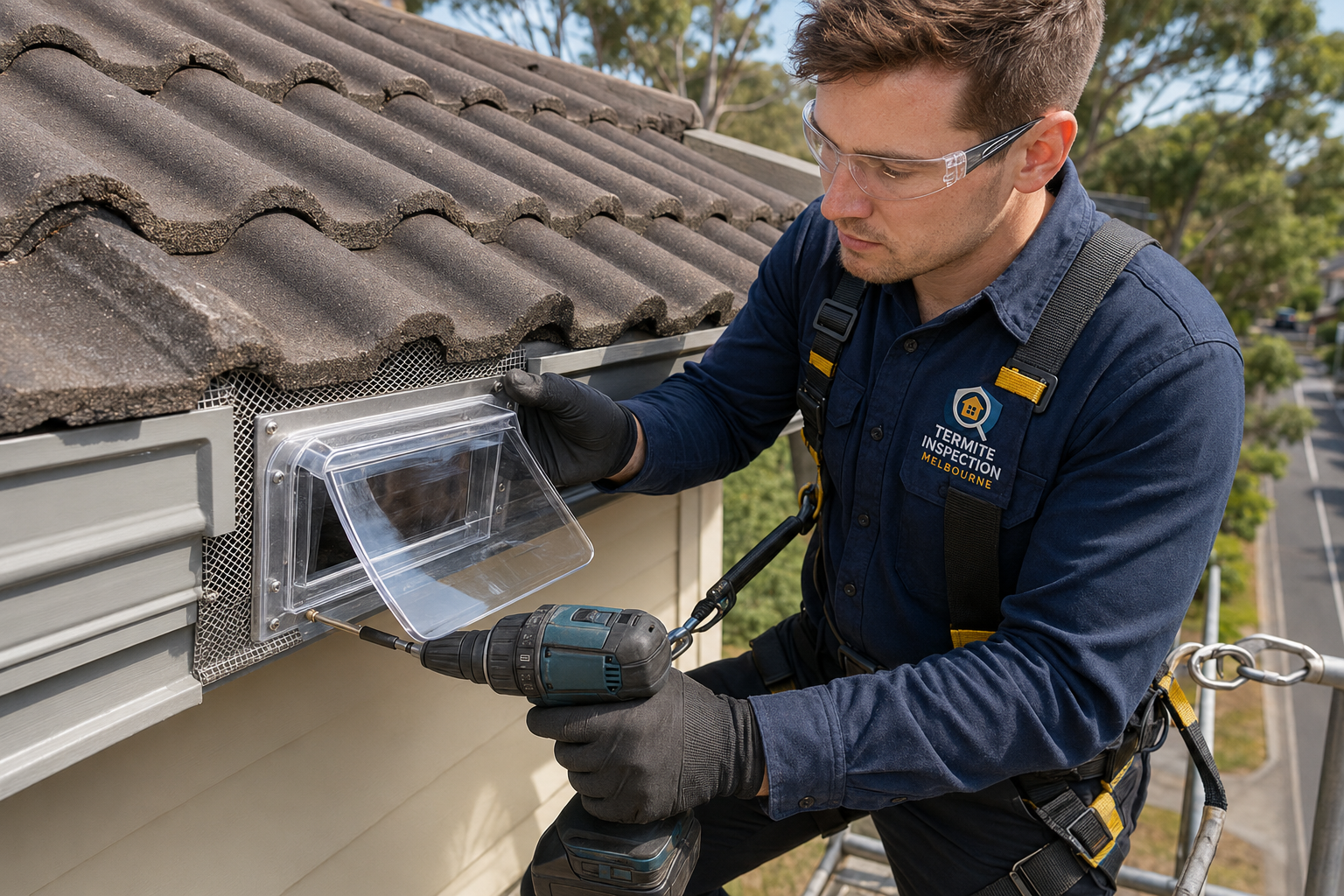
Stop possums entering your roof with a lawful, evidence-led exclusion process: identify the animal and active opening, allow safe one-way exit, secure accessible re-entry points, monitor, then close the final gate location.
*The $495 including GST starting package is limited to eligible standard single-storey properties. Species, access, active entry, dependent young and repair scope must be confirmed.
Your details open our secure booking page with the possum service already selected.
The durable solution is not to poison the animal, drive it to a distant suburb or seal every hole while it may still be inside. Start by confirming the species and active entry. Secure other accessible re-entry points, fit a suitable one-way exit over the active opening, allow the possum to leave during its normal nocturnal movement, monitor for continuing activity, then return to remove the device and permanently close the final opening.
This process is commonly called possum exclusion or a possum one-way gate installation. It addresses the building access that allows repeated roof occupation. The exact method changes with tiled, metal, flat, multi-level, heritage and commercial roofs. Eaves, fascia, valleys, ridge ends, chimneys, roof-to-wall junctions, vents, plumbing penetrations, extensions, pergolas and damaged tiles can all create access. A gate fitted to the wrong hole will not solve the problem.
Possums are protected native wildlife. Current Victorian rules distinguish Common Brushtail Possums living in buildings from Ringtail Possums and other wildlife. Common Brushtail trapping, where used under the applicable provisions, carries strict release and welfare conditions. Ringtail control is not automatically allowed under the same pathway. That is why species identification, exclusion and current guidance matter before anyone describes a job as “DELWP compliant possum removal.” The current agencies are DEECA and the Conservation Regulator.
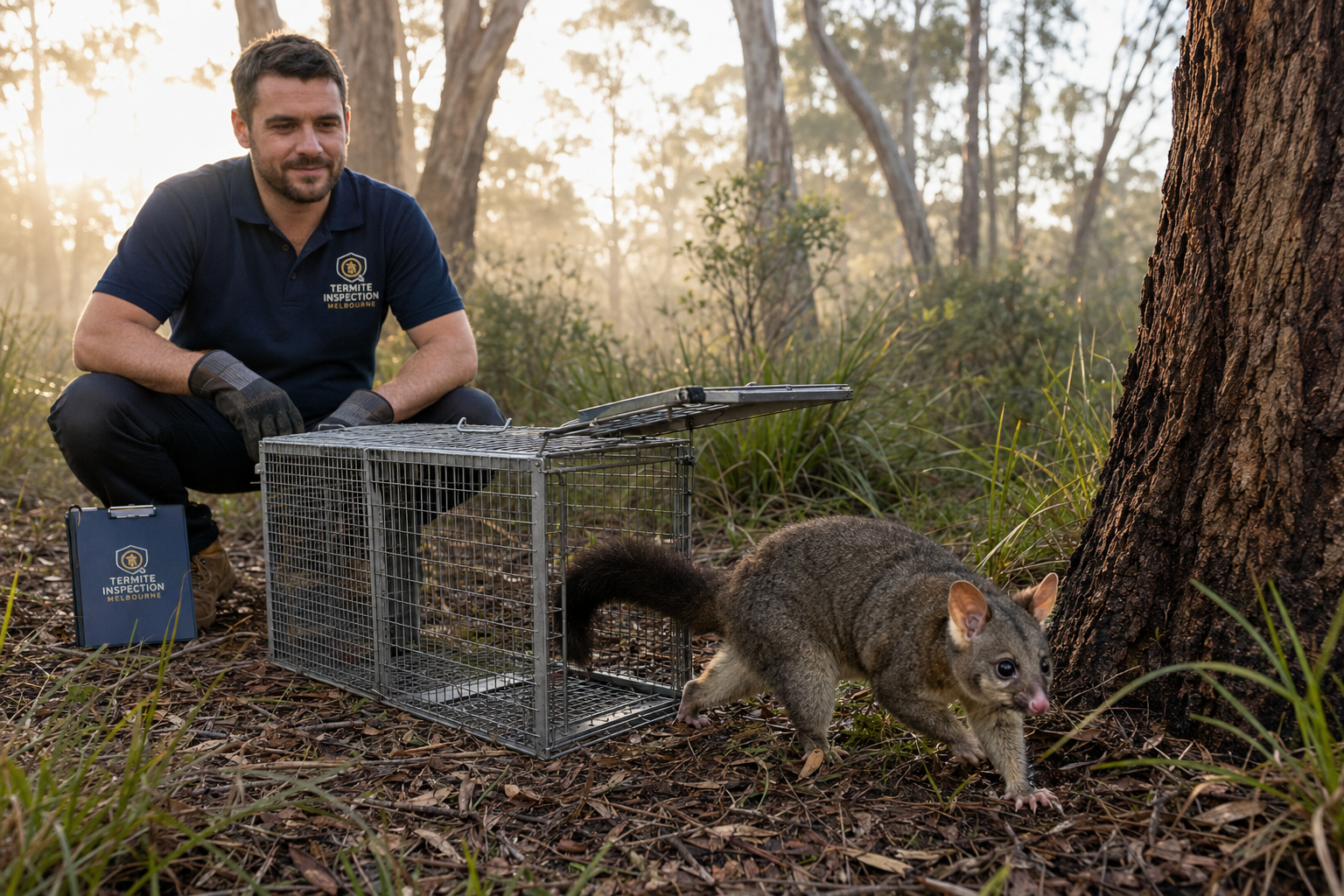
A successful gate is part of a controlled sequence, not a plastic flap placed over the first visible gap.
Record when the sound occurs, whether it is heavy or light, visible animals, droppings, odour, ceiling movement, electrical concerns and known roof access. Possums, rats and birds can produce similar reports.
Inspect safe accessible evidence, entry size, tracks, droppings, nesting and movement patterns. Common Brushtail and Ringtail Possums do not share identical control permissions, so identification changes the lawful pathway.
Trace displaced tiles, eaves, fascia, junctions, vents, chimneys and services. An opening may be visible but inactive; sealing the wrong point leaves the real route available.
Consider young, multiple animals and nesting evidence. Exclusion pauses or changes if a gate could separate a dependent animal or trap wildlife inside the building.
Secure agreed accessible secondary openings with suitable mesh, flashing or repairs while preserving roof ventilation, drainage, services and construction requirements.
Attach the device at the confirmed active exit so the possum can leave but cannot use the same route to return. The installation must avoid sharp edges and unsafe entanglement.
Listen, inspect and use agreed camera or tracking evidence where suitable. A quiet night alone may not prove vacancy, especially in intermittent occupancy or poor weather.
Return after the agreed confirmation period, remove the temporary gate and close the final opening. Provide photos, remaining limitations, maintenance actions and warranty terms.
Common Brushtail Possums are cat-sized, nocturnal animals that may use sheltered building spaces when natural hollows are limited. Movement across plaster, timber, metal or ductwork can sound like running, thumping, dragging or a person in the ceiling. Vocal calls, fighting and movement around dusk or before dawn can strengthen the possibility of a possum, but roof acoustics distort size. Rats moving across loose insulation can also sound surprisingly heavy. Birds may create daytime scratching or wing noise. Correct diagnosis prevents an expensive gate being installed for the wrong pest.
Useful evidence includes the exact time and duration of noise, where it starts and ends, visible access routes, roof stains, droppings, odour, disturbed insulation, footprints, nesting, gnawing and camera observations. Do not handle droppings or enter a restricted roof space merely to confirm a guess. Ceiling cavities may contain live electrical wiring, sharp fixings, fragile plaster, hot spaces, dust, insulation and restricted access.
Possums are territorial and a familiar roof can provide shelter close to established feeding routes. Removing an animal without closing access leaves the den available to the same animal or another one. Temporary scent, light or sound deterrents may change activity briefly without correcting a lifted tile, open eave or damaged fascia. Durable control therefore focuses on the building envelope and lawful one-way exit.
Possum occupation can disturb insulation, stain ceilings, leave droppings and urine, damage flexible ducts or expose an existing building defect. Gnawing or movement near wiring must be assessed by a licensed electrician; a wildlife technician cannot certify electrical safety. Likewise, visible ceiling movement or deteriorated timber may require a building professional. Our report separates wildlife evidence from work that needs another qualified trade.
Common Brushtails often shelter alone in substantial cavities and can use larger gaps, while Common Ringtails may build leafy dreys and have different social patterns. Appearance, tail shape, droppings and nesting can help identification, but poor evidence should be recorded as uncertainty. Victorian licence conditions state that Ringtail Possums are not eligible for routine control under the Common Brushtail provisions without an Authority to Control Wildlife. A contractor should not quietly label every roof animal “brushtail” to make the job convenient.
All wildlife in Victoria is protected under the Wildlife Act framework unless a specific authorisation, licence or exemption applies. Exclusion techniques may be available without an Authority to Control Wildlife, but trapping, wilful disturbance and relocation can trigger additional requirements. The rules depend on species, location, activity and who performs the work. This page explains the service pathway but does not replace current advice from DEECA or the Conservation Regulator.
Common Brushtail Possums living in buildings may be controlled under specified provisions. If a Common Brushtail is trapped, current official guidance requires a suitable non-injury confinement trap, protection from weather and domestic animals, and release after sunset on the same property within 50 metres of capture. Distant relocation or release on another property is prohibited. Official guidance notes that translocated animals can suffer territorial conflict, distress and death.
A correctly planned one-way gate allows the animal to leave the den under its own movement and avoids transporting it to unfamiliar territory. It still requires careful species and dependant checks, appropriate design, entry proofing and monitoring. Exclusion should not be described as automatically lawful in every circumstance. If the animal is injured, trapped, non-target wildlife, a Ringtail, a bat, or associated with a nest or young, a wildlife controller, rescuer, veterinarian or formal authorisation may be required.
The uploaded brief refers to “DELWP compliant possum catchers.” DELWP is an older department name still used in search queries. Current Victorian wildlife information is published through DEECA and the Conservation Regulator. The meaningful conversion question is not whether a website repeats an old acronym; it is whether the proposed method, species, personnel and evidence match current rules.
The scope should identify whether the job is inspection, exclusion, trapping, gate installation, proofing, dead-animal extraction or referral. It should state the property, building area, active entry evidence, access limitations, materials, monitoring period, return visit, final closure, exclusions and warranty terms. If trapping is proposed, ask who is authorised, how the trap will be checked, what species can lawfully be controlled, and how release or veterinary handling will occur.
The gate must suit the animal, opening and roof—not simply look like a one-way device in a photograph.
A purpose-made flap, sleeve or door is fixed over the active exit. The animal can push outward but cannot gain purchase to move back through the same opening. Edges, mesh size, fastening and clearance must avoid injury, entanglement and a new water-entry problem. Gravity and spring designs behave differently on vertical, sloping and irregular openings. Installation is adapted to tiles, fascia, eaves or other authorised substrates.
Possums can test nearby gaps after finding the familiar entrance closed. Other accessible openings are assessed before the gate is fitted. Proofing may use metal mesh, formed flashing, tile correction or suitable repair materials, but roof ventilation and drainage cannot be indiscriminately blocked. Loose temporary foam or thin plastic is not treated as permanent possum proofing.
The time before final closure depends on evidence, weather, property occupancy and the likelihood of multiple animals. Camera monitoring, tracking surfaces, visual checks and customer noise reports can support the decision. A single quiet night is weak evidence if the property was empty, rain changed movement or the animal uses the roof intermittently.
Calls, movement patterns and nesting material can indicate dependent young. A device must not separate a mother from a dependant or seal an animal inside. If the risk cannot be resolved through safe inspection, the work pauses and the relevant wildlife pathway is used. Conversion pressure never justifies rushing the welfare decision.
The return visit is not an optional afterthought. It removes the temporary gate, inspects the area, closes the last opening and records any continuing evidence. A quote should say whether one return is included, the expected window, what customer observations are required and how additional visits are charged if activity remains uncertain.
Photographs identify the gate position, proofed gaps and final closure. Notes record areas not inspected, fragile materials, inaccessible roof lines, common-property limits and maintenance required by others. Any warranty follows the documented scope. The record helps distinguish re-entry through a repaired point from a new opening created later by damage or works.
Possum proofing begins at ground level by reading the building and likely climbing routes. Trees, fences, sheds, pergolas, downpipes, balconies and neighbouring structures may lead to the roof. External inspection then reviews eaves, fascia, gutters, tile edges, ridge ends, valleys, vents, chimneys, roof-to-wall junctions, extensions, plumbing penetrations and damaged materials. Safe internal roof access can reveal light, stains, nesting, droppings, displaced insulation and the relationship between sound and the exterior opening.
Not every visible gap should be sealed. Some openings are required for ventilation, drainage or services. Certain repairs affect roofing, electrical, solar, plumbing, fire or building requirements. We define what can be completed within the wildlife-exclusion scope and what must be referred to a licensed or suitably qualified trade. The customer authorises additional work before it begins.
Durable proofing may include corrosion-resistant mesh, custom flashing, secure mechanical fixings, replacement tiles or repairs compatible with the existing construction. Material choice considers exposure, salt, heat, movement, drainage, roof warranty and appearance. Expanding foam alone is not presented as structural wildlife exclusion. Sharp wire, loose netting and improvised traps can injure wildlife and create future maintenance hazards.
A single-storey starting package assumes safe normal access and minor accessible proofing. A steep roof, brittle tiles, two-storey eave line, confined roof, asbestos risk, solar array, commercial plant, multiple roof levels or broad deterioration changes the safety method and price. Where scaffolding or elevated equipment is required, the quote separates that cost.
No contractor controls future storms, tree impact, material deterioration, building movement, renovations or openings made by another trade. Good proofing reduces current accessible entry risk and documents what remains. Customers receive maintenance actions such as trimming an access branch where lawful, repairing deteriorated fascia, securing a vent, managing a chimney or coordinating solar-panel work. Warranty terms, if offered, must state the covered repairs, term and exclusions.
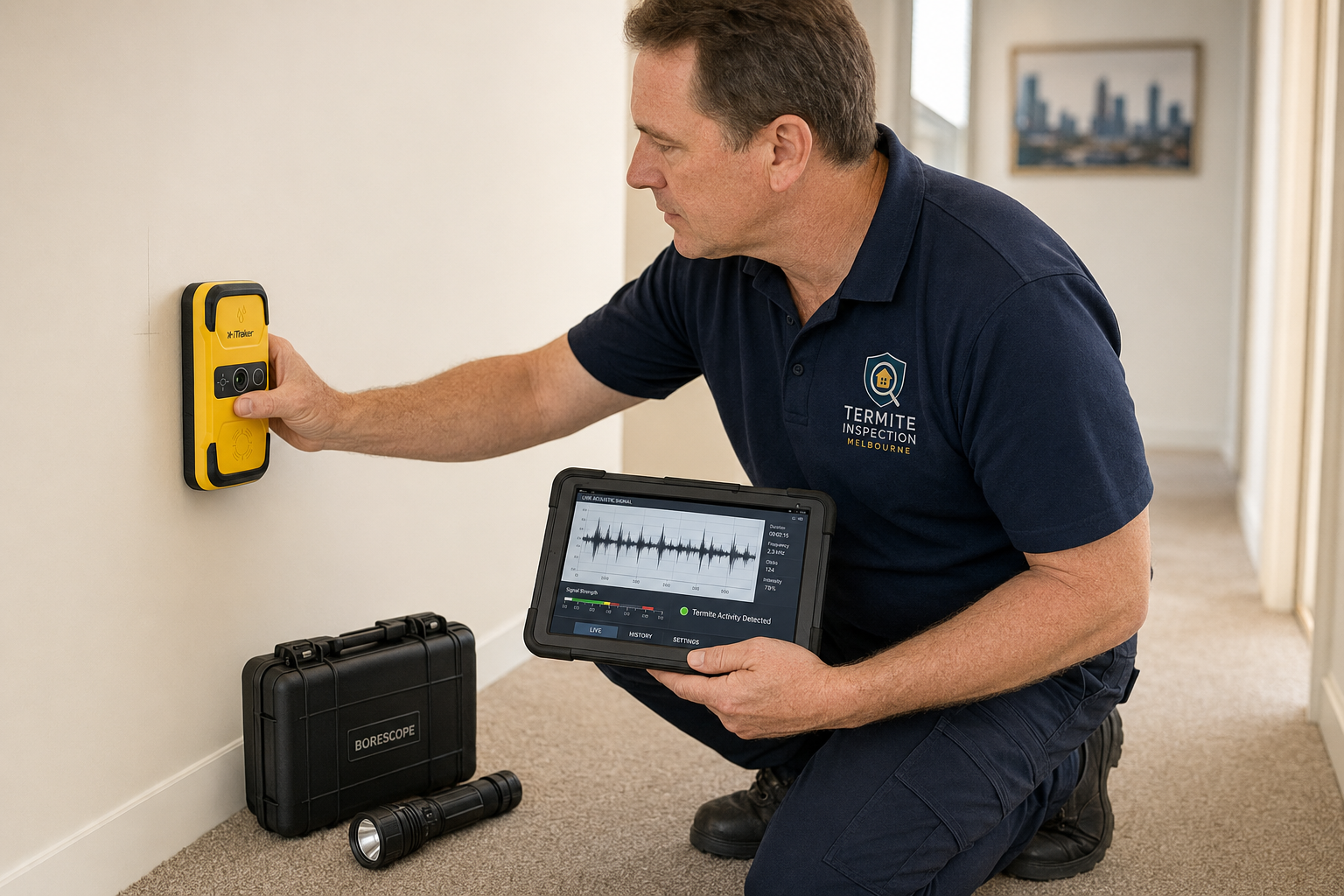
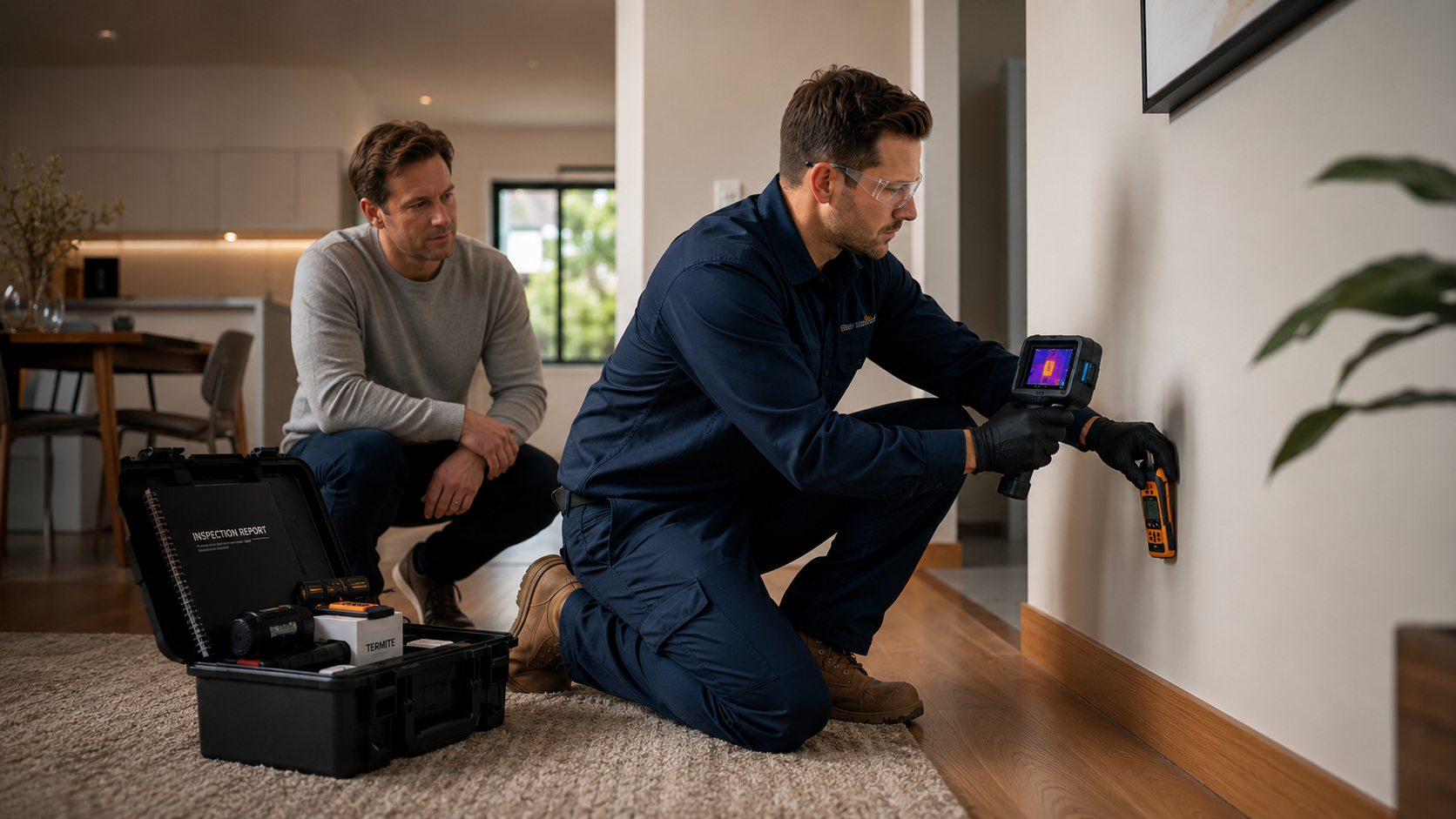
A thermal camera displays surface-temperature differences. In suitable conditions it can help prioritise an area associated with warm-bodied movement, compressed insulation, moisture, airflow or an electrical load. It cannot see through all ceilings and cannot identify a possum by colour. Sunlight, heating, cooling, plumbing, downlights, appliances, roof material and insulation can produce similar patterns.
We interpret thermal images alongside sound location, timing, visual evidence, safe roof access, droppings, tracks, cameras and building construction. A scan may help narrow a large ceiling area before access, compare a suspect zone with surroundings or document a moisture condition that needs another trade. It is not sold as proof that the whole roof is clear.
Thermal contrast can be weak when indoor and outdoor temperatures are similar, the animal has moved, thick insulation masks the surface, or reflective and heated materials interfere. A difficult result is recorded honestly. The service may recommend a camera, tracking evidence, return inspection or building access rather than turning an uncertain image into a false conclusion.
Any “free thermal scan” promotion must define the included area and eligibility. This page does not promise a $150 scan or whole-house inspection automatically. If a scan is useful and offered within the written package, the proposal states the area, purpose and limitations. Electrical hot spots are not diagnosed as wildlife; suspected electrical safety concerns are referred promptly to a licensed electrician.
A sudden strong odour, flies, staining or a period of noise followed by silence can indicate a deceased animal, but plumbing, mould, rodents and other sources can smell similar. The assessment traces the strongest accessible area, roof or subfloor entry, airflow and visible insect activity. Thermal imaging may sometimes support location but does not reliably find every carcass.
Where the animal is safely reachable, the scope can include extraction, containment and localised cleaning of the immediate affected surface. Saturated or heavily contaminated insulation may need removal and replacement. Deodoriser and antimicrobial products are selected for the surface and used under their directions; they do not make a carcass disappear or restore damaged plaster.
A carcass inside a sealed wall, inaccessible skillion roof, duct, chimney or service zone may require authorised opening. Before cutting, consider electrical cables, plumbing, structural elements, asbestos-containing materials and finish restoration. The customer may need an electrician, plumber, carpenter, roofer, hygienist or restoration contractor. We do not perform uncontrolled demolition simply to satisfy a same-day promise.
Dead wildlife remains regulated. Handling and disposal follow the applicable current pathway, and a contractor should not claim unrestricted possession of protected wildlife. After extraction, the building still needs an entry investigation so another animal does not occupy the same roof. A dead-possum service and a one-way gate are different scopes and are itemised separately.
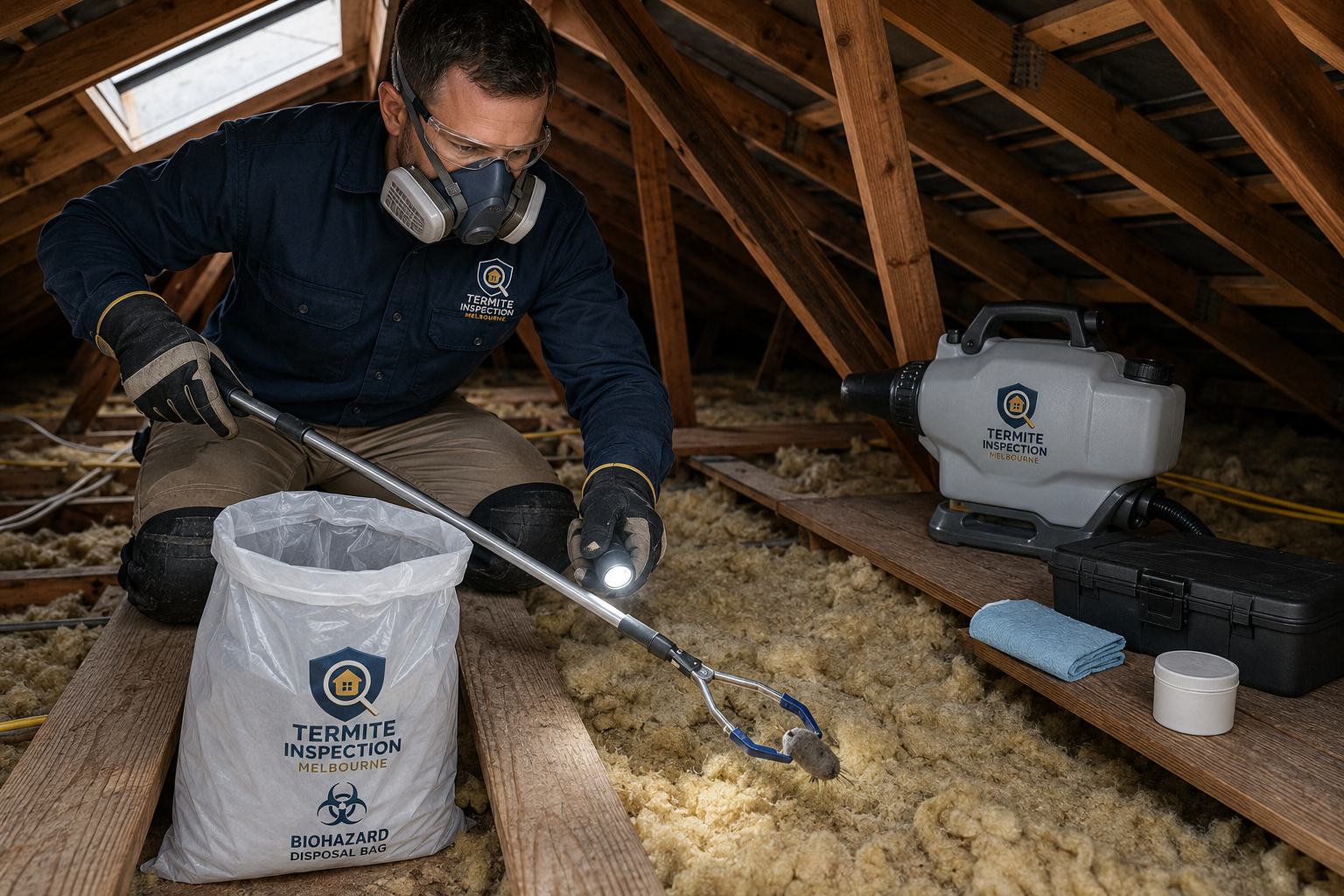
Pricing below includes GST and states the starting scope. Roof height, pitch, fragility, species, number of openings, access equipment and repair materials are confirmed before work.
Victorian compliance begins with species, location and proposed activity. Exclusion, trapping, possession, release and treatment of injured wildlife are not interchangeable. Common Brushtail control in buildings has specific conditions, while Ringtail Possums and other protected wildlife may require a different authorisation or rescue pathway. The contractor should be able to explain which pathway applies and record any uncertainty before disturbing an animal.
Where trapping is proposed, current conditions address confinement-trap design, weather and domestic-animal protection, checking, same-day handling and release after sunset on the same property within 50 metres of capture. A distant park release is not an acceptable convenience. If lawful release cannot occur, the current veterinary pathway applies; field destruction by an unauthorised person is not permitted.
Roof work depends on height, pitch, surface condition, moisture, wind, heat, access, edge risk and the need to move materials. Ground inspection and customer information help determine whether normal ladder access is suitable or whether the job needs a second person, fall protection, scaffold, elevated platform or a roofing contractor. No online price can cancel those requirements.
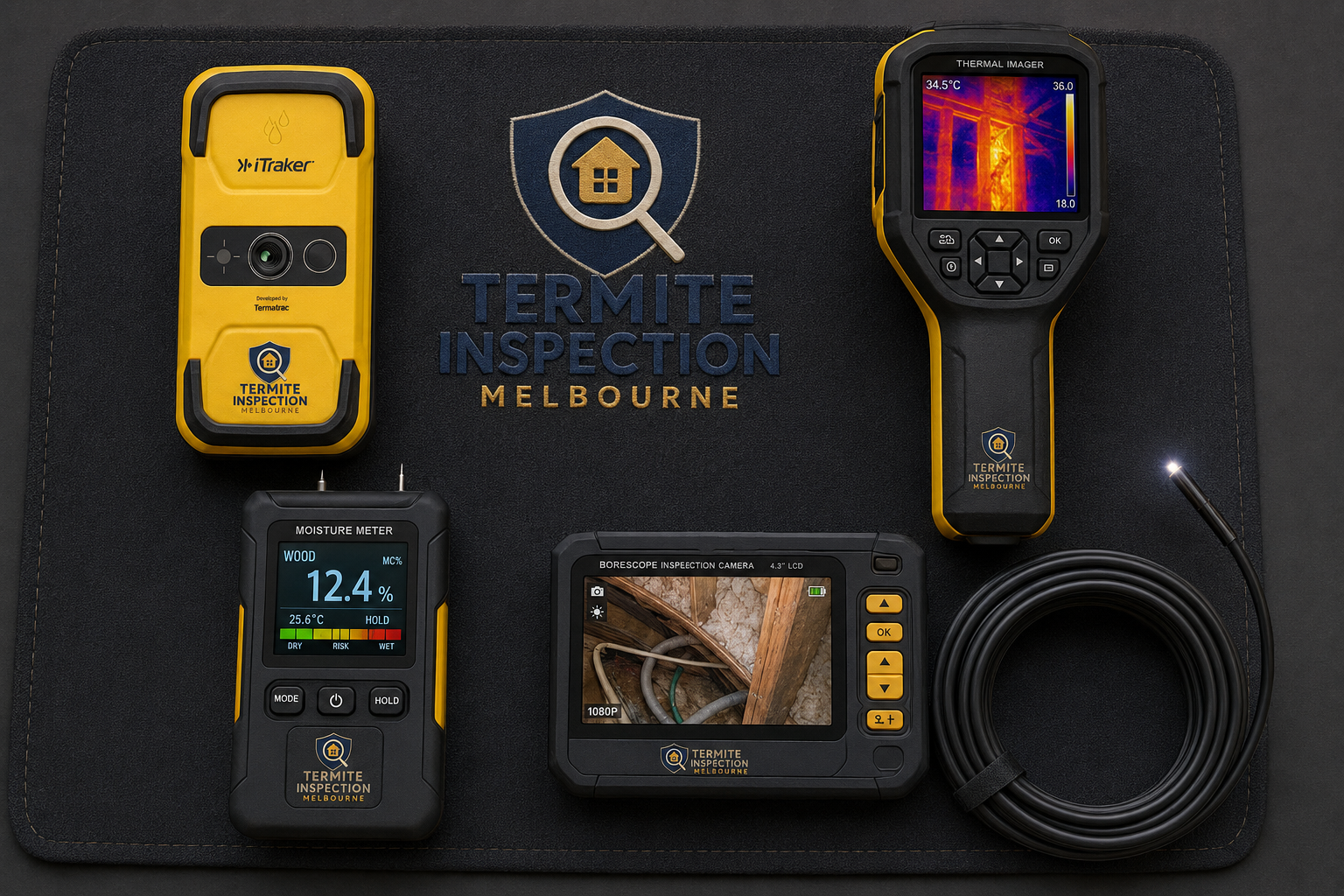
Inspection tools may include high-output torches, cameras, binoculars, mirrors, thermal imaging, moisture meters, tracking materials and safe access equipment. Proofing tools and fixings are selected for mesh, metal, timber, masonry or roof material. The goal is a secure repair without damaging tiles, blocking drainage, piercing hidden services or creating sharp edges.
A wildlife service does not automatically include electrical, solar, plumbing, chimney, structural or licensed roofing work. If entry occurs beside solar wiring, the system may require isolation or an electrician. Broken tiles, failed pointing, deteriorated eaves or major flashing may need a roofer or carpenter. Suspected asbestos stops uncontrolled drilling or cutting. Clear referral is more professional than pretending one operator can lawfully repair every component.
The written quotation should show labour assumptions, included materials, number of gate positions, accessible proofing allowance, return visits and exclusions. If roof conditions change once access is gained, the technician photographs the issue and obtains approval before expanding the task. This prevents a low headline price from turning into an unexplained invoice.
The website booking flow records the selected possum package, customer details, property address and service notes in a private TIM Bookings entry before notification email is attempted. This protects the lead when an inbox is delayed or filters a message. The customer receives a reference and the office can review the saved WordPress record.
The first conversation distinguishes heavy roof noise, a visible possum, trapped or injured wildlife, dead-animal odour, suspected rats, a known opening and a full-roof proofing request. The written scope then defines whether the first visit is diagnostic, gate installation, dead-animal extraction or a custom roof assessment. No pesticide is used to “kill a possum,” and the booking does not authorise unlisted repair work.
The uploaded brief asks for licensed handlers, $20 million public liability insurance and long-term written warranties. Those claims should only be published when current evidence and exact terms are confirmed. This page invites customers, property managers and facility teams to request relevant licence, insurance and roof-safety evidence for the proposed personnel and work. The quote states the warranty actually available for the defined repair.
TIM's Pest Control serves Melbourne from Clyde North and can scope single-storey homes, double-storey houses, townhouses, strata common property and commercial roofs. Attendance depends on route, weather, lawful species pathway and safe access. The conversion promise is a clear assessment and documented next step—not an impossible guarantee that every roof can be permanently sealed for one flat price.
The animal follows opportunity. Construction detail, deterioration and climbing access matter more than the age printed on the real-estate listing.
Displaced or broken tiles, ridge and verge ends, valley junctions, roof extensions and gaps above fascia can create access. Tiles may be brittle and not safely walkable. Proofing must preserve water flow and avoid damaging bedding, pointing or underlay. Major tile repairs are quoted or referred separately.
Profile ends, ridge gaps, flashings, eaves and roof-to-wall junctions may provide openings. Metal can be slippery, hot and easily damaged by incorrect fixings. Custom closure material or roofing expertise may be required, especially on steep or commercial spans.
Rot, storm damage, missing sheets, loose boards and service penetrations can expose cavities. A small visible break may connect to a much wider damaged section. Minor secure proofing and full eave replacement are different prices and responsibilities.
Unused chimneys, open cowls and damaged vents need covers that retain required airflow and combustion safety. Chimney, gas and ventilation work may require specialist assessment. We do not cap a functioning system without confirming its purpose.
Panels and cabling create sheltered edges and electrical risk. Animals may travel beneath arrays or use nearby roof gaps. Proofing must respect panel, roof and electrical warranties. A licensed solar electrician may be required before fastening, isolation or repair.
Old-to-new roof junctions, flashing changes and connected pergolas offer sheltered routes. Possums may climb a post or fence and disappear at a junction invisible from the ground. Each authorised structure is recorded so a repair on the main roof is not mistaken for whole-property proofing.
Choose the pathway that addresses lawful exit and the roof opening, not just tonight's noise.
| Method | Species & welfare check | Lawful exit focus | Re-entry proofing | Return & final seal | Written limitations |
|---|---|---|---|---|---|
| TIM One-Way Gate Scope | Required before exclusion | Gate allows exit from the building | Accessible secondary gaps scoped | Defined in the selected package | Recorded with photos where included |
| DIY Repellent | Usually none | Attempts temporary disturbance | Does not repair the entry | No professional confirmation | Customer carries the risk |
| Distant Trap Relocation | High welfare and legal risk | Prohibited for routine Brushtail release away from site | Roof remains open | Animal or another animal may return | Not recommended |
| General Pest Callout | Depends on wildlife competence | May diagnose rats or another pest | Often separately quoted | Confirm before booking | Check scope and evidence |
Provide property, contact, noise timing, visible animal, access and urgency. The booking is saved with a reference before email notification.
We distinguish possible possum, rat, bird, dead animal, injury, wiring or ceiling risk and confirm the appropriate first attendance.
Review safe accessible evidence, climbing routes, active opening, roof condition, secondary gaps and dependent-young risk.
Confirm included gate, proofing allowance, access equipment, return visit, exclusions, GST and any warranty terms in writing.
Secure agreed secondary gaps and fit the one-way device at the confirmed active entry under the approved method.
Use agreed noise, camera, tracking or inspection evidence to decide whether the animal has exited and activity is resolved.
Remove the temporary device, close the final opening and photograph the completed authorised repair.
Act on remaining roof, tree, vent, solar or building defects and report suspected re-entry under the written terms.
Leafy established suburbs, coastal properties, inner-city shared roofs and growth-corridor homes each create different access and proofing conditions.
Growth-corridor homes can have complex tiled roof junctions, garage interfaces, pergolas, solar services and newly planted access routes. Possum noise may also be confused with rats moving along shared fences or construction edges. We inspect the active entry and accessible secondary gaps rather than treating a new home as automatically sealed.
Mature trees, older tiled roofs, chimneys, original eaves, extensions and multiple roof levels create numerous wildlife pathways. Established territorial possums may test repaired areas, so the plan combines lawful exit, durable materials and a defined monitoring period rather than relying on scent repellents.
Dense vegetation and frequent wildlife movement increase the importance of correct species identification. Ringtail Possums, Brushtail Possums, rats, birds and other wildlife require different pathways. Steep roofs, wet surfaces and difficult access are quoted only after roof-safety requirements are understood.
Older housing, warehouse conversions, renovations and fast-growing estates can expose fascia gaps, displaced tiles, uncapped service openings and roof-to-wall junctions. Seasonal building work can create a new entry even after an earlier repair, so photographs and limitations matter.
Terraces, shared roofs, apartments and commercial buildings may involve common property, neighbouring access and owners-corporation approval. We separate the inspected tenancy or roof area from shared-building responsibilities and do not promise exclusion beyond the authorised scope.
Coastal wind, salt exposure, mature trees, holiday occupancy and large rooflines affect access and material selection. Weather can delay roof work, and a quiet period in an intermittently occupied property may require camera monitoring or a longer confirmation window.
Service availability and starting-price eligibility depend on the actual property, route, weather and roof access. A Melbourne postcode does not prove a roof is standard. Send photographs of the roofline or visible opening where safe, but do not climb onto the roof to obtain them.
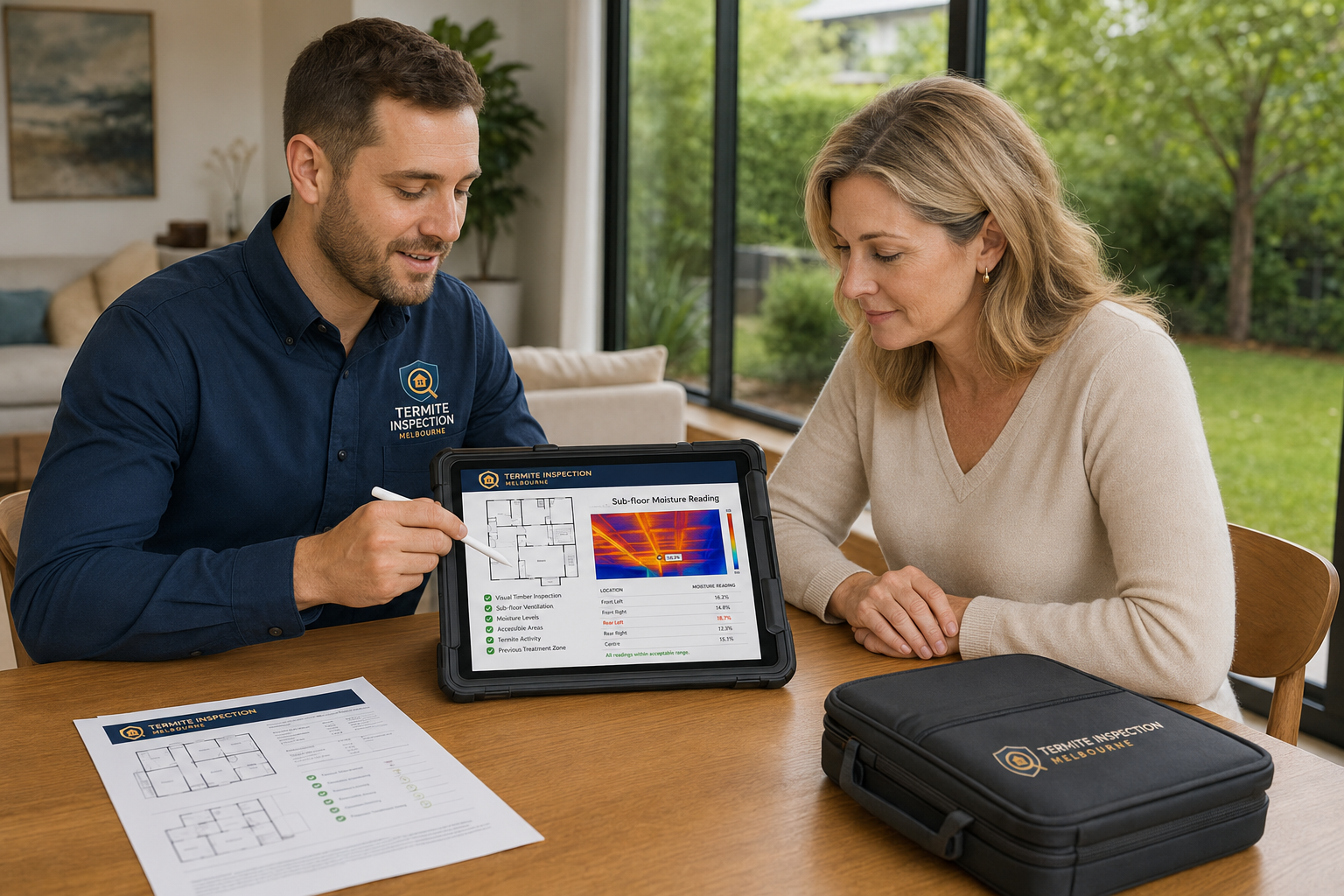
A useful roof exclusion record identifies the customer and property, building or roof zone, report date, observed species evidence, likely active entry, inspected areas, inaccessible areas, climbing routes and immediate safety issues. The quotation then states the gate design or purpose, included proofing points, material assumptions, number of attendances, monitoring responsibility, GST, price, exclusions and acceptance pathway.
At installation, photographs can record the active opening, gate placement and accessible secondary repairs. The return record states the evidence used to decide final closure, whether the device was removed, how the final opening was sealed and what activity or limitations remained. This is especially important for rentals, strata, insurance discussions and commercial facilities where the person approving the invoice may not attend the site.
A warranty document, if supplied, should identify covered repairs rather than merely say “possum free.” It should explain how quickly suspected re-entry must be reported, whether inspection is required, and exclusions for deterioration, storms, trees, building movement, work by others and new openings. Customers can then evaluate a real promise instead of a headline that has no defined boundary.
Victorian Government guidance explains one-way flap design, nest boxes and the same-property, within-50-metre release rule where lawful Common Brushtail trapping provisions apply.
Open official Brushtail guidanceLicence conditions cover species, confinement traps, shelter, checks, release timing and the limits on Common Brushtail control in buildings.
Open official licence conditionsThe Conservation Regulator explains when an ATCW may be required and why practical non-lethal options must be considered.
Open official ATCW guidanceAn injured, orphaned or distressed possum may require a wildlife rescue or veterinary pathway instead of routine exclusion.
Find official wildlife helpRules and agency names can change. These links support customer understanding but do not replace legal advice or a site-specific wildlife decision.
A one-way gate is fitted over the confirmed active roof entry after other accessible re-entry points have been secured. The possum can push through the outward-opening flap when it leaves to forage, but the design prevents it from lifting or pushing back into the roof. The device remains only for the agreed monitoring period. Once exit is confirmed and no dependent animal is trapped inside, the gate is removed and the final opening is sealed with material suited to the roof construction. A gate should never be installed without checking species, entry location and the possibility of young.
Victorian rules do not allow a captured Common Brushtail Possum to be taken to a distant park or another property. Where lawful trapping provisions apply, it must be released after sunset on the same property and within 50 metres of the capture point, or handled through the other pathway permitted by current law. Ringtail Possums are not covered by the same routine control provisions and may require an Authority to Control Wildlife. Species identification and current Conservation Regulator guidance must be checked before trapping or disturbance.
A diagnostic roof and entry assessment starts from $220 including GST for standard accessible metropolitan properties. An eligible single-storey one-way gate and essential proofing package starts from $495 including GST and includes the nominated gate, accessible minor entry-point sealing and the scheduled return to remove the gate and close the final opening. Double-storey, steep, fragile, complex, commercial or extensively damaged roofs require a written quote. Scaffolding, elevated-work equipment, licensed roof repairs, electrical work, hygiene remediation and large exclusion projects are not silently included.
Possums can create heavier thumps, slow movement, vocal calls and activity around dusk or dawn, while rats often produce quicker scratching, gnawing and repeated light movement. Sound alone is not a reliable species test. Roof construction can amplify a small animal and make rats sound much larger. We compare timing, droppings, tracks, odour, nesting, damage, entry size, camera or thermal observations and safe accessible roof evidence before recommending a possum gate or rodent program.
Installation can often be completed during daylight because roof access and proofing are safer when visibility is good. The process must still account for a possum that may be sheltering inside. We do not simply seal the final active opening during the day. The one-way device allows an appropriately identified possum to leave during its normal activity period, while monitoring and a return visit confirm the next step. Weather, roof condition, dependent young and species uncertainty can change the schedule.
Work pauses or changes if dependent young may be present. A one-way gate must not separate a dependent animal from its mother or leave wildlife trapped inside a sealed cavity. Evidence can include multiple movement patterns, nesting material, calls, seasonal behaviour and visual confirmation. The lawful welfare pathway depends on species and circumstances, so the job may require a licensed wildlife controller, wildlife rescuer or veterinarian. We explain the limitation and do not proceed with exclusion until the risk is resolved.
Odours, lights, noise and retail repellents may alter behaviour temporarily, but they do not repair a displaced tile, open eave, fascia gap, roof junction or uncapped opening. A territorial possum may tolerate or avoid the device and continue using another route. The durable part of the service is evidence-based exclusion: identify the animal and active opening, allow lawful exit, secure other accessible gaps, monitor, then close the final entry. Repellents are not presented as a substitute for roof proofing.
Possums can exploit loose vents, damaged mesh, gaps around eaves and roof junctions, and access routes created by trees, fences, pergolas or services. Solar-panel spaces can also shelter birds, rodents or possums, but the animal and access point need confirmation before work begins. Proofing material and fixings must suit the substrate, ventilation, drainage, electrical clearances, roof warranty and bushfire or building requirements. Solar-panel electrical and roofing issues are referred to appropriately qualified trades where required.
No. The $495 including GST starting package applies only to an eligible standard single-storey scope with safe access, one confirmed active entry, a standard gate location, minor accessible proofing and the scheduled return visit. It does not cover scaffolding, boom lifts, brittle or steep roofs, extensive eave replacement, tile bedding and pointing, major flashing, solar electrical work, asbestos-containing materials, multiple buildings or inaccessible wall cavities. Any additional work is described and priced before authorisation.
We record the evidence and recommend the correct pathway instead of installing a possum gate for the wrong animal. Rats may require a rodent inspection, monitoring, control and different proofing sizes. Birds, bats and Ringtail Possums have different legal, welfare and nesting considerations. If the assessment cannot confidently confirm the source, the report identifies the uncertainty and proposes monitoring, a return inspection or referral. The initial assessment fee covers the commissioned inspection rather than guaranteeing a particular species.
We can assess accessible roof, subfloor or cavity locations for deceased wildlife. Extraction depends on safe access and the ability to reach the carcass without uncontrolled demolition. The scope can include removal, bagging, localised cleaning, contaminated insulation advice and odour-source treatment, but deodoriser cannot replace physical removal when the carcass remains. Wall or ceiling opening, electrical isolation, hazardous contamination, specialist cleaning and building repairs may require separate authorised trades. Dead wildlife handling must still follow current Victorian requirements.
Any warranty is stated in the written proposal and applies only to the identified building areas, repairs and conditions described. It can exclude new storm damage, movement, deterioration, tree impact, work by others, newly created openings, unapproved alterations and areas that were inaccessible or outside scope. We do not publish a universal lifetime or whole-roof promise. The completion record identifies the repaired points, remaining vulnerabilities, maintenance responsibilities and the process for reporting suspected re-entry.
The main TIM booking workflow saves a private WordPress TIM Bookings record and creates a reference before email notification is attempted. The business receives the enquiry through the configured WordPress mail connection and the customer receives a confirmation at the email entered. The selected possum package, property information and access notes are included in the saved record. If an email is delayed or filtered, the office can still review the WordPress booking record.
Same-day or urgent attendance may be available depending on suburb, weather, roof safety, technician availability, species risk and lawful access. It is not guaranteed by submitting the form. Ceiling movement, exposed wiring, an injured animal, a trapped animal or a dead-animal odour should be described clearly during triage. We confirm the attendance window and whether the first visit is assessment, extraction, temporary protection or a complete exclusion scope.
Call 0466 929 533 or continue to the secure TIM booking page. Tell us the address, property type, time of the noise, visible animal or entry, roof height and any safety concern. We will confirm whether the first step is assessment, humane exclusion, dead-animal extraction or another pest pathway.
Starting prices require eligible access and scope. Same-day attendance, species confirmation, warranty, thermal imaging and complete proofing are subject to written confirmation. Do not seal an opening while wildlife may be inside.