Municipal Tender & Facility Offer — Managing Melbourne council assets? Book a comprehensive public-building pest and termite assessment this Wednesday and receive $250 OFF an eligible complete barrier treatment + free thermal scan voucher ($150 value) — offer ends 15th September 2026 · Call 0466 929 533
Serving Melbourne from Clyde North Same-Day Options Subject to Availability
Call 0466 929 533
☰ Explore Services & Menu
Council building pest control services at a Melbourne municipal facility
Municipal IPM, public-asset protection and procurement-ready reporting across Greater Melbourne

Council Building Pest Control Services Melbourne

Protect town halls, libraries, community centres, depots, public housing and heritage assets with a council building pest control Melbourne program designed for public access, operational continuity and traceable risk management.

TIM's Pest Control combines site-specific Integrated Pest Management, public facility termite inspection services, non-destructive diagnostics, targeted treatment and detailed asset reporting. Municipal procurement teams receive a defined scope, exact fixed pricing after assessment, safety requirements, exclusions and evidence suitable for contract administration.

Municipal tender documentation support
Police-check and insurance evidence available
Heritage-sensitive inspection pathways
After-hours scheduling subject to access
Public-Space SafetyMethods selected around asset use
Asset-Level RecordsFindings, actions and limitations
Discreet SchedulingLow-occupancy service options
Melbourne CoverageSingle and multi-site scopes
Fixed Written ScopeGST, exclusions and variations clear
Public health, asset and governance risk

Why Municipal Pest Problems Require Controlled, Documented Action

A pest sighting in a council building can affect more than comfort. Rodent evidence in a library kitchenette, cockroaches near a community hall servery, wasps beside a childcare entrance or termites inside a heritage floor can create public-safety, operational, financial and reputation consequences. Municipal assets are used by people with different ages, mobility, health needs and risk tolerances, so response must be proportionate and recorded.

Reactive spraying alone does not provide governance. Asset managers need to know which areas were inspected, what evidence was confirmed, which conditions support the pest, what was treated, what was inaccessible and which building or operational action remains outstanding. A local government pest contractor Melbourne councils can rely on should separate observations from assumptions and pest work from repairs requiring another qualified trade.

Early triage also protects evidence. Staff should record the exact location, time and pest description, isolate affected material where procedure requires it and avoid unapproved aerosols in sensitive areas. For suspected termites, mud leads and damaged timber should remain undisturbed until assessed. For food, childcare or structural risk, the responsible council officer determines any additional isolation or regulatory escalation.

Urgent municipal response: call 0466 929 533 with the asset address, public-access status, evidence, affected zone and authorised contact. Same-day attendance is requested against route, access and safety availability rather than promised before confirmation.
Municipal pest management and public safety inspection in Melbourne
Module 1

Scope of Municipal & Council Pest Management

A municipal contract starts with asset purpose and exposure, not a residential checklist copied across every building.

Town Halls & Civic Offices

Civic offices combine public counters, meeting chambers, kitchens, archives, basements, plant rooms and after-hours functions. The program maps rodent, cockroach, ant, spider and flying-insect pathways while preserving access to records and essential services. Service windows are coordinated with security and event calendars. Findings identify whether a council team, landlord, cleaner or building contractor must close the corrective action.

Public Libraries & Archives

Libraries contain paper, bindings, adhesives, fabrics, quiet voids and climate-controlled zones that can support silverfish, booklice, rodents, moths and timber pests. Monitoring must be discreet and placed away from public interference. Treatment around collections is selected with the asset custodian, and contaminated books or heritage items may require specialist conservation advice rather than routine chemical application.

Community & Recreation Centres

Community halls, sports pavilions and recreation buildings experience changing food, waste and occupancy patterns. Kitchens, change rooms, storage, roof spaces and external bins create linked risks. Programs account for bookings, cleaning turnover, children, vulnerable users and weekend activity. A service record distinguishes an isolated visitor pest from persistent building ingress.

Childcare & Health Facilities

Sensitive facilities require controlled access, careful product selection and exact preparation. Exclusion, sanitation, moisture correction and targeted monitoring are prioritised. The responsible officer confirms occupancy, medical or allergy considerations, toys, food, aquariums and ventilation before treatment. Re-entry follows the registered label and site plan, not a generic statement that every product is harmless.

Council Depots & Workshops

Depots combine vehicle movement, roller doors, stores, staff amenities, waste, drainage and outdoor yards. Rodents, birds, spiders, ants and mosquitoes move through perimeter and service interfaces. Monitoring devices must avoid traffic and maintenance hazards. Fleet, storage and waste activities are mapped so pest evidence can be connected to source rather than treated indefinitely.

Public Housing & Multi-Unit Assets

Housing portfolios require clear division between common property, individual dwellings, tenant responsibilities and building defects. Privacy, access authority and communication are planned before visits. Cockroach, rodent, bed bug and termite work may need different scopes. Portfolio reporting can show trends without treating one tenancy’s result as evidence for an entire complex.

For every category, the approved scope states the sites, buildings, rooms, external zones, target pests, service frequency, response process and reporting. This prevents an invoice for one treatment from being misunderstood as whole-portfolio protection. It also creates a defensible basis for tender comparison because competing proposals can be measured against the same asset and service assumptions.

Pest-specific municipal protocols

How Integrated Pest Management Changes by Pest, Asset and Public Risk

A council-wide program uses consistent reporting and approval controls, while the inspection and treatment method changes according to confirmed evidence, building use and exposure.

Rodent Monitoring, Exclusion & Source Control

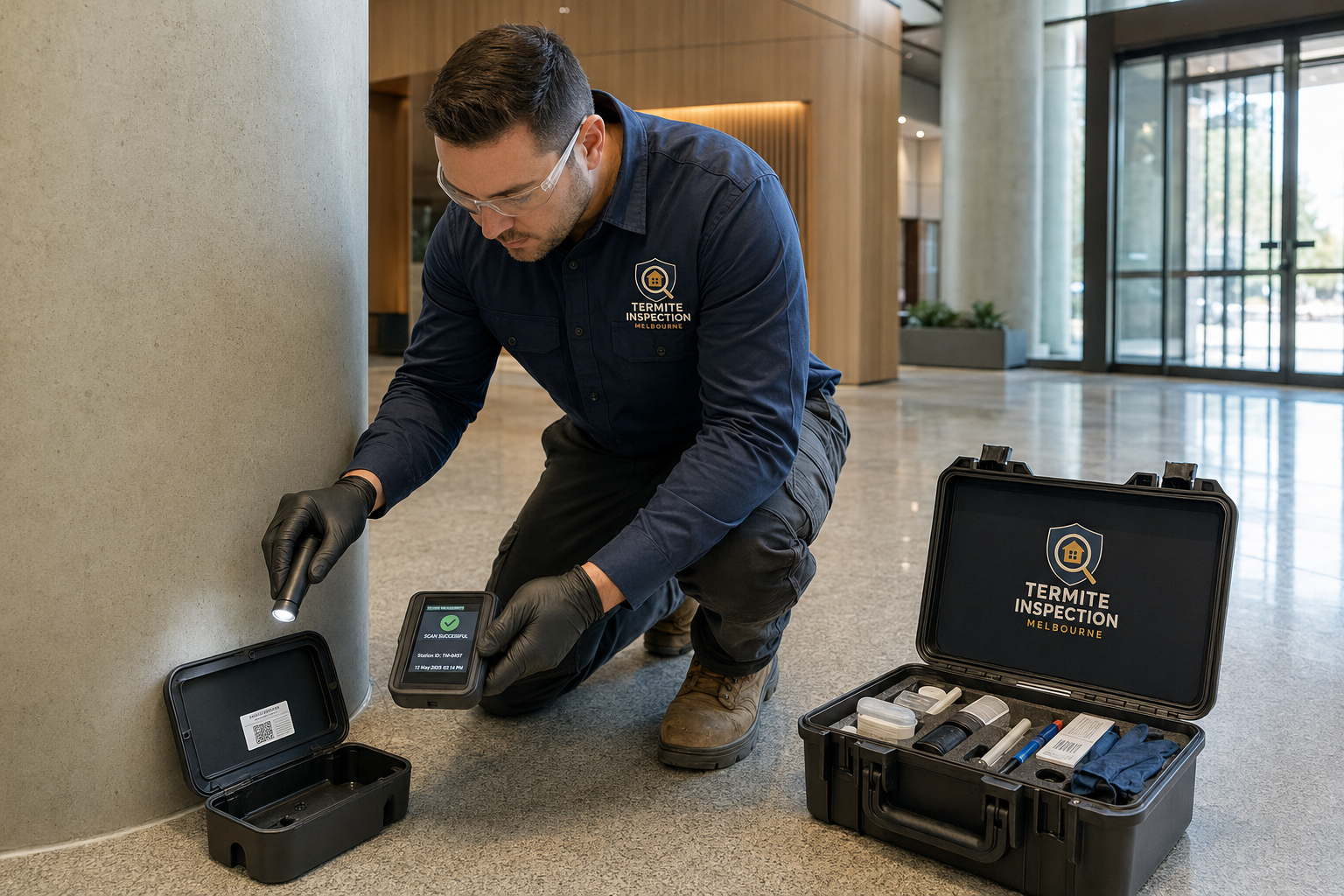
Rats and mice can move between drains, roof voids, garden edges, bin compounds, loading areas, kitchens and storerooms. A municipal rodent plan records droppings, gnawing, rub marks, tracks, harbourage, food and water sources before devices are positioned. Tamper-resistant external stations, internal monitoring devices and traps are selected for the site rather than installed as a generic grid. Device identifiers and service results create a trend record by asset and zone.

Repeated activity triggers investigation of door seals, wall penetrations, drainage, vegetation, stored materials and waste practices. Proofing recommendations specify the observed opening and responsible action, because bait alone does not repair a building. Carcasses, contamination or inaccessible ceiling activity may require a separate hygiene, access or building scope. Public housing, childcare and food premises also need site-specific communication and access control.

Cockroach, Ant & Stored-Product Pest Management

Cockroaches and ants exploit warm equipment, service ducts, plumbing voids, floor-wall junctions, staff kitchens and food residues. Inspection identifies species and activity because German cockroach control inside a kitchenette differs from an outdoor ant trail entering a public counter. Targeted gel bait, monitoring, crack-and-crevice treatment and an insect-growth regulator may be considered where the registered label and site conditions support them. Aerosol fogging is not treated as a universal municipal solution.

Libraries, community stores and food areas can also experience silverfish, booklice, moths, beetles or pantry pests. Affected material is traced to the source, isolated where appropriate and reviewed for moisture, storage, stock rotation and cleaning. Reports distinguish treatment from conservation, disposal or food-safety decisions that remain with the asset custodian.

Spiders, Wasps, Mosquitoes & Public-Facing Hazards

Outdoor amenities, pavilions, playground-adjacent buildings and depots may develop webs, wasp nesting or mosquito resting and breeding zones. The response begins with identification and location. A wasp nest beside a childcare gate requires different control and isolation from an inactive web under a locked depot canopy. Spider management combines web removal, harbourage reduction and targeted residual treatment where suitable, while staff avoid disturbing egg sacs or suspected venomous species.

Mosquito planning maps standing water, gutters, drains, containers, shaded vegetation and nearby wet areas. Source reduction and lawful larval control are considered before broad adult treatment. Pollinators, waterways, stormwater, native animals and public access affect product and timing. Where a pest presents immediate risk, the council contact retains authority over closure or exclusion of the zone.

Termites, Borers & Structural Timber Evidence

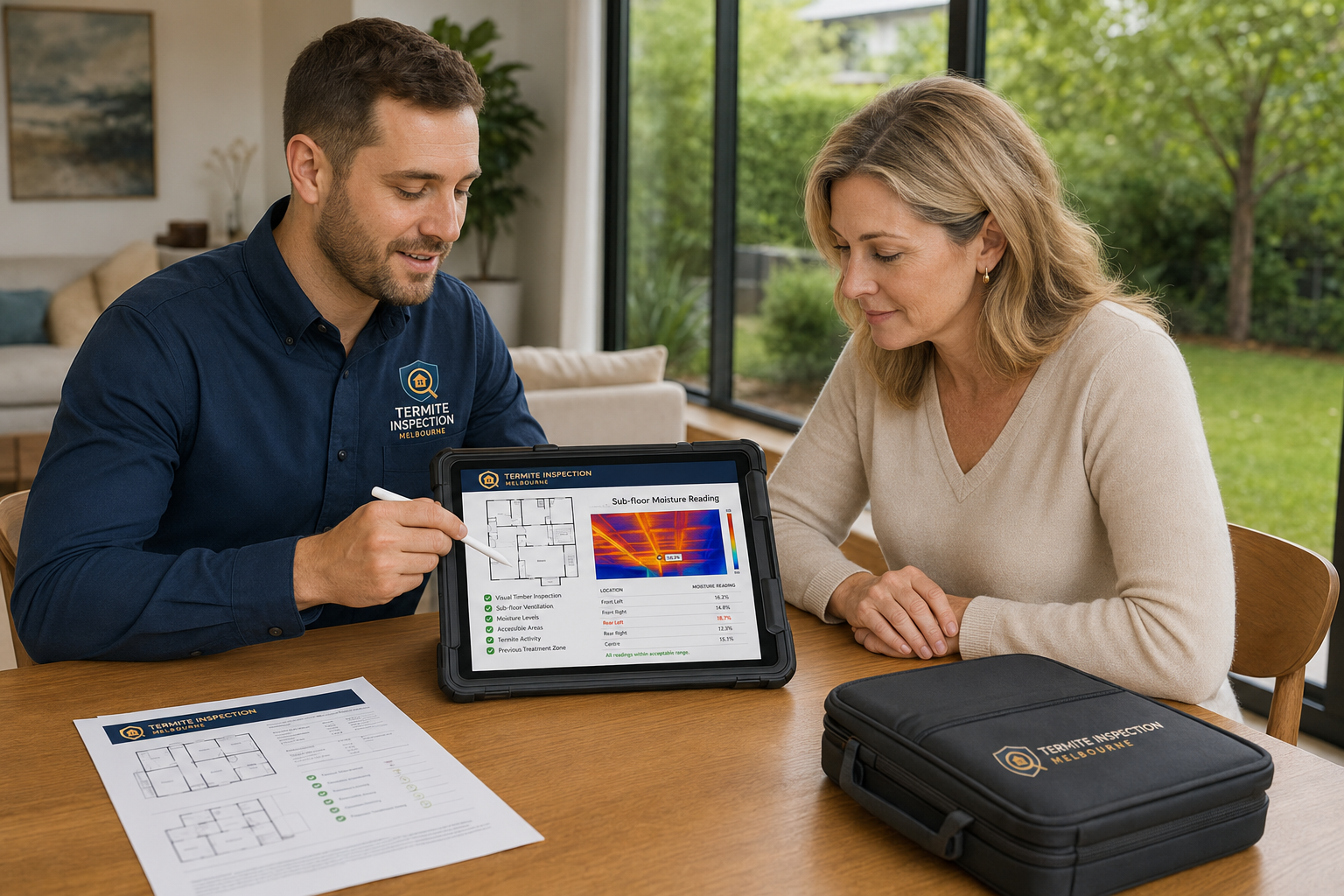
Timber-pest work requires a dedicated inspection scope rather than inclusion by assumption in a routine general-pest visit. Accessible interiors, external edges, subfloors, roof voids, fences, stumps and other agreed zones are examined for mud leads, damage, moisture, fungal decay, borer evidence and conducive conditions. Thermal imaging, moisture measurement, sounding and suitable radar screening support—not replace—professional interpretation.

Active termites should not be sprayed or disturbed by unqualified staff because evidence can be lost and activity may move from the visible point. The report separates active evidence, previous damage, inaccessible areas and suspected structural concern. Colony management, baiting, barriers or reticulation are proposed only after construction and access are understood. Timber repair and structural safety require the appropriate building professional or engineer.

Bird Activity, Roof Access & Lawful Proofing

Birds may roost or nest on solar arrays, canopies, plant platforms, roof ledges and loading structures, creating fouling, blocked drainage, insects and slip or contamination risk. Inspection records species where possible, access, nesting status, building use and affected equipment. Netting, screening, spikes, wire or other proofing must suit the structure and avoid transferring pressure to another unsafe location.

Native wildlife, active nests and protected species can restrict timing and method. Roof work may also require permits, fall protection, asbestos-register review, electrical awareness or elevated-work equipment. The proposal therefore separates inspection, cleaning, nest handling, access equipment and proofing instead of presenting one price that conceals safety and legal variables.

Bed Bugs, Fleas & Sensitive Occupant Incidents

Public housing, respite spaces, community transport facilities and upholstered meeting areas can receive reports of biting pests. Skin marks alone do not identify bed bugs, fleas or mites. Inspection seeks specimens, spotting, cast skins, harbourage and exposure history while protecting privacy. The response plan controls movement of furniture and personal items so an unconfirmed report does not spread material—or stigma—across the portfolio.

Confirmed infestations may require preparation, heat or targeted chemical treatment, follow-up monitoring and coordination with occupants or support personnel. The council determines tenancy, welfare and communication procedures. Pest records should use necessary factual information without placing sensitive personal details into a widely accessible contractor log.

Evidence-led escalation: treatment frequency is increased when monitoring confirms continuing pressure, not simply because a calendar date arrives. Conversely, a quiet device does not close an outstanding building defect. Trend data, sanitation, proofing and asset repairs are reviewed together.
Heritage municipal building timber pest inspection Melbourne
Module 2

Heritage Building Timber Pest Protection

Non-destructive investigation before intervention

Historic town halls, mechanics institutes, libraries, halls and former municipal buildings often contain original hardwood floors, roof trusses, subfloor bearers, decorative joinery, wall linings and archives. Their age does not automatically mean active termites, and visible damage does not establish current activity. The inspection separates accessible evidence, conducive conditions, previous repairs and areas that cannot be examined without permission.

Subterranean termites may travel through concealed soil and building interfaces, while borers can leave emergence holes and frass in seasoned timber. Damp subfloors, blocked ventilation, leaking services, stored timber and garden contact increase risk. Our inspection records mud leads, hollow-sounding areas, moisture anomalies, fungal decay, borer evidence and the relationship between damaged timber and the building’s load path.

Heritage fabric, structural responsibility and treatment approval

A pest technician identifies pest evidence and can recommend pest-management options; structural adequacy and repair design belong to an appropriately qualified building professional or engineer. Where heritage controls apply, drilling, lifting boards, opening linings, removing timber or changing finishes may require approval from the asset manager and heritage adviser. This authority is documented before invasive access.

Targeted treatment may include localised dust, foam, baiting, timber treatment or an external management system depending on the confirmed pest and construction. Broad spraying of historic fabric is not the default. Records include treatment location, product, access method and limitations so future custodians understand what occurred. An AS 4349.3 compliant pest report is offered only where the commissioned scope and inspection conditions support that description.

Module 3

Public Health, Chemical Safety & OH&S Controls

Risk assessment around public use

Municipal pest management Victoria programs operate around public counters, children, older residents, community groups, staff, contractors, animals, food, waterways and sensitive equipment. Method selection begins with who uses the space and how exposure can occur. Inspection, proofing, cleaning, drainage correction, waste control, habitat reduction and monitoring can resolve or reduce many pressures before pesticide use is considered.

Where an APVMA-registered product is justified, label directions govern dosage, location, protective equipment, ventilation, isolation and re-entry. Site controls may be stricter because of the asset’s occupants or operations. The treatment plan identifies preparation responsibilities, signage, barriers, key control, cleaning restrictions and the person authorised to reopen the area. Safety Data Sheets and product records can be supplied according to the contract.

Contractor management and public communication

Municipal sites may require inductions, permits, White Card evidence, working-at-heights controls, asbestos registers, confined-space restrictions, traffic management or security escorts. Those conditions are confirmed before mobilisation. Pest treatment does not authorise access to a roof, subfloor, plant room or construction zone that the site has not declared safe.

Community communication should be accurate and calm. Notices can state the treated zone, access restriction and contact without making unsupported claims. “Low toxicity” does not mean risk-free, and “eco-friendly” should not be used as a substitute for a registered label and risk assessment. Our reports record what was actually applied and why. The council retains responsibility for its broader public-health, workplace and facility obligations.

Professional pest inspection equipment and safety standards for council facilities
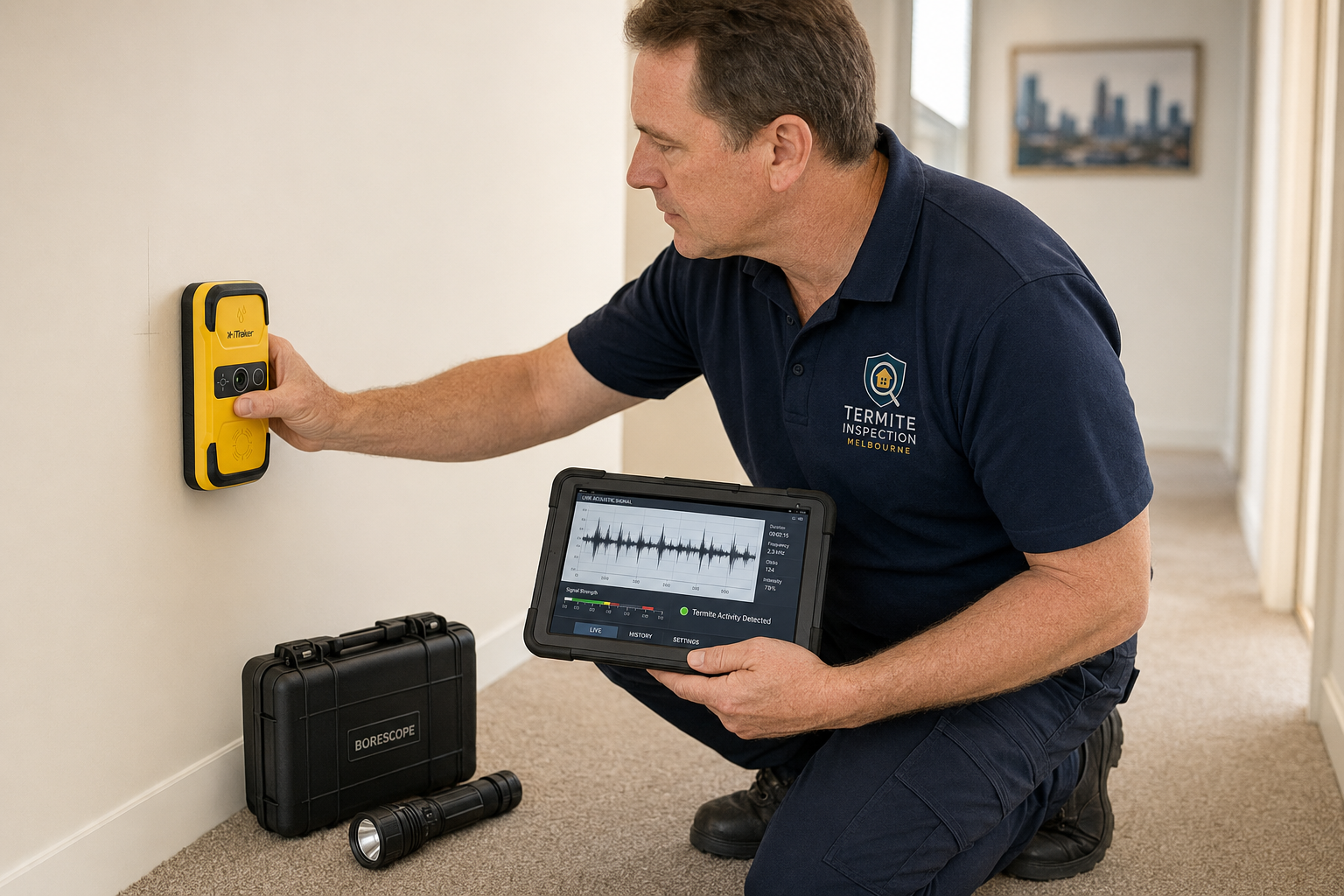
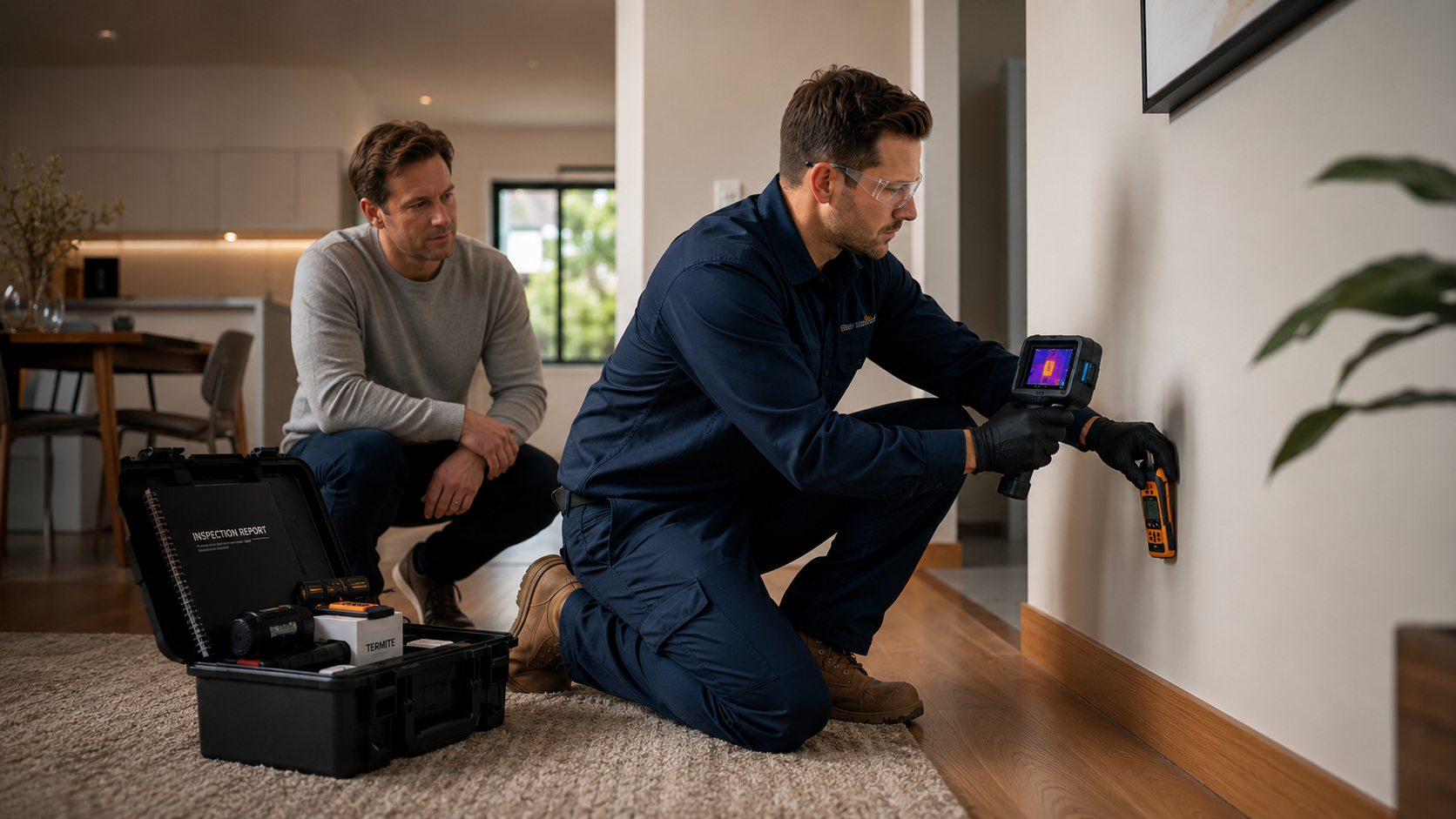
FLIR thermal imaging and non-destructive termite diagnostics in a Melbourne public building
Module 4

Advanced Thermal Imaging & Non-Destructive Diagnostics

Tools that support professional judgement

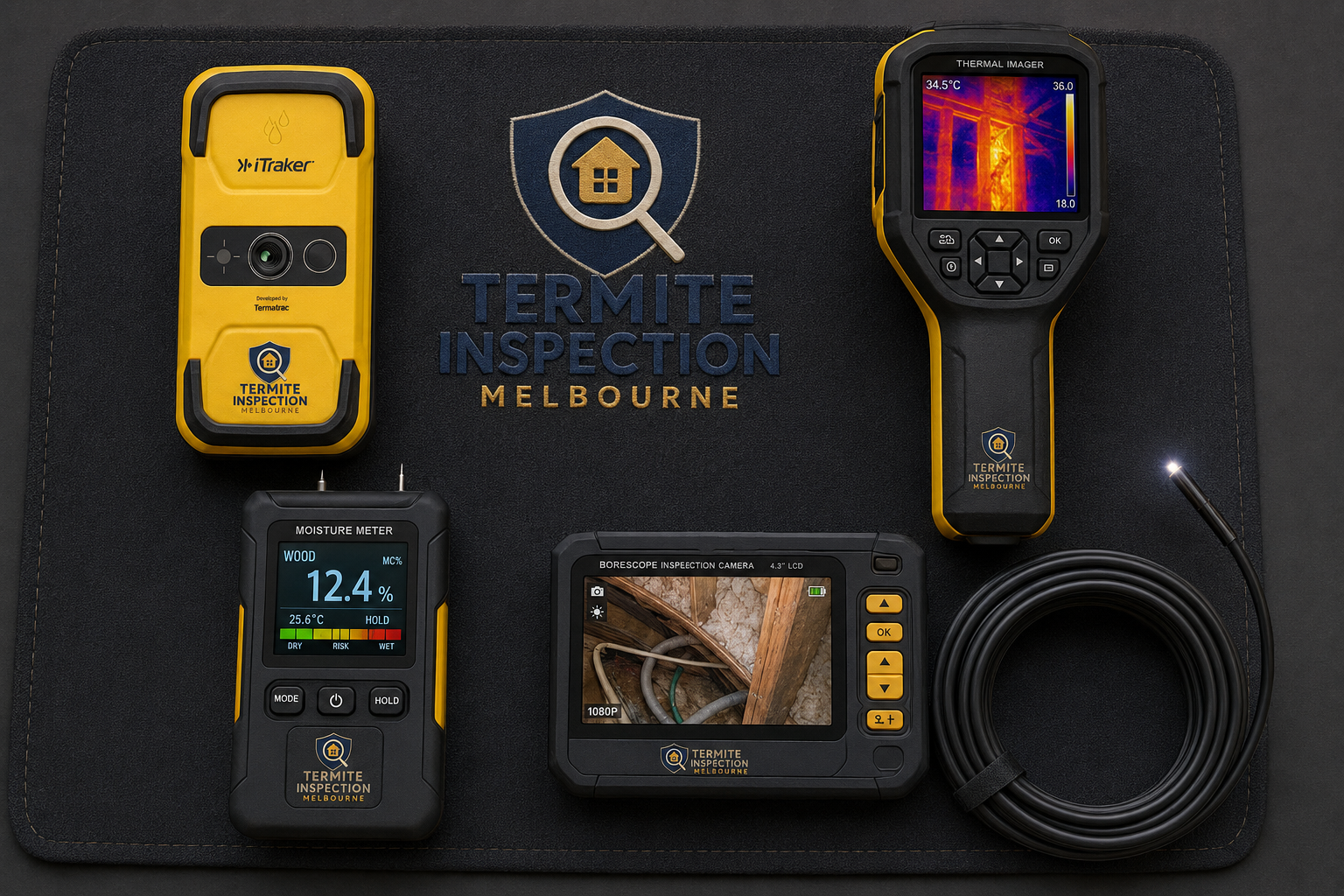
FLIR thermal imaging can reveal temperature patterns that warrant closer investigation. Moisture meters help locate elevated moisture associated with leaks, damp subfloors or concealed conditions. Suitable radar screening may detect movement behind accessible linings. Sounding tools compare timber response and help identify possible hollowing. Each method has limitations: sunlight, air conditioning, plumbing, electrical equipment, insulation, surface material and access can affect results.

No thermal camera or radar device independently guarantees that concealed spaces are pest-free. Diagnostic findings are interpreted with visual evidence, construction, moisture, pest biology and site history. Where evidence remains uncertain, the report states the limitation and recommends monitoring, authorised access or another specialist rather than converting a coloured image into a false conclusion.

Low-disruption diagnostics for high-traffic assets

Non-destructive tools are especially useful where a library, civic office or community venue must remain functional and unnecessary opening would damage finishes. Scanning can prioritise areas for closer inspection and help asset managers decide whether invasive access is justified. It also provides dated evidence for comparing future moisture or thermal patterns.

Diagnostic records can include image references, measured zones, environmental context and inspection limitations. They remain part of a pest assessment, not an engineering certificate. If timber may be structurally compromised, the affected area should be controlled and referred to a qualified building professional or engineer.

Module 5

Council Depot, Fleet & Waste-Facility Pest Control

Rodent and bird pressure across operational yards

Depots and transfer facilities may include open roller doors, vehicle bays, parts storage, wash areas, drains, bins, compactors, vegetation, boundary fences and neighbouring industrial land. Rodents follow edges, drainage and stored materials. Birds use roof ledges, canopies and sheltered plant. Spiders and wasps establish around quiet external structures, while mosquitoes develop where containers or drainage retain water.

A depot survey maps the movement of people, vehicles, waste, stock and water. External rodent stations require secure positioning, identification and a route that avoids collision or public access. Internal monitors are placed at likely transitions rather than at arbitrary equal intervals. Bird pressure is assessed for roosting, nesting, fouling and access before netting, spikes or exclusion are proposed.

Operational correction instead of permanent reaction

Repeated captures at one roller door indicate a building or operating pathway that requires investigation. Damaged seals, stacked materials, unmanaged vegetation, food waste, leaking taps and open drains remain visible in corrective-action reporting. Pest devices do not replace facility maintenance.

Waste and transfer environments may need a higher visit frequency, faster escalation and coordination with cleaning or waste contractors. Product selection considers water, stormwater, wildlife, staff and equipment. Bird nests, native wildlife and protected species can be subject to legal and seasonal restrictions; identification and lawful method selection occur before removal or proofing.

Council depot fleet and civic facility pest control Melbourne
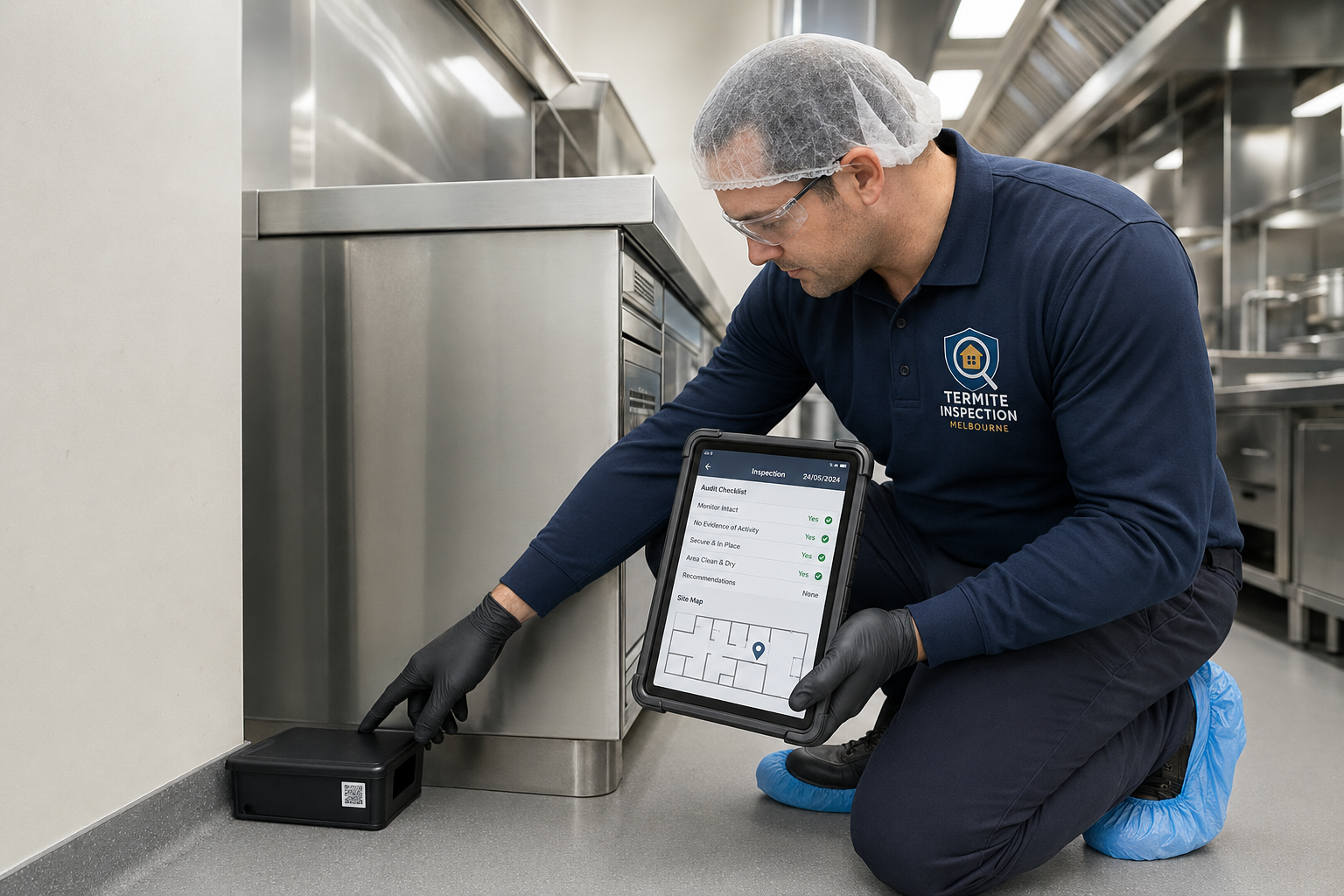
Council pest-control compliance report and municipal asset documentation
Module 6

Tender Documentation, Compliance Reporting & Audit Trails

Procurement-ready scope and contractor evidence

A municipal proposal should allow procurement officers to compare like with like. We define assets, target pests, service frequency, device quantities, response rules, after-hours conditions, reporting, exclusions, specialist work, GST and variation approval. Available contractor evidence can include relevant licences, insurance, police checks, safety documents, product information and requested professional credentials.

Claims such as AEPMA certified municipal technicians, $20 million public-liability cover or White Card accreditation are verified against current evidence for the technicians and work category proposed. If a tender requires a credential the nominated team does not hold, that gap should be disclosed rather than hidden in marketing language.

Asset reports that create a usable audit trail

Each service can record asset identity, date, inspected areas, limitations, pest evidence, device status, treatment, product, photographs, priority actions, responsible party and next review. Trend summaries compare activity over time and help councils distinguish an isolated incident from a persistent asset defect. A closed action should retain evidence of completion rather than disappearing from the next report.

AS 4349.3-aligned timber-pest reporting and HACCP-supporting pest records are supplied only where relevant to the commissioned scope. The pest contractor does not certify a whole food-safety system, a building’s structural adequacy or statutory compliance beyond its competence. Clear limits make the record more reliable during internal review, insurance enquiry, asset planning and contract renewal.

Transparent municipal scoping

Council Pest-Control Consultation & Contract Options

Municipal work is quoted against the inspected asset and tender requirements. We do not publish a misleading bedroom-based price for council facilities.

Single Public Asset
Fixed Quote
Town hall, library, hall or civic office
  • Asset risk assessment
  • Defined pest and inspection scope
  • Safety and access requirements
  • Written GST-inclusive proposal
Request Asset Quote
Heritage & Timber Audit
Custom Scope
Non-destructive diagnostics and reporting
  • Accessible timber inspection
  • Thermal and moisture screening
  • Heritage access limitations recorded
  • Treatment roadmap if evidence is found
Scope Heritage Audit
Multi-Site Portfolio
Contract Quote
Multiple assets or municipal regions
  • Staged mobilisation
  • Asset-level records
  • Portfolio trend reporting
  • Agreed response and variation rules
Discuss Portfolio
Pricing note: final inclusive pricing and site-specific specifications are confirmed after the required asset information and physical inspection. Barriers, bird-proofing, major exclusion, access equipment, contaminated-material removal and emergency out-of-hours attendance are separately stated unless included in the contract. The advertised $250 barrier discount and thermal-scan voucher are subject to eligibility and written scope.
Compare governance and capability

Municipal Pest-Control Service Comparison

Council procurement should compare evidence, scope and asset-management value—not only the first callout price.

Provider modelTender documentationHeritage timber capabilityThermal diagnosticsAsset audit trailInsurance verification
TIM's Certified Municipal ServiceScope, safety documents, credentials and response rules availableNon-destructive, approval-led pathwayUsed where suitable with limitations recordedAsset findings, photographs, actions and trendsCurrent certificate requested against proposed work
Standard Commercial ProviderVaries by contract maturityMay require a separate timber specialistNot always includedOften standard service reportsMust be checked for municipal requirements
General HandymanUsually no pest-management tender frameworkNo assumed timber-pest qualificationGenerally unavailableRepair notes are not pest audit recordsMay not cover pesticide or timber-pest work
Interstate Corporate ChainStrong systems possible, local flexibility variesDepends on nominated local technicianMay be an additional serviceCentral portal, local detail variesCorporate cover still needs scope verification
Controlled municipal mobilisation

Our 4-Step Council Pest-Management Framework

1

Asset Register & Risk Audit

We confirm buildings, use, access, pest history, operating hours, sensitive occupants, existing devices and reporting requirements. Each asset’s limitations and immediate priorities are recorded.

2

Municipal IPM & Tender Scope

The proposal defines target pests, monitoring, treatment, safety controls, frequency, response, credentials, reporting, exclusions, GST and change-control rules.

3

Discreet Service Implementation

Authorised devices and treatments are installed under site access and label requirements. Urgent evidence is escalated while public operations are protected as far as the risk permits.

4

Digital Reporting & Review

Asset reports, actions and trends are updated. Recurring hotspots trigger source review, and portfolio performance is assessed against the approved contract.

Managing Melbourne's municipal microclimates

Council Pest Control Across Greater Melbourne

Coastal exposure, clay soil, mature vegetation, dense inner-city services and growth-corridor construction create different pest pathways across municipal assets.

South East Melbourne & Clyde North

From 38 Graziers Crescent in Clyde North, municipal routes can cover Cranbourne, Casey, Cardinia, Dandenong, Frankston and neighbouring public assets. Rapid residential growth, construction interfaces, drainage corridors, reserves and expanding community facilities create changing rodent, ant, cockroach, wasp and termite pressure. Asset programs can group nearby libraries, halls, depots and pavilions while retaining separate site records and access instructions.

Eastern Melbourne

Tree-lined eastern municipalities contain established civic centres, libraries, sports pavilions and heritage buildings with mixed timber, brick and subfloor construction. Mature vegetation, sloping ground, damp subfloors and ageing service penetrations increase timber-pest and rodent vulnerability. Inspection routes consider roof access, archives, public operating hours and heritage controls.

Northern Melbourne

Northern council assets range from dense inner-suburban libraries and community rooms to depots, workshops, aquatic precincts and expanding growth-corridor facilities. Drainage, shared boundaries, food activity, waste compounds and high public use can create linked pest pathways. Monitoring and reporting are scaled to each asset rather than applied as one generic spray schedule.

Western Melbourne

Western municipalities include large industrial interfaces, logistics corridors, grassland edges, drainage networks and fast-growing residential precincts. Council depots, storage yards, community facilities and public amenities may face rodent movement, bird pressure, spiders, ants and mosquitoes. Programs emphasise perimeter mapping, door and drain defects, waste controls and practical route planning.

Melbourne CBD & Inner Municipalities

Inner-city public buildings can involve basements, shared service risers, heritage fabric, adjoining tenancies, constrained waste areas and continuous public access. Discreet scheduling, exact asset identification and coordination with security, cleaners, building managers and heritage advisers are essential. Reports distinguish the inspected council area from landlord or adjoining-property responsibilities.

Mornington Peninsula & Coastal Assets

Coastal reserves, foreshore buildings, halls, libraries, depots and public amenities experience salt air, seasonal visitation, dense vegetation, moisture and bird activity. Programs consider weather exposure, standing water, roof access and seasonal service demand. Same-day commercial pest quote requests remain subject to route and authorised access.

Microclimate informs inspection and frequency but does not replace site evidence. Two libraries in the same municipality can have different roof access, moisture, waste, landscaping and public use. Contract schedules should therefore allow risk-based adjustments supported by records rather than treating geography as the only predictor.

TIM's Pest Control accredited local municipal team Melbourne
Module 7

Why Melbourne Councils Partner with TIM's Pest Control

Local accountability with procurement discipline

Operating from 38 Graziers Crescent, Clyde North VIC 3978, our routes serve the Melbourne Metropolitan Area, South East Melbourne, Eastern Melbourne, Northern Melbourne, Western Melbourne and Mornington Peninsula. Local routing supports communication and practical mobilisation, while each council retains control of access, priorities and approval.

We focus on evidence, defined scope and transparent limitations. When no activity is found, the report says so. When an area is inaccessible, it is not silently described as clear. When a building repair, heritage decision or engineering assessment is required, that responsibility is identified instead of being disguised as pest treatment.

Credentials verified for the proposed contract

Municipal buyers can request current licensing, insurance, police-check, White Card and relevant AEPMA or timber-pest evidence. An advertised $20 million public-liability limit is subject to the current policy certificate, exclusions and work category. This verification protects both parties and is stronger than relying on unqualified website claims.

  • Municipal asset scopes and staged portfolio mobilisation
  • Public-space, heritage and operational risk planning
  • Thermal imaging and diagnostic tools where suitable
  • Clear GST, exclusions, response and variation rules
  • Digital reporting for facility and procurement review
Evidence before engagement

Municipal Contractor Assurance

Licensing & Insurance

Current evidence is supplied for the proposed work and checked against tender limits, exclusions and specialist activities.

Police Checks & Site Induction

Personnel evidence and municipal induction requirements are coordinated before access to controlled or sensitive facilities.

APVMA Label Compliance

Products are selected and applied according to registered labels, site risk controls and documented re-entry requirements.

AS 4349.3-Aligned Scope

Timber-pest reporting references the appropriate inspection scope without misrepresenting structural or statutory certification.

Digital Asset Records

Findings, photographs, treatment, limitations and actions remain traceable by site and review date.

Controlled Variations

Specialist work, access equipment and expanded scope proceed only through the agreed approval pathway.

Municipal procurement answers

Council Building Pest Control Melbourne FAQs

What types of council buildings and public assets do you service in Melbourne?

TIM’s Pest Control can design municipal pest-management scopes for town halls, municipal offices, public libraries, community and recreation centres, neighbourhood houses, council depots, workshops, storage buildings, maternal and child health facilities, selected childcare premises, public housing assets, pavilions, amenities blocks, heritage buildings and other accessible local-government properties. Each site is assessed separately because operating hours, public access, construction, pest pressure, sensitive occupants and reporting requirements differ. Parks, playgrounds, waste-transfer facilities, aquatic centres and specialised infrastructure may need a separate risk assessment, product limitation review or specialist subcontractor. The approved proposal identifies the buildings, zones, target pests, frequency, access limitations, inclusions and exclusions before work begins.

Are your technicians vetted and insured for municipal work?

Council procurement teams can request the current licences, insurance certificates, police-check evidence, White Card evidence where construction-site access requires it, training records and relevant professional memberships for the technicians proposed for the contract. Any statement about $20 million public-liability cover, AEPMA certification or specialist timber-pest accreditation must be supported by the current certificate and must apply to the exact work category. We do not ask municipal clients to rely only on a website badge. Tender submissions can include the available evidence, safety documentation, product information and escalation contacts required by the procurement schedule. Site-specific inductions, permits and contractor-management conditions remain subject to the council’s requirements.

Do you provide reports suitable for council risk audits and procurement records?

Yes. The reporting package can include the service date, technician, asset identifier, inspected zones, limitations, pest evidence, device activity, photographs, product use, safety controls, corrective actions, priority ratings and next review date. Site maps, monitoring-device registers, trend summaries and outstanding-action schedules can be incorporated where the contract requires them. Timber-pest inspections can be documented to the agreed AS 4349.3-aligned scope when that standard is applicable. Reports support the council’s audit trail but do not replace engineering certification, building-compliance assessment, public-health decisions or the council’s own contractor-governance obligations.

Can treatments be completed outside standard council operating hours?

After-hours, early-morning and low-occupancy servicing can be scheduled where technician availability, security access, alarms, lighting, lone-worker controls and site procedures allow. The facility contact must confirm access authority, keys or escorts, isolation requirements and emergency contacts. Discreet timing reduces disruption but does not remove preparation or re-entry obligations. A severe infestation, contaminated room, active termite area or unsafe structure may require temporary isolation irrespective of the preferred service window. Those constraints are explained before authorised work whenever the inspection evidence permits.

How do you treat heritage-listed council properties without damaging historic timber?

Heritage work begins with non-destructive inspection, documentation and consultation. We map accessible timber, moisture, subfloor conditions, previous repairs, mud leads, frass, borer emergence holes and suspected concealed activity before recommending treatment. Thermal imaging, moisture meters, sounding and suitable radar screening may support the investigation, but no instrument alone proves a wall or beam is pest-free. Drilling, opening, removal, chemical application and structural repair must respect the heritage-management plan and the authority of the asset manager, heritage adviser, builder or engineer. Treatment is targeted to confirmed evidence and recorded so future custodians can understand what was inspected and changed.

What pests are included in a municipal Integrated Pest Management program?

The written scope may include rodents, cockroaches, ants, flies, stored-product insects, spiders, mosquitoes, wasps, selected birds and timber pests. Coverage is not assumed merely because a pest appears during the contract. Termite barriers, major bird-proofing, fumigation, extensive proofing, contaminated-material removal, specialist access and emergency callouts are generally separately defined. Integrated Pest Management combines inspection, monitoring, exclusion, sanitation, waste and moisture correction, staff reporting and targeted treatment. The objective is to reduce the conditions supporting pests and create evidence-based escalation rather than repeatedly spraying public buildings without source control.

Can you provide a fixed price for a council asset or multi-site portfolio?

Yes, after the required scoping information and site access are available. Municipal pricing depends on the number and type of assets, total floor area, public-access profile, pest history, device quantity, service frequency, travel, reporting format, induction time, access equipment, after-hours requirements and specialist work. We issue a written proposal identifying GST, recurring services, callout rules, response targets, device ownership, exclusions and separately priced projects. This approach gives procurement teams a defensible fixed scope rather than a low headline rate followed by unplanned variations.

Do you offer same-day response for urgent council pest incidents?

A same-day commercial pest quote or urgent attendance can be requested and is subject to route, technician availability, asset location, access authority, pest type and safety risk. We triage public-facing sightings, food or childcare concerns, multiple rodent captures, wasp hazards and suspected active termites according to the information provided. Immediate containment guidance may be given, but an unverified telephone description is not a substitute for site inspection. Emergency after-hours fees and response conditions are confirmed before dispatch.

How are pesticides managed around children, libraries and public spaces?

Product selection follows inspection and the registered label. Around childcare, libraries, public counters, playground-adjacent buildings and community venues, we prioritise exclusion, cleaning, moisture correction, monitoring and targeted placement so broad treatment is not the default. The site contact receives preparation, isolation, ventilation, drying and re-entry instructions. Products are not described as universally harmless; safety depends on correct selection, dosage, placement, access control and compliance with the label. Sensitive occupants, animals, aquariums, food, artefacts and ventilation systems must be disclosed before treatment planning.

What happens during the initial municipal asset assessment?

The assessment confirms the asset purpose, construction, public access, operating hours, known pest history, previous treatments, high-risk zones, waste and food sources, water and drainage, roof and subfloor access, current devices, safety requirements and documentation expectations. Evidence and conducive conditions are photographed where authorised. The resulting proposal defines priorities, monitoring layout, treatment options, responsibilities, limitations, reporting, frequency and escalation. The assessment is not automatically a free treatment or engineering certification. Promotional eligibility, travel and access are confirmed at booking.

Can one program cover multiple councils or a large municipal portfolio?

A portfolio program can use a consistent governance framework while preserving asset-specific scopes. Councils can nominate contract managers, facility contacts, emergency authorities, service categories, response targets and reporting fields. Each asset retains its own map, findings, limitations and action history, while portfolio summaries show trends, recurring building defects, overdue corrective actions and high-risk sites. Mobilisation is normally staged so critical and public-facing assets are baselined first. Contract changes, new acquisitions, renovations and disposed assets are recorded through an agreed change-control process.

Do you provide termite inspection and treatment advice for council assets?

Yes. Public facility termite inspection services can cover accessible interiors, roof voids, subfloors, external perimeters, nearby timbers and conducive conditions according to the approved scope. Thermal imaging, moisture measurement and other diagnostic tools may support the inspection. Active termites, suspected structural damage and heritage fabric require careful escalation. Treatment options may include targeted colony management, baiting, soil treatment, barriers or reticulation depending on species, construction and access. Structural adequacy and repair design remain the responsibility of an appropriately qualified building professional or engineer.

Protect public assets with a defined, auditable program

Schedule Your Council Asset Pest Assessment

Municipal facility managers and procurement officers can call 0466 929 533 to discuss a single urgent building, heritage inspection, depot program or multi-site council portfolio. We will confirm access, assessment scope and the information needed for a fixed written proposal.

Same-day response, free thermal scanning and promotional barrier discounts are subject to location, access, technician availability, eligibility and written scope. No treatment, certification or tender award is implied by submitting an enquiry.