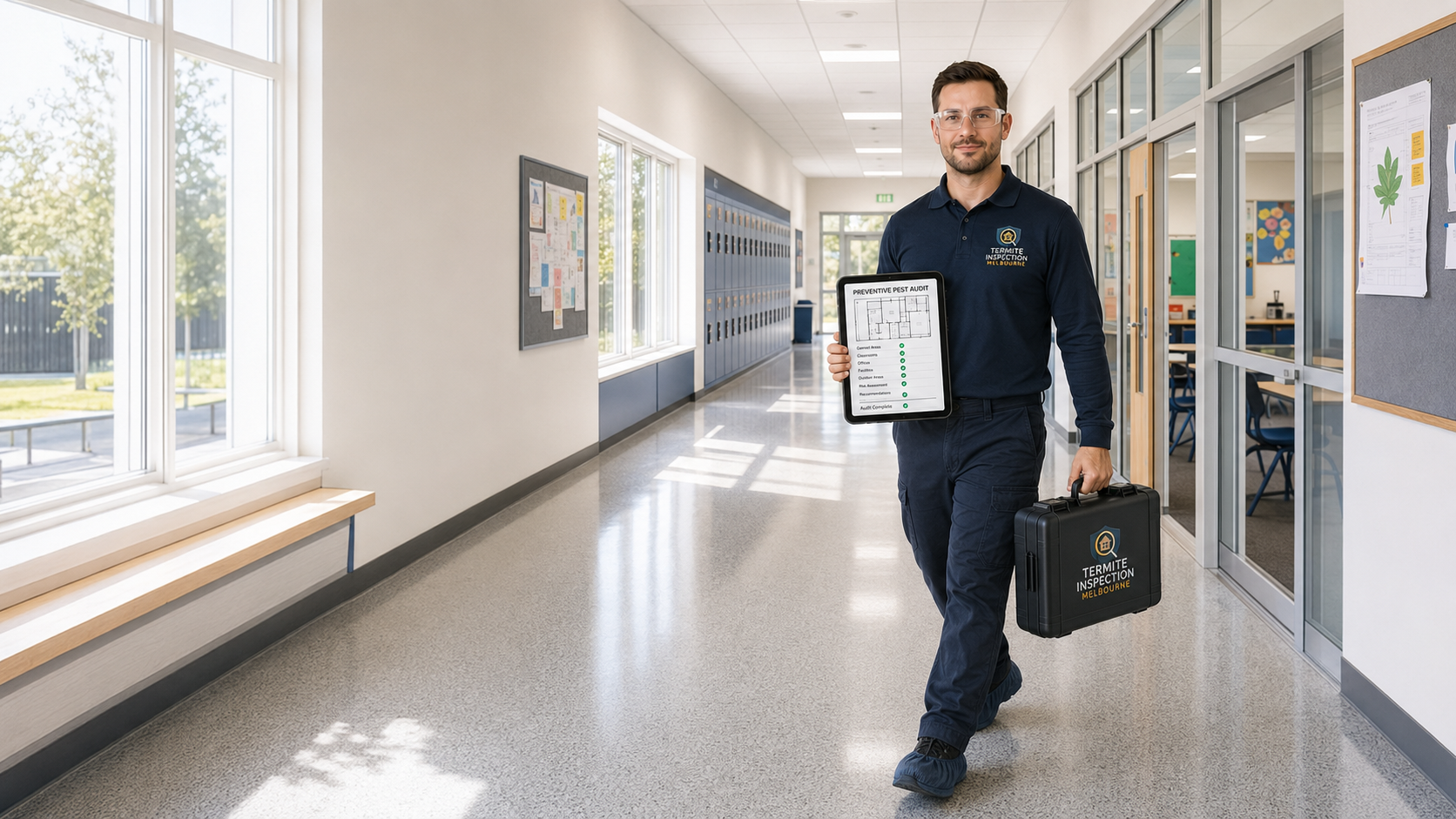
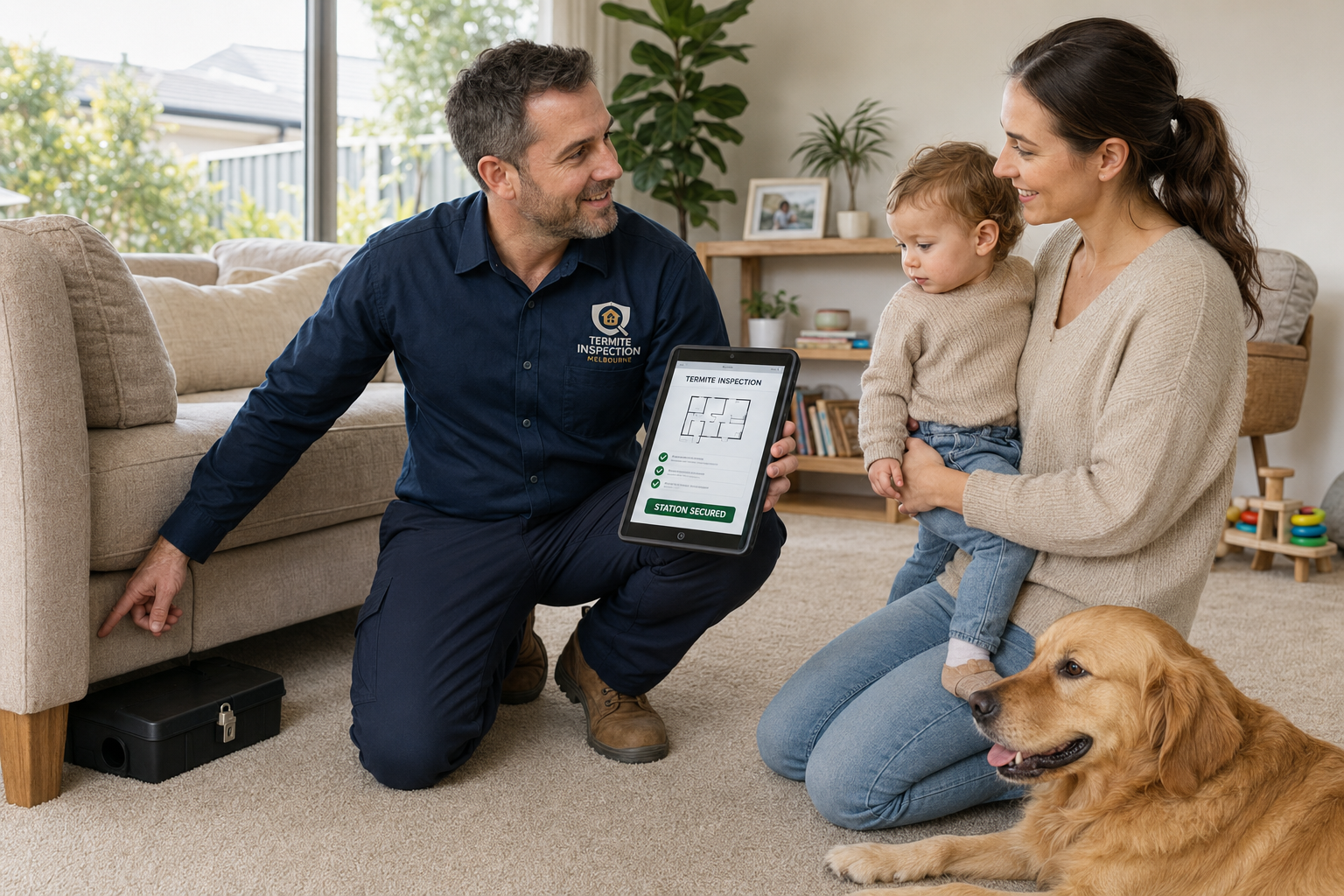
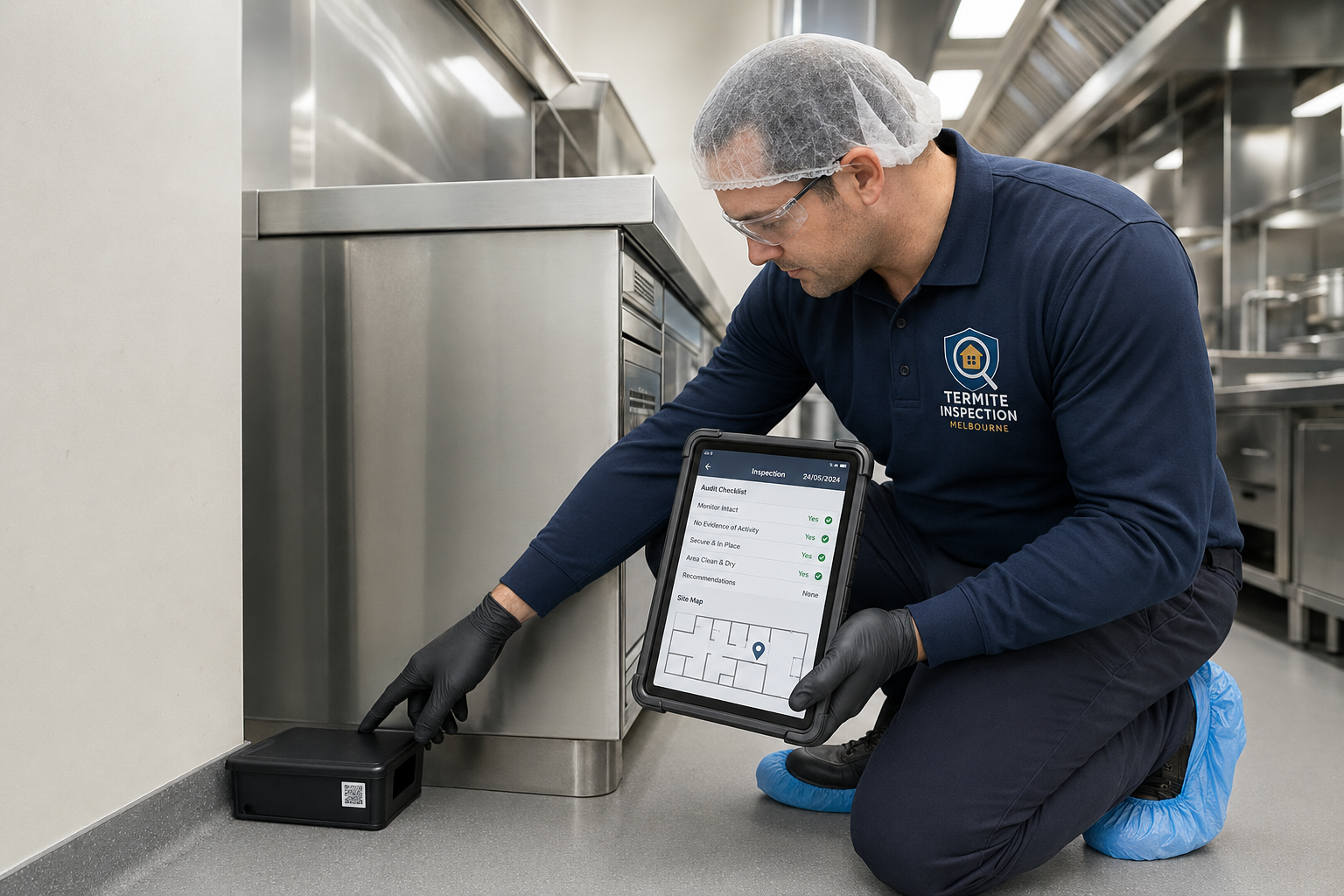
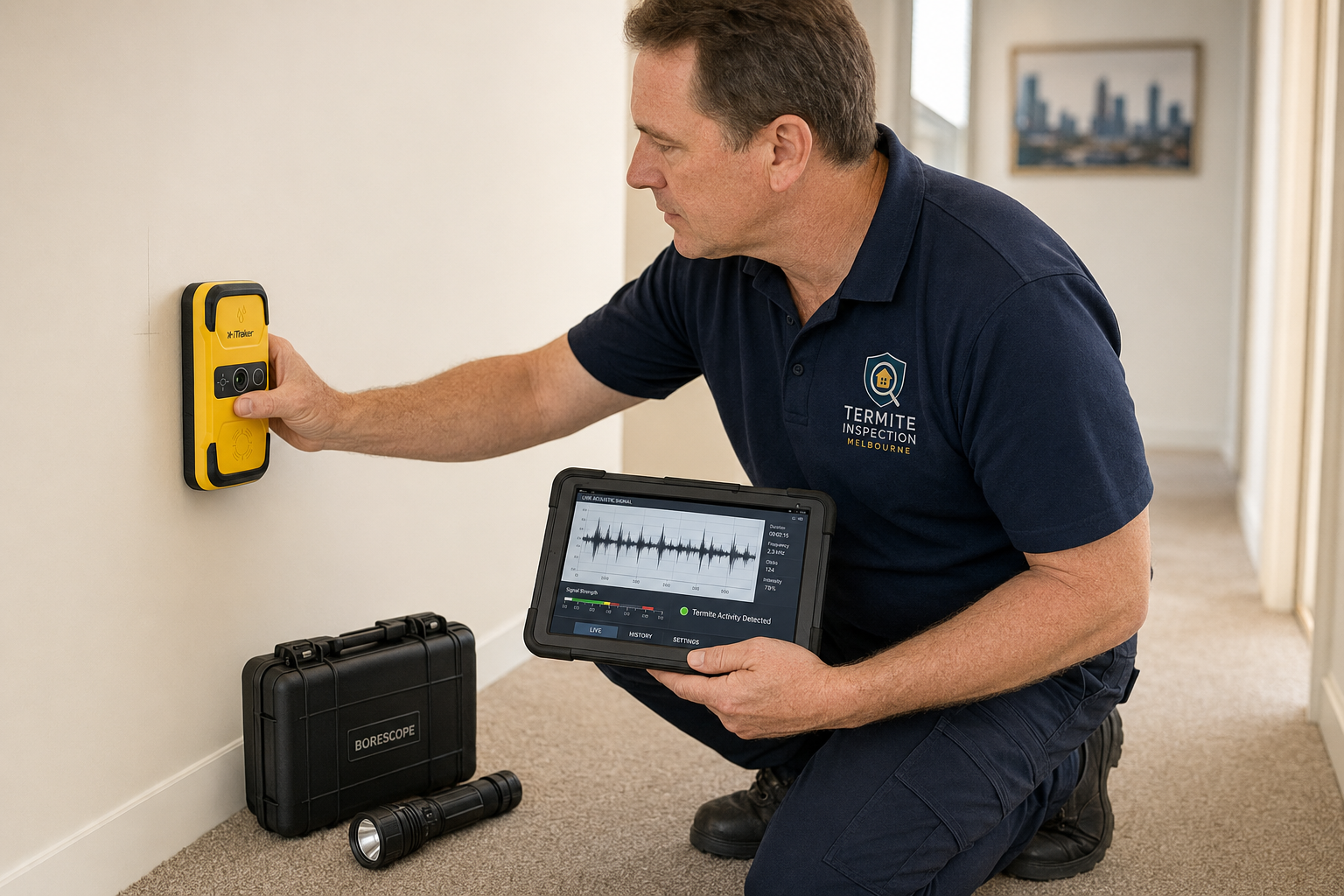
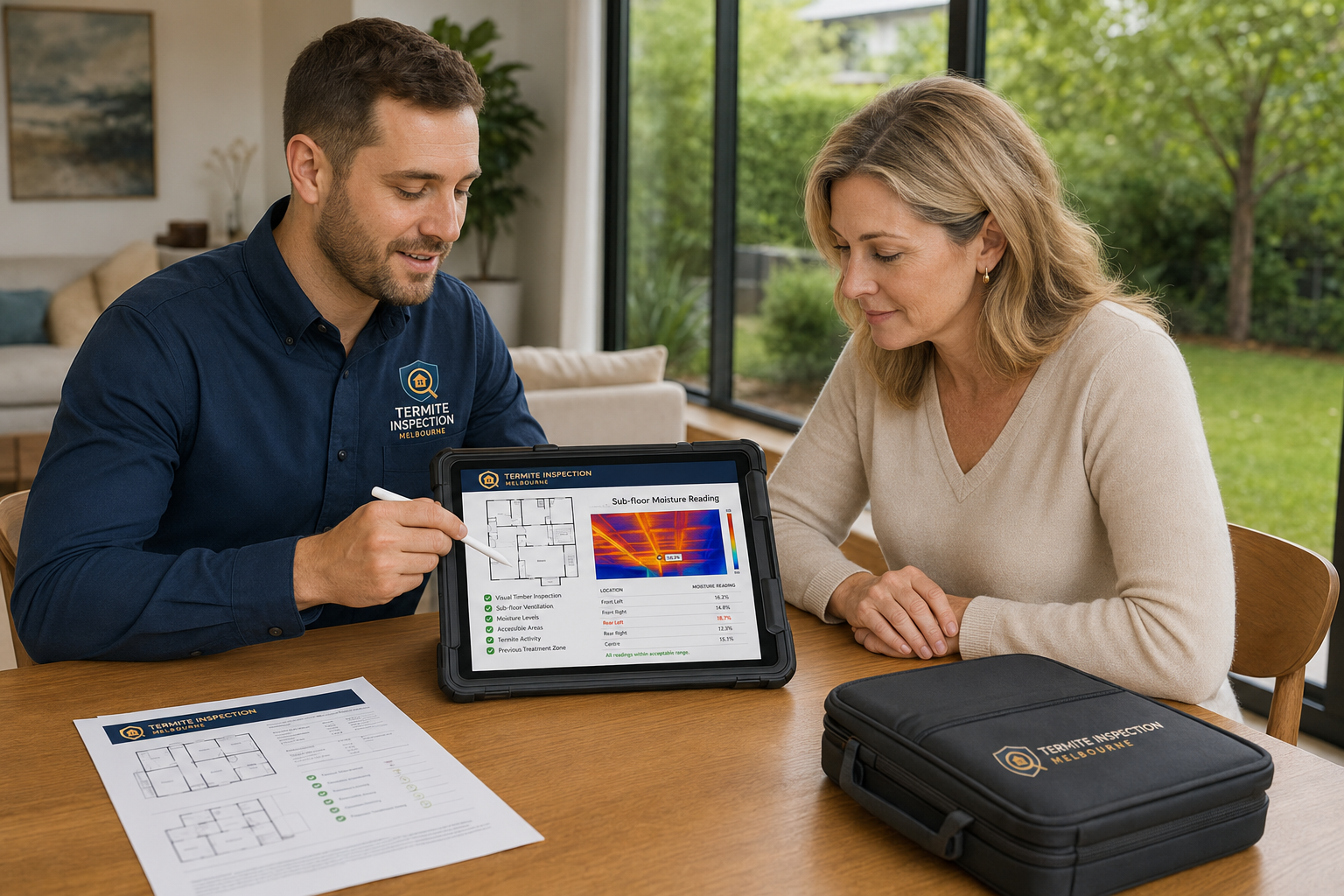
A campus is not one treatment area. Each zone has different occupants, access, food, moisture, construction and acceptable control methods. The inspection converts those differences into a usable site plan.
Classrooms, Libraries and Administration
These areas often contain bags, paper, cardboard, food crumbs, soft furnishings, electronics and concealed service gaps. The first task is to confirm whether a sighting is isolated or connected to a wall void, roof space, neighbouring room or delivery pathway. Monitors can be positioned away from student handling and numbered on the site register. Cleaning and storage actions are specific: remove food from drawers, rotate long-stored materials, reduce cardboard and report water damage. If treatment is needed, the scope identifies the room, placement, preparation, access restriction and review point. It does not treat every classroom merely because one insect was found elsewhere.
Canteens, Kitchens and Food Stores
Food areas receive a higher observation priority because pests can move through deliveries, dry stock, refrigerators, drains, grease, bins and equipment voids. Inspection reviews stock rotation, damaged packaging, spill access, cleaning edges, door seals and overnight harbourage. Cockroach or rodent evidence in these zones may require prompt isolation of affected material and coordination with the school's food-safety process. Pest treatment alone does not certify food safety. The IPM report records pest evidence, accessible contributing conditions and the corrective actions assigned to cleaners, maintenance, suppliers or management. Follow-up checks confirm whether activity and the underlying conditions changed.
Early-Learning, First-Aid and Sensitive Rooms
Young children, bedding, floor play, toys, food, medicines, aquariums and disclosed sensitivities can materially change the service plan. The school identifies the room function and any additional internal controls before approval. Preparation may include removing or covering nominated items, controlling access, selecting a low-occupancy window and confirming who can reopen the room. Non-chemical actions and localised methods are considered before broader application. Product registration does not eliminate the need to follow the label, SDS, risk assessment and site instructions. The completion record clearly states what was treated, what was not treated and the applicable re-entry information.
Roof Voids, Subfloors and Plant Areas
Concealed building spaces can support rodents, birds, termites, wasps, spiders and moisture-related pests, but access can involve electrical, height, confined-space, asbestos or structural considerations outside routine pest work. The quote records available hatches, safe access, known services and any school permit or induction requirement. Technicians inspect only areas that are accessible and safe within the approved scope. Suspected electrical damage is referred to an electrician; structural concerns are referred to a suitable building professional or engineer. Findings from a roof or subfloor are mapped to the room or building below so maintenance teams receive a useful location rather than a vague note.
Playgrounds, Ovals and Outdoor Learning
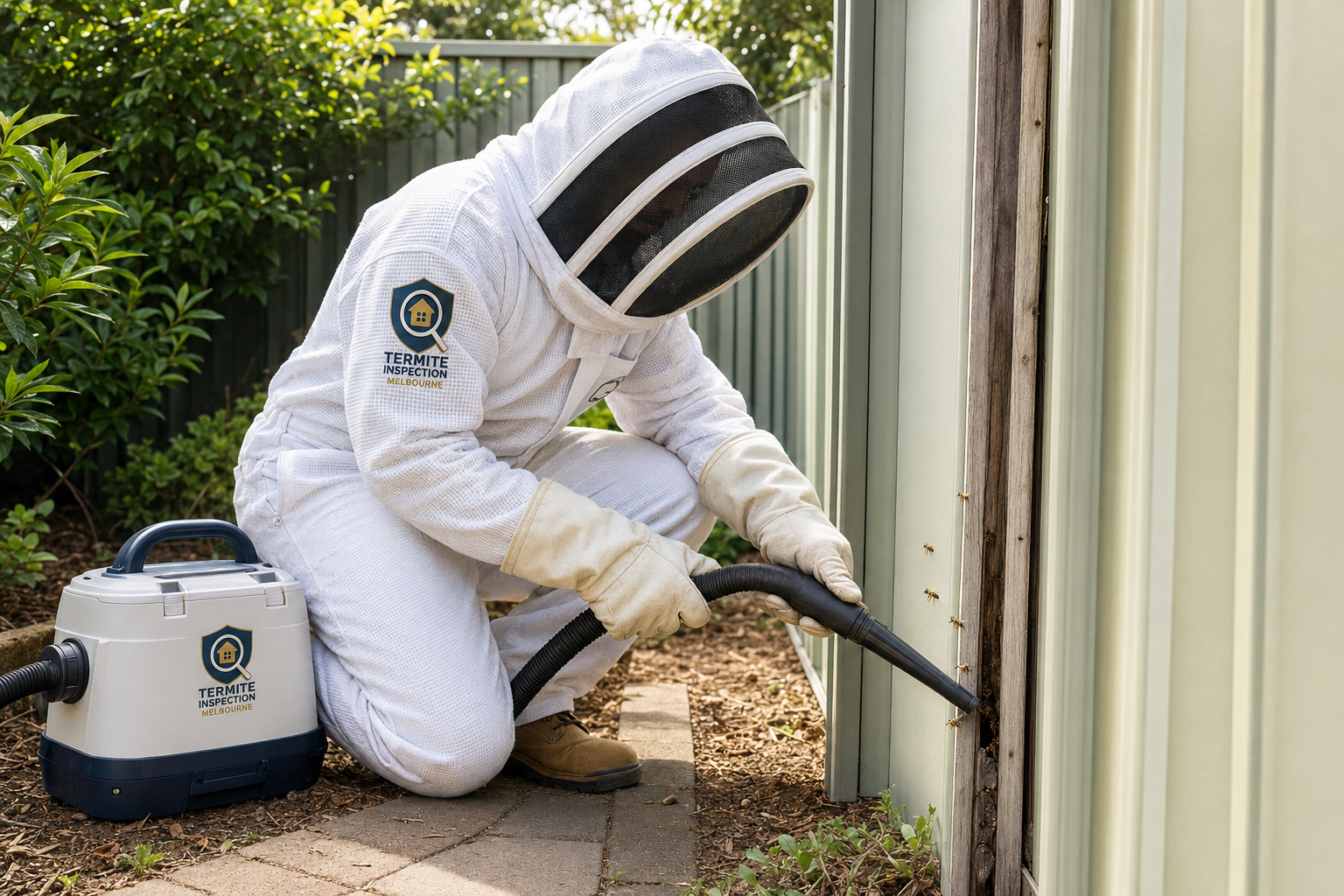
Outdoor areas change with rainfall, vegetation, mowing, waste, irrigation, community use and neighbouring land. The plan maps stinging-insect flight paths, ant activity, rodent harbourage, spider webbing, standing water and pest access near high-use routes. An active wasp nest close to children requires different urgency from occasional foraging insects at a distant boundary. Staff should keep people away from the affected zone and avoid disturbing the nest while access is arranged. Mosquito prevention prioritises removal or management of breeding water. Landscaping, drainage and waste actions are assigned separately from pesticide work and checked again after seasonal or site changes.
Portables, Construction and Refurbishment
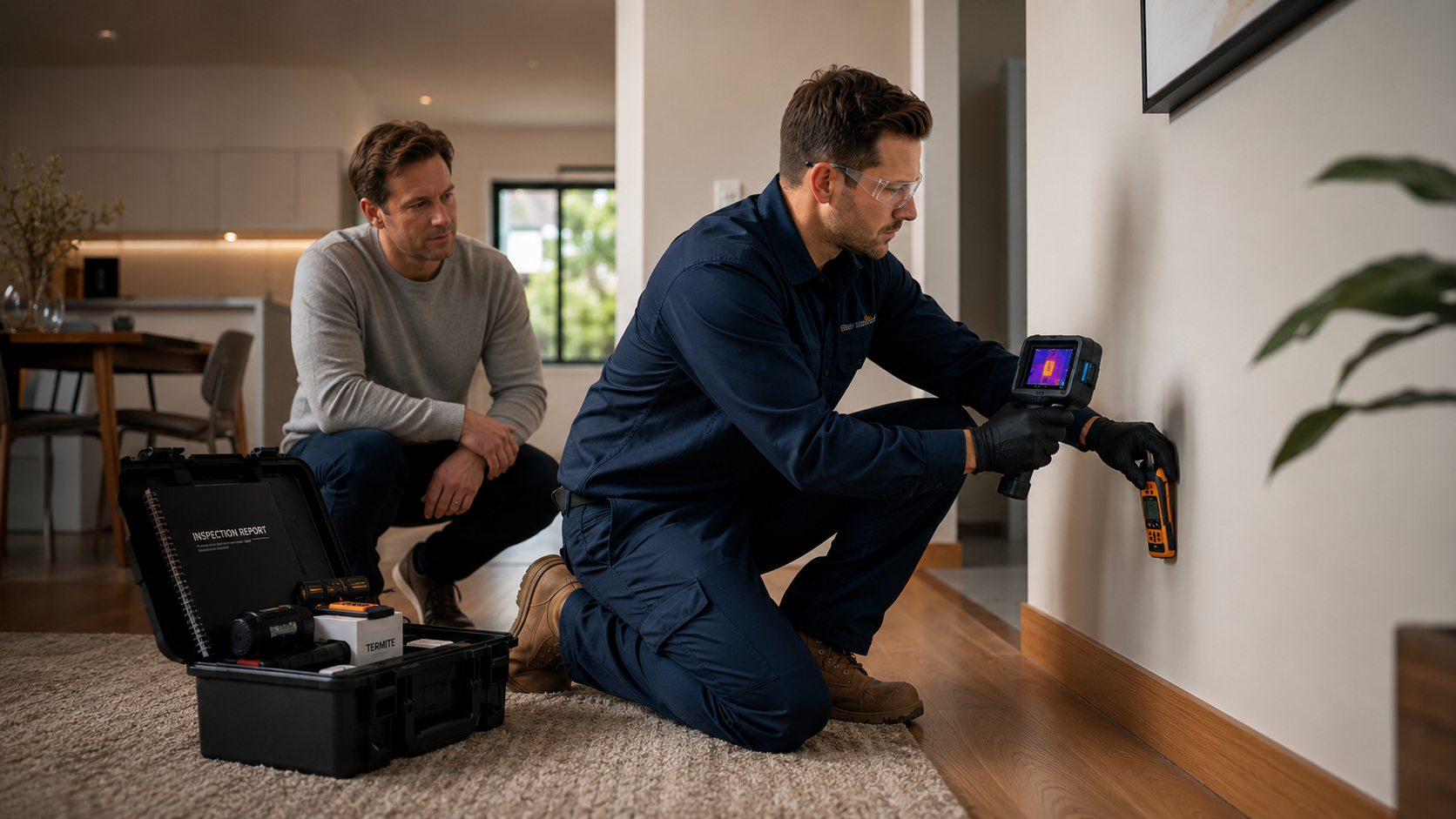
New portables, temporary fencing, excavations, stored materials and changed drainage can create pest pathways that did not exist when the annual plan was written. Before works, the school can record existing termite evidence, monitoring points, bait stations, barriers and vulnerable openings. Contractors should not move or cover identified devices without coordination. During construction, increased rodent or ant pressure may require additional observation around compounds, waste and service trenches. After works, the campus map, building register, access instructions and monitoring locations are updated. This prevents the IPM program from relying on an obsolete floor plan or losing a known risk beneath a new structure.
Waste, Deliveries and Community-Use Areas
Bin compounds, loading points, sports kitchens, halls and after-hours hire can connect school pest pressure with contractors and community users. The plan records collection frequency, wash-down drainage, damaged lids, spills, external lighting, door-open periods and food left after events. Responsibilities need to be explicit because a pest contractor cannot correct an overflowing bin schedule or unlock a hall after the nominated contact has left. Repeated evidence is reviewed against event dates, waste conditions and access logs. Where activity is shared with an adjoining tenancy or public area, the report states the limitation and recommends the coordination needed rather than promising control beyond the school boundary.
Procurement, Review and Service Continuity
A conversion-ready quote should still be precise enough for school approval. It identifies campuses, included buildings, target pests, visit frequency, response categories, normal hours, urgent attendance rules, approved contacts, reporting format, excluded work and GST. The school can also request current evidence relevant to the proposed technician and task. At mobilisation, the provider receives maps, keys, alarms, inductions, restricted areas and the existing pest history. At review, both parties compare service records, monitoring trends, emergency calls and outstanding building actions. If needs change, the scope is varied in writing so the program remains controlled and budget decisions are traceable.