
1
Book & Confirm Access
Provide the property address and your timeframe when booking — we coordinate access with the vendor's agent directly where needed, so you don't have to.

AEPMA-certified timber pest inspectors • AS 4349.1 & AS 4349.3 compliant
Buying a property is one of the biggest financial decisions most Melburnians will ever make, and a rushed or incomplete inspection is one of the easiest ways for that decision to go wrong. This checklist walks through every zone a genuinely thorough pre-purchase inspection evaluates — eliminating settlement risk, uncovering hidden structural defects, and identifying subterranean termite colonies before they become your problem — all compliant with Australian Standards AS 4349.1 and AS 4349.3, and written so you know exactly what you're paying for before the inspector arrives.
Start here
No obligation, expert inspector dispatch, exact fixed pricing. Book online this Sunday & save with our VIP Members offer.
Fully compliant reports
Included, not an extra
Non-invasive termite detection
To you & your conveyancer
Clyde North to CBD
2,000+ reviews
Seven modules, every zone covered
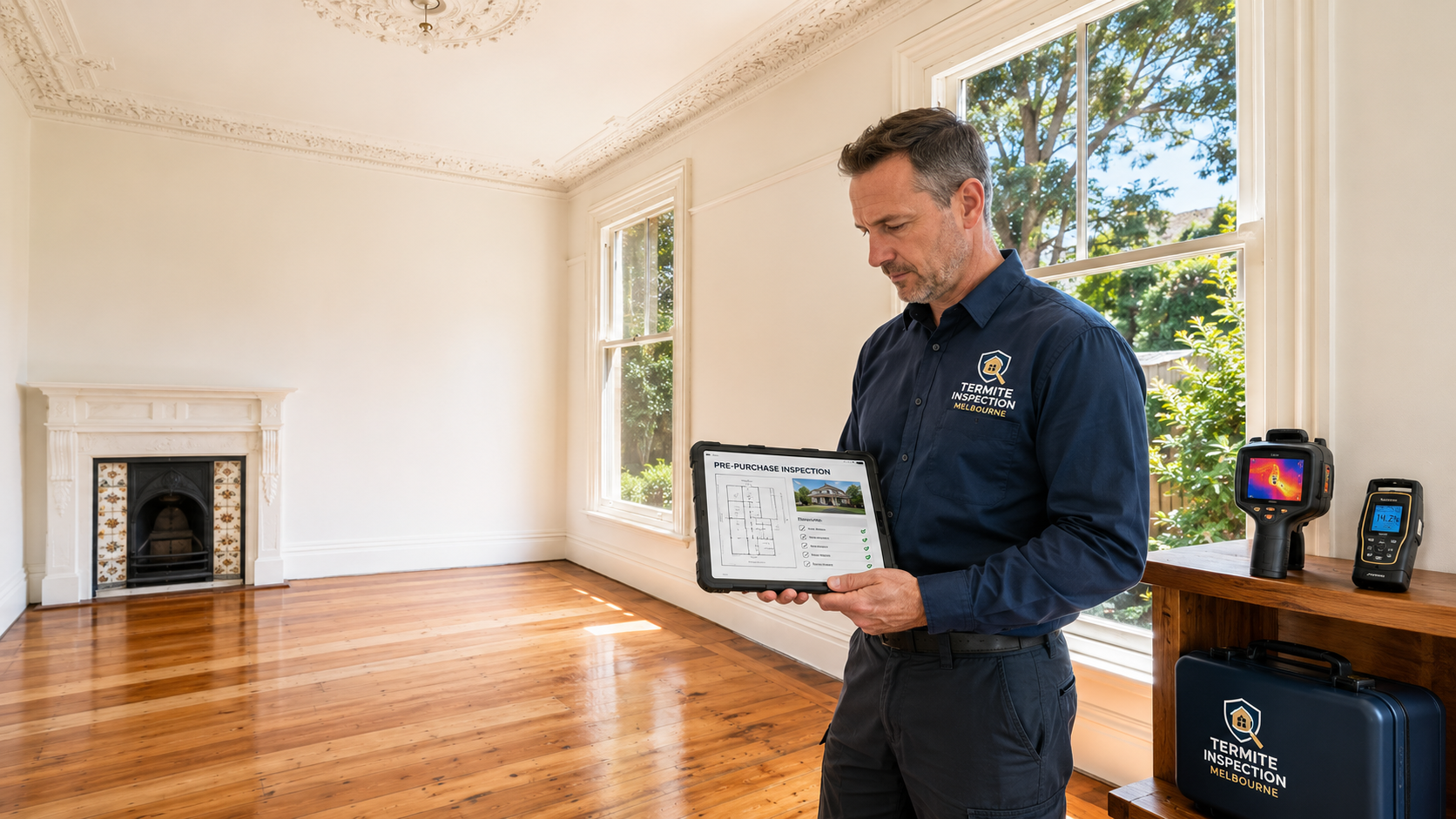
A pre purchase termite inspection checklist Melbourne buyers can actually rely on needs to cover the whole property, not just a quick walk-through of the obvious spaces. This master checklist breaks a compliant AS 4349.1 and AS 4349.3 inspection into seven modules — the exact zones our certified inspectors work through on every pre-purchase job, from the exterior boundary through to the final written report your conveyancer will read. Whether you're a first home buyer, an investor evaluating your third property this year, or a conveyancer wanting to understand exactly what your client's report will cover, this checklist gives you the complete picture before the inspector even arrives, module by module, in the same order our team walks every property.
Module 1
Exterior & Site Boundaries
Module 2
Subfloor & Foundation Timber
Module 3
Roof Void & Interior Framing
Module 4
Interior Living Spaces & Walls
Module 5
Wet Areas
Module 6
Diagnostic Technology
Module 7
The Written Report
Full FAQ
Common Questions
Every item below is assessed where visually and physically accessible without demolition — the same non-invasive standard AS 4349.1 and AS 4349.3 hold every compliant pre-purchase inspection to, whether it's our team or another licensed inspector doing the work. Where access is restricted anywhere on a property, that limitation is documented clearly in the final report rather than silently skipped, so you always know exactly what was and wasn't able to be assessed.
Module 1
The inspection starts before you even step inside — how a property drains, what's growing near the foundation, and how well-maintained the boundary structures are often tells an inspector as much as the interior does, and it shapes exactly where the rest of the inspection focuses its closest attention.
Checked for structural soundness, lean, rot at ground contact points, and — for retaining walls specifically — signs of bulging or failure that could indicate drainage or soil movement issues affecting the wider property.
Ground slope relative to the foundation is assessed, along with any evidence of pooling water after rain — a major contributor to subfloor dampness and one of the clearest predictors of future termite and moisture-related structural risk.
External vents are checked to confirm they're unobstructed by garden beds, mulch, paving or debris — poor subfloor ventilation is a direct contributor to the damp conditions subterranean termites and fungal decay both need to establish.
Established trees and large shrubs close to the foundation are noted for root-related risk to footings and slabs, and separately flagged as a moisture-retention factor that can influence termite risk in that specific area of the property.
Sheds, garages, pergolas and other outbuildings are checked for timber-to-ground contact, stored timber against structures, and any visible termite or rot activity — a common overlooked entry point for termite colonies onto a property.
Exterior findings routinely predict what's found inside. A property with poor drainage, blocked subfloor vents and timber stacked against the foundation is statistically far more likely to have active subterranean termite activity than one without — which is why Module 1 shapes how closely we scrutinise Modules 2 and 3 once our inspector moves inside.
Module 2
The subfloor is where a compliant timber pest inspection concentrates the most attention — it's the part of the property most likely to carry active termite activity and least likely to have been checked recently by anyone else, vendor included.
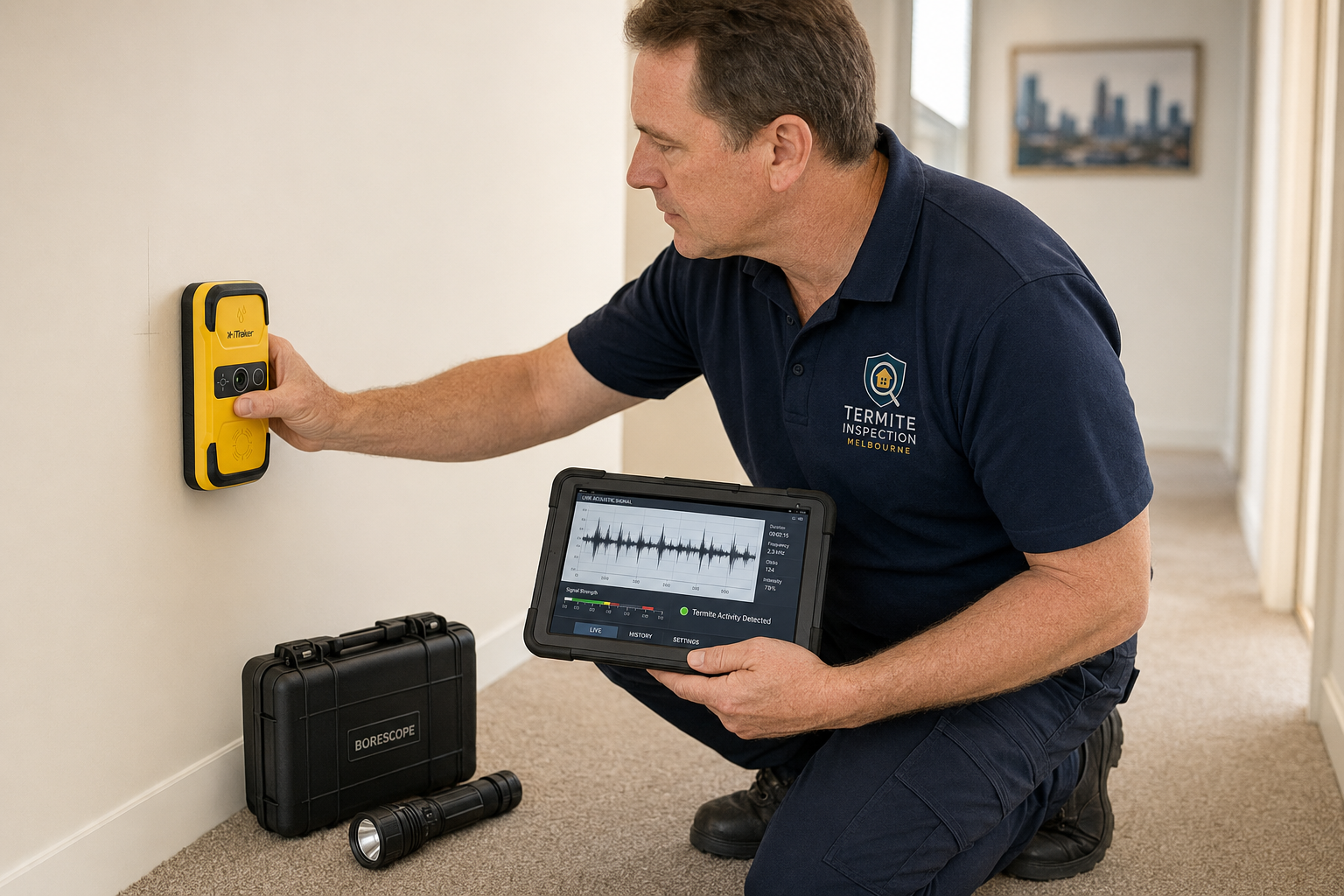
Every accessible stump is visually checked and sounded for rot, termite hollowing, and structural movement, with particular attention to timber stumps in direct or near-direct soil contact where decay and termite risk are both highest.
The primary structural timbers supporting the floor above are inspected for sagging, hollow sounds, visible mud tubes and fungal staining — damage here directly affects how much floors above will sag or bounce underfoot.
Subfloor soil moisture is assessed both visually and with a moisture meter where accessible — persistently damp subfloor soil is one of the strongest indicators of elevated termite risk and future timber decay across the whole property.
Airflow through the subfloor space is assessed against the property's construction era and vent placement — older Melbourne homes in particular often have inadequate original ventilation for current subfloor conditions and garden growth.
Every stump, pier and subfloor wall is checked for mud (shelter) tubes — the clearest physical evidence of active subterranean termite colonies travelling from the soil to the timber above, and a finding that changes the entire risk assessment.
Beyond termites, timber is also assessed for fungal decay caused by persistent moisture — a separate but related structural risk that shares many of the same underlying causes and warning signs as termite activity.
Module 3
The roof void is the second most common location for hidden termite and structural issues, and — like the subfloor — it's an area most homeowners have never actually inspected themselves, let alone a prospective buyer walking through an open home.
Both the exterior roofline and interior ceiling are checked for sagging, which can indicate anything from timber decay to structural overloading — findings here often prompt closer inspection of the specific framing members involved.
Roof covering type and condition is assessed, along with the structural elements supporting it — different roofing materials carry different weight loads and age-related risk profiles our inspectors account for on every visit.
Where visible, the sarking (roof underlay) is checked for tears, sagging or moisture staining — a compromised sarking layer is a common contributor to roof void dampness that in turn elevates timber decay and pest risk.
Primary and secondary roof framing timbers are visually inspected and sounded for hollow spots, sagging and termite damage — these are structural members where damage has direct implications for roof safety and longevity.
Roof timbers are checked for evidence of both drywood termite activity (kick holes, frass) and subterranean termite galleries that have travelled up through wall cavities to reach roof-level structural timber.
Roof void access varies significantly by property — some Melbourne homes have generous manhole access, others have minimal crawl space or none at all. Where access is limited, our inspector documents exactly what could and couldn't be assessed, so the report's coverage is always transparent.
Module 4
Inside the home, the inspection combines a trained visual assessment with thermal imaging to catch the kind of subtle signs a buyer walking through an open home would never notice, however carefully they looked.
Wall and ceiling cracks are assessed for pattern, width and location — hairline cosmetic cracks are common and low-concern, while diagonal cracking near door and window frames can indicate structural movement worth investigating further.
Doors and windows that stick or no longer close flush are tested and the likely cause investigated — sometimes simple seasonal timber movement, sometimes a sign of frame distortion from termite damage or structural settling.
Skirting boards throughout the property are sounded for hollow spots consistent with termite damage — one of the most accessible and reliable physical checks available inside a finished living space.
Ceiling and wall staining consistent with current or historical water ingress is documented and, where the source isn't obvious, cross-referenced with thermal imaging and moisture meter readings to determine whether it's active or resolved.
FLIR thermal cameras scan wall and ceiling surfaces for temperature anomalies that can indicate hidden termite galleries, insulation gaps or moisture behind an intact, undamaged-looking surface.
A pre-purchase inspection can't cut into walls to check what's behind them — thermal imaging is the closest non-invasive equivalent, flagging exactly where a visual and physical check should focus without ever damaging a property that isn't yours yet.
Module 5
Wet areas are consistently where the most expensive hidden defects turn up in Melbourne property inspections — waterproofing failure can sit undetected behind tiles for years, quietly causing structural damage the whole time without a single visible symptom.
Shower recesses are checked using moisture meters and thermal imaging where accessible, since failed waterproofing behind tiles is one of the most expensive and commonly missed defects in older Melbourne bathrooms.
Visible plumbing junctions under sinks and around fixtures are checked for active leaks, corrosion and previous repair evidence, with any active leak documented as a defect requiring attention before settlement.
Tramex moisture meters take specific readings across floors, walls and around fixtures in every wet area, giving an objective moisture percentage rather than relying on visual assessment alone.
Cracked, missing or deteriorated grout and silicone seals are noted as a minor defect, but also flagged as a likely entry point for the moisture ingress that leads to the more serious waterproofing failures above.
Module 6
A pre-purchase inspection can't demolish walls to confirm a suspicion, which is exactly why the equipment below matters — it's how a genuinely thorough inspection sees further than the naked eye without damaging a property you don't yet own.
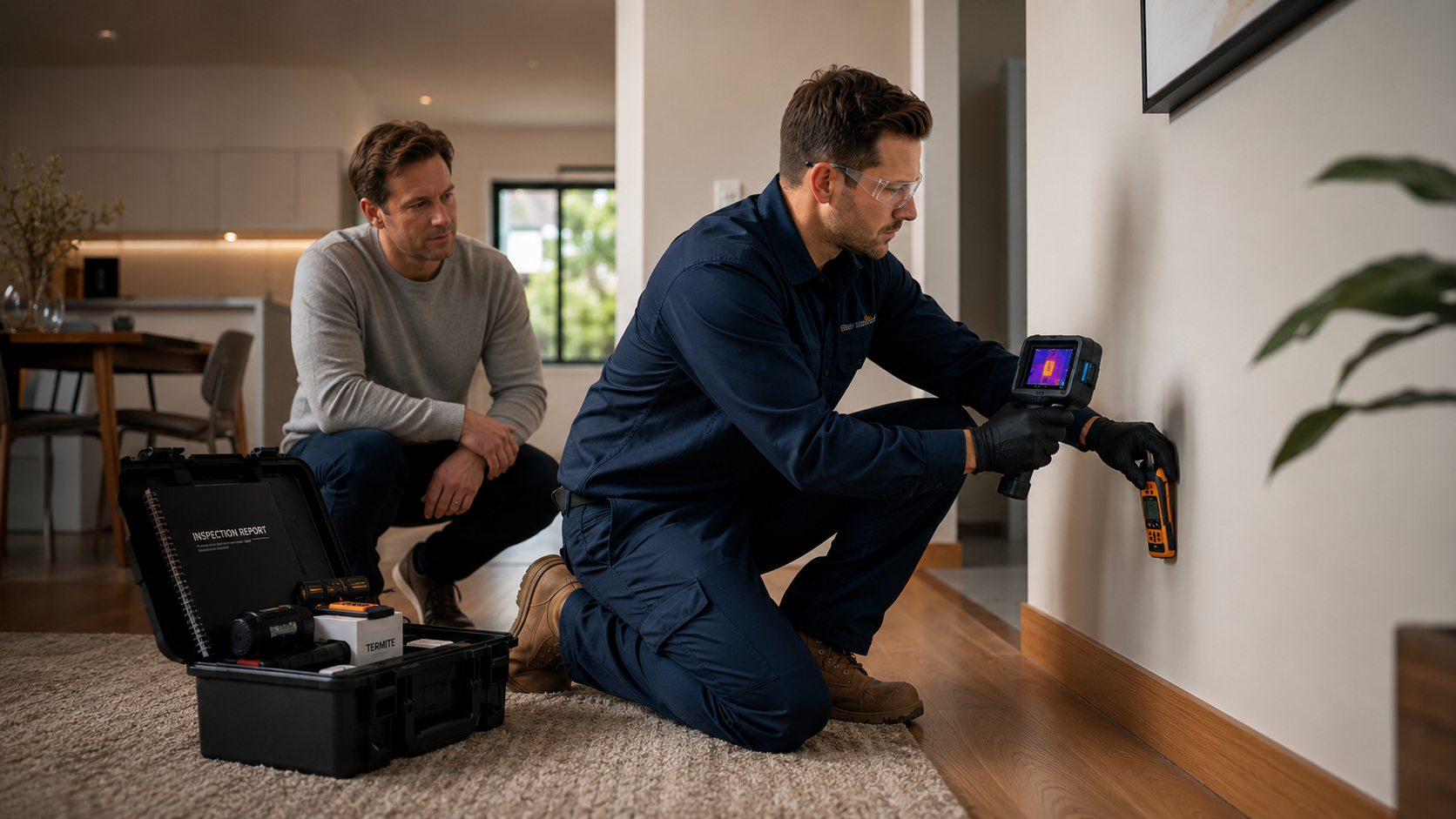
🌡️ FLIR Thermal Imaging Cameras
Reads surface temperature variance across walls, ceilings and flooring to flag moisture and hidden termite activity behind intact surfaces, directing the inspector to exactly where a closer check is warranted.
📡 Termatrac Microwave Radar Motion Sensors
Detects termite movement inside timber and wall cavities without any drilling or cutting — a genuinely non-invasive way to confirm whether activity found is currently live or historical.
💧 Tramex Moisture Meters
Provides objective moisture percentage readings in timber and masonry, corroborating thermal imaging findings and giving the written report a measured data point rather than a subjective impression.
🔨 Acoustic Sounding Tools
Calibrated tapping equipment confirms hollow or softened timber sections flagged by thermal or radar readings, physically verifying the diagnostic technology's findings before anything goes into the report.
Module 7
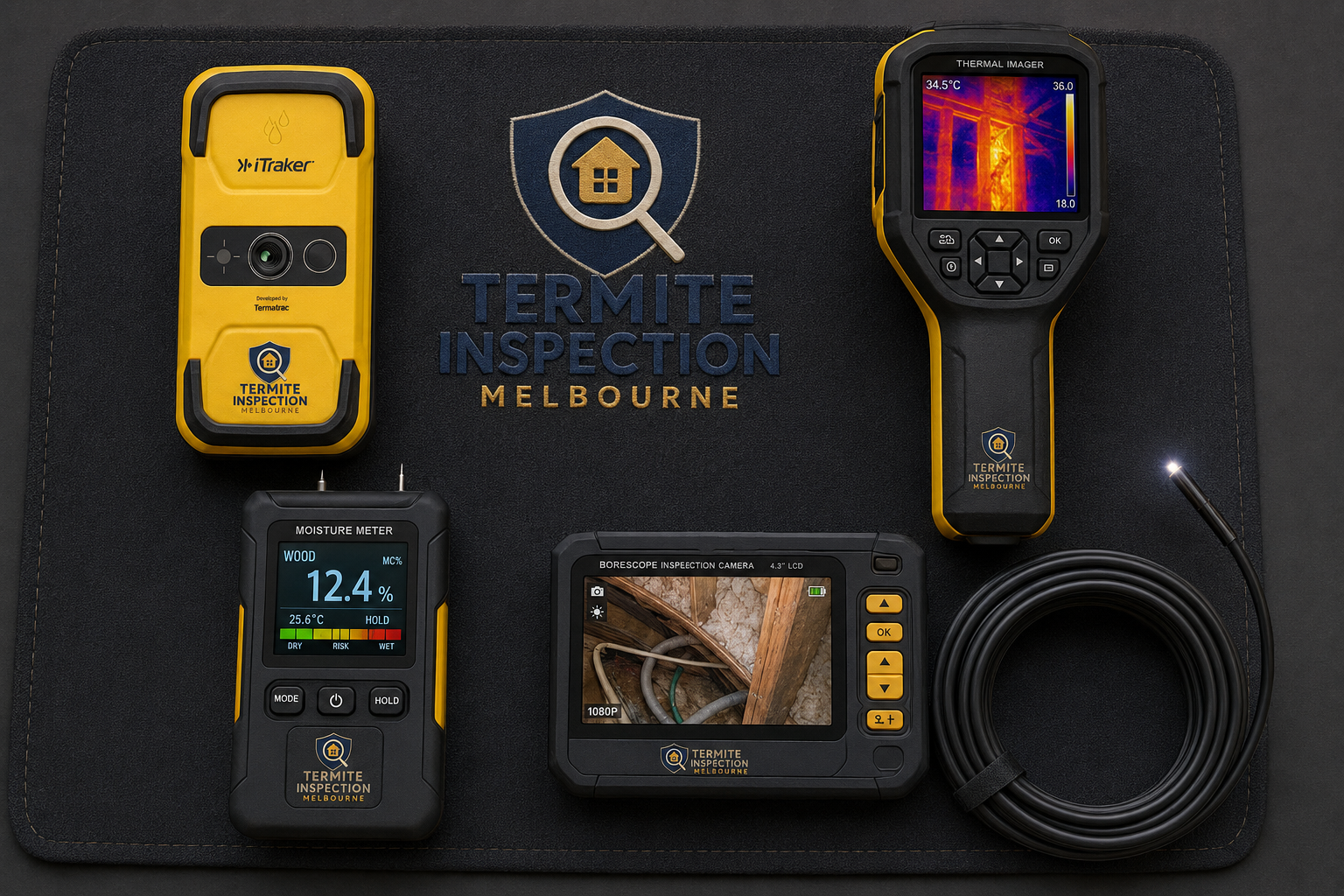
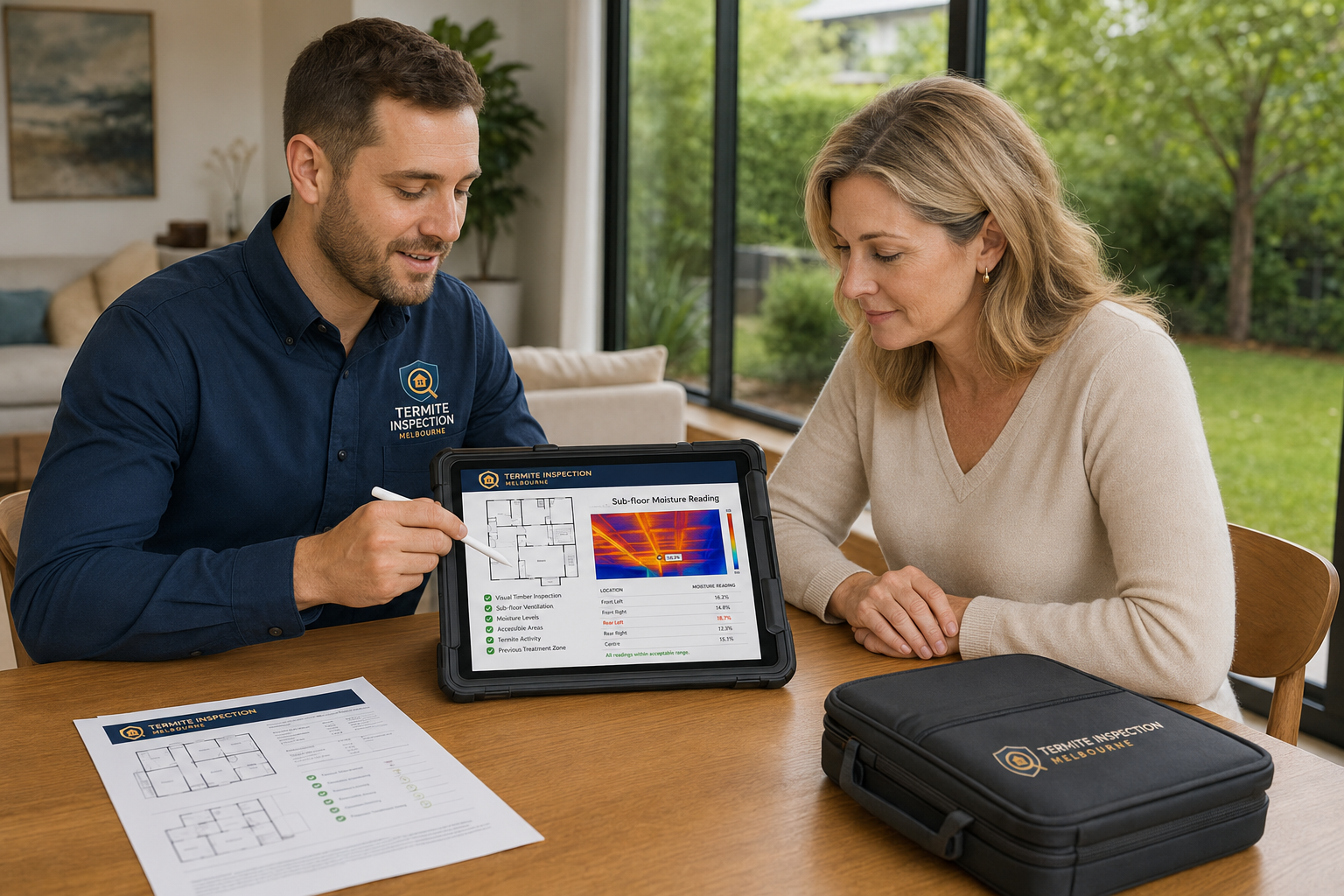
Every finding across the six modules above is compiled into a single AS 4349 compliant document — the deliverable your entire pre-purchase decision, and often your negotiation position, is built on.
Major Defects
Clearly flagged, described in plain language, and supported by photographic evidence — these are the findings most likely to influence a purchase decision or negotiation.
Minor Blemishes
Documented for completeness so nothing is left out of the report, but clearly distinguished from major defects so you and your conveyancer can prioritise accordingly.
Timber Pest Damage
Species identified where determinable, activity status (active or historical), extent of damage, and a clear treatment recommendation if action is required before settlement.
Safety Hazards
Any immediate safety concerns found during the inspection are flagged prominently, separate from the standard defect classification, given the more urgent nature of these findings.
Photographic Evidence
Every significant finding is backed by a photograph, giving you, your conveyancer, and if needed a negotiating vendor, an objective visual record rather than a written description alone.
Why the inspector matters as much as the checklist
A checklist is only as reliable as the inspector and equipment behind it — here's how the common options stack up on the criteria that actually protect you as a buyer, not just the criteria that sound reassuring in a sales pitch.
| Provider | AS 4349.1 / .3 Compliance | Thermal Imaging Included | Moisture Meter Mapping | Professional Liability Insurance |
|---|---|---|---|---|
| TIM's Certified Pre-Purchase Inspection | ✓ Fully compliant, both standards | ✓ Included as standard | ✓ Tramex readings every wet area | ✓ Full professional liability cover |
| Basic Handyman Visual Checks | ✗ Not a licensed inspection | ✗ None | ✗ None | ✗ None |
| DIY Home Buyer Walkthroughs | ✗ No standard applied | ✗ None | ✗ None | ✗ None |
| National Interstate Agencies | ⚠️ Compliant, generic scheduling | ⚠️ Often an added-cost extra | ⚠️ Variable by inspector | ✓ Generally covered |
What actually shows up in a Melbourne pre-purchase report
Not every finding is a deal-breaker, and not every clean-looking property is risk-free. Here's how to read some of the most common results our inspectors report back to Melbourne buyers.
This means evidence of a past termite colony was found — damaged timber, old mud tubes — but no current live activity was detected during the inspection. It's worth understanding the extent of the damage and whether any structural timber needs replacement, but it isn't automatically a reason to walk away; many properties with a treated, historical termite event are perfectly sound purchases.
Common in older properties built before physical or chemical barriers were standard practice, and not unusual on its own. It does mean the property has one less layer of protection than a newer or more recently treated home, which is worth factoring into your post-purchase maintenance plan.
Noted whenever a section of subfloor genuinely couldn't be safely or physically accessed during the inspection. This is a limitation on the report's coverage for that specific area, not a finding of risk in itself — but it's worth asking whether access could be improved for a follow-up check if that area matters to your decision.
A Tramex reading came back above expected levels but the exact cause (plumbing leak, condensation, rising damp) couldn't be confirmed non-invasively. This is exactly the kind of finding worth raising with the vendor or getting a follow-up trade opinion on before settlement, since the underlying cause changes the likely cost significantly.
What to expect, start to finish
Knowing the process ahead of time helps you plan around a cooling-off period or auction condition with confidence.
Provide the property address and your timeframe when booking — we coordinate access with the vendor's agent directly where needed, so you don't have to.
Our inspector works through all seven modules above, using thermal imaging, moisture meters and Termatrac radar where the property allows. You're welcome to attend.
Findings are written up to AS 4349.1 and AS 4349.3 standard with photographic evidence and clear defect classification, targeted for same-day delivery.
Sent to you and, on request, your conveyancer or solicitor directly. We're available by phone afterwards to talk through any finding that needs clarifying before you decide.
Property type changes the risk profile
From Victorian weatherboard terraces in the inner suburbs to modern concrete slab project homes in growth corridors like Clyde North and South East Melbourne, the properties buyers inspect across greater Melbourne carry genuinely different risk profiles, and a one-size-fits-all inspection template misses that entirely — construction era, soil type and garden maturity all shift what actually matters on the day.
Inner Melbourne suburbs
Original timber stumps, decades of accumulated subfloor moisture history, and construction predating modern termite management make this Melbourne's highest-risk property category for hidden termite damage.
Eastern & northern suburbs
Mature gardens now reaching or exceeding foundation contact, combined with original subfloor ventilation that may no longer suit current soil moisture conditions, keeps this category firmly in the higher-risk range.
South East growth corridors, Clyde North
Generally lower subfloor risk given slab construction, but installed termite barriers have a defined service life that needs periodic verification, and newly established gardens can quickly reach the foundation.
CBD & inner suburbs
Lower direct timber pest risk given the reduced structural scope, but a body corporate's maintenance history on shared structural elements becomes a relevant due-diligence question of its own.
Credentials you can verify
Every inspector who assesses your prospective property is qualified, background-checked and trained to AS 4349.1 and AS 4349.3 standard — the level of scrutiny a purchase this significant deserves.
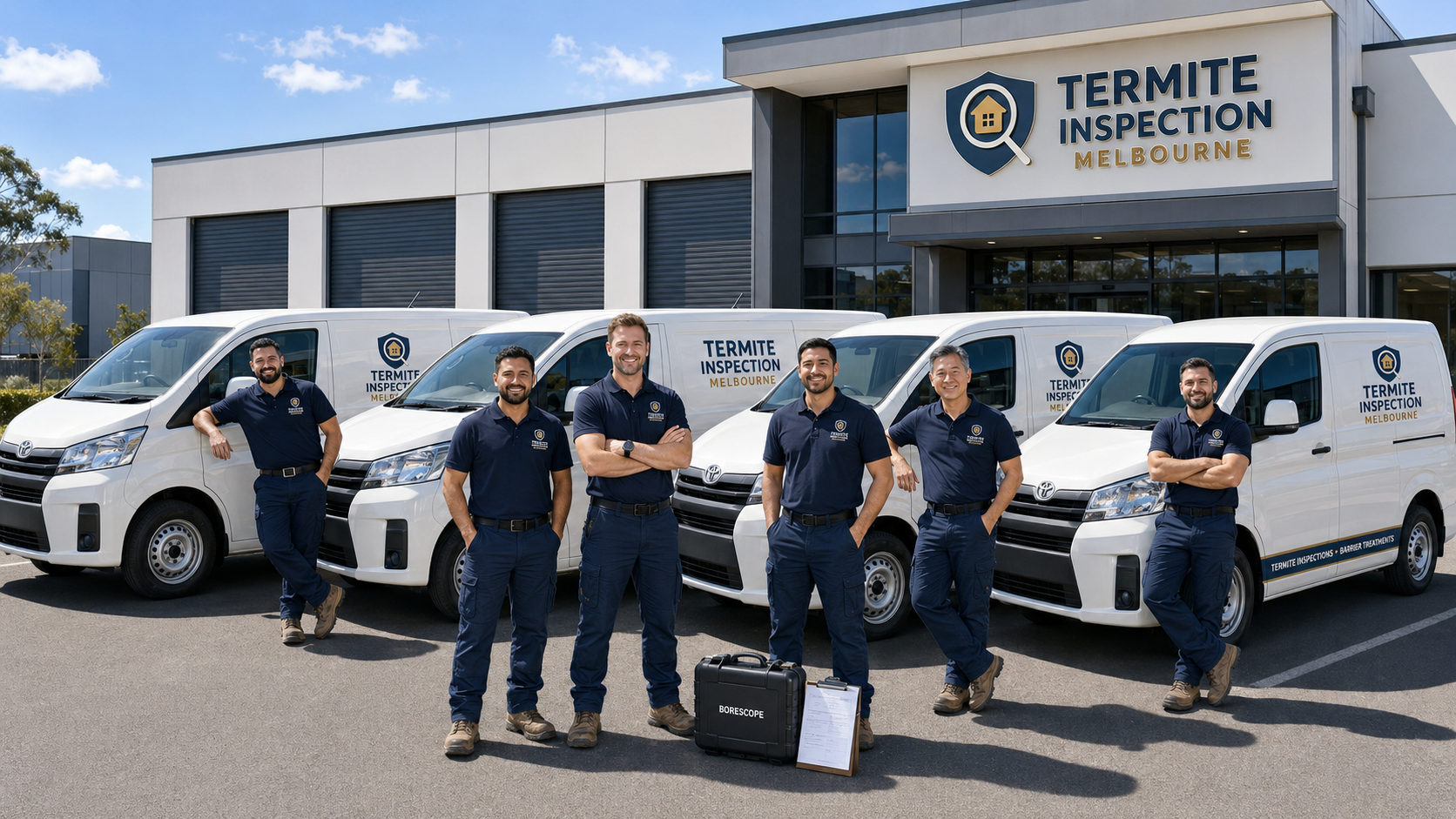
Current pest-management licence and full professional liability and public-liability insurance. Certificates available on request before we start.
Members of the Australian Environmental Pest Managers Association, trained specifically in AS 4349.1 and AS 4349.3 compliant pre-purchase assessment.
Every report is documented to the Australian Standards conveyancers, solicitors and lenders recognise, with clear major/minor defect classification throughout.
Every inspector is background-checked and Melbourne-based — direct local knowledge of construction eras, soil types and suburb-by-suburb risk, not a generic national script.
Trusted by Melbourne buyers
Rated on Google
from 2,000+ local Melbourne properties
Verified customer reviews
“Bought a Victorian weatherboard and the inspection found early termite activity in the subfloor we would never have found ourselves. Renegotiated the price to cover treatment before settlement.”
“First home buyer here — report was thorough and explained clearly, and they sent it straight to our conveyancer same day which took the pressure off with our cooling-off deadline.”
“Attended the inspection in person and the inspector talked us through every finding as they went. Genuinely reassuring for a nervous first-time buyer.”
“Comparing two properties and got both inspected. The thermal imaging picked up a moisture issue behind a bathroom wall in one that wasn't visible at all during the open home.”
“Report was AS4349 compliant which our solicitor specifically asked for. Everything came through clearly organised and easy to act on.”
“Bought an older property near the coast and the inspection flagged subfloor ventilation issues we wouldn't have known to check. Fixed it before it became a bigger problem.”
Answers before you book
A standard pre-purchase inspection covers a full visual and physical assessment of the property's accessible structure — exterior boundaries and site drainage, subfloor stumps, bearers and joists, roof void framing and sarking, interior walls, ceilings, doors and windows, and wet areas including bathrooms, kitchens and laundries. It also includes a dedicated timber pest assessment checking for subterranean termite activity (mud tubes, damage), drywood termites, wood borers and fungal decay, plus thermal imaging and moisture meter readings where accessible. Everything is compiled into a single AS 4349.1 and AS 4349.3 compliant written report with photographic evidence, delivered to you and, on request, directly to your conveyancer or solicitor.
Yes. Every pre-purchase inspection we conduct is carried out and reported to AS 4349.1 (general property inspections) and AS 4349.3 (timber pest inspections), the two Australian Standards that govern what a compliant pre-purchase report must assess and how findings are classified as major defects, minor defects, or safety hazards. This compliance matters for two practical reasons: it's what most conveyancers, solicitors and lenders expect to see, and it protects you as the buyer by ensuring nothing outside the accepted scope of a visual, non-invasive inspection gets misrepresented as covered.
Thermal imaging cameras read subtle surface temperature variations across a wall, ceiling or floor and display them as a colour-mapped image — termite galleries and the elevated moisture that comes with active colonies show up as thermal anomalies compared with the surrounding material, all without cutting, drilling or otherwise damaging the surface. It's a genuinely non-invasive diagnostic step that flags exactly where to focus a closer physical check (sounding, moisture meter, or Termatrac radar), rather than a substitute for physical inspection on its own — but for a pre-purchase inspection where the property isn't yours to open up, that non-invasive capability is invaluable.
A same-day digital report delivery is targeted for most pre-purchase inspections, and we're happy to email the completed report directly to your conveyancer or solicitor as well as to you, which is standard practice given Melbourne's typically tight settlement and cooling-off timeframes. If you have a specific deadline — a cooling-off period ending, an auction condition, or a finance approval date — let us know when booking and we'll prioritise accordingly.
Your written report documents every major defect and any confirmed timber pest activity in clear, specific detail with supporting photographs, giving you and your conveyancer or solicitor the evidence needed to negotiate on price, request the vendor arrange repairs before settlement, or in some cases withdraw from the purchase where your contract allows a due-diligence or building inspection condition. We can talk you through what was found and what it would likely cost to remediate, but the negotiation and legal decision itself sits with you and your conveyancer — our role is making sure you have accurate, defensible findings to work with.
Not with us — our pre-purchase inspection combines both AS 4349.1 (building) and AS 4349.3 (timber pest) assessments in a single visit and a single report, which is both more cost-effective and more thorough than booking two separate inspectors who may miss the overlap between structural and termite findings. Some agencies do split these into two separate services and two separate reports; ask directly whether a quoted price includes both standards before you book.
Pricing depends on property size and type: a standard house typically starts from $330 + GST, larger properties or those with extensive subfloor and roof void access run up to around $550 + GST, and unit or apartment inspections are usually priced lower given the reduced structural scope. Every quote is confirmed in writing before the inspection, with no hidden add-ons for standard thermal imaging or moisture meter readings — those are included as standard, not billed as extras.
A major defect is a fault that is, or could become, sufficiently serious that rectification is required in the near future to prevent unsafe conditions, loss of utility, or further significant deterioration — think structural cracking, an active termite colony, or a failing roof structure. A minor defect is a fault that doesn't require urgent rectification, such as cosmetic plaster cracking, a sticking door, or worn tile grout. AS 4349.1 requires both to be documented, but the classification is what lets you and your conveyancer quickly prioritise what actually affects your purchase decision versus what's routine maintenance.
Yes, and we genuinely encourage it where your schedule allows — walking the property alongside our inspector lets you see findings firsthand, ask questions on the spot, and better understand the context behind what ends up in the written report. If you can't attend, that's completely fine too; the report itself is written to stand alone with clear photographic evidence, and we're always available by phone afterwards to talk through anything that needs clarifying.
A standard pre-purchase inspection covers the specific unit or lot you're purchasing, including its internal structure and any exclusive-use areas like a balcony or courtyard, but common property (shared roof, structural walls, lobbies, lifts) generally falls under the body corporate's own maintenance and inspection responsibility rather than an individual buyer's report. If structural concerns about common property matter to your purchase decision, we can discuss what additional scope or a strata report review might cover — ask when booking.
Speak directly with our certified Melbourne building and timber pest inspectors and book your pre-purchase inspection today — save $250 off complete barrier treatments plus a free moisture scan ($150 value) when you book this week. Same-day report delivery to you and your conveyancer, whatever your settlement timeline looks like, wherever your property is located across greater Melbourne.
🎯 Offer ends 31th October 2026 • ✓ Licensed & Insured • ✓ 4.9★ Rated