
Bridged Slab Edges and Weep Holes
New mulch, soil, paving, render or stored items can conceal inspection zones and give termites protected entry. The audit records visible clearance and recommends practical correction.
Protect your home with a scheduled professional inspection that reviews accessible timbers, previous treatment zones, barrier conditions, moisture risks and the surrounding property. TIM's Pest Control combines visual assessment with thermal imaging, moisture measurement, controlled sounding and suitable radar screening to find evidence before silent activity becomes obvious damage.
Annual inspection is a common risk-management interval and may be required by a treatment or product warranty, but the exact obligation comes from your written warranty—not a universal Victorian law. We issue an AS 4349.3-aligned digital timber-pest report recording findings, inaccessible areas, conducive conditions and the recommended next inspection or treatment action.
Subterranean termites do not follow a household calendar. Colonies forage through soil and protected galleries whenever local moisture and temperature permit, and activity can continue behind plaster, under flooring or inside timbers with few external signs. Melbourne’s variable seasons, leaking services, garden irrigation and reactive soils create changing local conditions. A building that appeared clear last year can develop a new entry pathway after landscaping, paving, plumbing work or ground movement.
Many treatment, chemical-barrier, baiting and reticulation warranties require inspections at stated intervals. If an owner misses a required visit, blocks access, alters the treated zone or fails to correct listed conditions, warranty eligibility may be affected. The controlling document is the manufacturer’s or installer’s written warranty. We review available records and document current conditions, but we do not claim an inspection automatically reinstates an expired warranty.
Home insurance is a separate issue. Many policies exclude gradual termite damage even when a property is inspected annually. A dated AS 4349.3-aligned report can demonstrate maintenance and support informed decisions, but it does not rewrite an insurance policy. The practical value of annual inspection is early detection: finding a mud lead, moisture source, damaged station or concealed access problem before timber loss becomes extensive.
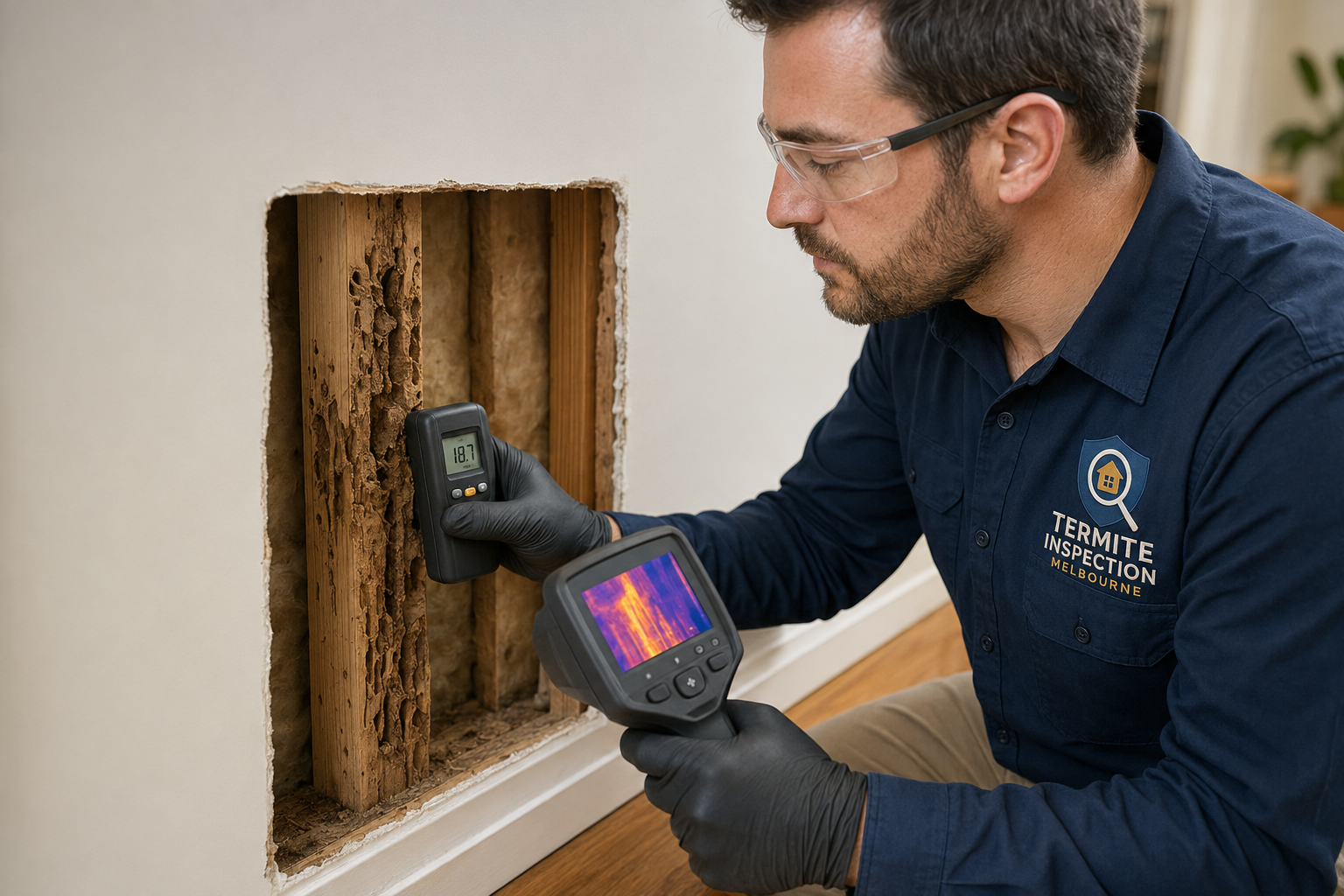
The yearly audit is not a repeat photograph. It looks for changes that create new access, moisture or monitoring failures.
New mulch, soil, paving, render or stored items can conceal inspection zones and give termites protected entry. The audit records visible clearance and recommends practical correction.
Plumbing leaks, air-conditioner discharge, blocked drainage and irrigation can create local dampness. Moisture readings help prioritise areas, but elevated readings are not treated as proof of termites.
Extensions, decks, cabling, plumbing and concrete work may disturb treated soil or create concealed joins. We record visible changes and recommend system review where the original protection may have been interrupted.
Stations can be covered, damaged, displaced or inaccessible. An annual inspection reviews visible system condition, while servicing frequency and bait replacement remain governed by the specific management program.
Chemical protection has a finite registered life. We review labels, treatment records and recharge dates where supplied. Inspection does not replace scheduled recharge or repair.
Firewood, sleepers, stumps, fences, planter boxes and dense vegetation can change the foraging environment. Boundary evidence does not automatically mean the house is infested, but it informs the risk plan.
A thermal imaging termite check measures surface-temperature differences. It can highlight an area affected by moisture, airflow, missing insulation, plumbing, electrical loads or possible biological activity. It does not see through walls or confirm termites by itself. The pattern is compared with the building layout, physical evidence and other readings before any recommendation is made.
Moisture meters help map damp subfloors, wet-area walls, skirtings and service zones. The annual comparison can reveal a developing leak or drainage issue even when no termites are found. Elevated moisture guides investigation and maintenance; it is not a stand-alone pest diagnosis.
Microwave movement detection can add information behind selected surfaces when site conditions and equipment availability allow. Readings can be affected by movement, services and wall construction, so radar is used on defined anomalies and corroborated rather than sold as universal scanning.
Controlled sounding and permitted light probing help compare accessible timber response. The inspector follows grain, joins, finish changes and likely entry routes. Instruments extend the inspection; they do not replace the trained visual process required for a dependable timber pest inspection Melbourne report.
Coverage follows the building from grounds and perimeter interfaces through internal wet areas, subfloor timbers and the roof void, subject to safe and reasonable access.
Accessible slab edges, weep holes, masonry joints, service penetrations, vents, ant caps and soil clearances are checked for mud leads, bridging and changes since previous reports. Concrete paths and attached structures are reviewed for visible interfaces and access limitations.
Where safe access and clearance allow, we inspect bearers, joists, piers, flooring, plumbing zones and ventilation. Moisture, fungal decay, termite evidence, damaged ant caps and timber-to-soil contact are recorded. Low clearance, water, hazards or obstruction are clearly listed as limitations.
Skirtings, architraves, door jambs, window frames, cupboards and accessible wall-floor junctions are examined. Bathrooms, kitchens and laundries receive particular attention because concealed leaks and persistent moisture can increase risk.
Accessible top plates, trusses, rafters, battens and service penetrations are reviewed when safe access, lighting and platform conditions permit. Insulation and restricted geometry can conceal surfaces and are documented rather than ignored.
Within the agreed property scope, inspectors check accessible fences, stumps, retaining walls, sleepers, decks, stored timber and vegetation. Evidence away from the house helps explain local termite pressure and maintenance priorities.
Reports, treatment diagrams, product labels, bait logs, reticulation plans and warranty documents help us revisit high-risk zones and service dates. Missing records are noted, and the current findings are not used to invent product or warranty history.
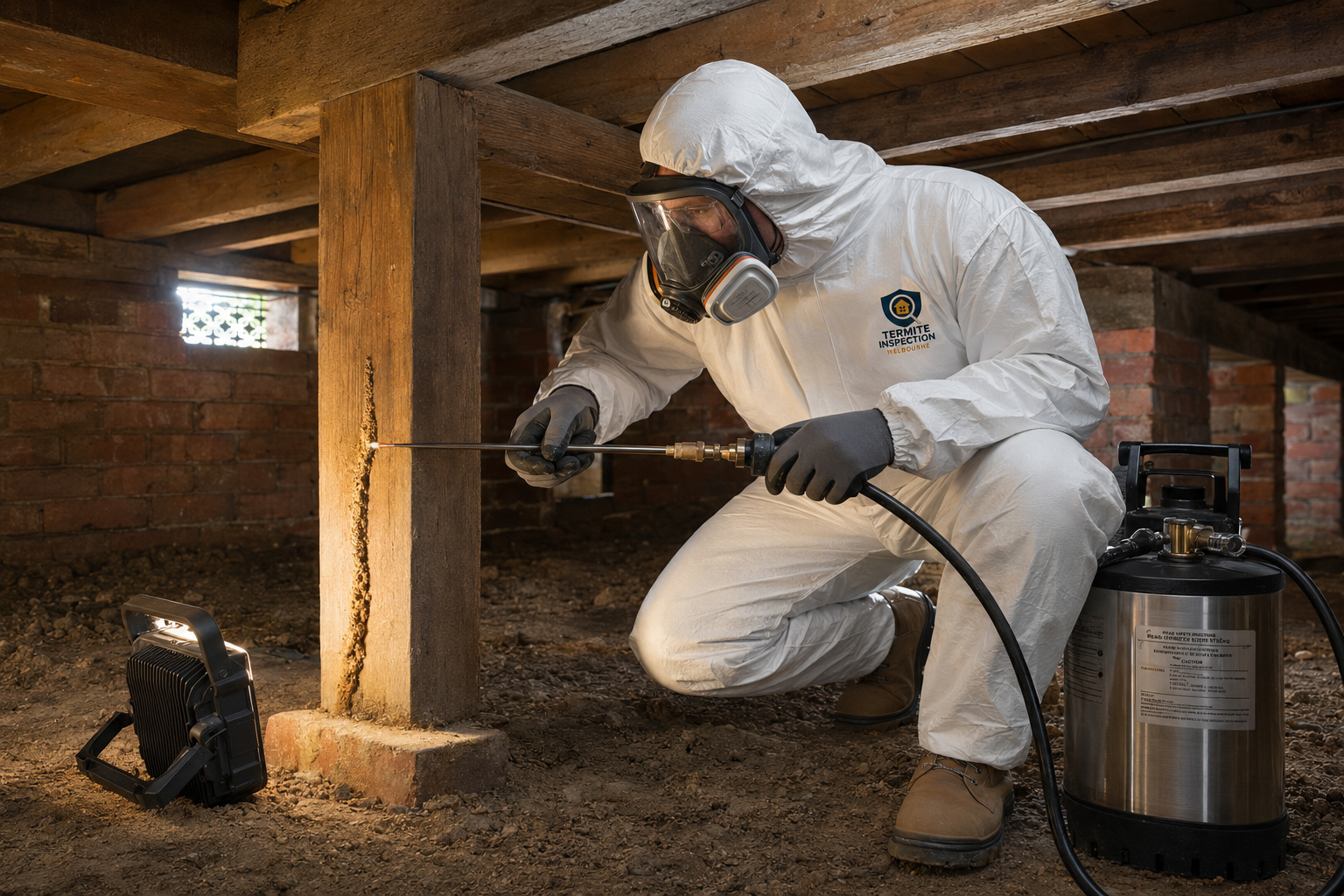
A routine interval serves a different purpose from transaction due diligence or short-interval monitoring after elevated risk.
| Inspection approach | When it is commonly used | Diagnostic technology | AS 4349.3 reporting | Cost and limitations |
|---|---|---|---|---|
| Annual professional inspection | Routine home risk management and many warranty programs | Visual, sounding, moisture, thermal and suitable radar assessment | Digital report for agreed accessible scope | From $350 + GST; treatment is separate |
| Six-monthly professional check | Previous activity, high-risk conditions, monitoring or warranty direction | Focused reassessment plus relevant diagnostic tools | Scope depends on whether the visit is a full inspection or monitoring service | Frequency and price depend on risk and program |
| Pre-purchase combined audit | Before buying, subject to contract and access deadlines | Broader pest and property-condition assessment | Transaction-focused written reporting | $590 + GST standard package; structural engineering may still be required |
| DIY visual check | Between professional visits for obvious changes | No calibrated diagnostic process | No professional report | Low immediate cost but cannot validate a warranty or clear concealed areas |
We confirm construction, previous termite activity, treatment products, barrier or reticulation records, bait programs, repairs, leaks and renovation changes. Warranty terms and previous high-risk zones help shape the inspection route, but current accessible evidence remains decisive.
Accessible internal timbers, wet areas, subfloor and roof void zones are visually examined and sounded. Thermal imaging and moisture sweeps identify anomalies for closer assessment, with radar used where suitable. Devices support—not replace—professional interpretation.
We check accessible fences, stumps, sleepers, retaining walls, drainage, soil levels, slab edges and landscaping. New bridging, stored timber and moisture conditions are recorded because the surrounding environment can change substantially between annual visits.
You receive findings, photographs where relevant, conducive conditions, access limitations and priority recommendations. We document the inspection date for your records and identify warranty issues, but formal warranty continuation remains governed by the original provider and written terms.
Prices are shown before GST, with the exact GST and inclusive total displayed. Select your package and optional services to continue directly to the connected booking calculator.
Pricing note: Prices shown before GST. Final inclusive total and site-specific scope are confirmed before booking. The $50 renewal offer applies only to eligible standard annual inspections under current promotional terms. Species testing is arranged only where required and available. Urgent same-day reporting depends on route, access and report complexity. Treatment, repairs, invasive access and system recharge are quoted separately.
The report identifies the property, inspection date, agreed scope, construction observations and accessible areas examined. It records evidence of active or previous timber pests, visible damage, moisture and other conducive conditions, diagnostic findings and practical recommendations. Photographs and location descriptions support later comparison and help treatment or building professionals return to the relevant area.
Access limitations are not hidden. Low subfloors, sealed cavities, insulation, stored goods, fixed linings, unsafe roof areas and inaccessible common property are listed so the customer understands what could not be examined. This is essential because an annual report cannot ethically guarantee concealed areas are pest-free.
Customers searching for an AS4349.3 compliant pest report need clear language: the standard relates to timber-pest inspection and reporting, not structural engineering and not an absolute termite-clearance certificate. Where damage may affect load-bearing timber, the report recommends a suitably qualified structural or building professional.
Your report and invoice can help demonstrate that an inspection occurred on a particular date, but the warranty provider decides whether all contractual conditions have been met. Product life, recharge timing, bait-station servicing, treatment-zone disturbance, access and recommended maintenance may all matter. We identify visible concerns and recommend contacting the original provider where necessary.
Free enrollment in the Annual Reminder VIP Program records a future reminder preference. It is a scheduling aid, not an automatic appointment and not a warranty guarantee. Contact details, ownership and property access can change, so the customer remains responsible for booking within any contractual deadline.
An annual visit is diagnostic. If active termites, damaged stations, disturbed treated soil, expired chemistry or a concealed perimeter gap are found, the next step is scoped separately. This prevents inspection pricing from being confused with colony eradication or whole-property protection.
Do not spray or break open workings. The technician documents accessible activity and explains whether additional species identification, targeted investigation, baiting, dusting, foaming or a broader treatment proposal is appropriate. Treatment selection depends on species, building construction, access and colony pathways.
Inspection can identify visible disturbance, inaccessible zones or overdue service records, but it cannot make expired chemistry active again. Reticulation pressure testing, chemical recharge, trenching, drilling and soil treatment require product identification, measurements and a separate approved specification.
Renovations, penetrations, paving, additions and landscaping can affect inspection zones or termite-management systems. The report records visible issues and may recommend builder, system installer or treatment review. Any corrective work should maintain accessible inspection zones and comply with applicable product instructions.
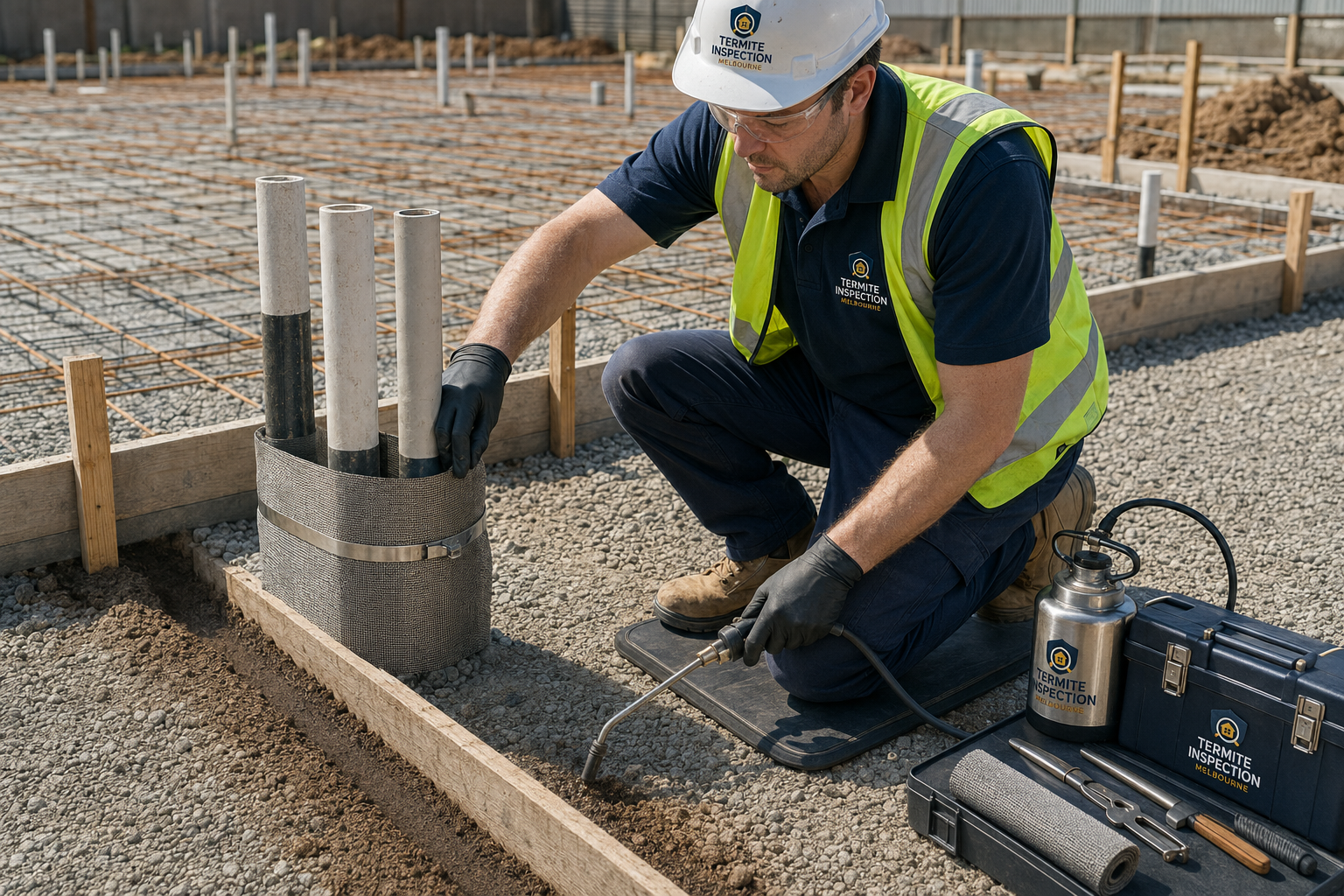
Our method stays consistent while the risk profile changes with soil, age, construction, drainage, renovation history and access.
From our Clyde North base, annual termite inspection Melbourne routes regularly cover Cranbourne, Berwick, Narre Warren, Officer, Pakenham, Dandenong and Frankston. New estates often have slab edges later concealed by paving, mulch or raised gardens, while established houses can combine suspended floors, extensions and mature vegetation. A Clyde North pest control audit compares this year’s access, moisture and perimeter conditions with prior records so developing risks are not missed.
Leafy eastern suburbs such as Ringwood, Croydon, Doncaster, Box Hill and Glen Waverley commonly include sloping sites, retaining walls, older subfloors and mature trees. Drainage and soil levels can change between yearly visits. The routine termite check Melbourne process revisits previous high-risk zones, confirms whether access remains clear and records new garden, plumbing or renovation conditions.
Across Preston, Reservoir, Coburg, Brunswick and Greensborough, Victorian timber homes, post-war brick veneer and modern infill construction create different inspection pathways. Renovations can conceal old ant caps or connect new framing to historic timber. Annual records help identify when access, moisture or construction has changed since the previous timber pest inspection Melbourne service.
Western suburbs such as Werribee, Point Cook, Hoppers Crossing, Sunshine and Footscray include modern slabs, weatherboards and reactive soils. Lower rainfall does not eliminate termite pressure because irrigation, plumbing leaks and drainage faults create local moisture. Yearly inspection checks slab-edge visibility, concrete interfaces, garages, fences and landscaped perimeters for fresh evidence or new conducive conditions.
Terraces, apartments and converted buildings may involve shared walls, common property, limited roof or subfloor access and service risers. The report defines the lot and common-property areas actually inspected. Owners-corporation or building-manager access may be necessary, and a single apartment inspection should never be represented as a whole-building termite clearance.
Mornington Peninsula properties can combine coastal moisture, holiday-home vacancy, decks, dense vegetation, sandy or variable soils and humid subfloors. Annual inspection is particularly useful when a home is unoccupied for long periods. The audit separates termite evidence from fungal decay, moisture damage and borer activity while tracking drainage, landscaping and access changes.
Locate previous timber-pest reports, treatment plans, warranties, reticulation diagrams, bait logs and renovation records. Clear reasonable access to skirtings, subfloor and roof hatches without disturbing suspected activity. Confirm keys, pets, power, tenant or strata access and known hazards. Report leaks, landscaping changes and building work completed since the previous visit.
The technician reviews history, then follows a systematic exterior, interior, subfloor, roof and yard route. Diagnostic tools are used where they add evidence. A standard home commonly requires 60–120 minutes; large, obstructed or suspicious properties take longer. Any urgent finding is explained without pretending a device alone provides a final diagnosis.
Findings are checked and converted into the digital report. Recommendations may include maintenance, shorter reinspection, treatment assessment, system service or structural referral. If the reminder program is selected, the next routine reminder preference is recorded. The actual interval must still follow risk and warranty conditions.
| Approach | Accessible areas reviewed | Diagnostic tools | Warranty usefulness | Written limitations |
|---|---|---|---|---|
| TIM's annual professional inspection | Exterior, interior, wet areas, accessible subfloor, roof void and yard | Visual, sounding, moisture, thermal and suitable radar assessment | Dated professional record; acceptance depends on warranty terms | Clear digital report with inaccessible areas and actions |
| Brief maintenance visit | Often limited to one system or treatment zone | Depends on service scope | May satisfy only part of a program | Must not be represented as a full inspection unless it is one |
| Device-only scan | Selected surfaces only | One instrument without full site correlation | Unlikely to meet full inspection conditions | Can create false certainty from non-termite anomalies |
| DIY visual check | Only obvious and easily reached areas | No calibrated professional process | Generally not a professional warranty record | No formal scope, evidence or limitation statement |
A routine termite check Melbourne property owners can rely on should compare the current building with its previous condition. Small changes around a home can create concealed entry, moisture or inspection-access problems long before an owner notices damage.
Raised soil, mulch or compost can cover slab edges, weep holes and physical barrier inspection zones. The material may retain moisture and give subterranean termites a concealed path across an interface that should remain visible. The inspection records the location, clearance concern and practical landscaping correction rather than assuming the building system has failed.
A new sprinkler, leaking tap, overflowing downpipe or redirected stormwater line can keep soil beside footings damp. Moist soil does not prove termite activity, but it can support foraging and conceal a plumbing defect. Moisture readings, staining, vegetation growth and drainage direction are considered together.
Plumbing, electrical, data, air-conditioning and solar work can introduce penetrations through slabs, walls or treated zones. Additions may also block formerly visible perimeters. We look for accessible changes and recommend confirmation from the installer where a termite-management system may have been altered.
New concrete, pavers, timber decking or an attached pergola can bridge clear inspection zones or cover soil previously treated. Posts, ledger boards and low decks deserve particular attention. A professional report distinguishes a visible risk condition from confirmed termite entry and identifies where further access may be needed.
Slow leaks around showers, baths, laundries, kitchens and hot-water services may remain concealed. A thermal or moisture anomaly prompts closer assessment, but it is not labelled termites without corroborating evidence. Repairing the moisture source is often an important part of reducing future risk.
Blocked vents, stored materials, ground moisture and restricted airflow can increase humidity below suspended floors. Inspectors examine accessible bearers, joists, piers and plumbing zones while documenting low clearance or hazards that prevent full entry. Ventilation advice may require a building professional.
Roof leaks, overflowing gutters and failed flashings can wet top plates, rafters, fascia or wall cavities. Roof void inspection is subject to safe access and visible surfaces, but evidence of moisture or fungal decay can direct repair before conditions worsen.
Firewood, sleepers, offcuts, boxes and renovation waste stored against walls or beneath a house can obstruct access and provide cellulose close to soil. Removal improves visibility and reduces avoidable harbourage. Suspected termite material should be left undisturbed until professional inspection.
Old stumps, embedded timber, railway sleepers and retaining structures can contain or attract timber pests away from the building. Their presence does not automatically mean the house is infested, but activity in the yard changes the local risk picture and may justify closer monitoring.
Melbourne’s reactive clay can move with changing moisture. Cracks do not themselves equal termite entry, yet movement can alter junctions, drainage and accessibility around slabs. Significant structural movement requires appropriate building or engineering advice beyond the timber-pest inspection scope.
Landscaping, vehicles, pets and maintenance work can disturb monitoring stations, reticulation ports and identification labels. Annual inspection reviews visible condition and records missing information. System servicing and chemical recharge are separate tasks completed to the relevant product instructions.
When a home changes owner, treatment plans and warranty obligations are often misplaced. Reconstructing the history from labels, invoices and visible features is useful, but uncertainty must be reported honestly. A new annual baseline helps future comparisons without inventing past coverage.
An annual inspection is a professional snapshot, not a twelve-month force field. Owners can preserve visibility and respond to changes between visits without disturbing suspected termite activity or attempting unsafe DIY treatment.
Read the entire report, including scope, inaccessible areas and urgency categories. Arrange plumbing, drainage, ventilation, landscaping or building advice where recommended. Save the PDF, invoice, photographs, product documents and treatment diagram in one property file. If a warranty provider has its own submission or service rules, send the documents within the stated timeframe rather than assuming the inspector will do so automatically.
Where active termites are reported, avoid spray cans, household chemicals, demolition and premature timber removal. A disturbed colony can withdraw from the visible location while continuing elsewhere. Obtain the recommended treatment assessment and keep the evidence available for the licensed technician.
Without dismantling building elements, look for new mud leads, changes around slab edges, soft skirtings, blistered paint, moisture staining, damaged vents and timber stored against the structure. Check that weep holes and accessible inspection zones remain visible. Monitor recurring leaks and note unexplained changes in doors, flooring or trim.
Owner observations are useful triggers for an earlier professional visit, but they do not replace one. Most structural timbers are partly concealed, and several common building defects can resemble pest damage. Photograph the location and date, leave suspicious material intact and call for advice if anything changes.
After heavy rain, irrigation changes or a dry-to-wet seasonal shift, check gutters, downpipes, garden drainage, taps and subfloor conditions where safely visible. Trim dense vegetation that blocks inspection access, keep mulch and soil clear of specified interfaces, and relocate timber products away from the house. Do not excavate around a known chemical zone or reticulation network without reviewing the system plan.
On the Mornington Peninsula and other exposed areas, wind-driven rain and coastal conditions can change moisture patterns. In reactive-clay suburbs, drainage and movement deserve continuing attention. Recommendations should reflect the actual property rather than a generic suburb label.
Check the earliest relevant deadline across the previous report, chemical product, baiting agreement, reticulation service plan and installer warranty. Some systems need more frequent monitoring than an annual timber-pest inspection. Book early enough to secure access to rental, strata or commercial areas and allow time to clear stored items.
Bring forward the inspection if there is suspected activity, a major leak, renovation, altered landscaping, system damage or a nearby termite finding. The free reminder program is helpful administration, but the property owner remains responsible for meeting contractual dates and responding promptly to risk.
The most useful report separates evidence, limitations, risk conditions and recommendations. Understanding those categories prevents both complacency and unnecessary panic.
Active termites, fresh workings or corroborated instrument findings require a different response from old damage, abandoned mud residue or a historical treatment mark. The report should describe what was observed and where, not imply a live colony from damage alone. Species identification may be recommended when it changes treatment planning and suitable material is available.
A room appearing normal does not mean every concealed surface was inspected. Fixed wall linings, insulation, floor coverings, stored goods, low subfloors, unsafe roofs and common property can restrict access. Limitations identify residual uncertainty and may lead to clearance, specialist access or invasive inspection recommendations with owner approval.
Moisture, poor drainage, timber-to-soil contact and blocked ventilation increase opportunity but are not proof of termites. Correcting them reduces avoidable risk and improves future inspection visibility. Work involving structure, waterproofing, electrical services or hazardous access should be completed by the appropriate qualified trade.
Thermal, moisture and radar results must be interpreted in context. A cool or warm area can result from plumbing, airflow, insulation or electrical load; movement readings can have non-pest causes. The report explains why an anomaly matters and whether physical evidence, monitoring or further access is needed.
Recommendations should distinguish immediate safety or active-pest concerns from prompt maintenance and routine monitoring. “Annual” is a maximum planning interval for many properties, not a universal rule. A high-risk or previously affected building may require a shorter interval set by the inspector, product instructions or warranty conditions.
An AS 4349.3-aligned timber-pest report does not certify structural adequacy, determine repair engineering or guarantee insurance coverage. Suspected load-bearing damage requires a suitably qualified building professional or structural engineer. Policy coverage is decided by the insurer under the current wording, exclusions and claim facts.

A recurring service earns trust by producing useful evidence each year, not by repeating generic advice. Our technicians explain what was accessible, what changed, what an instrument reading means and what remains unresolved. This helps customers prioritise maintenance and compare treatment proposals without being pressured by unsupported certainty.
Customers can request current evidence of licensing, insurance and AEPMA-related credentials before work. Any advertised $10 million timber-pest liability cover should be verified against the current policy certificate and applicable terms. Police-checked local technicians, written booking records and digital reports make the annual process easier to track.
We service Melbourne Metropolitan Area, South East Melbourne, Eastern Melbourne, Northern Melbourne, Western Melbourne and the Mornington Peninsula from Clyde North. Customers seeking a same day termite quote can request priority routing, but availability depends on location, access and inspection scope.
An annual inspection is not a universal statutory requirement for every Victorian home, but it is a widely recommended risk-management interval and may be a contractual condition of a treatment, barrier, reticulation or product warranty. The relevant warranty document controls the required timing, access and maintenance obligations. Melbourne homes remain exposed to subterranean termite pressure as soil moisture, landscaping, plumbing and building changes evolve. A yearly professional inspection creates a dated record and can identify activity or conditions before visible damage becomes extensive.
A standard 1–3 bedroom home commonly takes about 60 to 120 minutes when access is clear. Large properties, low subfloors, complex roof voids, multiple outbuildings, extensive stored goods or suspicious evidence require longer. The technician should not rush merely to meet a fixed time. Package scope, safe access and findings determine the duration, and urgent same-day reports still require proper review before issue.
Many Australian home policies exclude gradual termite and insect damage regardless of inspection frequency, although policy wording varies. Annual inspection records may demonstrate responsible maintenance but do not create coverage that the policy excludes. Ask your insurer for written clarification. Separately, a manufacturer or treatment warranty may require inspections on specified dates; missing them can affect warranty eligibility under that contract.
We provide an AS 4349.3-aligned timber-pest inspection report for the agreed accessible scope. AS 4349.3 is an inspection and reporting standard, not a promise that concealed termites cannot exist and not a structural engineering certificate. The report records inspected areas, evidence, conducive conditions, limitations and recommendations. Barrier or treatment warranty validation remains subject to the original product, installation and warranty conditions.
Subject to safe and reasonable access, the inspection covers the building exterior, accessible internal timbers, wet areas, skirtings, door and window frames, roof void, subfloor, garages, attached structures and surrounding grounds. Perimeter checks consider slab edges, weep holes, fences, stumps, retaining walls, stored timber, drainage and soil-to-building interfaces. Inaccessible or obstructed areas are listed rather than assumed clear.
No. A thermal imaging termite check identifies surface-temperature anomalies that may arise from moisture, airflow, insulation, plumbing, electrical sources or biological activity. It helps prioritise closer investigation but is not an X-ray and cannot independently prove termites. Our inspector correlates thermal patterns with moisture readings, sounding response, radar where appropriate, construction details and physical evidence.
Our annual termite inspection cost starts at $350 before GST for a standard 1–3 bedroom residential inspection. The comprehensive large-property audit is $495 before GST, and the combined pre-purchase pest and building audit is $590 before GST. Commercial facilities require a custom scope. Optional species identification and urgent reporting are priced separately, and the final GST-inclusive total is shown before booking.
No single interval fits every property. Twelve months is a common maximum interval for routine termite risk management, but active evidence, previous infestation, high moisture, inaccessible construction, system warranty conditions or local pressure may justify more frequent checks. The written report recommends an interval based on observed risk and relevant warranty documentation rather than using annual as an automatic guarantee.
Provide previous timber-pest reports, treatment diagrams, chemical application records, reticulation plans, bait-station logs, product warranty documents, renovation plans and details of leaks or repairs. These records help the technician revisit historical entry points, confirm which zones require checking and identify obligations that may affect warranty continuity. The current inspection remains based on current accessible evidence.
Do not disturb or spray the workings. The inspector documents the location, accessible evidence and likely entry path, then explains whether additional assessment, species identification or a treatment proposal is required. Inspection pricing does not automatically include colony treatment. Any treatment, invasive access or structural repair is quoted and authorised separately so the evidence can be preserved and the correct method selected.
An inspection cannot automatically restore a warranty that has expired or lapsed. It can document current accessible conditions and help determine whether servicing, recharge, repair or new treatment is required. Warranty status depends on the manufacturer, installer, product, application record, inspection history and written terms. We avoid issuing a generic “validation certificate” that contradicts the original warranty.
No ethical non-invasive inspection can guarantee every concealed void is free from termites. The report describes accessible evidence and clearly states limitations caused by sealed cavities, low clearance, insulation, stored goods, fixed linings or unsafe access. Where unresolved risk remains, recommendations may include improved access, targeted invasive inspection by permission, monitoring, treatment or a shorter reinspection interval.
A year is enough time for landscaping, moisture, access and termite-management systems to change. Schedule a professional annual termite inspection Melbourne property owners can use to document accessible evidence, review risk conditions and plan the correct next action before silent activity becomes obvious damage.
Same-day dispatch and the $50 renewal offer are subject to availability and eligibility. Treatment, repairs and system servicing are separate unless included in a written approved scope.