What are the absolute first signs of termites in a Melbourne home?
+
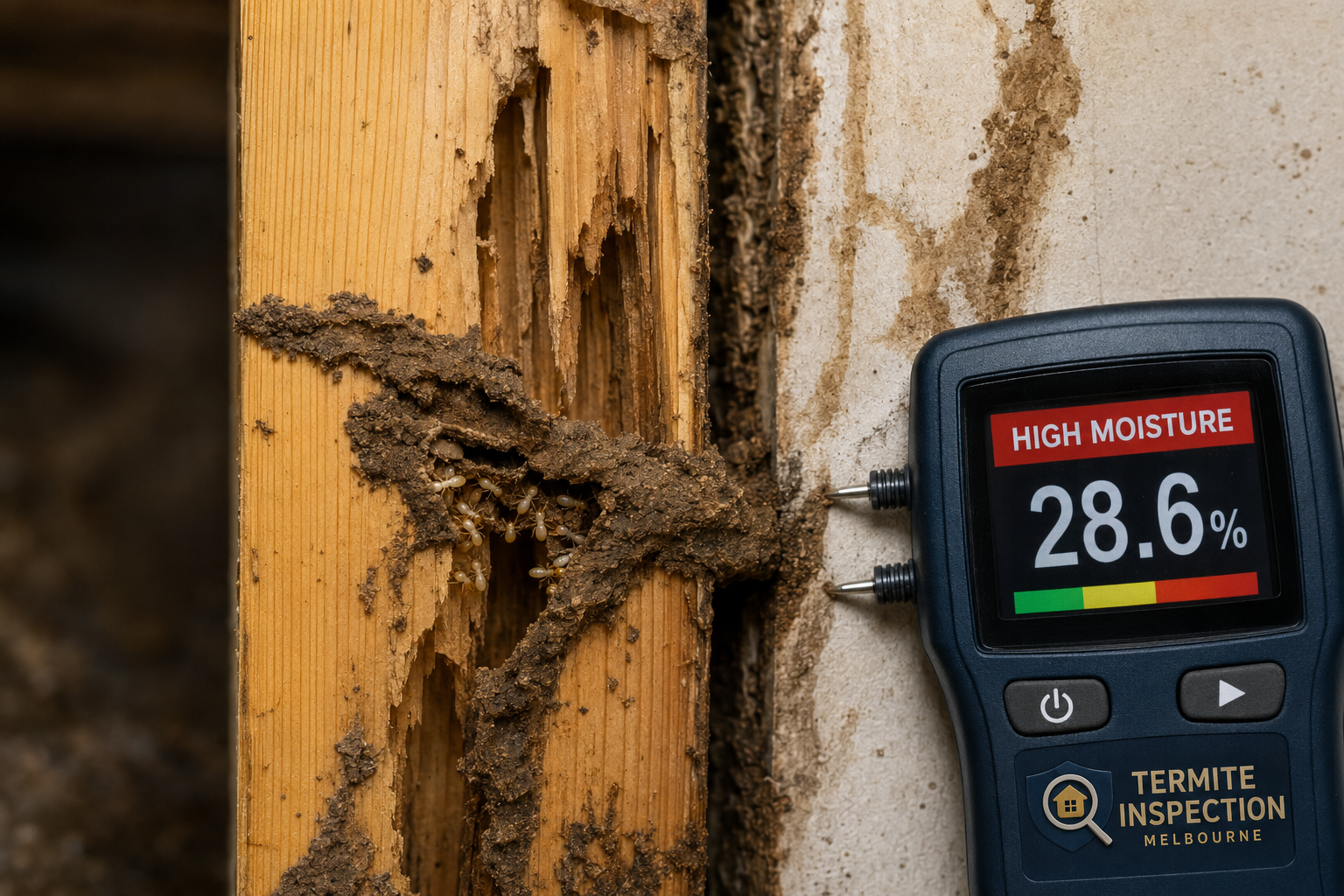
The earliest signs are usually the quietest ones: thin mud (shelter) tubes running up an external brick wall, a stump or a subfloor pier; skirting boards or architraves that sound papery or hollow when tapped; and doors or windows that have started sticking for no obvious reason. Discarded, papery wings near window sills after a warm, humid evening are another early tell — that is a termite swarm looking for a new site to colonise, and it means an active colony is already close by. Because subterranean termites (the dominant risk species in Melbourne) work from the inside out, most early activity is invisible until you know exactly what to tap, probe and look for.
Can I check for termites myself using a screwdriver?
+
A screwdriver or similar probe test can flag a problem — if the tip sinks easily into skirting, an architrave or a stump with little resistance, or the timber sounds hollow when tapped, that is a red flag worth acting on. What it cannot do is tell you how far the damage extends, whether the colony is still active, or what is happening inside wall cavities, behind plaster, under flooring or in the roof void, none of which a screwdriver can reach. A DIY probe test is a useful early-warning habit, not a substitute for a licensed AS 4349.3 inspection with thermal imaging and moisture assessment.
Why do mud tubes appear on brick walls?
+
Subterranean termites need a humid, dark micro-climate to survive — direct exposure to open air dries them out within hours. Mud tubes (also called shelter tubes) are how they solve that: they build enclosed tunnels from soil, saliva and chewed timber across bare surfaces like brick footings, concrete stumps, piers and subfloor walls, giving the colony a protected, moisture-controlled route from the soil to a timber food source above. Finding a mud tube on an external wall means termites have already built a safe corridor into your home's timber — it is one of the clearest and most reliable visual warning signs there is.
How does thermal imaging reveal hidden termite damage behind plastered walls?
+
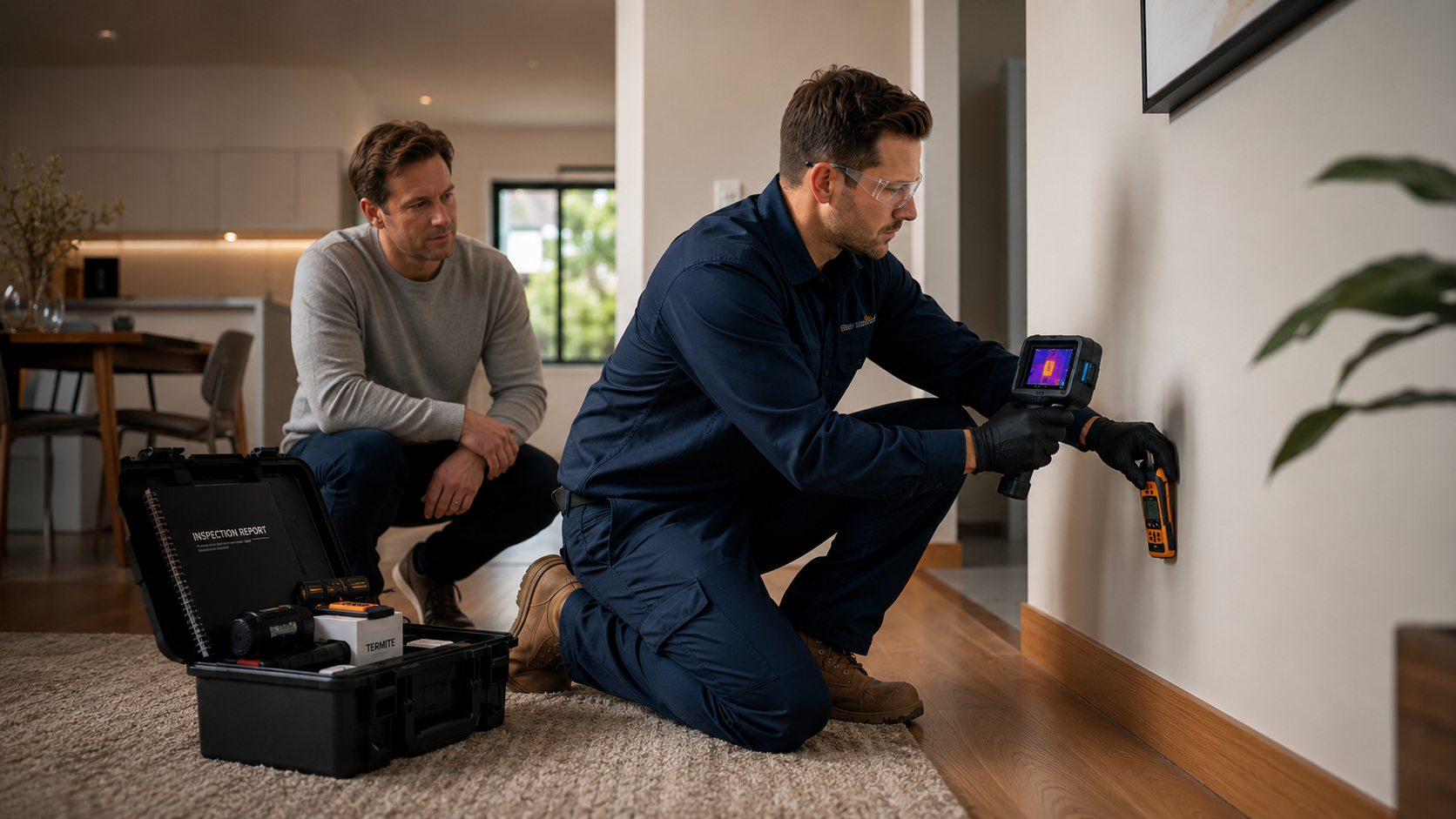
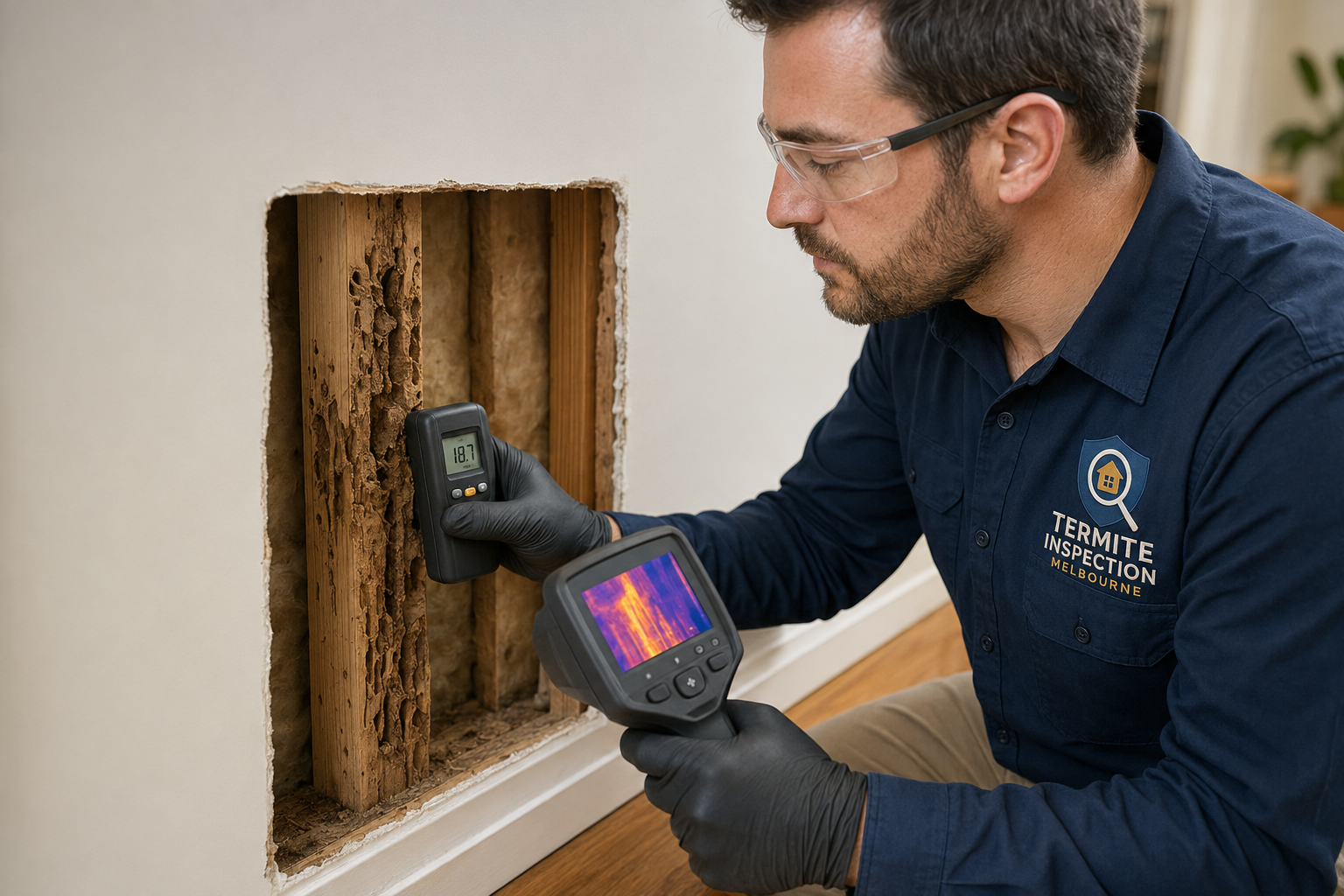
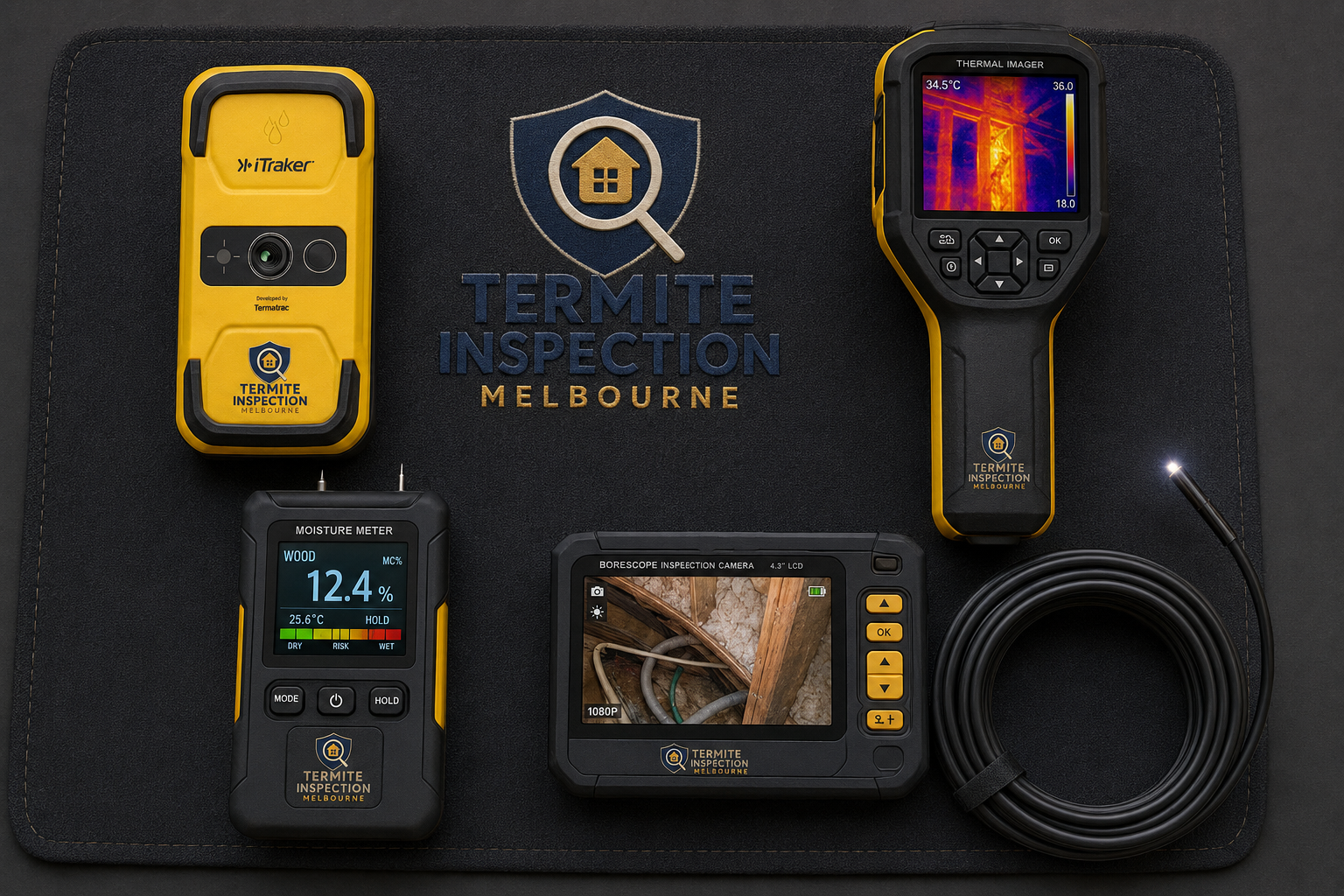
Termite galleries and the moisture that comes with an active colony change how a surface holds and releases heat compared with the timber and plaster around it. A thermal imaging camera reads those subtle temperature differences across a wall, ceiling or floor and displays them as a colour-mapped image, highlighting cooler or warmer patches that correlate with hidden voids, moisture and termite activity behind an intact, undamaged-looking surface. It does not replace a physical inspection, but it directs the inspector straight to the areas that need a closer probe, moisture-meter reading or targeted access point — finding problems that a purely visual walk-through, DIY or otherwise, would miss entirely.
What should I do immediately if I spot live termites?
+
Do not disturb them, spray them, or poke at the mud tube or timber — disturbing an active colony can cause it to retreat deeper into the structure or relocate to a harder-to-treat area, making the job more difficult later. Leave the area undisturbed, note down where you saw the activity (room, wall, approximate height), and call a licensed technician for an urgent diagnostic inspection as soon as possible — same-day appointments may be available depending on your suburb and route. The goal is to let a professional map the full extent of the colony with thermal imaging and moisture assessment before any treatment decision is made.
How much does a professional termite inspection cost in Melbourne?
+
A full AS 4349.3-aligned termite inspection with moisture assessment starts at $270 + GST for a small property, $300 + GST for a medium 3-bedroom home, and $330 + GST for a large property, with a same-day digital report targeted where possible. Commercial buildings and larger or unusual sites require a custom on-site quote rather than a fixed online price. Your exact GST-inclusive total is confirmed in the booking calculator before you enter any personal details, and licensed technician attendance is included in every price shown.
Are termite warning signs different for subterranean vs drywood termites?
+
Yes. Melbourne's dominant risk is subterranean termites (notably aggressive Coptotermes species), which need soil contact or a moisture source and give themselves away through mud tubes, damp-affected paint and timber that stays cool and hollow-sounding near ground level or in the subfloor. Drywood termites are less common locally but do not need soil contact at all — instead, look for small, gritty, sand-like faecal pellets (frass) pushed out of tiny "kick holes" in furniture, skirting or roof timbers, along with discarded wings after a swarm. Because the two types nest, feed and present differently, correct species identification during inspection changes both the diagnosis and the treatment plan.
How often should I have my Melbourne property inspected for termites?
+
Industry guidance and most home insurance and building-warranty requirements recommend a minimum of one professional termite inspection every 12 months, and every 6 months for properties in higher-risk areas — those with established gardens close to the foundation, known clay soils, timber-in-ground contact, or a prior history of termite activity nearby. An annual inspection is what catches early warning signs (a fresh mud tube, a newly hollow-sounding skirting board) while treatment is still simple and inexpensive, well before the sagging floors and structural repairs that come with a colony left undetected for years.