Corporate Tender & Office Offer — Managing a Melbourne workplace? Book an office inspection and treatment this Wednesday and receive $250 OFF an eligible complete barrier treatment + free thermal scan voucher ($150 value) — offer ends 15th September 2026 · Call 0466 929 533
Serving Melbourne from Clyde North Same-Day Options Subject to Availability
Call 0466 929 533
☰ Explore Services & Menu
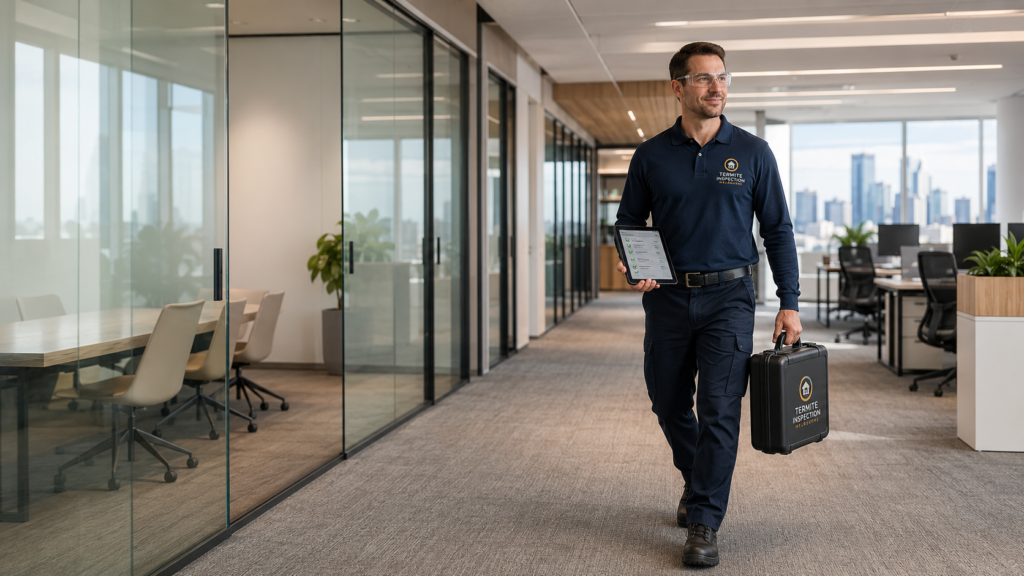
Professional office pest control services in a Melbourne corporate workplace
Discreet corporate pest management, after-hours scheduling and audit-ready reporting

Office Pest Control Services Melbourne

Protect staff, clients, IT infrastructure and workplace reputation with evidence-led office pest control Melbourne services designed around operational continuity, commercial access and clear OH&S controls.

TIM's Pest Control provides workplace pest inspection services, targeted cockroach and ant treatment, rodent monitoring, timber-pest assessment and documented commercial programs from boutique suites to multi-floor headquarters. Published initial-service prices start from $180 plus GST, with exact inclusions shown before booking.

After-hours scheduling available
Server-room risk protocols
Digital treatment documentation
Transparent GST-inclusive totals
After-Hours OptionsEarly, evening and weekend requests
Clear PricesFrom $180 + GST
IT-Aware MethodsNo indiscriminate equipment spraying
Workplace RecordsService findings and actions
Melbourne CoverageSingle and multi-site offices
Module 1

The Critical Importance of Commercial Office Pest Management

A workplace pest problem affects more than appearance

An insect or rodent sighting in a professional office can quickly become a staff-health concern, a tenant complaint, a client-confidence issue and a facilities escalation. Droppings inside a stationery cupboard, cockroaches near the coffee machine or gnawing above a ceiling do not remain isolated presentation problems. They can indicate food access, building ingress, moisture, shared service pathways or activity from another tenancy. A commercial office needs a controlled response that establishes where evidence was found, what supports it, which areas were inspected and who is responsible for corrective work.

Multi-storey Melbourne buildings add complexity. A tenant may control the suite but not the loading dock, waste room, riser, roof, basement or external perimeter. Treating only the visible desk area can suppress symptoms while the source remains in landlord-controlled space. Our workplace pest inspection services record these interfaces and distinguish tenant treatment from recommendations that require the building manager, strata, cleaner, food contractor, plumber, electrician or maintenance team.

Health, morale, asset and reputation protection

Staff should not be expected to work around repeated pest sightings or improvised aerosol use. Rodents may contaminate surfaces and damage cabling. Cockroaches can move through appliances and service voids. Ant trails create recurring complaints around food and workstations. Silverfish can damage archived paper, bindings and stored materials. Timber pests may affect structural or decorative timber without obvious external signs. Prompt identification reduces unnecessary treatment and directs spending toward the actual source.

Commercial pest management Victoria programs are most effective when inspection, monitoring, sanitation, exclusion, moisture correction and targeted treatment work together. This is Integrated Pest Management in practical office terms: control the pest, reduce the conditions that support it, document unresolved defects and review evidence over time. It is more defensible than scheduling the same broad spray regardless of species, occupancy or result.

Urgent office incident: record the exact location and time, take a clear photograph where safe, protect exposed food, avoid spraying electrical equipment and call 0466 929 533. Same-day office pest quote and attendance requests are subject to route, access and technician availability.

Corporate workplace safety and commercial pest compliance inspection Melbourne
Module 2

Key Pests Impacting Melbourne Workplaces

Identification matters because a kitchenette cockroach program, ceiling-void rodent response and timber-pest inspection require different tools, access and follow-up.

German Cockroaches in Kitchenettes

German cockroaches favour warm, protected harbourage near coffee machines, dishwashers, refrigerators, plumbing penetrations and cupboard hinges. Staff may see only a small proportion of the activity. Monitoring and gel bait can be placed strategically after sanitation and access are reviewed. Severe activity may require repeat visits, growth-regulating measures and coordination with appliance or cleaning access. A visible knockdown does not prove concealed harbourages or egg cases are resolved.

Roof Rats and Mice

Rodents use ceiling cavities, loading zones, risers, cable routes and gaps beneath doors. Gnawing around data or electrical cables needs prompt escalation. Devices are secured and mapped according to risk; poison is not placed indiscriminately around staff or equipment. Repeated captures trigger investigation of ingress, food, water and building defects. Contamination cleaning, carcass removal and electrical repairs can require separately qualified providers.

Ant Trails and Nesting Pressure

Ants can enter through window frames, expansion joints, plumbing and garden interfaces, then trail toward kitchenettes, plants and desk food. Species and source influence bait and treatment selection. Wiping the trail or spraying visible workers may provide only temporary relief. Reports identify recurring entry zones and practical changes such as food storage, plant management, seal repairs and external source control.

Silverfish and Archive Pests

Archive rooms, compactus storage, stationery cupboards and quiet paper stores can support silverfish, booklice and occasional stored-material pests when humidity and undisturbed harbourage remain high. Inspection reviews paper damage, cast skins, droppings, moisture and storage practices. Treatment is coordinated with document custodians; sensitive or historic materials may require conservation guidance rather than routine spraying.

Spiders and Flying Insects

Spiders establish around windows, exterior lighting, plants, car parks and quiet storage. Flies enter through doors or develop near waste, drains and food residues. Web removal and targeted barrier treatment can be combined with source correction. Electronic fly units, drains and waste systems are separately assessed. A single visitor insect is not automatically evidence that an entire office requires broad chemical treatment.

Termites and Timber Pests

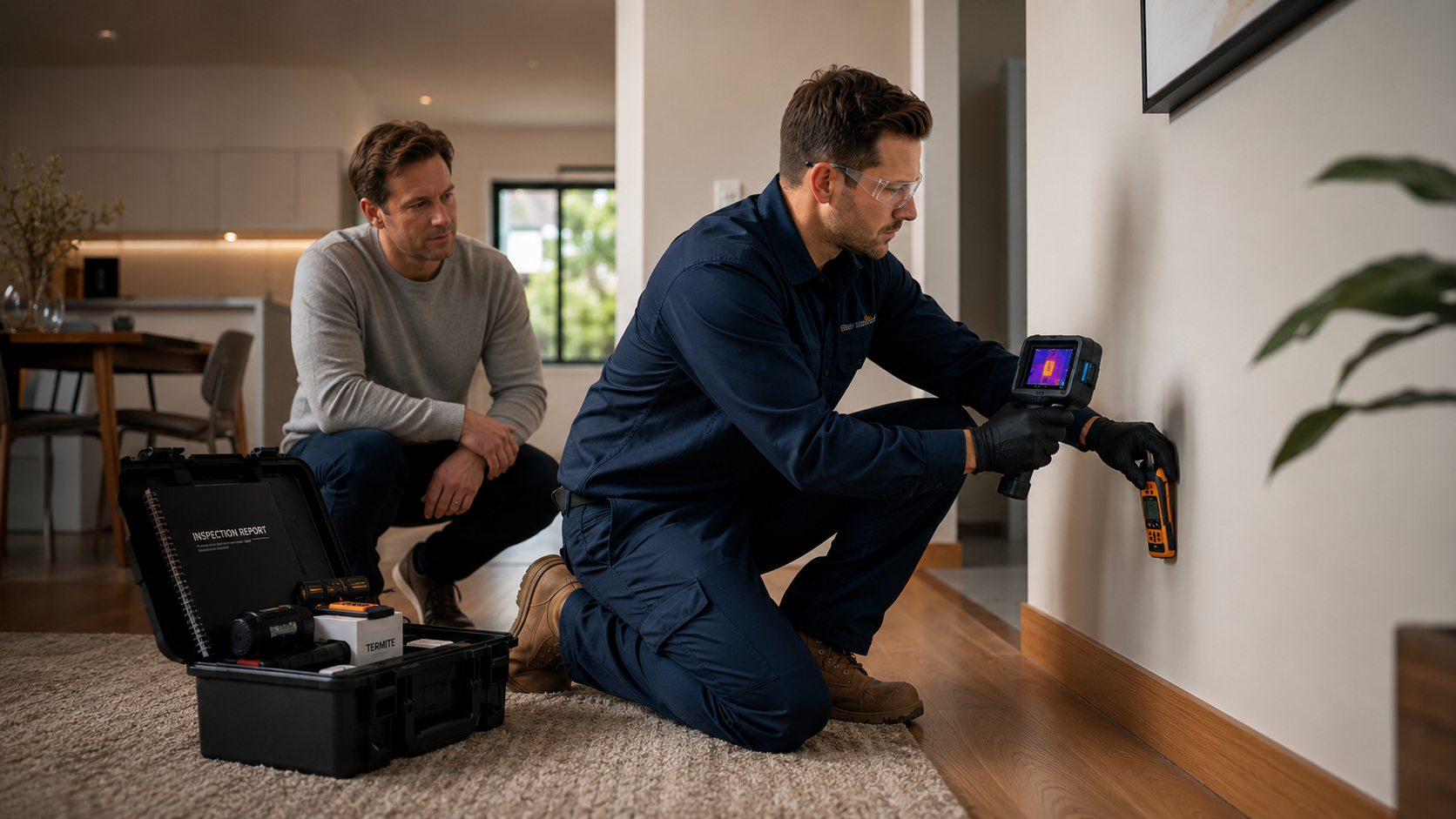
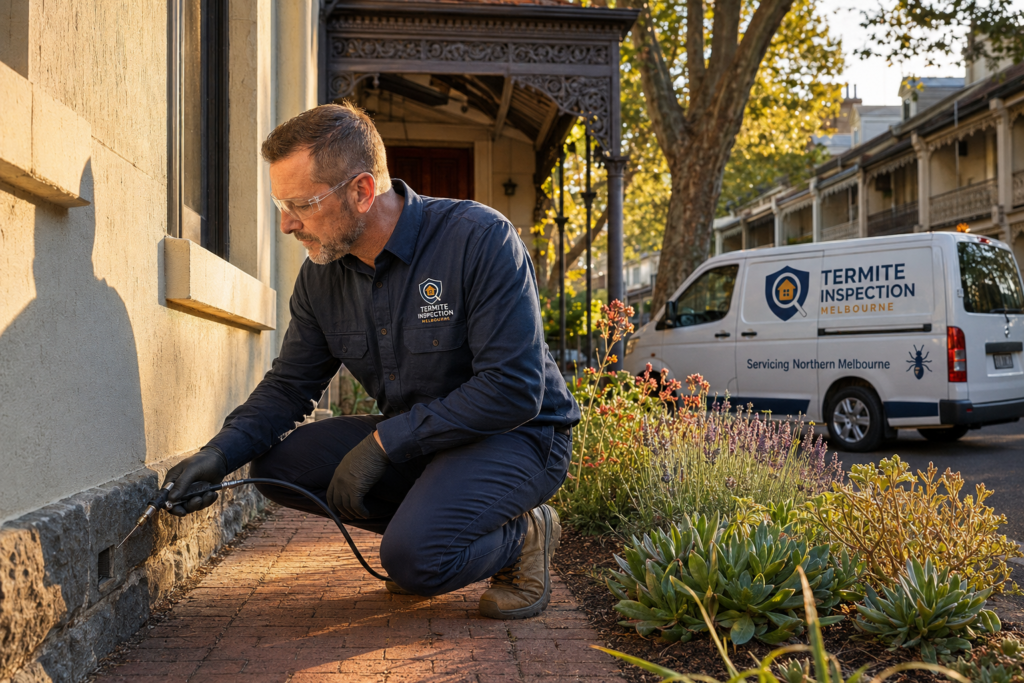
Heritage offices, converted houses, timber-framed fitouts and ground-floor tenancies may contain vulnerable structural or decorative timber. Mud leads, moisture, hollow-sounding timber or unexplained damage need a specialist timber-pest scope. Thermal imaging and moisture tools may support the inspection, but concealed areas cannot be guaranteed clear. Active termites should remain undisturbed until assessed.

Corporate office cockroach rodent treatment: where multiple pests are present, we stage methods so one treatment does not compromise monitoring for another. The approved report identifies each target pest, zone, product or device and follow-up requirement.
Module 3

After-Hours & Zero-Downtime Scheduling

Discreet work around business operations

After hours commercial pest control is valuable when staff numbers, client meetings, reception activity or confidential work make daytime servicing impractical. We can accept requests for early morning, evening or selected weekend windows. The exact appointment depends on technician availability, location, security access, parking, building rules, lighting, lone-worker risk and the treatment planned. The standard booking calculator discloses the after-hours add-on rather than hiding it inside a later invoice.

Zero downtime should mean zero avoidable disruption—not a promise to ignore safety. Some baiting, monitoring and inspection work can proceed with limited isolation. Other products require preparation, ventilation, drying or a stated re-entry period. Severe contamination, an exposed wasp nest, suspected structural termite damage or unsafe ceiling access may require temporary control of the area. These conditions are explained before authorised work wherever the evidence allows.

Access planning prevents failed visits

The nominated facilities contact should confirm keys, alarm procedures, lift or loading access, parking, escort requirements, security telephone numbers, tenancy boundaries and the person authorised to approve variations. Restricted rooms, roof access, plant spaces, server rooms and switchboard areas must be declared. A technician cannot assume permission to enter a secure data room or climb into an unassessed ceiling simply because the building is quiet.

Following treatment, the service record states areas attended, products or devices, limitations, preparation completed, re-entry instructions and corrective actions. The morning facilities handover can be brief and practical: what was found, what was done, what must not be cleaned or moved, and what action remains. This gives staff a fresh workplace without losing the evidence required for follow-up.

Professional low-odour pest-control equipment for after-hours office treatment
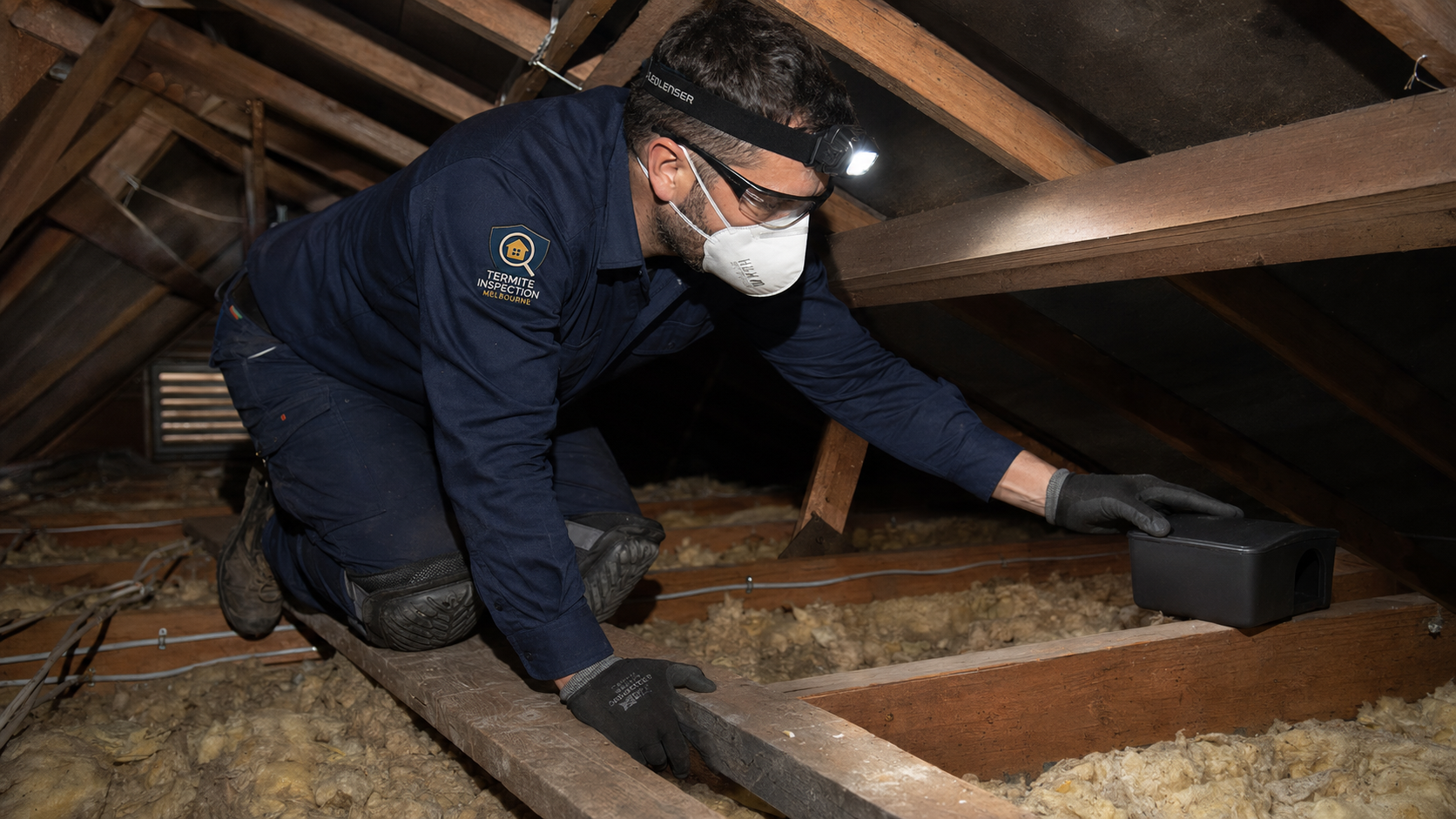
Office subfloor data room and server room pest inspection Melbourne
Module 4

Server Room, Cable Void & IT Infrastructure Protection

Inspection-led methods around sensitive assets

Server rooms and communications spaces combine heat, cable penetrations, raised floors, ceiling services and restricted access. Rodents can exploit the same routes used by data and electrical infrastructure. Pest work begins with visual evidence and pathway mapping, not liquid spraying near energised racks. We inspect accessible perimeter edges, doors, wall penetrations, underfloor interfaces, ceiling transitions and adjacent food or water sources with the authorised facilities representative.

Monitoring devices or secured rodent-control equipment are selected for the risk and positioned so they do not obstruct cooling, maintenance or emergency access. Low-moisture or non-liquid methods may be preferred around sensitive components. Any need to open switchboards, lift raised-floor panels, isolate power, repair cables or clean contaminated electronics belongs to the authorised data, electrical or facilities professional. The pest technician does not exceed site permissions or trade competence.

Rodent evidence becomes an infrastructure incident

Fresh droppings, gnawing, nesting or repeated device activity near cable routes should be documented by exact location. The response may include intensified monitoring, trapping, secured baiting outside sensitive zones, proofing recommendations and investigation of adjoining risers or ceiling space. A single device beside a server rack is not a complete solution if the loading dock, kitchen, wall opening or shared service shaft remains uncontrolled.

Reports separate what was accessible from what was not. If a floor void cannot be safely opened or a shared riser is landlord-controlled, the limitation and referral are recorded. This protects the office from a false statement that hidden infrastructure is clear and provides facilities teams with a specific action list for their IT, building and landlord contacts.

Module 5

Breakout Area, Kitchenette & Cafeteria Hygiene Standards

Food, water and warmth concentrate office pest pressure

Even a small office kitchenette provides water, crumbs, heat, recycling, cardboard and quiet equipment voids. Shared refrigerators, coffee machines, dishwashers, sinks, microwaves and under-bench storage can support cockroaches, ants, flies and rodents when cleaning responsibilities are unclear. Inspection looks behind and beneath accessible equipment, around plumbing, cupboard hinges, bin zones, splashbacks and adjoining wall penetrations.

Targeted gel bait and monitoring can control cockroaches with less disruption than indiscriminate aerosol use. Ant treatment follows species and trail evidence. Rodent measures combine devices with food-storage and exclusion controls. Drain or fly activity requires source inspection rather than repeated surface spray. Where a cafeteria or catered function introduces higher food volume, the plan may require more frequent monitoring and HACCP-supporting records appropriate to that operation.

Facilities, cleaners and staff share corrective actions

The pest contractor cannot permanently correct overflowing bins, food stored in desk drawers, leaking taps, damaged seals or unclean appliance cavities. Our report makes those conditions visible and assigns practical priorities. Cleaning recommendations are specific enough to act on without asking cleaners to remove placed bait or monitoring devices. Staff communication can focus on sealed food, end-of-day dishes, refrigerator clean-outs and fast reporting rather than blame.

Commercial hygiene reporting supports workplace management but does not certify an entire food-safety system. If the office operates a commercial kitchen or public cafe, a dedicated hospitality program may be more appropriate. The office scope identifies that boundary so a low-cost general treatment is not misrepresented as full food-premises compliance.

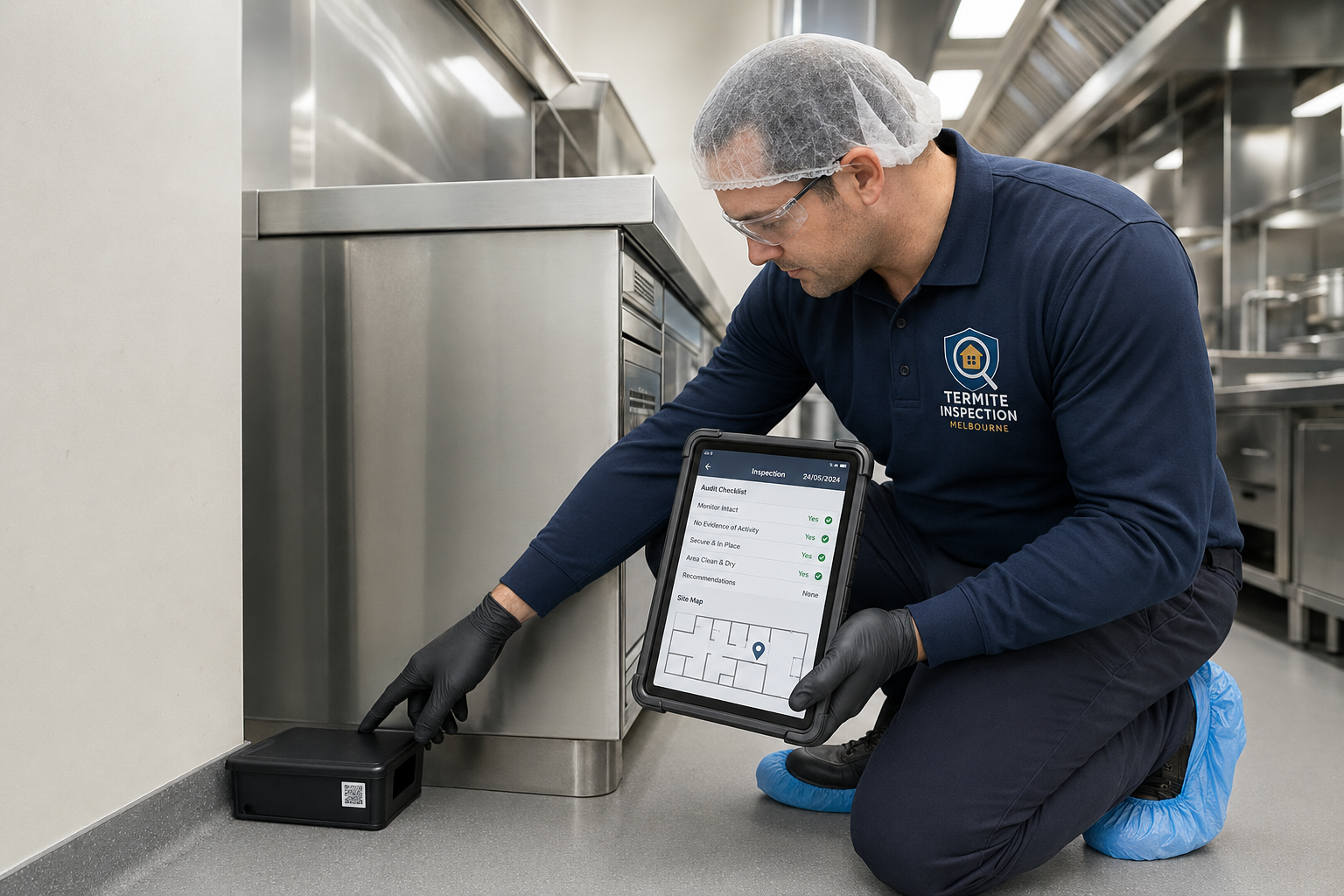
Rodent ant and general insect control for Melbourne office kitchens
Module 6 · Transparent corporate pricing

Office Pest Control Packages Melbourne

Compare four clear starting packages, then continue to the booking calculator with your Office Pest Control service and package already selected.

Quick-start protection

Boutique Office

Up to 100 sqm
Approximately 1–20 desks

$180
$198 incl. GST
+$18 GST
  • Accessible office risk inspection
  • Targeted general insect treatment
  • Kitchenette and entry-zone checks
  • Digital service record
Book Boutique Office
Expanded workplace cover

Large Office

201–300 sqm
Approximately 51–90 desks

$260
$286 incl. GST
+$26 GST
  • Multi-zone accessible inspection
  • Breakout, storage and perimeter coverage
  • Service-penetration risk review
  • Facilities action report
Book Large Office
Corporate-level coverage

Corporate Office

301–400 sqm
Approximately 91–120 desks

$310
$341 incl. GST
+$31 GST
  • Extended multi-zone inspection
  • Kitchen, records and IT-interface review
  • Targeted initial treatment
  • Compliance-ready service record
Book Corporate Office

Optional Office Add-Ons

Select any required specialist option inside the booking calculator. Every add-on is displayed before GST and included in the final GST-inclusive total.

Intensive Cockroach Control +$30 before GST
Rodent Bait Station +$30 each before GST
After-Hours Attendance +$90 before GST
Office Termite Check +$350 before GST
Pricing conditions: prices are for the described initial office service and are shown before GST with the inclusive total beside each rate. Final scope is confirmed from supplied details. Offices above 400 sqm, multi-floor buildings, severe infestations, extensive proofing, specialist access, parking or permits, contamination cleaning, bird work and recurring contracts require a written quote. No unapproved extra work is added after commencement.
Service assurance

Eligible 3-Month Office Treatment Warranty

Eligible general insect treatments within the inspected and treated office scope can include a three-month service warranty, confirmed in writing on the service record. The warranty supports treatment performance; it is not a promise that an open commercial building will remain free from every pest regardless of new introductions, adjoining tenancies or uncorrected defects.

Rodents, termites, flying insects, bed bugs, external reinvasion, inaccessible areas, untreated common property and activity sustained by unresolved sanitation, moisture or proofing conditions require their own service terms. If eligible activity returns, contact us promptly with the location and evidence. We review the original scope, preparation and corrective actions before scheduling warranty attendance.

Clear before booking: package inclusions, add-ons, exclusions, warranty eligibility, access and re-entry requirements are confirmed before treatment. This protects facilities teams from ambiguous “whole building” promises.
Professional equipment and targeted office pest-control formulations Melbourne
Controlled implementation

Our 4-Step Office Pest-Management Framework

1

Workplace Risk & Access Review

We confirm the tenancy, floor area, desk count, operating hours, security, sensitive rooms, sightings, previous service and authorised contact. Access limitations are recorded before the price or scope is represented as complete.

2

Inspection & Pest Identification

Accessible kitchens, storage, perimeter edges, service penetrations, ceiling interfaces and affected rooms are examined. Evidence and conducive conditions determine devices, baits, targeted residual treatment or specialist referral.

3

Discreet Targeted Treatment

Approved treatment is completed within label, access and OH&S controls. After-hours work follows security and re-entry arrangements. Staff, IT equipment and business operations are protected from avoidable disruption.

4

Report, Corrective Actions & Review

The service record states findings, areas treated, products or devices, limitations and priorities. Recurring programs review trends so persistent activity triggers source correction rather than endless reactive spraying.

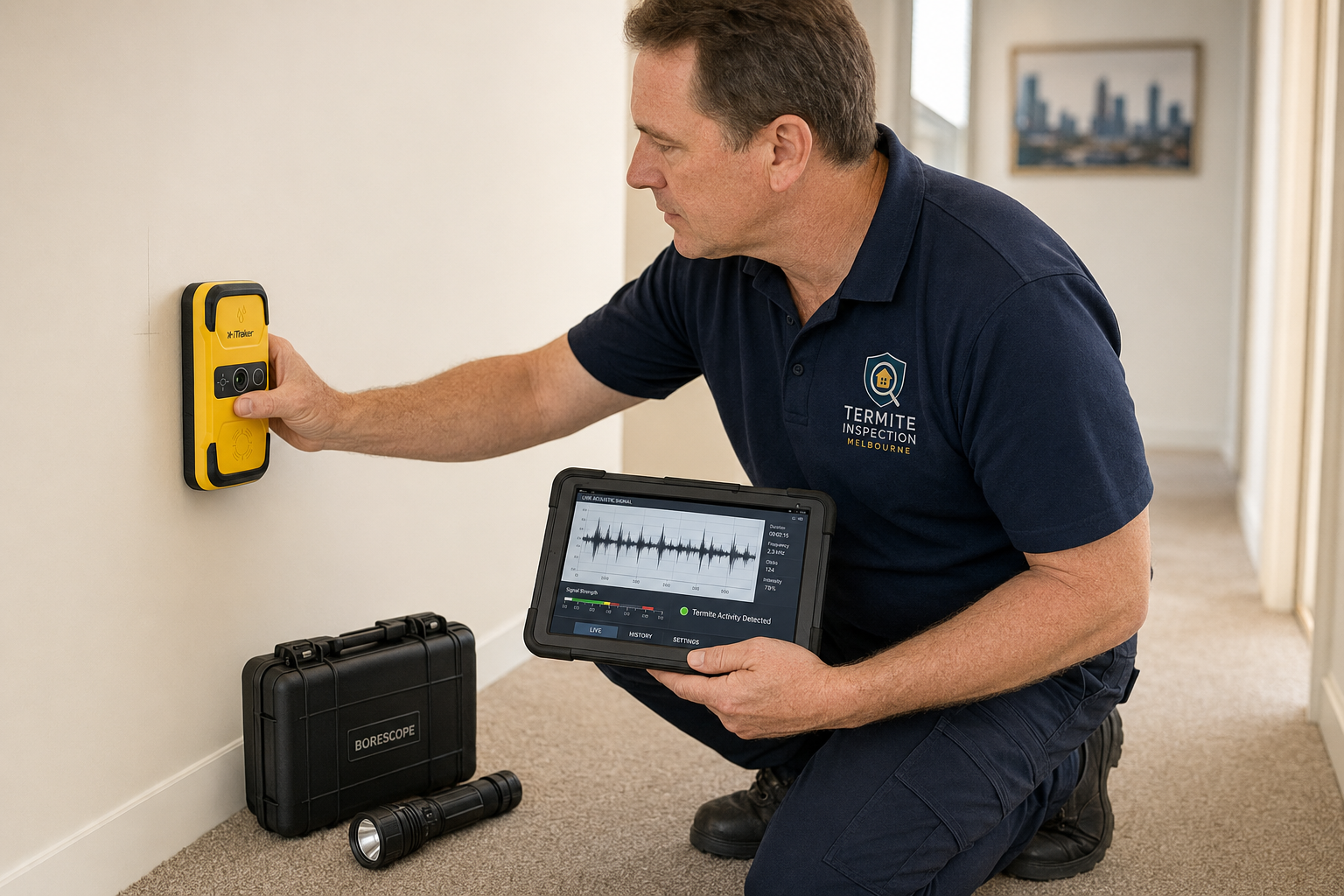
FLIR thermal imaging and non-destructive diagnostics for Melbourne offices
Non-destructive diagnostics

Thermal Imaging, Moisture Mapping & Concealed-Risk Assessment

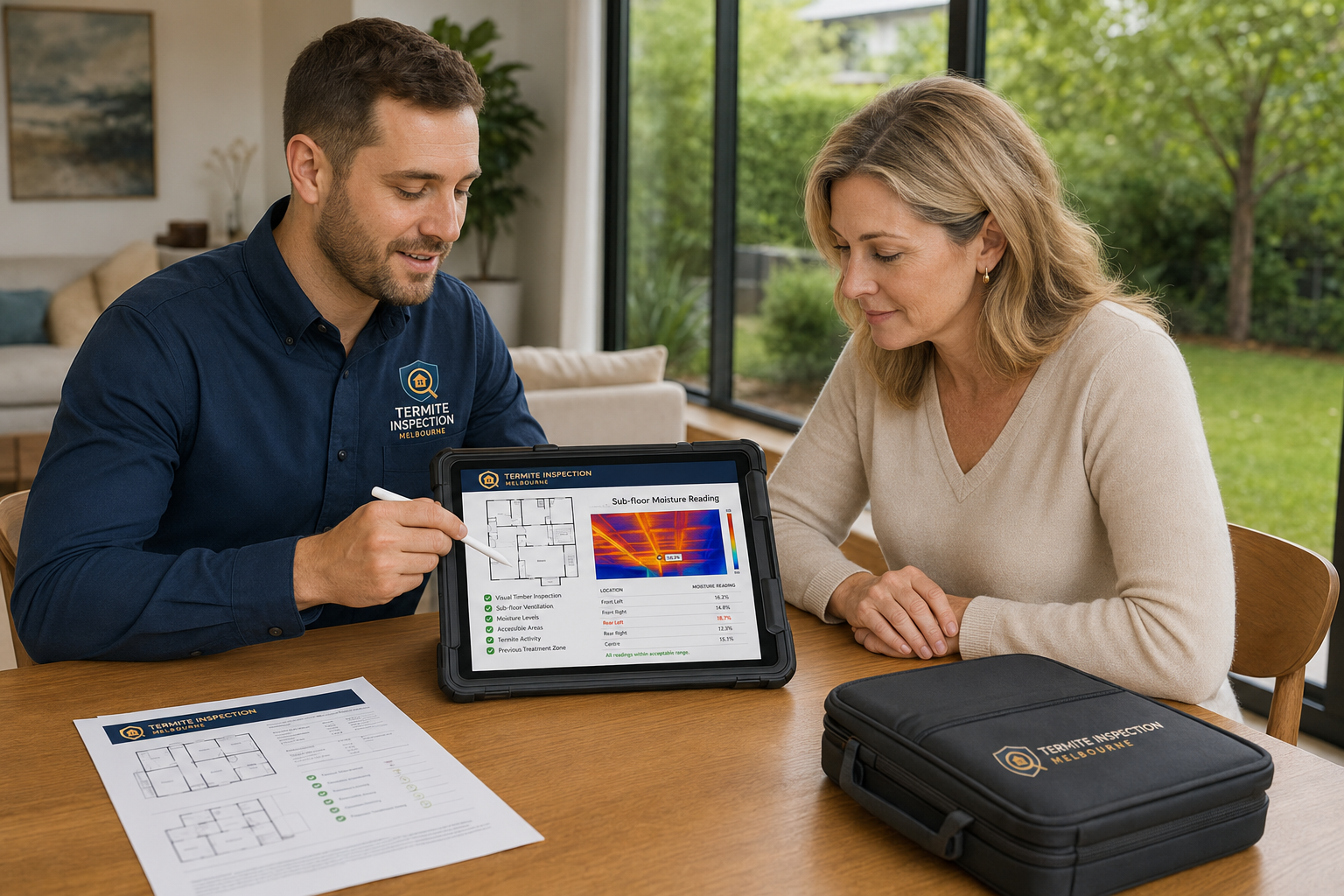
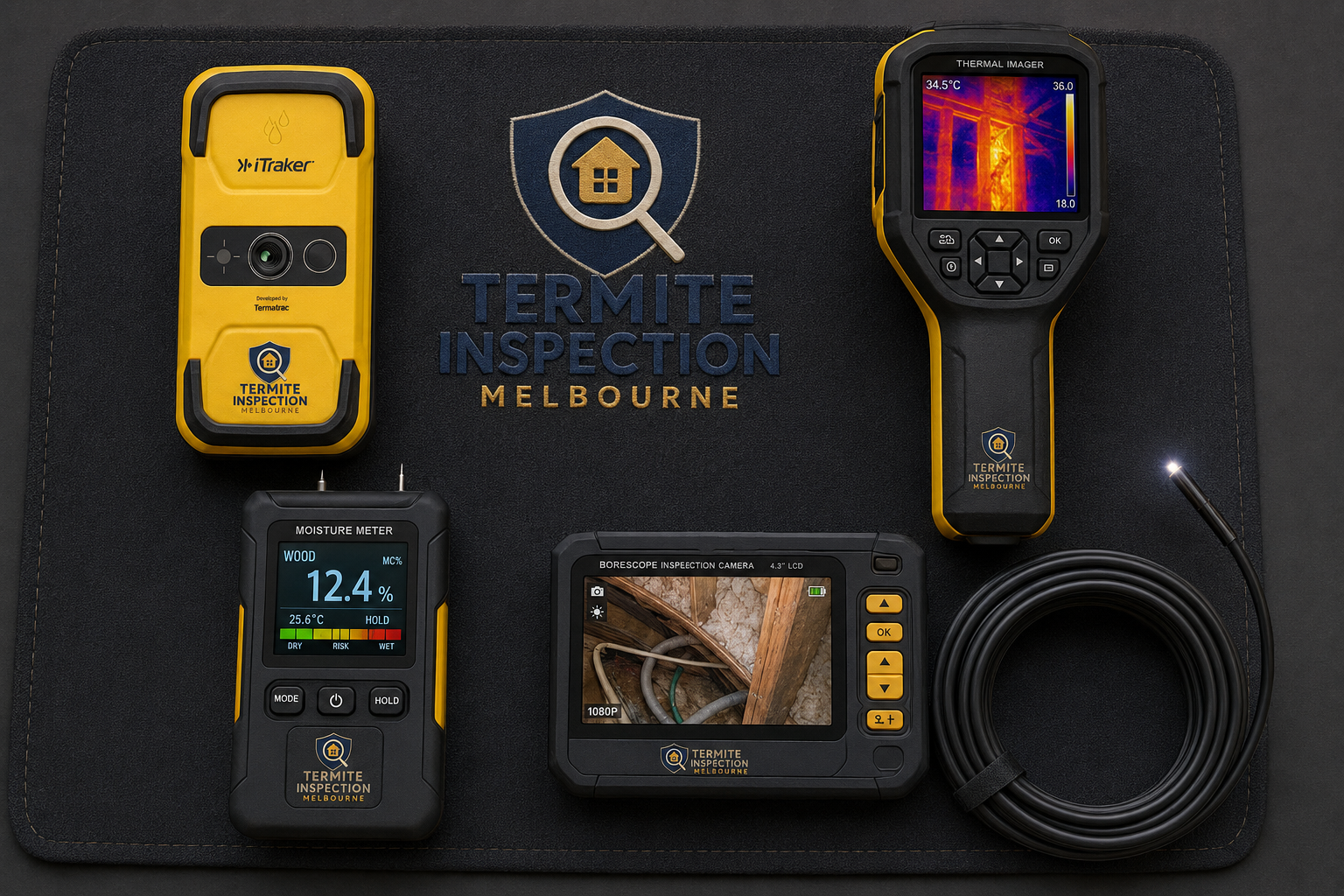
Thermal imaging can identify temperature patterns that justify closer inspection. Moisture meters help locate damp areas associated with leaks or subfloor conditions. Suitable radar screening may support investigation behind accessible wall linings. Sounding can identify timber that responds differently from surrounding members. These tools improve prioritisation but do not independently prove a hidden space is pest-free.

Office equipment, air conditioning, sunlight, insulation, plumbing and electrical loads can all create thermal patterns unrelated to pests. Findings are interpreted with construction, visual evidence, pest biology and site history. If concealed evidence remains uncertain, the report recommends monitoring, authorised access or another qualified professional rather than presenting a colourful scan as a guarantee.

Non-destructive diagnostics are particularly useful in heritage offices, occupied reception areas and high-value fitouts where unnecessary opening would damage finishes or interrupt work. Structural assessment and repair design remain outside the pest technician’s role and are referred to the appropriate building professional or engineer.

Module 7

Compliance Documentation, Audit Trails & Insurance Evidence

Documents facilities and risk teams can actually use

An office service record can include the service date, technician, exact tenancy or floor, inspected areas, limitations, pest evidence, device status, treatment locations, product details, Safety Data Sheet references, photographs where authorised, preparation or re-entry instructions, corrective actions and next review. Recurring reports can show trends, repeat hotspots and outstanding building defects rather than replacing the previous visit with a generic “treated” note.

Commercial landlords and contractor portals may request licences, insurance certificates, police-check evidence, White Card evidence, Safe Work Method Statements, product information and induction completion. Current evidence is supplied according to the approved work. Any statement about $20 million public-liability backing or AEPMA certified commercial pest technicians should be checked against current certificates, policy exclusions and the technicians proposed for the contract. Website wording is not a substitute for evidence.

Clear limits improve audit quality

A pest report supports—but does not replace—the office’s broader OH&S, lease, food-safety, electrical, structural or statutory responsibilities. It does not certify uninspected floors or inaccessible spaces. Where another tenancy, landlord-controlled riser, roof, basement or waste room may be involved, the limitation and recommended coordination are recorded. This prevents a treatment invoice from being used as an unsupported whole-building clearance.

For recurring contracts, change control matters. New floors, fitouts, construction, catering, additional staff, changed waste arrangements or acquired sites can alter pest pressure and scope. The facilities manager approves material changes before additional work. Transparent variation rules protect both budget and service quality.

Office pest-control compliance report and commercial audit trail documentation
Compare commercial capability

Office Pest-Control Service Comparison

A low callout price is not good value if it ignores access, equipment risk, documentation or recurring building pathways.

Service modelAfter-hours availabilityServer-room protocolCompliance recordsInsurance evidenceLong-term source control
TIM's Corporate Office ServiceEarly, evening and weekend requestsInspection-led, no indiscriminate equipment sprayingAreas, products, findings, limits and actionsCurrent certificate available for onboardingMonitoring, proofing and corrective actions
Standard Residential SprayUsually daytime residential routingNot designed around IT roomsBasic receipt or treatment noteMust be checked for commercial workOften focused on one application
DIY Hardware ProductsApplied by office staffRisk of unsuitable use around equipmentNo professional audit trailNo contractor backingVisible knockdown without diagnosis
National Interstate FranchiseVaries by local branchCapability depends on assigned technicianCorporate portal may be availableCorporate cover still needs scope verificationSystems may be strong; local flexibility varies
Melbourne commercial microclimates

Office Pest Control Across Melbourne Business Districts

Historic brick offices, glass business parks, converted warehouses and multi-storey towers create different pest pathways even within the same suburb.

South East Melbourne & Clyde North

Operating from 38 Graziers Crescent, Clyde North, our Clyde North pest control and commercial routes cover Casey, Cardinia, Dandenong, Narre Warren, Cranbourne, Pakenham, Frankston and surrounding business precincts. Growth-corridor offices often share boundaries with construction, drainage corridors, food outlets and landscaped estates. These interfaces can increase rodent, ant, spider and cockroach movement through roller doors, cable penetrations, roof voids and staff kitchenettes.

Eastern Melbourne & Mulgrave Business Parks

Mulgrave, Burwood, Box Hill, Ringwood, Scoresby and adjoining eastern commercial areas contain stand-alone offices, mixed-use buildings and landscaped business parks. Mature trees, loading zones, shared bin compounds and ageing roof or service penetrations can support rodents and insects. Programs coordinate internal tenancy work with landlord-controlled common areas so responsibility is clear.

Northern Melbourne Offices

Northern office precincts range from converted industrial buildings to modern professional suites and health administration facilities. Shared risers, food tenancies, warehouse neighbours and expanding construction can create connected pest pathways. Monitoring and reporting are scaled to the specific tenancy, floor and building interface rather than applied as a generic spray schedule.

Western Melbourne Commercial Corridors

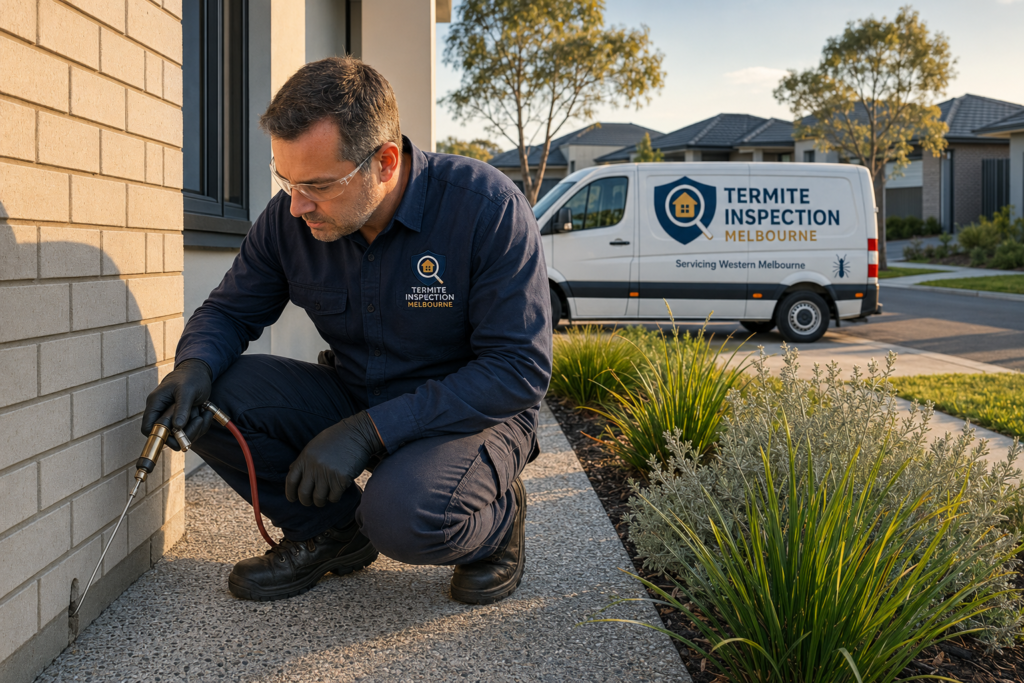
The western suburbs include logistics, industrial and professional-office combinations around Sunshine, Truganina, Laverton, Werribee and Footscray. Large roof voids, loading activity, grassland edges, drains and pallet movement can increase rodent and spider pressure. Office treatment may need coordination with warehouses, external yards and shared waste systems.

Melbourne CBD, Docklands & Inner Offices

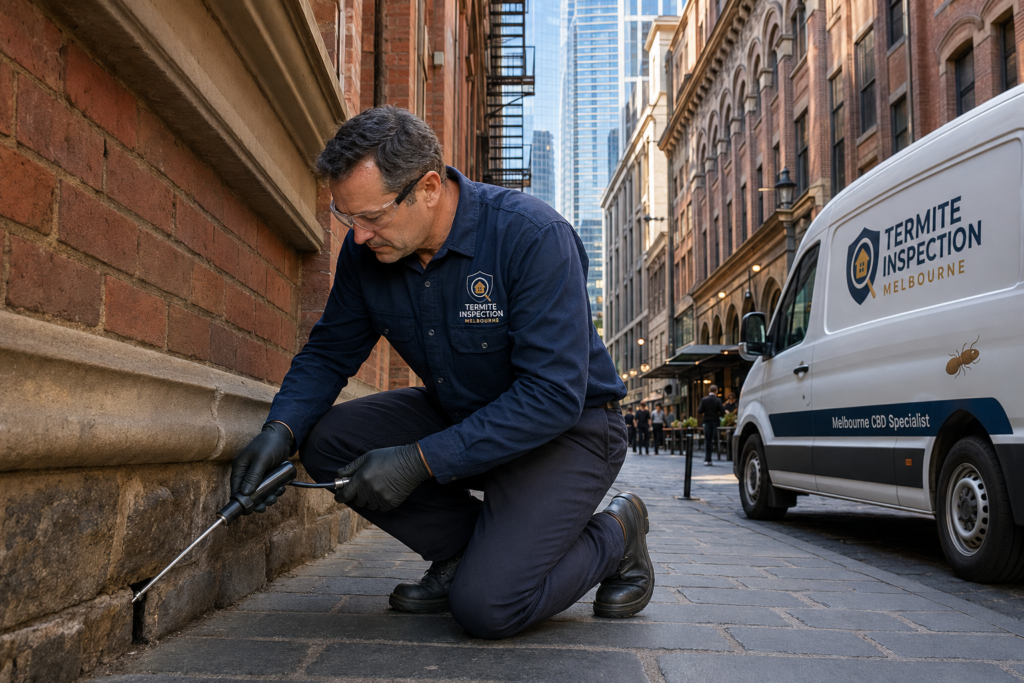
CBD and Docklands offices often occupy multi-storey buildings with shared service risers, basements, food courts, loading docks, tenancy kitchens and central mechanical systems. A pest found on one floor may originate from a common area or neighbouring tenancy. Discreet access, lift bookings, security, after-hours permits and precise floor-level records are essential.

Mornington Peninsula & Bayside Workplaces

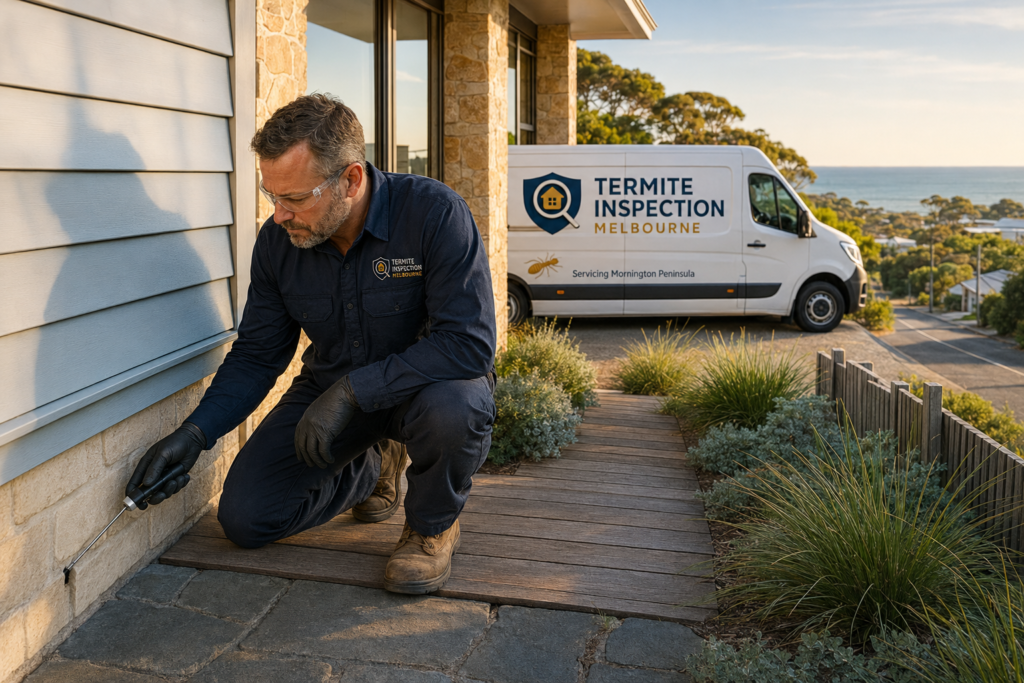
Coastal offices around Mornington, Frankston, Dromana and the bayside corridor experience seasonal visitation, moisture, dense vegetation and bird or rodent pressure around rooflines and landscaped car parks. Programs consider weather exposure, salt-affected building seals and holiday operating patterns. Same-day office pest quote requests remain subject to route and authorised access.

Season affects activity, but building evidence determines treatment. Warm weather can increase ants, flies and spiders around glazing and landscaped entrances. Cooler periods can drive rodents toward roof and service spaces. Rain and drainage problems can shift ants, cockroaches and moisture risk. A modern glass facade does not prevent pests if loading docks, risers, cable openings, kitchens and waste areas remain connected.

TIM's Pest Control accredited local commercial office team Melbourne
Module 8

Why Melbourne Facilities Managers Partner with TIM's Pest Control

Local response with commercial discipline

Our Clyde North base at 38 Graziers Crescent supports routes across South East Melbourne, Eastern Melbourne, Northern Melbourne, Western Melbourne, the CBD, Docklands and Mornington Peninsula. Local routing helps with urgent communication and practical scheduling, while every booking remains subject to confirmed access and technician availability.
Facilities managers receive defined pricing for standard office sizes and a written quote when the building falls outside those assumptions. We record inaccessible areas rather than silently describing them as clear. We separate pest work from electrical, structural, hygiene or building repairs that require another provider. This honesty produces better asset decisions and prevents small treatment scopes from being oversold.

Credentials and service levels verified before engagement

Police checks, White Card evidence, licensing, insurance and relevant AEPMA credentials can be requested for onboarding and verified against the personnel and work category proposed. Response expectations, after-hours rules, report format, escalation contacts and variation approval are agreed for recurring programs. Multi-site clients can retain asset-level records while receiving a portfolio view of trends and outstanding actions.

  • Discreet scheduling around staff, clients and meetings
  • Exact floor, tenancy and common-area boundaries
  • Targeted methods around IT and workplace equipment
  • Clear prices, GST, add-ons and custom-scope triggers
  • Digital evidence for facilities and landlord review
Commercial contractor assurance

Office Safety, Documentation & Scope Controls

Registered-Label Compliance

Products are selected and applied according to their registered labels, documented preparation and site-specific access controls.

Current Contractor Evidence

Licensing, insurance and requested personnel evidence can be checked during commercial onboarding.

Sensitive-Area Planning

Server rooms, switchboards, medical areas, food, aquariums and sensitive occupants are disclosed before method selection.

Exact Area Identification

Reports distinguish the serviced tenancy or floor from landlord-controlled areas and adjoining businesses.

Controlled Variations

Severe activity, specialist access and expanded work are priced and authorised before commencement.

Evidence-Led Reviews

Recurring frequency responds to monitoring and building pressure rather than repeating an unchanged spray schedule.

Facilities manager answers

Office Pest Control Melbourne FAQs

How much does office pest control cost in Melbourne?

Our published starting prices are $180 plus GST for a boutique office up to approximately 100 square metres, $220 plus GST for a standard office from 101 to 200 square metres, $260 plus GST for a large office from 201 to 300 square metres, and $310 plus GST for a corporate office from 301 to 400 square metres. The GST-inclusive totals are $198, $242, $286 and $341 respectively. These prices cover the listed initial inspection and treatment scope. Severe infestation, specialist termite work, extensive exclusion, additional rodent stations, after-hours access, ceiling or subfloor access, parking, permits and areas above the selected range are quoted before extra work begins. Recurring programs are priced after the initial risk assessment because service frequency and monitoring-device requirements differ between offices.

Can you perform office pest treatments outside normal business hours?

Yes. Early-morning, evening and selected weekend appointments can be requested so normal staff and client activity is not interrupted. After-hours attendance is subject to technician availability, building access, security procedures, alarms, lighting, parking, lone-worker requirements and the treatment selected. Our booking calculator shows the standard after-hours add-on where applicable. The facilities contact must arrange authorised entry, keys or an escort and identify the person permitted to reopen the treated area. Discreet scheduling reduces disruption, but it does not remove preparation, ventilation, drying or re-entry requirements stated on the registered product label.

What pest-control measures are suitable for server rooms and data cables?

Server rooms require inspection-led methods that protect equipment and minimise moisture, dust and accidental contact. We examine cable penetrations, raised floors, ceiling interfaces, door gaps, cooling pathways and nearby food or water sources. Rodent monitoring or secured devices can be placed away from sensitive components where the site risk assessment allows. Liquid spraying directly onto server racks, switchboards or energised equipment is not part of a safe general treatment. Any electrical opening, cable repair or contaminated equipment work remains with an authorised electrical, data or facilities professional. The service report records inspected areas, evidence, inaccessible zones and building defects requiring correction.

Do you provide compliance documents for commercial lease agreements and audits?

The agreed service can include a dated treatment report, areas inspected, pest evidence, device activity, products used, application locations, Safety Data Sheet references, preparation or re-entry instructions, photographs where authorised, corrective actions and next review date. Current licensing and insurance evidence can be supplied when requested for contractor onboarding. These records support commercial landlord, facilities, strata and workplace audit processes, but they do not certify an entire office as legally compliant, pest-free or structurally sound. The contract identifies exactly which tenancy, common area or building zone was inspected so one suite is not mistakenly treated as evidence for a whole property.

How often should a commercial office receive professional pest inspections?

Many low-pressure offices benefit from quarterly inspection and monitoring, while buildings with kitchenettes, food service, shared loading areas, extensive gardens, waste rooms, recurring rodents or neighbouring hospitality may require monthly or bi-monthly visits. A one-off treatment can address a defined incident, but it cannot manage recurring conditions that remain after the technician leaves. We recommend frequency from evidence, construction, occupancy and pest history rather than selling every office the same calendar. Device results and corrective actions are reviewed at each visit so frequency can be adjusted and recurring activity can trigger source investigation.

Are office pest-control products safe for staff and visitors?

Safety depends on correct identification, product selection, dosage, placement, preparation, isolation and compliance with the registered label. We prioritise exclusion, sanitation, moisture correction, monitoring and targeted baits or crack-and-crevice methods where appropriate. We do not describe every pesticide as harmless or universally eco-friendly. The facilities manager must disclose sensitive occupants, pregnancy concerns, allergies, aquariums, animals, food, medical areas, clean rooms and ventilation considerations before treatment. Written preparation and re-entry instructions are provided for the approved method, and after-hours scheduling can reduce—but does not replace—exposure controls.

What is included in a standard office pest-control treatment?

The published office packages include an inspection of accessible nominated office areas, identification of observed pest evidence, targeted general-pest treatment within the selected floor-area range, attention to typical entry and harbourage zones, and a service record. Exact inclusions vary with the confirmed pest and building. Specialist cockroach work, rodent stations, termite inspection, after-hours attendance, external grounds, roof voids, subfloors, extensive proofing, contamination cleaning and inaccessible areas are not silently included; they are selected as an add-on or quoted. Before work, the technician confirms the authorised scope so the invoice and report match the service actually delivered.

Can you treat German cockroaches in an office kitchenette without closing the workplace?

A targeted program may use monitoring, gel bait, crack-and-crevice placement, sanitation correction and suitable growth-regulating or residual products rather than broad airborne treatment. Whether the kitchenette can remain open depends on infestation severity, preparation, food storage, equipment access and the registered label. Staff may need to remove exposed food, empty selected cupboards, protect utensils and avoid cleaning bait placements. Severe German cockroach activity can require multiple visits because eggs and concealed harbourages are not resolved by a single visible knockdown. Service timing and any temporary isolation are agreed with the office contact.

How quickly can you respond to an urgent pest sighting in a Melbourne office?

A same day office pest quote or attendance can be requested by calling 0466 929 533. Availability depends on the office location, technician route, access, pest, safety risk and required equipment. Photographs or a captured specimen can support triage but do not replace inspection. Staff should record the exact location and time, avoid unapproved aerosol use around equipment, isolate affected food where appropriate and leave suspected termite mud leads undisturbed. The booking is confirmed only after our team has reviewed the request and access conditions.

Can one pest-management program cover several office floors or sites?

Yes. Multi-floor headquarters and portfolio clients can use one governance framework with site-specific records. Each floor or address retains its own access instructions, monitoring map, findings, limitations and corrective actions. Central reporting can summarise trends, overdue proofing, repeat kitchen activity and device results without treating an uninspected floor as clear. Pricing is custom for areas above the published package range because security, travel, service frequency, device count, plant rooms, car parks, loading zones and landlord responsibilities can materially change the workload.

Do you inspect offices for termites and timber pests?

Yes, but a termite or timber-pest inspection is a specialist scope rather than an automatic inclusion in a general office spray. It may cover accessible internal timber, external perimeter, roof void, subfloor and other agreed areas, supported by moisture measurement, sounding, thermal imaging or suitable radar screening where appropriate. Active termites should not be disturbed before assessment. The report distinguishes current evidence, previous damage, conducive conditions and inaccessible areas. Structural adequacy and repair design require an appropriately qualified building professional or engineer.

What should our facilities team do before the technician arrives?

Provide the exact tenancy or building address, floor and suite, authorised contact, parking or loading instructions, access times, security and induction requirements, pest sightings, photographs, previous reports and any sensitive equipment or occupants. Arrange access to affected kitchens, store rooms, risers, ceiling hatches, data rooms and external areas included in the scope. Staff should not move contaminated items between rooms or spray suspected termites. The technician will confirm any pest-specific preparation. Incomplete access may limit the inspection and is recorded rather than described as pest-free.

Discreet service with transparent office pricing

Secure Your Melbourne Office Pest-Control Schedule

Corporate facility managers, commercial landlords and operations directors can call 0466 929 533 for a same-day office pest quote request or select a published package online. We will confirm the exact tenancy, access, service window and approved scope before treatment.

Same-day attendance, after-hours windows, free thermal scanning, promotional barrier discounts and warranty eligibility are subject to location, access, technician availability, service type and written terms.