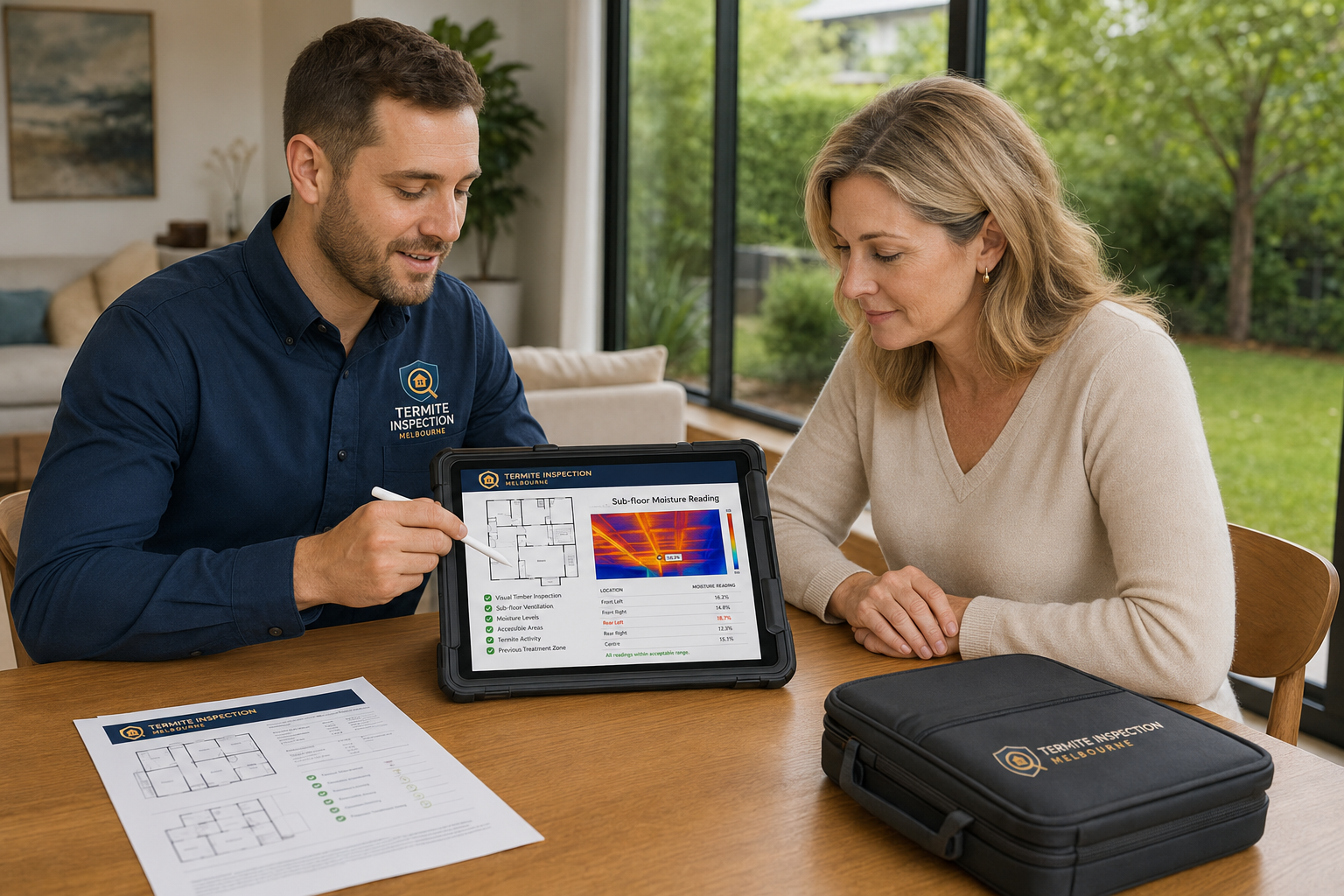
School Facility Planning — Need a holiday treatment or campus IPM plan? Request a written scope this Wednesday and ask whether your site qualifies for the current barrier-treatment or thermal-scan promotion — terms confirmed before booking · Call 0466 929 533
Serving Melbourne from Clyde North Same-Day Options Subject to Availability
Call 0466 929 533
☰ Explore Services & Menu
School and educational facility pest control service in Melbourne
Site-specific IPM • holiday scheduling • documented safety controls

School & Educational Facility Pest Control Services Melbourne

Protect students, staff, learning spaces, food areas and campus buildings with a practical school Integrated Pest Management plan designed around evidence, prevention, controlled treatment and accountable reporting.

TIM's Pest Control supports primary schools, secondary colleges, kindergartens, childcare services, training centres and university facilities across Greater Melbourne. Every proposal defines the inspected zones, target pests, access conditions, holiday or after-hours window, product controls, monitoring schedule, corrective actions and limitations before work begins.

IPM plan tailored to the campus
Holiday and low-occupancy options
Product and re-entry documentation
Private booking record and email confirmation
Evidence FirstInspection before method selection
IPM PlanningPrevention, monitoring and thresholds
Controlled AccessPreparation and re-entry documented
Campus RecordsFindings, actions and limitations
Melbourne CoverageSingle-site and portfolio scopes
The practical answer for school leaders

What Should a School Pest-Control Program Include?

A school program should identify the campus zones and priority pests, inspect before selecting a method, monitor activity, set action thresholds, reduce food, water and entry opportunities, use targeted controls when justified, document every application and review results. This is Integrated Pest Management, or IPM. It replaces the habit of applying the same broad spray on a calendar whether evidence exists or not.

For principals, business managers, facility teams and early-learning directors, the value of an IPM plan is operational clarity. The plan says who reports a sighting, which areas are urgent, who can approve work, when technicians may enter, how sensitive occupants are considered, what cleaning or repairs the school owns, what the pest contractor records and how recurring activity triggers a review.

Victorian school chemical-management guidance places responsibility on the principal or delegate to identify, assess, control and monitor chemical risks. It also notes that some pesticide work, including termiticide work, is best left to licensed pest-control technicians. Our role is to provide the proposed method, label-based controls, current Safety Data Sheets where relevant, application records and limitations so the school can make an informed decision.

Urgent campus issue? Keep students and staff away from the affected area where necessary, do not disturb a suspected wasp nest or active termite evidence, and call 0466 929 533 with the campus address, exact location, evidence and authorised contact. Same-day attendance is subject to route, access, technician availability and safety.
Educational facility pest management planning for a Melbourne school
Your school IPM plan

An 8-Part Integrated Pest Management Plan for Educational Facilities

Each school receives a site-specific scope. The framework below shows how inspection, prevention, monitoring, treatment and review fit together without pretending that one spray can manage every campus.

1

Campus Register

List buildings, rooms, external learning zones, canteens, stores, roof spaces, subfloors, ovals, waste compounds and restricted areas. Record operating hours, access contacts, alarms, keys, inductions, vulnerable occupants and any building works that affect attendance.

2

Pest & Risk Baseline

Record confirmed pests, signs, historic hotspots, seasonal patterns, food and water sources, entry points and inaccessible zones. Separate an isolated sighting from established activity and identify health, food, sting, electrical, structural or operational consequences.

3

Prevention Duties

Assign sanitation, waste, stock rotation, vegetation, drainage, door-seal, service-penetration, roof and subfloor actions to the school or relevant contractor. Each action needs a responsible person, priority and review date so it does not vanish after the service report.

4

Monitoring Map

Place and identify suitable monitors or secure devices according to pest pathways and label requirements. Device numbers, locations and conditions remain traceable. A map helps staff report the correct room or station instead of using vague descriptions such as “near the classrooms.”

5

Action Thresholds

Define when observation becomes action. One ant near an external bin, repeated cockroach captures in a canteen, fresh rodent droppings in food storage and a wasp nest beside a playground do not carry the same urgency or control pathway.

6

Targeted Control

Choose the least disruptive effective method suitable for the confirmed pest and site. Options may include proofing, trapping, baiting, harbourage removal, sanitation, localised application or specialist termite work. Every pesticide use follows the approved label and site controls.

7

Communication & Records

Document preparation, treated areas, product details, method, precautions, re-entry, findings, photographs, limitations and next actions. The school decides how relevant staff, cleaners, caterers, families or building managers are notified under its policies.

8

Trend Review

Compare results across visits. Repeated activity should trigger a source review, not automatic repetition of the same treatment. Update the campus plan after renovations, new portables, drainage changes, food-service changes or significant pest events.

What the IPM document can contain

Campus and zone register, pest priorities, site map, monitoring-device register, inspection frequency, escalation rules, authorised contacts, service windows, sensitive-area controls, approved methods, product and SDS register references, corrective-action log, application records, response targets, exclusions, emergency contacts and review dates. The final document is scaled to the commissioned scope.

Module 1

Why Pest Management Matters in Schools and Early Learning

Educational facilities combine high occupancy, food, water, stored materials, changing timetables and sensitive users. Good pest management protects people and buildings while avoiding unnecessary disruption.

Classrooms & Learning Areas

Food crumbs, art materials, bags, lockers, soft furnishings and service penetrations can support ants, cockroaches, rodents, silverfish and stored-product insects. Inspection distinguishes an occasional visitor from a harbourage or shared-building pathway. Staff reports should include the room number, time, evidence and exact location.

View general pest control

Canteens & Food Technology

Delivery doors, dry stores, refrigerators, grease, drains, bins, voids and after-hours cleaning create connected pest pathways. The plan coordinates pest findings with sanitation and maintenance without claiming that a pest visit certifies the school's complete food-safety system.

View food-premises pest control

Rodents & Electrical Risk

Rodents may travel through roof voids, subfloors, drainage, landscaping, stores and service penetrations. Fresh droppings, gnawing, nesting, odour and device activity are mapped. Suspected electrical damage is isolated and referred to an appropriately qualified electrician.

View rodent control
!

Wasps, Bees & Sting Hazards

Playgrounds, ovals, roof eaves, retaining walls and garden edges can place flight paths close to students. The response considers species, nest location, allergies, pedestrian control and treatment timing. Bee issues may require a different relocation or specialist pathway.

View wasp and bee service

Mosquitoes & Standing Water

Blocked gutters, containers, rainwater systems, drains and low ground can create breeding conditions. Victorian school guidance requires regular grounds inspection for stagnant water or unsealed water sources and reasonable steps to control breeding conditions. Source reduction remains central.

View mosquito control

Termites & Timber Pests

Older classrooms, portables, subfloors, garden timbers, stored materials and concealed service entries may create termite or borer risk. Visible damage does not establish activity or structural adequacy. Inspection records accessible evidence, conducive conditions and limitations.

View termite inspections

The school should not wait for a complaint to define every high-risk zone. A baseline walk-through can reveal unsealed doors, damaged vents, leaking taps, inaccessible stores, overflowing waste, vegetation contact and standing water before those conditions support recurring activity. The IPM register then turns observations into assigned maintenance rather than leaving them buried in an invoice.

Module 2

Child-Safe Decision Making Without Unsafe “Non-Toxic” Claims

Prevention and targeted methods come first

“Child-safe” should describe a controlled process, not an unsupported promise that a pesticide has no risk. The process begins by confirming the pest, affected area, likely exposure routes and non-chemical controls. Cleaning, waste management, food storage, moisture correction, exclusion, habitat reduction and monitoring can often reduce pressure or narrow the area requiring treatment.

If treatment is justified, the proposed product must be registered for the intended use and applied according to its APVMA-approved label. Product choice considers the pest, room function, age group, ventilation, food, toys, bedding, animals, aquariums and any sensitivity information the school chooses to disclose. Baits, traps, dusts, gels and sprays have different placement, access and follow-up requirements; no method is automatically suitable for every room.

Preparation, isolation and re-entry

The service plan states what must be removed, covered, cleaned or secured, which area must remain vacant, how long controls apply, whether ventilation is required and who is authorised to reopen the area. School policy may set stricter controls than the product label. Holiday timing reduces contact and disruption but does not replace the label, SDS, risk assessment or a site-specific re-entry decision.

Safety Data Sheets explain product hazards, handling, storage and emergency information. WorkSafe Victoria requires employers using or storing hazardous substances to obtain current SDS documents and make them accessible to workers, contractors and emergency services. We can provide relevant product documentation for the approved scope; the school manages its own chemical register and internal consultation requirements.

Important: disclose asthma, allergy, pregnancy, medical, animal, aquarium, food, ventilation or special-access considerations before the proposal is approved. We will not describe every product as organic, harmless, odourless or exposure-free.
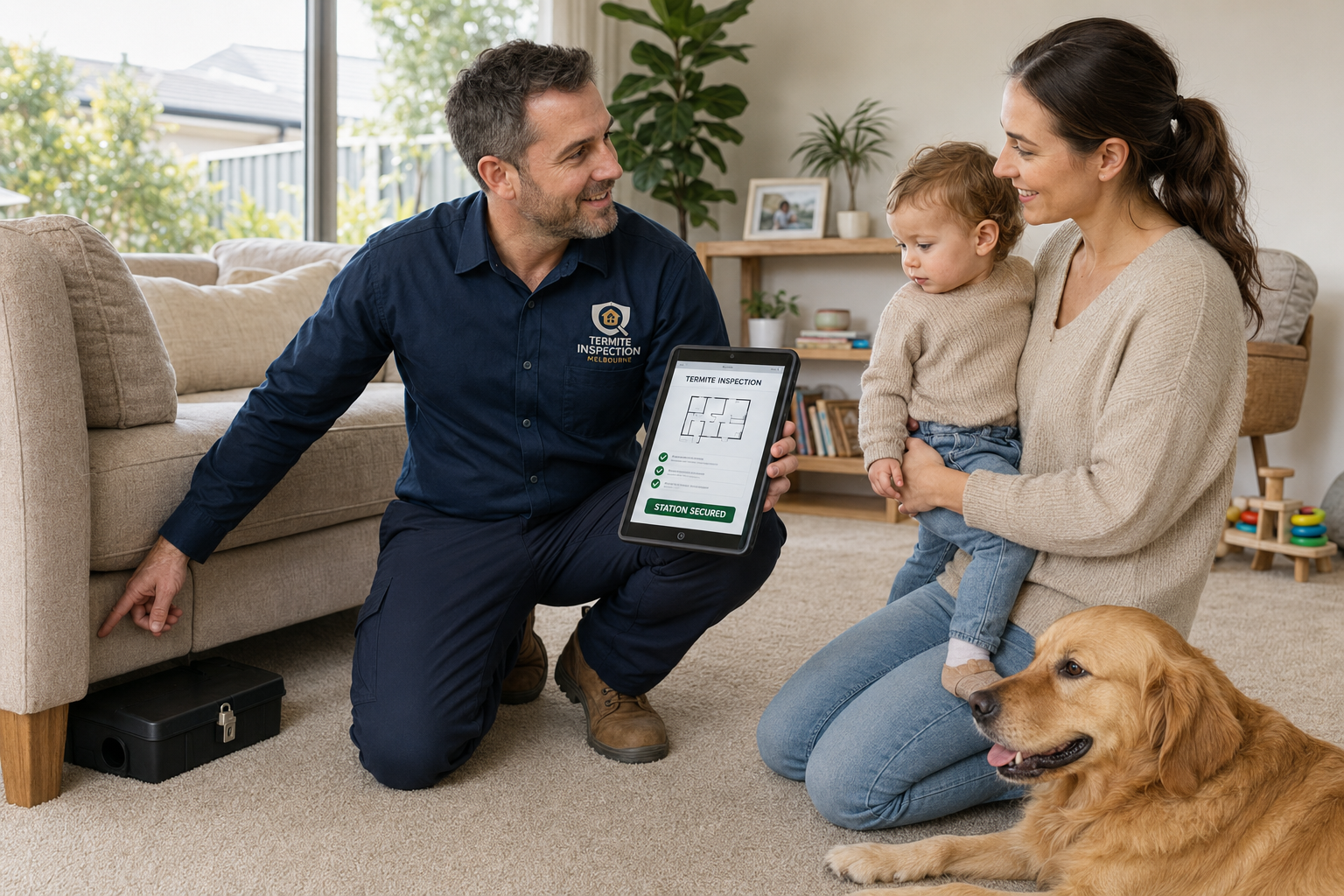
Careful family and child-aware pest-control planning for a Melbourne school
After-hours and school-holiday pest-control scheduling in Melbourne
Module 3

School Holiday, Weekend and Student-Free-Day Scheduling

Plan around the campus, not only the calendar

Term breaks can provide better access to classrooms, canteens, roof voids, subfloors and external areas, but schools also schedule cleaners, maintenance teams, capital works, holiday programs and community users during those periods. A useful booking therefore identifies the exact buildings and zones, occupancy, alarm procedure, keys, escorts, parking, contractor induction, asbestos-register access where relevant and the person authorised to accept completion.

Intensive work is normally planned for a window that allows preparation before attendance and sufficient time for label-directed drying, ventilation or re-entry controls before occupants return. The school must not assume that a treatment completed on the final holiday afternoon will automatically be suitable for immediate reopening. The confirmed product and site plan control the sequence.

Urgent issues during term

Some risks cannot wait until the next holiday. A wasp nest beside a playground, fresh rodent activity in food storage, a pest associated with an allergic response, suspected contaminated material or active termites may require prompt assessment and area control. The initial response can include keeping people away, protecting food, preserving evidence, arranging inspection and choosing a low-occupancy attendance window.

Where necessary, Victorian guidance recognises that pesticide use may occur during school hours to mitigate human-health risks, including certain mosquito situations. That does not make daytime application routine. The school and pest controller must assess the specific risk, product directions, isolation, communication and access requirements.

  • Holiday, weekend and early-morning options subject to availability
  • Building-by-building access and alarm instructions
  • Preparation checklist issued before attendance
  • Re-entry and reopening authority documented
  • Completion record linked to the campus reference
Module 4

Termite Protection for Portables, Subfloors and Campus Timber

Older and newer buildings can both have concealed risk

Historic classrooms may contain suspended timber floors, original roof structures, wall linings and subfloors altered by decades of services. Modern campuses may use modular or portable buildings, slab penetrations, landscaping close to walls and concealed construction joints. Neither age nor appearance proves a building is clear. The inspection follows accessible evidence and records every limitation.

Conducive conditions can include damp subfloors, leaking plumbing, blocked drainage, poor ventilation, soil or garden contact, stored timber, damaged termite systems and inaccessible perimeter edges. Mud leads, hollow-sounding timber, moisture anomalies, damaged timber, borer holes and frass are documented. Staff should avoid breaking open suspected termite workings or applying household insecticide because disturbance can reduce the evidence needed to determine an appropriate strategy.

Inspection, diagnosis and responsibility

Thermal imaging, moisture measurement, sounding and suitable radar screening can support professional judgement. They do not see through every wall and cannot guarantee that a concealed space is pest-free. Air conditioning, sunlight, insulation, plumbing, electrical equipment, surface finishes and access influence results. Uncertain findings are reported as limitations or areas requiring monitoring or authorised access.

A pest technician can identify timber-pest evidence and recommend management options. Structural adequacy and repair design must be determined by an appropriately qualified building professional or engineer. Treatment may involve targeted colony management, baiting, localised application, soil treatment, physical or chemical barriers or reticulation depending on the confirmed pest, construction and access. Each item is separately scoped rather than implied by the inspection fee.

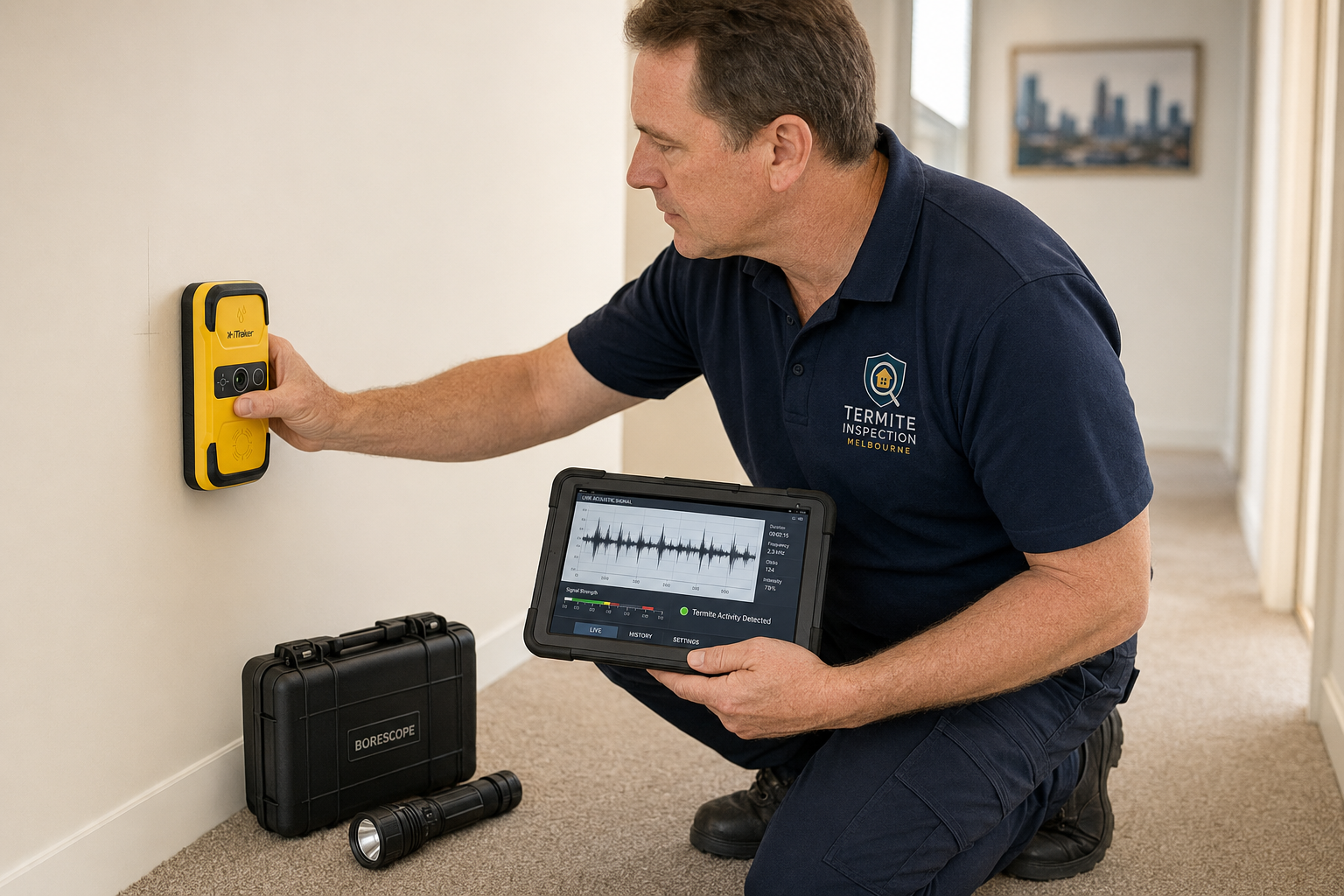
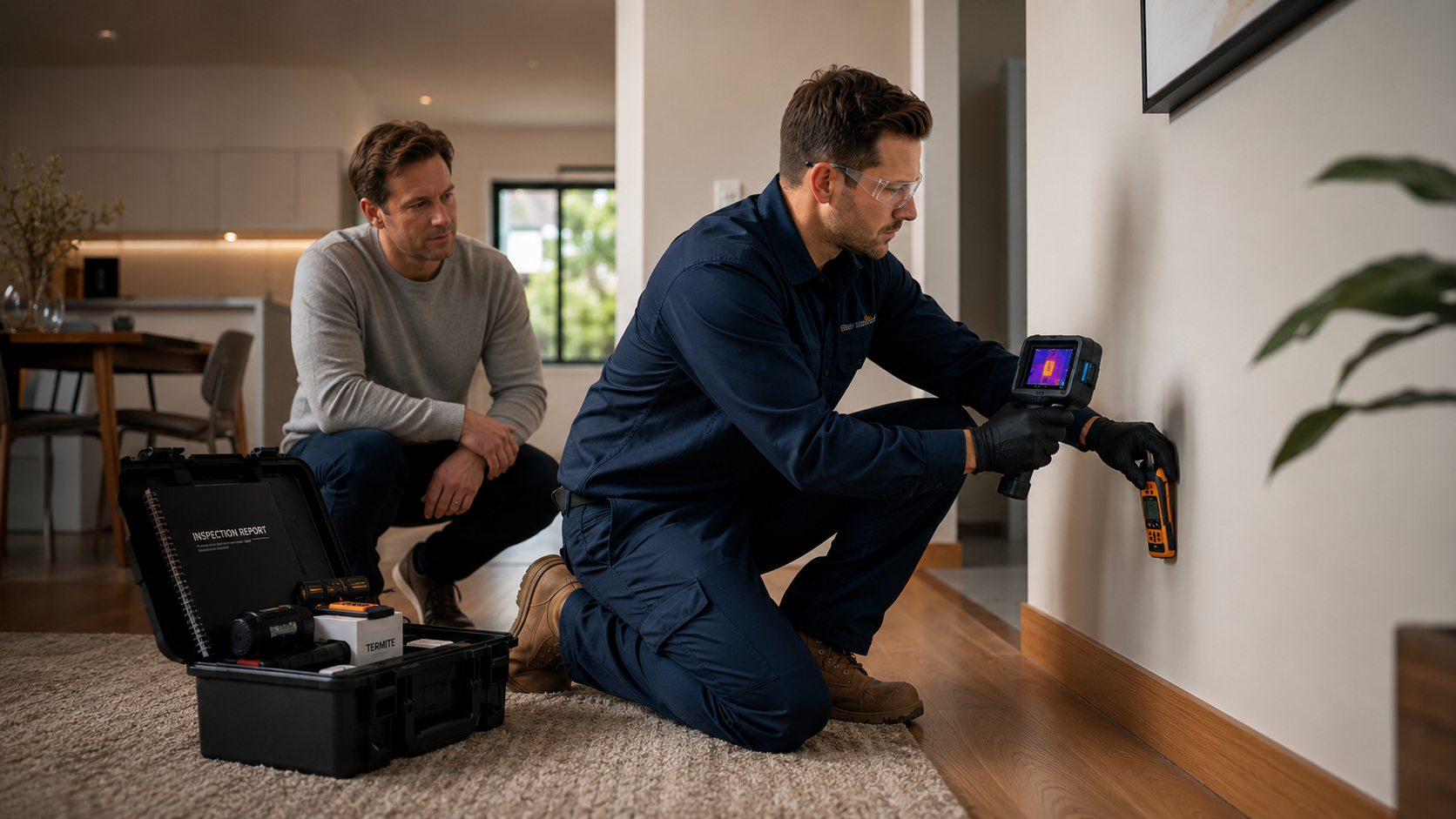
Professional termite inspection for Melbourne school buildings
Thermal imaging and non-destructive pest diagnostics in a school building
Module 5

FLIR Thermal Imaging and Non-Destructive Diagnostics

Useful evidence, clearly stated limits

Thermal cameras can identify temperature patterns that warrant closer investigation. Moisture meters help locate damp conditions associated with leaks, condensation or subfloor problems. Suitable movement-detection tools and sounding can support investigation of accessible wall or timber areas. These tools can reduce unnecessary opening, which is valuable around occupied classrooms, heritage finishes and areas containing services.

Instrument readings are interpreted with visual evidence, construction, pest biology, room conditions and site history. A coloured thermal image is not proof of termites, rodents, moisture source or structural damage by itself. The report identifies the scanned zone, relevant conditions, observed pattern and any recommended confirmation step.

When diagnostic tools add value

Diagnostics may help prioritise further access after a moisture event, compare suspect and surrounding areas, document a baseline, investigate concealed activity or guide a more targeted termite assessment. They may be inappropriate where surface conditions, access or environmental interference make interpretation unreliable. The technician decides whether a tool is useful for the actual scope.

A promotional thermal scan, where offered, is subject to written eligibility, the nominated area and suitable site conditions. It is not a whole-campus certification or a promise that all concealed spaces were scanned. This limitation appears in the proposal so school decision-makers understand exactly what is included.

Module 6

Canteens, Ovals, Playgrounds and High-Risk Pest Zones

Cockroaches, ants and stored-product insects

Canteens and food-technology rooms require inspection of deliveries, dry storage, refrigerators, preparation benches, drains, grease, bins, wall-floor junctions and equipment voids. German cockroaches often require detailed inspection, monitoring and bait placement rather than a superficial perimeter spray. Ant trails are traced toward food, water and entry points. Stored-product insects require identification and stock review so the affected material is not spread.

Rodents across buildings and grounds

Rodent programs map roof voids, subfloors, bin areas, garden edges, external stores, drains, door gaps and utility penetrations. Devices must be selected and secured for the environment, identified on the site register and protected from student access. Repeated activity at one point triggers review of the entry route, food source or neighbouring pressure. Proofing recommendations are separated from trapping or baiting so the school can allocate building work.

Wasps, bees, spiders and outdoor learning

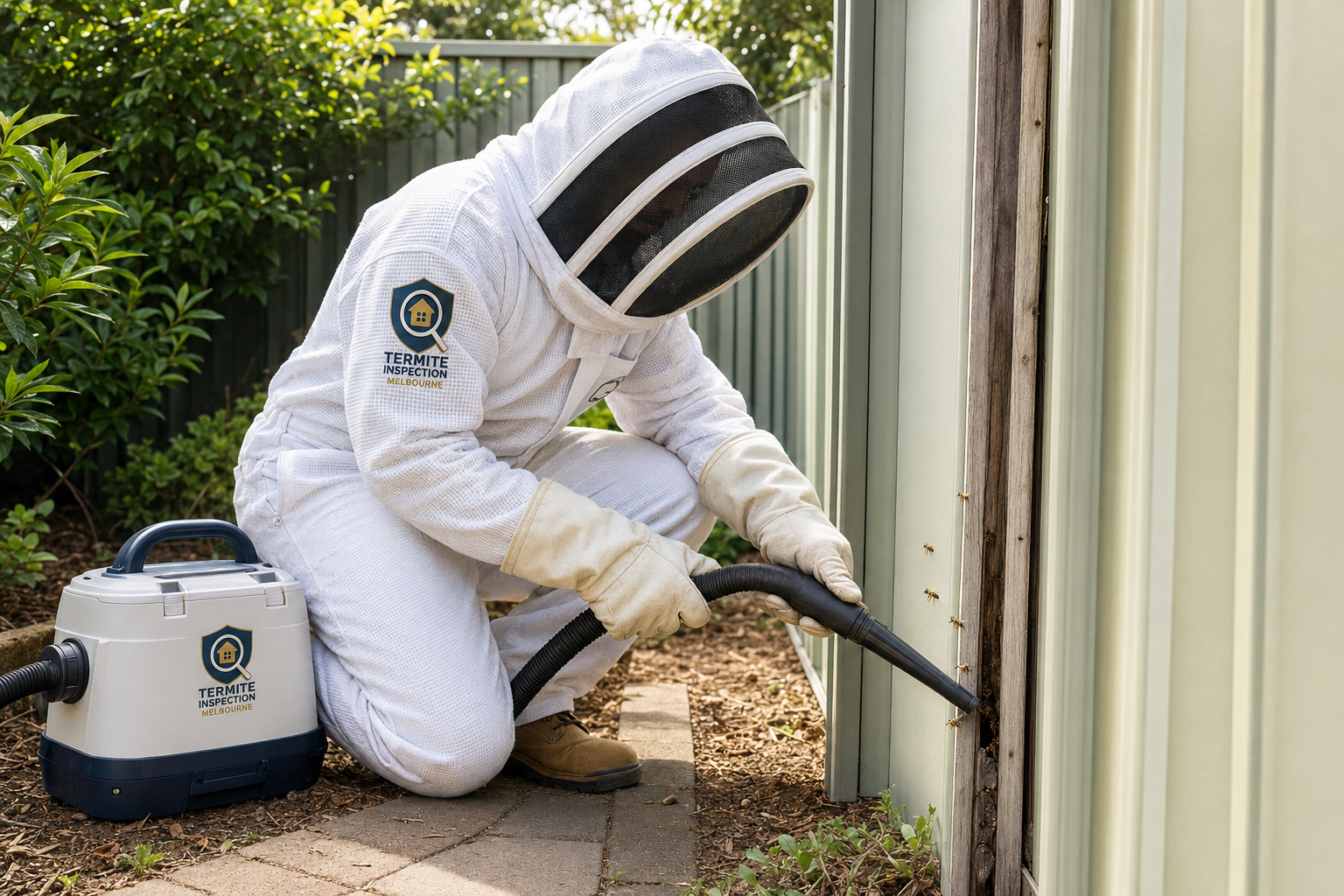
European wasps may nest in soil, walls, retaining structures or concealed cavities and can forage around food and waste. The affected path or play area should be kept clear while the nest is located. Victoria's Department of Health advises that nest treatment should use an insecticide registered for that purpose and notes that early morning or night treatment can be preferable when wasps are less active. Bees and native insects may require a different lawful or relocation pathway.

Spiders, mosquitoes and other insects are influenced by webbing, lighting, vegetation, water, harbourage and building gaps. The plan identifies whether treatment, cleaning, mowing, drainage, screening or maintenance offers the most durable control. The goal is not to promise an insect-free oval forever; it is to reduce hazards and create a clear response when activity crosses the agreed threshold.

Wasp and outdoor pest assessment near a Melbourne school playground
School pest-control compliance report and IPM records
Module 7

Compliance Reporting, SDS and Audit-Ready Records

Records that explain what happened

Victorian pest-control operators must keep prescribed records for pesticide applications. Depending on the work, those records include product trade name and batch number, precautions and re-entry period, application date and time, treatment location, target pest, application method, quantity and rate, relevant outdoor weather, operator or supervisor details and client details. A school service report can also include photographs, device activity, inaccessible areas and corrective actions.

Clear records support the school's own chemical management, OHS, contractor and facility processes, but they do not transfer those responsibilities to the pest contractor. The school or governing body decides its chemical register, staff consultation, parent communication, procurement approval, emergency plan and record-retention pathway. Our proposal identifies which documents are supplied and which internal decisions remain with the school.

Credentials checked for the proposed work

Schools can request current pest-control licensing, insurance, Working with Children Check evidence where required, police checks, inductions and specialist termite qualifications for the personnel proposed. A website statement such as “WWCC certified” or “$20 million insured” should not replace current evidence. The relevant card, expiry, policy certificate, exclusions and work category should be confirmed before access.

Working with Children Check requirements can depend on the role, supervision and access arrangement. The school remains responsible for its contractor-access requirements. Where the nominated technician or method does not meet a required condition, the issue should be resolved before attendance rather than hidden behind a generic trust badge.

  • Site, zone and asset identification
  • Pest evidence, monitors and trend data
  • Product, method, precautions and re-entry
  • Photographs, limitations and corrective actions
  • Licence, insurance and personnel evidence on request
  • Next service and program review date
Turning the plan into campus practice

School IPM Responsibilities, Frequencies and Escalation

A written plan works only when people know what to report, which actions they own and when the pest contractor must return. The following structure can be adapted to the school's buildings, governance and risk profile.

Everyday Staff Reporting

Teachers, administration, cleaning and canteen staff do not need to identify every species. They should record what was seen, exact location, time, quantity, relevant food or water, signs such as droppings or damage, and a photograph where safe. A central contact prevents duplicate calls and protects privacy. Staff should not move monitors, disturb nests, break termite workings or apply an unapproved product. The school decides which observations require immediate room isolation and which can wait for routine review.

Routine Facility Checks

The school's facility or maintenance process can check door seals, screens, utility penetrations, roof and subfloor access, leaks, gutters, drains, stagnant water, bins, vegetation contact and stored materials. Frequency reflects risk: food and waste areas may need more frequent observation than a dry archive; mosquito breeding checks rise after rain; rodent pressure may change during building works or nearby earth disturbance. The IPM log should retain both the defect and the person assigned to correct it.

Scheduled Pest Inspections

Professional visits review monitoring points, new sightings, previous actions, accessible pest evidence and changes to the site. The schedule might be monthly, bi-monthly, quarterly, seasonal or event-driven, but frequency is not chosen by marketing convenience. It is based on food activity, building condition, pest history, surrounding land, occupancy and the school's tolerance for risk. Each visit should show what changed since the prior report and why the next interval remains suitable.

Urgent Escalation

Fresh rodent evidence in food storage, an aggressive nest near student movement, suspected contamination, widespread cockroach activity, evidence linked to illness or allergy, active termites, unsafe timber or a pest inside sensitive equipment may require urgent triage. The school controls immediate access and follows its emergency and health procedures. The pest contractor confirms what can be assessed, whether another professional is required and what treatment or containment can be authorised safely.

Corrective-Action Ownership

A pest report should separate pest work from cleaning, building, plumbing, electrical, landscaping, waste or landlord responsibilities. “Seal gap” is not complete unless the location, priority and responsible party are clear. Where the contractor cannot confirm a construction detail or structural consequence, the action is referred to the appropriate trade or professional. The next pest visit checks whether the condition changed and whether activity responded.

Annual Program Review

At least once during the agreed contract cycle, review pest trends, emergency calls, recurring zones, device usefulness, chemical applications, unresolved defects, holiday scheduling and response performance. Remove unnecessary monitors, add coverage where building use changed and update contacts, access instructions and campus maps. A strong review can reduce repetitive treatment, expose a maintenance pattern and give the school a defensible plan for the next budget or procurement period.

Information that improves the first school quote

Provide the institution name, campus address, facility type, approximate building count or floor area, operating and holiday dates, affected zones, known pest evidence, previous treatment, food facilities, early-learning or special-needs areas, roof or subfloor access, current devices, contractor induction requirements, desired reporting format and the authorised contact. Complete details reduce follow-up calls and help us prepare the right inspection scope.

A practical plan for every campus zone

How the School IPM Plan Changes by Area and Pest Pressure

A campus is not one treatment area. Each zone has different occupants, access, food, moisture, construction and acceptable control methods. The inspection converts those differences into a usable site plan.

Classrooms, Libraries and Administration

These areas often contain bags, paper, cardboard, food crumbs, soft furnishings, electronics and concealed service gaps. The first task is to confirm whether a sighting is isolated or connected to a wall void, roof space, neighbouring room or delivery pathway. Monitors can be positioned away from student handling and numbered on the site register. Cleaning and storage actions are specific: remove food from drawers, rotate long-stored materials, reduce cardboard and report water damage. If treatment is needed, the scope identifies the room, placement, preparation, access restriction and review point. It does not treat every classroom merely because one insect was found elsewhere.

Canteens, Kitchens and Food Stores

Food areas receive a higher observation priority because pests can move through deliveries, dry stock, refrigerators, drains, grease, bins and equipment voids. Inspection reviews stock rotation, damaged packaging, spill access, cleaning edges, door seals and overnight harbourage. Cockroach or rodent evidence in these zones may require prompt isolation of affected material and coordination with the school's food-safety process. Pest treatment alone does not certify food safety. The IPM report records pest evidence, accessible contributing conditions and the corrective actions assigned to cleaners, maintenance, suppliers or management. Follow-up checks confirm whether activity and the underlying conditions changed.

Early-Learning, First-Aid and Sensitive Rooms

Young children, bedding, floor play, toys, food, medicines, aquariums and disclosed sensitivities can materially change the service plan. The school identifies the room function and any additional internal controls before approval. Preparation may include removing or covering nominated items, controlling access, selecting a low-occupancy window and confirming who can reopen the room. Non-chemical actions and localised methods are considered before broader application. Product registration does not eliminate the need to follow the label, SDS, risk assessment and site instructions. The completion record clearly states what was treated, what was not treated and the applicable re-entry information.

Roof Voids, Subfloors and Plant Areas

Concealed building spaces can support rodents, birds, termites, wasps, spiders and moisture-related pests, but access can involve electrical, height, confined-space, asbestos or structural considerations outside routine pest work. The quote records available hatches, safe access, known services and any school permit or induction requirement. Technicians inspect only areas that are accessible and safe within the approved scope. Suspected electrical damage is referred to an electrician; structural concerns are referred to a suitable building professional or engineer. Findings from a roof or subfloor are mapped to the room or building below so maintenance teams receive a useful location rather than a vague note.

Playgrounds, Ovals and Outdoor Learning

Outdoor areas change with rainfall, vegetation, mowing, waste, irrigation, community use and neighbouring land. The plan maps stinging-insect flight paths, ant activity, rodent harbourage, spider webbing, standing water and pest access near high-use routes. An active wasp nest close to children requires different urgency from occasional foraging insects at a distant boundary. Staff should keep people away from the affected zone and avoid disturbing the nest while access is arranged. Mosquito prevention prioritises removal or management of breeding water. Landscaping, drainage and waste actions are assigned separately from pesticide work and checked again after seasonal or site changes.

Portables, Construction and Refurbishment

New portables, temporary fencing, excavations, stored materials and changed drainage can create pest pathways that did not exist when the annual plan was written. Before works, the school can record existing termite evidence, monitoring points, bait stations, barriers and vulnerable openings. Contractors should not move or cover identified devices without coordination. During construction, increased rodent or ant pressure may require additional observation around compounds, waste and service trenches. After works, the campus map, building register, access instructions and monitoring locations are updated. This prevents the IPM program from relying on an obsolete floor plan or losing a known risk beneath a new structure.

Waste, Deliveries and Community-Use Areas

Bin compounds, loading points, sports kitchens, halls and after-hours hire can connect school pest pressure with contractors and community users. The plan records collection frequency, wash-down drainage, damaged lids, spills, external lighting, door-open periods and food left after events. Responsibilities need to be explicit because a pest contractor cannot correct an overflowing bin schedule or unlock a hall after the nominated contact has left. Repeated evidence is reviewed against event dates, waste conditions and access logs. Where activity is shared with an adjoining tenancy or public area, the report states the limitation and recommends the coordination needed rather than promising control beyond the school boundary.

Procurement, Review and Service Continuity

A conversion-ready quote should still be precise enough for school approval. It identifies campuses, included buildings, target pests, visit frequency, response categories, normal hours, urgent attendance rules, approved contacts, reporting format, excluded work and GST. The school can also request current evidence relevant to the proposed technician and task. At mobilisation, the provider receives maps, keys, alarms, inductions, restricted areas and the existing pest history. At review, both parties compare service records, monitoring trends, emergency calls and outstanding building actions. If needs change, the scope is varied in writing so the program remains controlled and budget decisions are traceable.

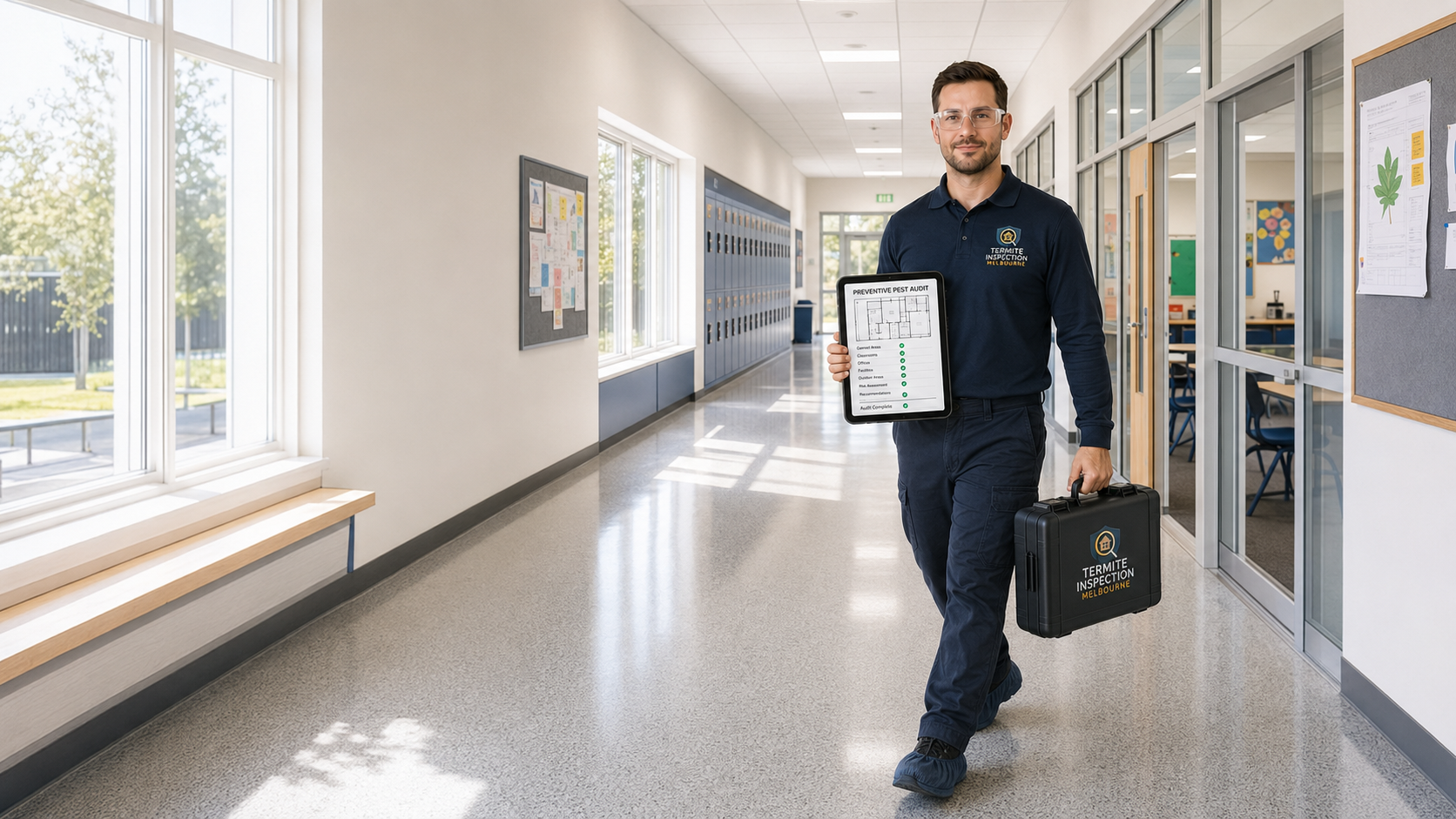
What happens after you request the IPM plan?

Your enquiry opens the main booking page with the school source and selected program already attached. Enter the school contact, campus address, facility type, pest concern, preferred timing and access notes. On submission, WordPress creates a private TIM Bookings record and reference before sending notification emails through the configured Brevo connection. The office can therefore recover the enquiry from WordPress even if an inbox notification is delayed or filtered. We then confirm the assessment scope and provide a written proposal; the form itself does not authorise pesticide application.

Transparent school scoping

School Pest-Control and IPM Service Options

Educational facilities receive a written quote based on campus size, zones, pest evidence, visit frequency, reporting, access and specialist work. We do not publish a residential bedroom price for a school.

Single Campus Assessment
Fixed Quote
One school, kindergarten or childcare site
  • Campus risk walk-through
  • Priority pest and zone register
  • Access and safety requirements
  • Written GST-inclusive proposal
Request Campus Quote
Holiday Treatment Scope
Custom Scope
Defined buildings and target pests
  • Preparation and access plan
  • Label-based treatment controls
  • Re-entry instructions
  • Completion documentation
Plan Holiday Service
Multi-Campus Program
Contract Quote
School groups and education portfolios
  • Staged campus mobilisation
  • Separate site maps and histories
  • Portfolio trend reporting
  • Agreed response and approval rules
Discuss Portfolio
Pricing note: final pricing is confirmed after the required campus information and, where needed, an inspection. Termite systems, major proofing, bird work, elevated access, contaminated-material removal and urgent out-of-hours attendance are separately stated unless included. Any barrier discount or thermal-scan promotion is subject to current availability, eligibility and the written proposal.
Compare the operating model

School Pest-Control Service Comparison

Compare evidence, planning and accountability—not only the first spray price.

Service modelSchool IPM planHoliday schedulingProduct and re-entry recordsCorrective actionsCredential verification
TIM's School IPM ServiceSite-specific zones, monitoring, thresholds and reviewPlanned around access and label controlsDefined in the approved scope and service recordAssigned and tracked by siteCurrent relevant evidence available on request
Residential General SprayUsually no campus planAppointment timing onlyMay provide a basic treatment recordOften limited building follow-upMust be checked for the school setting
DIY Hardware TreatmentNo independent inspection or monitoring programSchool controls all use and isolationSchool must retain label and SDS informationNo contractor action registerNot applicable
National AggregatorSystems may be available; local delivery variesDepends on local technician capacityCentral reporting may be availableEscalation detail depends on contractConfirm the nominated local personnel
Controlled campus workflow

From Pest Report to Closed Corrective Action

1

Report & Triage

The school records the exact location, evidence, time, affected people and immediate access risk. Urgent food, sting, structural or health concerns are escalated to the authorised contact.

2

Inspect & Scope

We confirm the pest where possible, inspect accessible pathways, identify contributing conditions and define treatment, monitoring, access, preparation and documentation.

3

Approve & Schedule

The school approves the written scope, price, service window and controls. Staff, cleaners, caterers or other contractors receive the instructions relevant to their responsibilities.

4

Treat & Record

The technician completes the authorised work, records evidence, treatment, product, limitations and actions, and confirms the applicable re-entry information.

5

Correct the Source

Door gaps, leaks, drainage, waste, food storage, vegetation, damaged screens or building access points are assigned to the appropriate school or maintenance owner.

6

Review the Trend

Monitoring and repeat reports are compared with the agreed threshold. Persistent activity prompts a source, scope or frequency review before the case is closed.

7

Update the Plan

Renovations, new portables, altered kitchens, construction, drainage changes and significant pest events are added to the campus IPM register.

8

Audit & Renew

The school and service provider review records, outstanding actions, seasonal patterns, response performance and the scope required for the next period.

Greater Melbourne campus coverage

Educational Facility Pest Management Across Melbourne

Building age, vegetation, drainage, food service, neighbouring land and campus use shape pest pressure more reliably than postcode alone.

South East Melbourne & Clyde North

Schools around Clyde North, Cranbourne, Casey, Cardinia, Dandenong and Frankston often combine new modular buildings, landscaped drainage corridors, construction interfaces and rapidly changing food and waste loads. IPM planning connects classroom blocks, canteens, early-learning rooms, ovals and external stores while preserving a separate record for each campus zone.

Eastern Melbourne

Established eastern campuses frequently sit among mature trees and older timber, brick or subfloor construction. Leaf litter, damp shaded ground, roof access, possum or bird activity and ageing service penetrations can influence termites, rodents, ants and spiders. Monitoring frequency follows the actual building and grounds evidence.

Northern Melbourne

Northern campuses range from compact inner-suburban schools to large growth-corridor colleges. Shared boundaries, food areas, drainage, portable classrooms and building works can create linked pest pathways. The campus map identifies who controls each boundary, tenancy or adjoining property action.

Western Melbourne

Grassland edges, logistics corridors, industrial neighbours and fast-growing school precincts can increase seasonal rodents, spiders, ants, mosquitoes and wasps. Programs emphasise perimeter evidence, door and drain defects, waste compounds, external storage and safe access around student movement.

Melbourne CBD & Inner Suburbs

Multi-storey education buildings may share basements, risers, waste rooms and loading access with other occupants. Discreet scheduling, exact tenancy boundaries and coordination with landlords, cleaners, security and facility teams are essential. Reports distinguish the inspected school area from common-property responsibilities.

Mornington Peninsula & Coastal Campuses

Coastal schools may experience seasonal visitation, salt exposure, dense vegetation, moisture, standing water and bird activity. IPM plans account for weather, gutters, rainwater systems, external learning spaces and holiday demand. Urgent attendance remains subject to route, access and safety confirmation.

Two schools in the same suburb can need different monitoring and service frequencies. One may have mature trees and a damp subfloor; another may have new portables beside construction and open grassland. The IPM plan therefore follows site evidence, not a generic Melbourne spray schedule.

Local TIM's Pest Control team serving Melbourne schools
Module 8

Why Melbourne Education Teams Choose a Defined Local Service

One accountable pathway from enquiry to record

Our school page and booking workflow are designed to preserve the lead even if an email notification is delayed. A completed booking is first stored privately under TIM Bookings in WordPress, assigned a reference, then sent to the business and customer through WP Mail SMTP and Brevo. This means the office has a recoverable record independent of an inbox filter.

The consultation confirms school name, contact, address, facility type, requested service, appointment preference and access notes. The proposal then defines the work that can be approved. A general IPM assessment does not silently become termite treatment, roof access, bird proofing or a large exclusion project.

Evidence rather than inflated badges

Schools can ask for current licences, insurance, Working with Children Check or police-check evidence, SDS documents and specialist qualifications relevant to the proposed work. We avoid turning those requirements into permanent universal claims because documents, personnel and job categories can change. Verification against the actual technician and service protects the school.

Local routing from Clyde North supports Greater Melbourne attendance, but no website can guarantee same-day access before the campus, route and safety requirements are confirmed. Our commitment is to give the authorised school contact a clear response, a defined written scope and a record that accurately distinguishes findings, treatment, limitations and actions.

  • School-specific IPM plan available
  • Holiday and after-hours scheduling options
  • Targeted treatment under registered label directions
  • Termite and non-destructive diagnostic pathways
  • Private WordPress lead record plus email notification
  • Single-campus and multi-campus written scopes
Current primary guidance

School Chemical and Pest-Control Reference Points

Victorian Department of Education

The Chemical Management policy and procedures cover risk assessment, controls, safe work procedures, training, pesticide use and Safety Data Sheets in schools.

Open official chemical-management guidance

Victorian Department of Health

Victorian guidance covers pest-controller licensing, safe pesticide use and the application records pest-control operators must keep.

Open official pest-control guidance

WorkSafe Victoria

Safety Data Sheets communicate product hazards, safe use, storage and emergency information, and must be accessible where relevant workplace chemicals are used or stored.

Open official SDS guidance

APVMA

Use must follow the approved pesticide label. The label's directions, limitations and safety instructions apply to the exact product and use.

Open official label guidance

These links help schools review current requirements. This page provides general service information and is not legal, medical, engineering or regulatory advice.

School procurement and safety answers

School Pest Control Melbourne FAQs

What is included in a school Integrated Pest Management plan?

A school IPM plan defines the campus zones, priority pests, inspection frequency, monitoring points, reporting pathway, action thresholds, prevention responsibilities, treatment options, access controls and review dates. It combines sanitation, proofing, moisture correction, vegetation and waste management with targeted treatment only where evidence and risk justify it. The written scope states inclusions, exclusions, response targets and who is authorised to approve additional work.

Can school pest control be scheduled during holidays or outside class hours?

Yes, subject to technician availability, campus access, alarms, lighting, lone-worker controls and the product label. Holiday, weekend, student-free-day and early-morning windows can reduce disruption, but the school must still follow the documented preparation, isolation, ventilation and re-entry instructions. Urgent hazards may require an immediate risk response rather than waiting for a preferred holiday window.

Are school pest treatments safe around children and staff?

No pesticide should be described as universally harmless. We first consider inspection, exclusion, cleaning, moisture correction, habitat reduction and monitoring. If treatment is needed, the proposed product and method must suit the target pest and site, follow the APVMA-approved label and use documented access and re-entry controls. The school can request current Safety Data Sheets and disclose asthma, allergy, pregnancy, animal, aquarium, food or ventilation considerations before approval.

Are your school pest technicians WWCC verified?

Where the school, childcare provider or access arrangement requires a Working with Children Check, the nominated personnel and evidence should be confirmed before attendance. A website statement is not a substitute for checking the current card, role, expiry and any site-specific contractor requirements. Police checks, licences, inductions, insurance and specialist timber-pest credentials can also be requested for the proposed scope.

How much does school pest control cost in Melbourne?

School pricing is site-specific because campus size, buildings, pest history, monitoring devices, service frequency, access, reporting, holiday work and specialist treatments differ. A written proposal confirms GST, recurring visits, urgent callout rules, exclusions and separately priced work. A small single-site assessment, a recurring IPM plan and a multi-campus contract are therefore quoted as different scopes rather than forced into a residential bedroom price.

How do you manage rodents around canteens and food areas?

The IPM plan maps food receipt, storage, preparation, dining, waste, drainage, door gaps and service penetrations. Secure monitoring and control devices are positioned according to site risk and label requirements, while cleaning, stock rotation, waste handling and proofing actions are assigned to the responsible party. Activity trends and corrective actions are recorded so repeated captures trigger source investigation rather than endless bait replacement.

How are European wasp nests near playgrounds or ovals handled?

The immediate area should be kept clear and the suspected flight path should not be blocked or disturbed. We confirm the nest location, access, species, nearby students and staff, allergies, traffic and treatment window before proposing control. Where pesticide treatment is appropriate, it must be registered for that use and applied under label directions. Emergency access restrictions and follow-up expectations are documented.

Do you inspect school buildings for termites?

Yes. An approved termite or timber-pest scope may include accessible interiors, roof voids, subfloors, external perimeters, nearby timbers, moisture and conducive conditions. Thermal imaging, moisture meters and other diagnostic tools may support the inspection but do not prove a concealed area is pest-free. Suspected structural damage must be assessed by an appropriately qualified building professional or engineer.

What compliance records can the school receive?

Depending on the contract, records can include service date, technician, areas inspected, pest evidence, monitoring results, treatment locations, product details, batch information, method, precautions, re-entry requirements, photographs, limitations, corrective actions and next review. Current Safety Data Sheets and contractor documents can be supplied where relevant. The school remains responsible for its own chemical register, OHS consultation, procurement and facility-management obligations.

Can one IPM plan cover multiple campuses?

Yes. A portfolio plan can use common service categories, escalation rules and report fields while keeping separate site maps, access notes, pest histories, monitoring data and corrective actions for each campus. Mobilisation is usually staged so higher-risk food, early-learning, boarding, heritage or known-infestation areas are baselined first.

Where is a school enquiry saved and who receives the email?

After the customer completes the secure booking form, the request is saved privately under TIM Bookings in the WordPress dashboard and assigned a reference before notification email is attempted. The business notification is routed to the configured admin recipient through WP Mail SMTP and Brevo, while the customer receives a confirmation at the email entered in the form. If an inbox message is delayed or filtered, the WordPress record remains available for the office to review. The school should keep the on-screen reference and check junk or quarantine folders before submitting the same request again.

Do you guarantee same-day attendance or complete eradication?

No blanket guarantee is made. Same-day triage or attendance depends on location, access authority, pest type, technician availability and safety. Outcomes also depend on species, infestation extent, adjoining properties, building defects, sanitation and preparation. The written proposal defines realistic response targets, treatment limits, follow-up criteria and responsibilities.

Plan before the next pest incident or holiday window

Request Your School IPM Assessment

School principals, business managers, facility coordinators and early-learning directors can call 0466 929 533 or continue to the secure booking page. We will confirm the campus, pest concern, access, preferred timing and information required for a written school pest-management proposal.

Same-day attendance, holiday availability, thermal imaging and promotional barrier discounts are subject to location, access, technician availability, suitability, eligibility and written scope. Submitting an enquiry does not authorise treatment or certify the campus as pest-free.