☀️ Solar Bird-Proofing — Eligible single-storey arrays from $595 incl. GST — measured perimeter, nesting status and access confirmed before work · Call 0466 929 533
Serving Melbourne from Clyde North Same-Day Options Subject to Availability
Call 0466 929 533
☰ Explore Services & Menu
Solar panel bird proofing and nesting prevention service on a Melbourne roof
Measured mesh • non-penetrating clips • documented scope

Solar Panel Bird Proofing & Nesting Prevention Services Melbourne

Stop pigeons and other birds using the sheltered space beneath solar arrays. TIM's Pest Control assesses the birds, nesting status, roof access and array perimeter before installing a purpose-fitted physical barrier around eligible residential and commercial systems.

From $595 incl. GST*Single & Double StoreyMelbourne MetroWritten Scope & Photos

*Starting prices apply only to eligible arrays with safe standard access. Final price depends on array perimeter, panel count and layout, roof height and pitch, nesting, contamination, electrical condition and access controls.

Fast solar proofing consultation

Tell us about the roof

Your details open the secure TIM booking page with solar bird proofing already selected.

Your enquiry is saved in WordPress before notification email. A submitted form requests an assessment; it does not authorise roof, electrical or wildlife work.

Nest Status CheckedActive birds, eggs and young considered
Non-Penetrating PlanNo routine drilling of panels or roof
Safe Access ReviewHeight, pitch, weather and edges assessed
Defined Hygiene ScopeDebris and contamination itemised
Saved EnquiryPrivate WordPress booking record
The direct answer

How Do You Stop Birds Nesting Under Solar Panels?

The durable answer is a correctly designed physical exclusion barrier fitted around the accessible perimeter of the solar array after the species, nesting status, debris and roof conditions have been checked. A fitted mesh skirt closes the sheltered gap beneath the panels while leaving the panels, roof drainage, ventilation and required service access intact. The barrier must be shaped around corners, rail ends, conduits, roof steps and irregular tiles; a loose straight strip tied to the frame is not the same service.

The order matters. First observe where birds enter and whether the nest appears active. Then assess the panel layout, edge clearance, roof surface, cable routes, gutter relationship, safe access and contaminated areas. Lawfully remove accessible inactive nesting material and debris if included, complete any specialist electrical or roof repair that is required, form and secure the mesh, inspect every corner and penetration, and provide completion photographs. If eggs, dependent young or protected native wildlife may be present, the exclusion timetable changes.

Solar panel bird proofing Melbourne customers often search after months of cooing, droppings and early-morning movement. The same visual symptoms can also involve starlings, mynas, sparrows, rodents or native birds. Identification is more than a label: it affects legal obligations, welfare decisions, mesh detail and whether exclusion can happen immediately. We do not seal a live animal into the array space to meet a rushed booking promise.

Safety first: do not lift panels, touch DC cabling, push wire beneath the array or climb onto a roof to investigate. Solar PV equipment can remain electrically hazardous in daylight, and roof falls are a serious risk. Send ground-level photos and arrange qualified assessment.
Professional bird mesh installation used to prevent pigeon nesting around solar panels
Pigeons gathering around an unprotected Melbourne rooftop solar array
Module 1

Why Solar Arrays Become Reliable Pigeon Nesting Sites

Shade, shelter and repeatable access

A rooftop array creates an artificial canopy. The panel surface sheds much of the direct sun and rain, while the framed gap below can shield birds from wind and some predators. Nearby ridges, parapets, television antennas, gutters and fences provide staging points. Once birds discover a quiet edge and repeatedly enter, twigs and loose material can accumulate across rails, tiles, cable paths and drainage routes.

Melbourne does not have one uniform bird-pressure profile. Inner-city buildings can have established feral pigeon flocks linked to food and roosting sites. Growth corridors may combine new arrays, open roof edges and changing food sources. Coastal and exposed western properties introduce stronger wind and salt considerations. Leafy eastern suburbs add tree cover and multi-level roof junctions. A quote based only on the number of panels ignores the perimeter, shape and access that determine the real installation.

Why repeated activity becomes a building-management issue

Birds can return to a successful roost or nesting position. Droppings may collect on glass, frames, tiles, gutters, paths and equipment below. Twigs can obstruct drainage or sit against cable protection. Feathers and dust may enter roof spaces at adjacent defects. Occupants may hear movement above bedrooms at dawn, while neighbours or tenants report staining and odour. The problem is therefore not limited to whether a pigeon is visible on a photograph.

Physical exclusion aims to remove access to the sheltered void. It does not claim to stop birds flying over the suburb, landing on every roof surface or using an untreated ledge. That distinction allows a meaningful scope: the quote identifies the array or arrays, perimeter, included corners and service zones. Where additional roosting occurs on parapets, gutters, signage or plant platforms, those locations are inspected and priced separately.

Identification and activity mapping

Ground observations can record entry edges, bird numbers, timing, loose twigs, droppings and likely flight paths. Roof access, where safe, confirms panel clearance, nests, cable routes and contamination. Customers can provide a short video from ground level rather than climbing. The technician separates historic material from current activity and checks whether a proposed barrier might trap an animal inside.

Pigeon nest removal solar panels Victoria searches often imply that every bird is an introduced pigeon. That is unsafe. Native birds are protected in Victoria, and eggs, dependent young, injured wildlife and non-target species require a different response. The written plan should identify uncertainty and state whether work can proceed, requires monitoring, waits for the nesting cycle, or needs formal wildlife advice.

Module 2

Nesting Debris, Electrical Risk, Drainage and Roof Damage

Fire language must be accurate

Dry twigs and feathers are combustible, but their presence does not prove that a particular array is about to catch fire. Solar system fires can have electrical causes unrelated to birds. The responsible approach is to document debris, avoid disturbing energised equipment, maintain access to isolators and connectors, and refer any damaged wiring, overheating signs, arcing marks, inverter alert or abnormal odour to a licensed electrician. A pest controller does not diagnose an electrical fault from a photo.

Solar DC conductors can remain energised while panels receive light. Energy Safe Victoria advises that damaged rooftop solar should be assessed by a registered electrical contractor and that routine system servicing involves checking wiring, components, fittings, corrosion and recorded inverter faults. Proofing work must not conceal a problem, compress a cable, obstruct an isolator or interfere with the equipment needed for safe maintenance.

Roof and drainage effects

Nesting material can collect at the lower panel edge and migrate toward valleys or gutters. Whether that creates a blockage depends on the layout and volume. Water must still move down the roof surface and reach the gutter after mesh is fitted. On tiled roofs, the barrier follows an uneven profile without levering tiles or closing designed drainage paths. On metal roofing, fixing and contact details must avoid damaging coatings or creating unintended penetrations.

Repeated bird traffic and debris can also complicate solar servicing. A technician may need safe access to panel clamps, cables or isolators. The proofing design should allow planned removal or controlled access without destroying the whole barrier. If another contractor alters the array later, the mesh perimeter should be inspected and reinstated under the relevant warranty or maintenance terms.

Contamination and occupant health

Heavy droppings and nesting material should not be treated as ordinary garden litter. Dust, feathers, mites and decomposed material can irritate occupants and workers. The risk depends on quantity, dryness, location and individual vulnerability. Work methods may include dampening where appropriate, controlled collection, disposable protective equipment, bagging and surface-compatible hygiene treatment. Extensive contamination, inaccessible cavities or vulnerable occupants may require specialist environmental cleaning.

Bird mites can move away from an abandoned nest and enter living areas through gaps. Treatment is most effective when it addresses the source, access pathway and affected rooms rather than applying an indiscriminate spray to the roof. The booking form should record bites, crawling mites, affected rooms, pets, children and any medical vulnerability so the scope can be planned accurately.

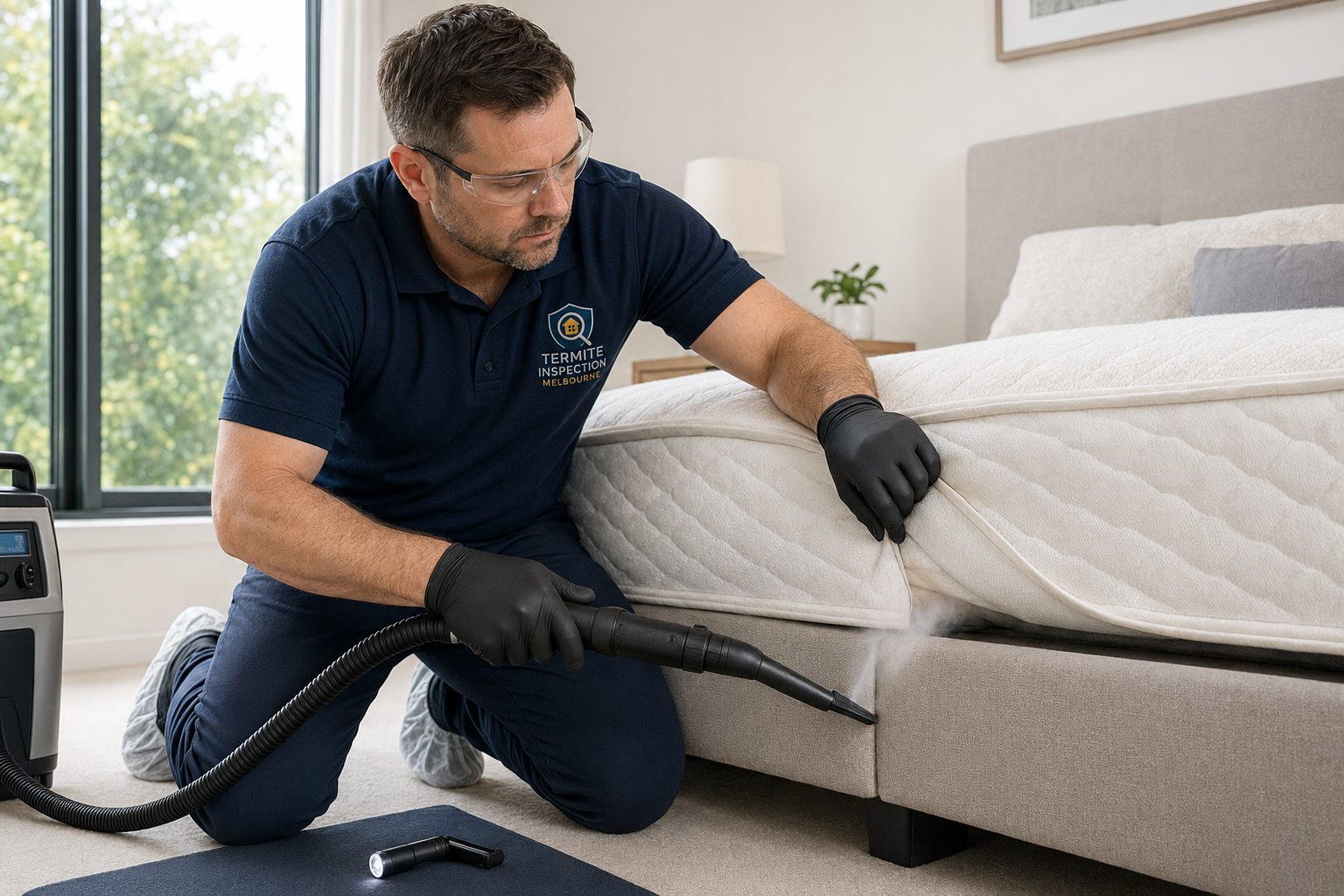
Bird nesting debris and mite treatment assessment near a solar array
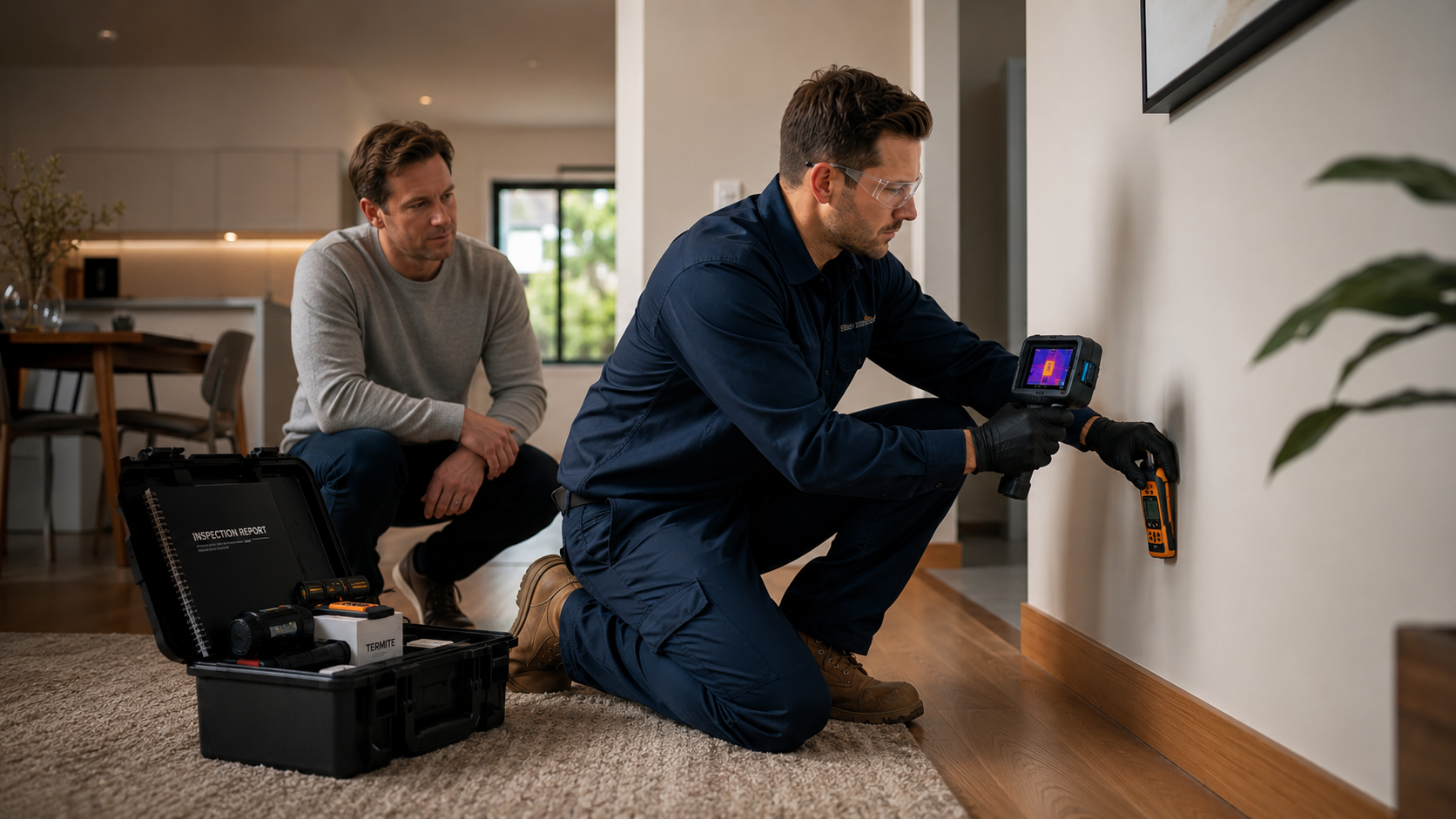
Thermal imaging used as a screening tool near rooftop solar panels
Module 3

Soiling, Partial Shade, Hot Spots and Solar Performance

Droppings can matter without inventing a universal percentage

Opaque bird droppings can shade part of a photovoltaic module. Research shows that localised soiling and partial shading can reduce output and contribute to temperature differences, but the size of the loss is not identical for every system. Cell layout, bypass diodes, string design, optimisers, orientation, time of day, contamination position and weather all influence the result. A website claim that every pigeon nest causes a fixed 30 per cent loss would be misleading.

Start with evidence that belongs to the actual property: inverter history, retailer or monitoring data, visible soiling patterns, photos and any fault message. Cleaning may improve output where soiling is the cause, but it will not repair a connector, cracked module, failed optimiser or damaged DC cable. If performance remains abnormal after suitable cleaning and exclusion, a licensed solar service provider should inspect the electrical system.

What thermal imaging can and cannot show

A thermal camera records surface-temperature patterns. Under suitable irradiance, load, angle and weather conditions, it may help flag a warmer cell area, connector zone or uneven surface for further investigation. It cannot by itself certify electrical safety, identify the precise internal defect or prove that birds caused the pattern. Reflections, wind, clouds, roof heat and viewing angle can make an image difficult to interpret.

TIM can offer thermal screening only when stated in the written quote and when conditions make it useful. The output is a screening observation, not a Certificate of Electrical Safety or a solar-performance guarantee. Any suspicious electrical pattern is referred to a licensed electrician. This boundary protects the customer from paying for a colourful image that is presented as more conclusive than it really is.

Cleaning without damaging the system

Panel cleaning needs a method appropriate to the manufacturer, glass condition, water quality, roof safety and temperature. Abrasive tools, harsh chemicals, high pressure and walking on panels can cause damage. A “power wash” promise is therefore removed from this page. If cleaning is included, the quote describes accessible panel surfaces, water access, accepted equipment, contamination limits and exclusions. Heavy guano may require a staged process rather than aggressive one-pass cleaning.

The performance objective is practical: remove avoidable shading where safely possible, prevent recurring nesting access, keep drainage and ventilation pathways open, and leave electrical diagnosis to the licensed trade. The customer receives a clearer maintenance baseline and photographs of the treated perimeter, without a fabricated savings forecast.

Module 4

Single-Storey, Double-Storey and Split-Level Installation Engineering

“Double story solar bird proofing cost” is not only a height surcharge. Safe access, array geometry and roof condition determine the work method.

Single-Storey Home

An eligible single-storey array may allow controlled ladder access and straightforward perimeter movement. We still assess roof pitch, brittle tiles, skylights, wet surfaces, overhead services, landscaping and how materials reach the work zone. A low roof is not automatically safe, and panel count does not equal perimeter length.

Double-Storey Home

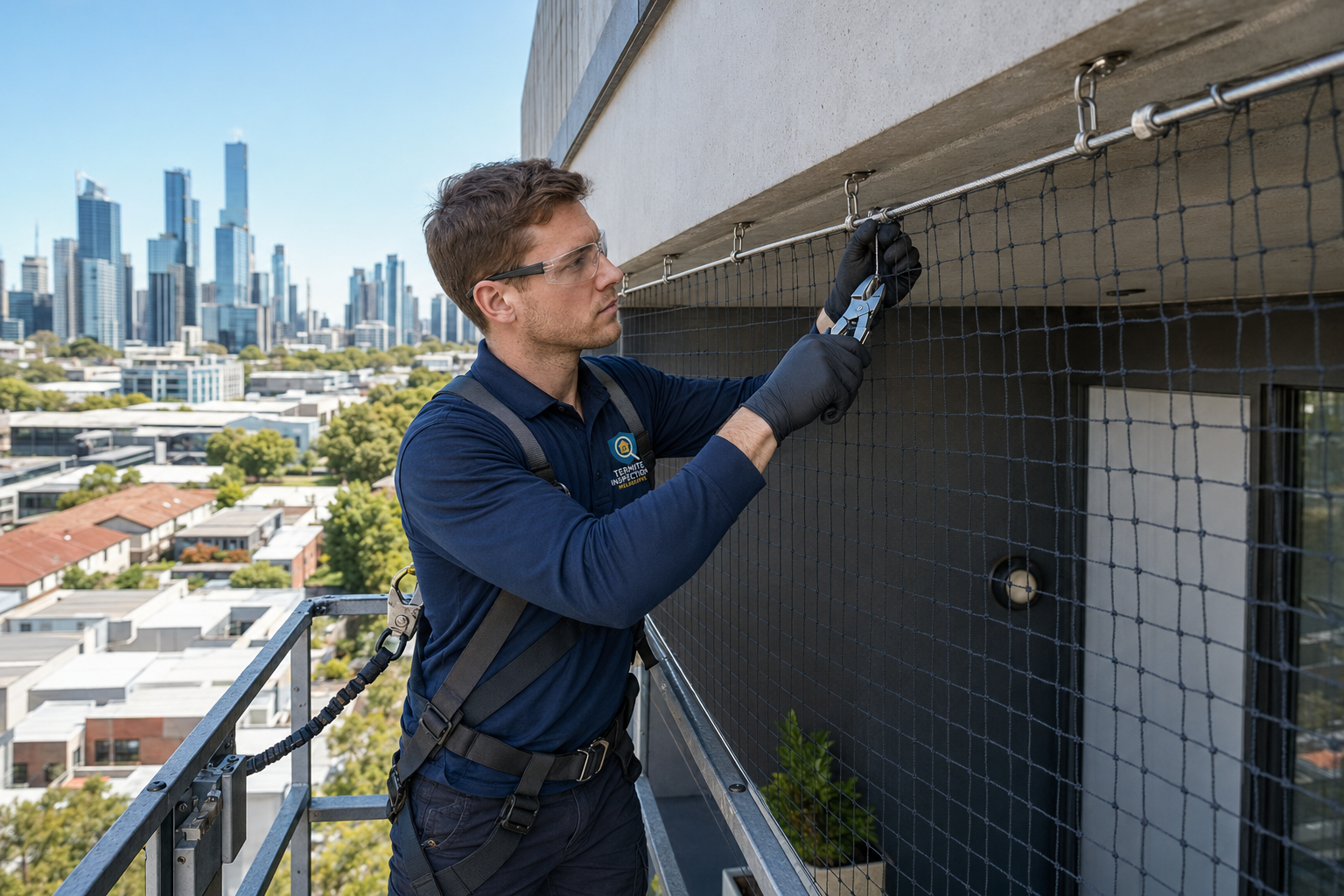
Double-storey work can require additional fall prevention, a second person, roof anchors, scaffold or an elevated work platform. Narrow side access, setbacks and neighbouring structures influence the method. The starting package applies only after the access review confirms that the described scope is suitable.

Split-Level & Complex Roof

Roof transitions, internal corners, valleys, dormers and several array groups increase detail and perimeter. Movement between levels may be more difficult than reaching the first edge. These properties receive a measured quotation with access equipment and weather limitations shown separately.

Tile Roof

Tiles create an uneven lower surface. Mesh must be formed to the profile without lifting, cracking or loading fragile tiles. Valleys and gutters must remain open. Broken tiles, failed pointing and structural repair are photographed and quoted or referred rather than hidden behind mesh.

Metal Roof

Metal surfaces can be slippery, hot and vulnerable to incorrect fastening. Roof penetrations are not part of the standard clip system. Coatings, thermal movement, corrugation, sharp edges and drainage need careful detailing. Roofing defects are referred to an appropriate contractor.

Commercial Array

Large systems may involve several roof zones, access permits, site induction, isolation coordination, plant platforms and operational constraints. We map each authorised array and quote perimeter, labour, equipment, hygiene and documentation as separate items for accountable approval.

Work at height is planned, not improvised

WorkSafe Victoria identifies falls as a major risk in rooftop solar work. Weather, roof fragility, edges, penetrations and equipment handling are assessed before installation. If the safe system of work changes, the price and schedule may change with it. No online offer overrides the need for suitable controls.

Module 5

Non-Penetrating Clip-Lock Mesh: What a Professional Perimeter Requires

Mesh specification follows the job

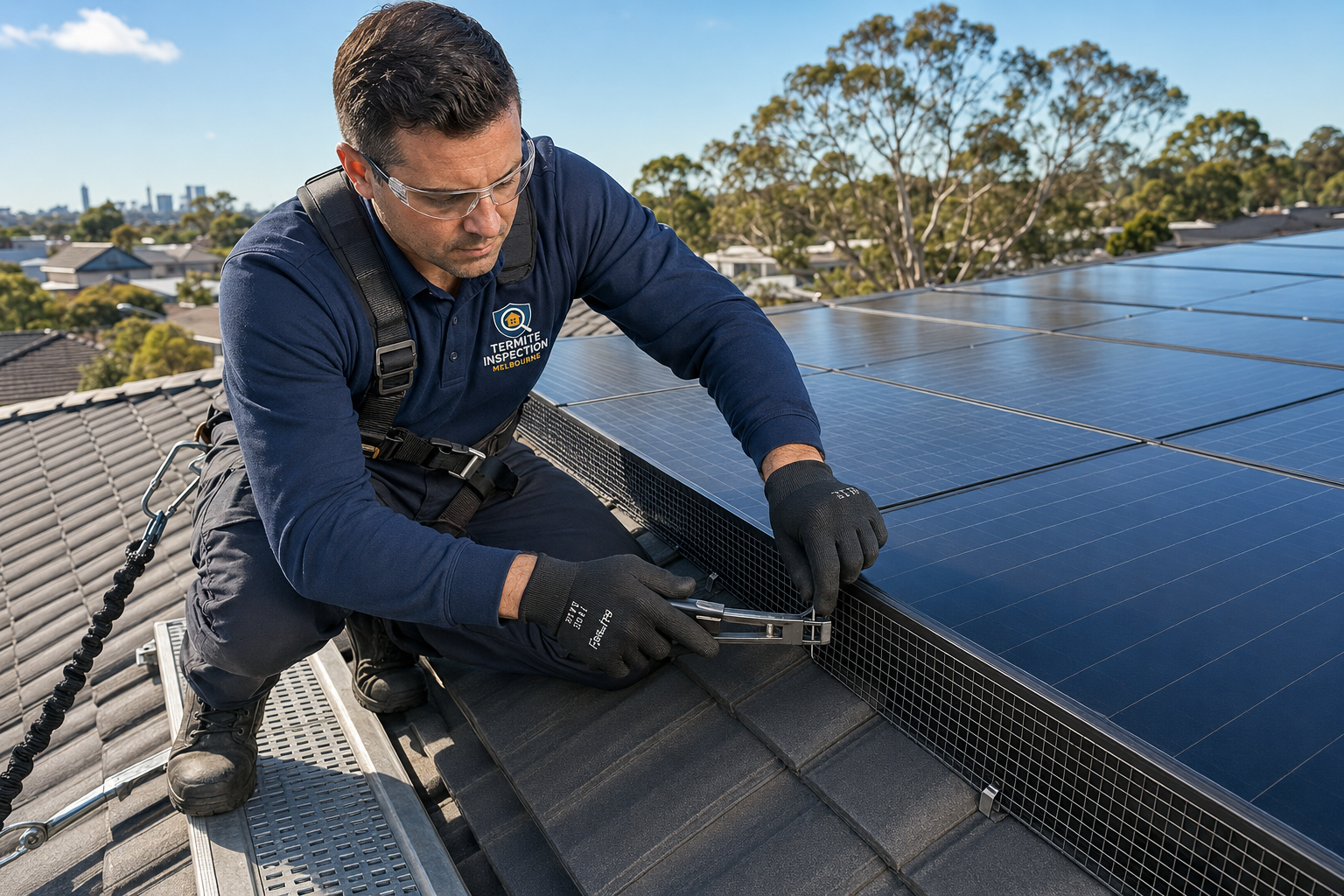
The barrier must resist bird pressure, sunlight, weather and normal roof movement while remaining compatible with the panel edge and roof surface. Material descriptions such as galvanised, stainless or coated mesh are not interchangeable marketing words. Wire diameter, aperture, corrosion resistance, cut-edge treatment and clip compatibility affect performance. The written quote identifies the material proposed rather than promising “marine grade” when that has not been selected.

Colour is also functional. Dark mesh can be visually discreet against many panels, but appearance is secondary to secure fit and corrosion compatibility. Dissimilar metals, exposed sharp ends and poorly retained corners can create maintenance problems. Cut edges are finished and positioned so they do not contact accessible cables, create a hand hazard or scratch components during movement.

The clips do not replace workmanship

Purpose-designed panel-edge clips allow a barrier to be fitted without routine drilling into the solar frame or roof. Correct spacing depends on the mesh stiffness, wind exposure, edge geometry and panel profile. A clip attached to a loose section or unsupported corner does not make the assembly secure. The installer forms each run, locks corners and checks the lower return against the roof profile.

Conduits, rail ends, cable entries and roof steps are common weak points. They may need shaped infill pieces or a different closure detail. Mesh must not pinch cabling, block a designed drainage path, obstruct an isolator or prevent required ventilation. If a safe closure would interfere with electrical components, an electrician or solar technician is involved before completion.

No blanket panel-warranty claim

Manufacturers and solar installers have different warranty conditions. Avoiding drilling reduces an obvious risk, but it does not create automatic written approval from every manufacturer. Customers should retain their panel, mounting and installer documents. Where warranty sensitivity is high, the fixing plan can be sent to the provider for confirmation. TIM's workmanship terms apply only as stated in the proposal and do not rewrite a third party's solar warranty.

Completion audit

After installation, the technician checks visible perimeter continuity, corners, lower returns, service penetrations, drainage and loose ends. Photos identify the treated array and any inaccessible area or existing defect. The completion note records mesh and fastening method, excluded zones, outstanding electrical or roof repair and maintenance advice. This makes the installation reviewable months later when another contractor services the array.

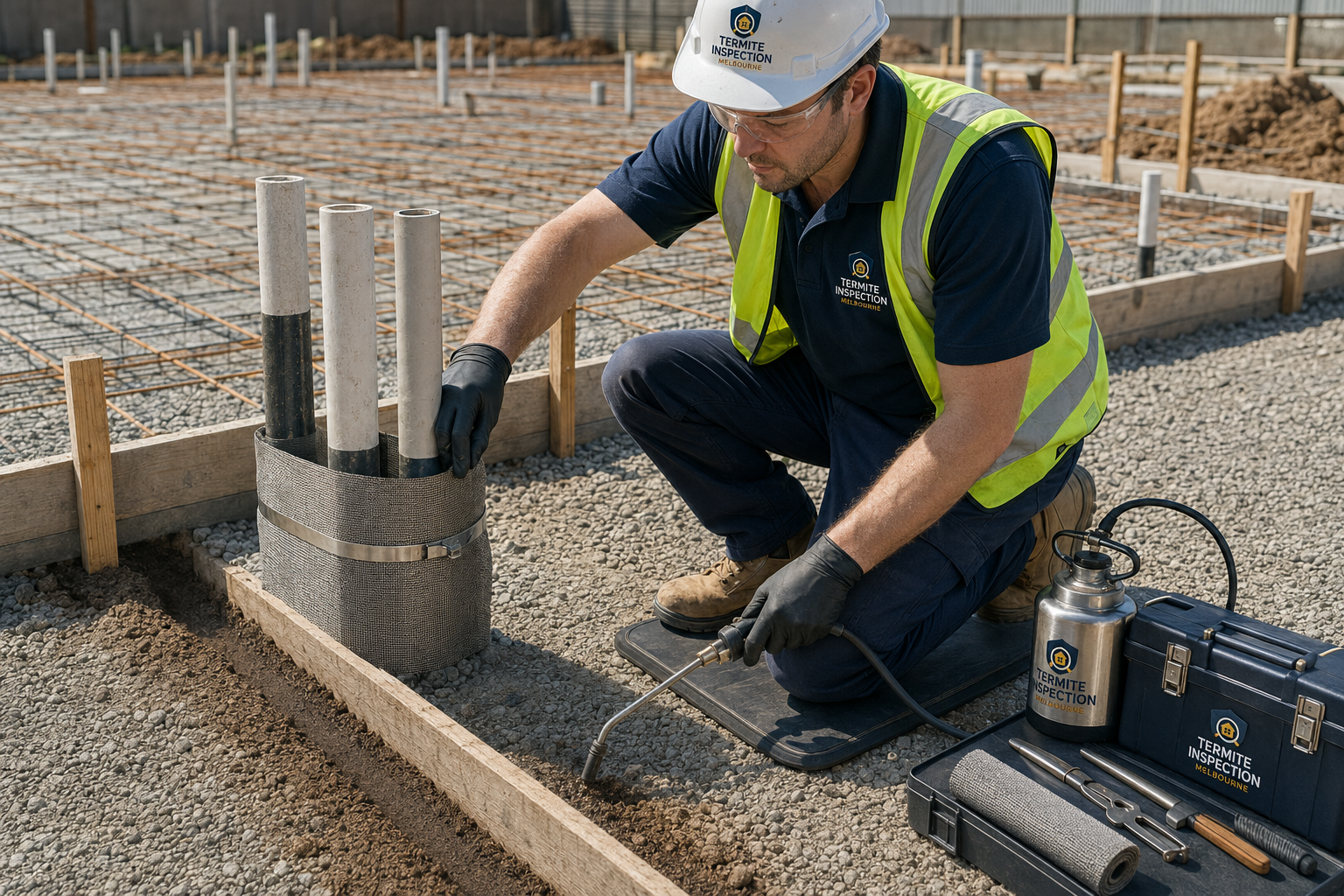
Close-up of a carefully fitted physical mesh barrier and non-penetrating attachment detail
Controlled bird nesting debris removal and localised hygiene treatment
Module 6

Nest Removal, Debris Clearing, Mite Treatment and Victorian Wildlife Rules

Active nests change the job

All Victorian native wildlife is protected by law, and it is illegal to wilfully disturb, trap or harm protected wildlife without the applicable authority. Introduced pigeons, starlings and mynas may be treated differently from native birds, but species must be identified and animal-welfare obligations still apply. Eggs or dependent young are a clear reason to stop and choose the lawful pathway rather than close the array perimeter immediately.

A roof photo may not show what is beneath the panel. Before removing material, we look for repeated adult access, calls, fresh droppings, eggs, young and nest condition. Where uncertainty remains, monitoring or wildlife advice can be required. The quote is adjusted for a return after the nest is inactive or for authorised assistance. A fast exclusion that traps birds inside is both poor workmanship and a welfare failure.

Debris removal is defined by access

Mesh installation does not automatically include every gram of material beneath panels. Some debris is accessible from the perimeter; some lies around mounts or cables that should not be disturbed; some may extend into gutters or roof cavities. The scope states whether it includes loose perimeter debris, a complete accessible nest removal, gutter clearing, dead-bird recovery or only the exclusion barrier.

Collection methods aim to reduce dust spread and prevent debris from entering stormwater. Waste handling depends on quantity and contamination. Heavy or extensive guano, carcass material, contaminated insulation and inaccessible cavities can require specialist remediation. If roof sections must be opened, panels lifted or electrical parts moved, the relevant qualified trade is scheduled.

Bird mites and lice

Mites may leave a nest when hosts depart and can enter rooms through ceiling gaps, vents or wall junctions. Treatment begins with locating and lawfully addressing the source. A residual treatment may be suitable for defined accessible cracks and surfaces, but product selection depends on label directions, occupants, pets, roof temperature and material compatibility. Customer preparation and re-entry instructions are issued for any pesticide treatment.

We do not promise that spraying the panel perimeter will solve every bite complaint. Other mites, fleas, bed bugs and environmental causes can produce similar symptoms. If the evidence does not support bird mites, the record states that limitation and recommends the correct inspection path.

Do not remove an active native-bird nest yourself. Current Victorian guidance says protected wildlife must not be wilfully disturbed without authorisation. Send photos from a safe location, keep people away from the roof edge and obtain appropriate advice before exclusion.
Module 7 • Transparent proposed starting prices

Solar Panel Bird Proofing Cost in Melbourne

The package price is based on an eligible array, stated panel range and safe standard access. We confirm the measured perimeter, layout, roof condition and nesting before final acceptance.

Small Single-Storey Array
From $595
$540.91 + $54.09 GST • up to 12 panels*
  • Accessible perimeter condition check
  • Purpose-fitted mesh and compatible clips
  • Standard corners and roof-profile forming
  • Completion photographs
Request Small-Array Quote
Double-Storey Array
From $1,095
$995.45 + $99.55 GST • up to 24 panels*
  • Height and safe-access review
  • Standard double-storey labour allowance
  • Measured mesh and clip system
  • Installation record and limitations
Request Double-Storey Quote
Large / Commercial Array
Site Quote
25+ panels, multiple arrays or complex access
  • Measured perimeter and array map
  • Access equipment and site requirements
  • Hygiene or electrical coordination
  • Itemised written proposal
Request Commercial Quote
*Starting-price conditions: one eligible array within the stated panel range; standard layout and panel clearance; sound accessible roof; suitable weather; no active protected nest; no scaffold, boom lift, electrical repair, panel lifting or major contamination. Panel count is an initial guide—unusually long perimeters, separated rows and complex corners may cost more. The final quote is confirmed before installation.

Nest & Debris Remediation

From $220 incl. GST when added to an eligible installation. Covers a defined accessible loose-debris scope after nesting status is cleared. Heavy guano, carcasses, insulation and inaccessible areas are separately quoted.

Request remediation scope

Panel-Surface Cleaning

From $165 incl. GST as an eligible add-on. Method, water access, panel temperature, manufacturer guidance and roof safety are confirmed. Electrical servicing and output diagnosis are excluded.

Request cleaning add-on

Thermal Screening

Quoted where useful. A screening image can flag temperature differences under suitable conditions but is not an electrical compliance inspection. Suspected faults are referred to a licensed electrician.

Ask about thermal screening
Module 8

Why Melbourne Owners Choose a Defined TIM Solar-Proofing Scope

Every enquiry has a traceable reference

The booking journey does more than send an email. When the customer completes the secure TIM booking form, WordPress creates a private TIM Bookings record before notification email is attempted. The record contains the customer, address, selected bird-proofing package, roof level, approximate panel count, preferred time and notes. This protects the lead if an inbox is delayed and gives the office a consistent reference for follow-up.

The page does not directly process a separate hidden PHP mail form. It passes the service and property information to the existing booking system that has already been configured with Brevo and tested. That reduces duplicate code, inconsistent recipients and the risk of a “thank you” screen without a saved enquiry. Customer confirmation and office notification use the same established workflow.

Claims supported by the written proposal

Qualifications, insurance, product specifications, promotional inclusions and warranty periods should be supported by current documents and exact terms—not a generic badge. Customers can request evidence relevant to the proposed personnel, access method and mesh. The quotation states what is actually included for the property.

This lets the owner compare the scope: mesh type, perimeter, roof level, access equipment, nest status, hygiene allowance, exclusions, documentation and warranty. Any promotion should have a real end date, clear eligibility and an identifiable value rather than an evergreen urgency claim.

Local service with professional boundaries

TIM's Pest Control serves Melbourne from Clyde North and scopes solar mesh installation Melbourne homeowners, landlords, strata managers and commercial operators. We identify when the job needs a wildlife authority, hygienist, roofer, access contractor or licensed electrician. Referring regulated work is not a weakness; it prevents a bird-control task from causing electrical, roof or warranty damage.

  • Single and double-storey starting options
  • Active-nest and native-wildlife checkpoint
  • Non-penetrating attachment plan where suitable
  • Electrical and roof defects recorded, not concealed
  • Debris, cleaning and mite work itemised
  • Private booking record plus email notification
  • Completion photos and written limitations
TIM's Pest Control team supporting Melbourne solar bird-proofing customers
Solar-array risk map

What We Inspect Before Quoting the Perimeter

A conversion-ready quote asks the right questions early, so the customer does not discover essential exclusions after the installer reaches the roof.

Panel Count & Layout

Twelve panels in one rectangle can have a shorter perimeter than twelve panels split across three roof faces. We record rows, separated groups, internal gaps, corners and rail ends. Photos and satellite imagery can support initial pricing, but the accessible on-site measurement controls the final material scope.

Roof Height & Pitch

Storeys are only a starting description. Roof pitch, setbacks, narrow access, parapets, valleys, wet surfaces, fragile tiles, skylights and overhead services affect safe movement. The work method may require two technicians, fall controls or access equipment.

Panel Clearance

The vertical and horizontal gap affects mesh width, forming and whether standard clips can be used. Very low, irregular or unusually high clearances can require different materials. We do not force one product into an incompatible edge detail.

Nesting Status

Fresh twigs, adult access, eggs, calls or young change the schedule and legal pathway. The price separates a clean preventive installation from a nest-remediation job. Work pauses where protected wildlife could be trapped or disturbed.

Cables & Isolators

Visible conduit, loose cable protection, damaged connectors, DC isolators and service clearances are documented. We do not push mesh against electrical components or hide a suspected defect. Licensed electrical work is a separate authorised service.

Contamination & Drainage

Droppings, carcasses, mites, blocked gutters and debris beneath the centre of an array affect labour and disposal. The scope identifies reachable areas, water control, panel cleaning and specialist remediation rather than implying unlimited sanitisation.

Compare the protection method

Professional Solar Mesh vs DIY Barriers and General Deterrents

The lowest purchase price is not the same as a secure, serviceable and documented array perimeter.

Decision pointTIM defined mesh scopeDIY plastic mesh / cable tiesVisual or sound deterrentSolar service without bird scope
AttachmentPurpose-selected clips and formed perimeter; no routine drillingMay rely on ties, adhesive or improvised fixingNo physical perimeter closureDepends on separate bird contractor
Active-nest checkRequired before exclusionOften overlookedBird remains able to enterConfirm wildlife process
Roof safetyHeight, pitch, weather and access reviewedOwner carries fall and electrical riskInstallation still may require roof accessSolar safety focus may not include hygiene
Corners and servicesShaped around array geometry and recordedCommon weak points can remainDoes not close gapsBird-proofing detail separately quoted
Debris and hygieneDefined add-on or exclusionHandling method may be unclearSource remains under panelsOften outside electrical service
Electrical defectsRecorded and referred to licensed electricianRisk of contacting or concealing damageUnderlying fault remainsCan diagnose when performed by qualified trade
Warranty languageWritten scope and actual termsNo contractor workmanship coverProduct promise variesSolar warranty does not automatically cover birds
Eight-step booking and installation workflow

From First Pigeon Sighting to a Documented Barrier

1

Enquiry Saved

Send the address, phone, email, roof level, panel count, preferred date and bird notes. WordPress creates a private booking reference before sending notification email.

2

Remote Triage

Ground photos or video help identify array groups, likely entry edges, nesting signs, roof type, access restrictions and whether an urgent electrical or wildlife referral is needed.

3

Safety Review

Height, pitch, surface, weather, edges, skylights, services and material handling determine whether standard access, additional controls, scaffold or an elevated platform is required.

4

Nest Check

Species, adult activity, eggs, dependent young, carcasses and contamination are assessed. Protected or active wildlife changes the timetable and authorisation pathway.

5

Written Quote

The proposal states array perimeter, panel range, mesh and clip assumptions, hygiene items, equipment, GST, exclusions, electrical referrals, documentation and warranty terms.

6

Prepare

Lawfully remove included accessible loose debris, coordinate electrical or roof repairs and clean only the approved surfaces with a compatible method.

7

Install & Audit

Form mesh around edges, corners, conduits and roof profiles; check retention, drainage, ventilation and service access; photograph the completed authorised perimeter.

8

Maintain

Inspect after storms or work by others, monitor untreated roosting locations, service the solar system through qualified trades and report suspected mesh movement promptly.

Controlled solar panel perimeter preparation and bird-proofing process
Preparation and hygiene

What “Cleaning and Sanitisation” Should Mean in the Quote

Words such as clean, sanitise and disinfect are often used as if they describe one unlimited task. They do not. Panel-surface cleaning, loose nest removal, guano remediation, gutter clearing, mite treatment and contaminated-insulation removal are different activities with different access, product, waste and trade requirements. A conversion-focused offer should make those differences easy to understand before the customer commits.

An eligible light-remediation add-on may cover accessible loose nesting material at the array edge, controlled bagging and localised treatment of the immediate roof surface. It may not reach beneath the centre of a large array without panel removal. It does not include electrical disconnection, tile replacement, gutter repairs, ceiling cleaning or whole-roof pressure washing. Heavy contamination receives a separate measured plan.

Panel-surface cleaning is performed only when the method is appropriate for the panel and roof conditions. The technician avoids walking on modules, abrasive pads and uncontrolled high-pressure methods. Water runoff, hot glass, hard-water spotting and nearby electrical equipment are considered. If the panel manufacturer specifies a particular process, that instruction takes priority.

A pesticide used for bird mites must be registered for the intended situation and applied according to its label. Occupants receive preparation and re-entry instructions. Treating the roof without locating the source can lead to repeated activity, while treating a source without sealing pathways can allow future nesting. The proofing and hygiene plans work together but remain separately priced so neither is hidden.

Quality audit and documentation

What Your Solar Bird-Proofing Record Should Show

The initial record identifies the customer, address, roof level, roof material, approximate panel count, number of arrays, bird evidence, nesting status, visible contamination and safe-access assumptions. It notes photos supplied, areas inspected from the ground and areas that could not be verified. The customer can then see why the quoted tier applies.

The proposal identifies the perimeter or arrays to be treated, mesh specification, attachment method, corner and service details, included debris work, panel cleaning, access equipment, GST, schedule, limitations and any third-party electrical or roof task. If the quote refers to a warranty, it states its duration, covered material or workmanship, reporting process and exclusions.

Completion photographs show representative edges, corners and difficult details without pretending that one wide photo proves every clip. The note records existing defects, inaccessible sections, wildlife observations, mesh continuity and outstanding recommendations. It also warns that future solar servicing, panel replacement or roof work can disturb the barrier and should be followed by an inspection.

For rental, strata and commercial properties, the record should include the authorised contact, property or purchase-order reference, tenant access pathway and who receives the report. This prevents a mesh job on one array from being described as protection for an entire complex. Clear documentation supports maintenance, invoice approval and future comparison.

Solar bird-proofing quotation, completion photographs and quality audit documentation
Greater Melbourne coverage

Solar Panel Bird Proofing Across Melbourne

Urban bird pressure changes by food source, roof design, building density, wind exposure and array layout. The proofing method follows the property—not a suburb stereotype.

Solar panel bird proofing service in Clyde North, Casey & Cardinia

Clyde North, Casey & Cardinia

Fast-growing estates have large numbers of tiled roofs and new solar arrays. Open panel edges, low roof pitches and nearby construction can make sheltered arrays attractive to feral pigeons. We assess perimeter length, safe access and existing debris rather than assuming a new system is already protected.

View South East Melbourne Area
Solar panel bird proofing service in Eastern Melbourne

Eastern Melbourne

Mature trees, older roofs, extensions and multi-level homes create several landing and nesting opportunities. Array layouts may bridge roof junctions or sit close to valleys and gutters, so mesh needs careful shaping that preserves drainage and future service access.

View Eastern Melbourne Area
Solar panel bird proofing service in Northern Melbourne

Northern Melbourne

Warehouse edges, rail corridors, shopping areas and dense residential growth can support persistent pigeon populations. Repeated roosting calls for physical exclusion around the actual array perimeter, not visual deterrents alone.

View Northern Melbourne Area
Solar panel bird proofing service in Western Melbourne

Western Melbourne

Exposed roofs, industrial precincts and expanding residential suburbs can combine wind, dust and bird pressure. Fixing selection, mesh forming and corner retention matter because loosely installed barriers can lift, rattle or open at uneven tile profiles.

View Western Melbourne Area
Solar panel bird proofing service in Melbourne CBD & Inner Suburbs

Melbourne CBD & Inner Suburbs

Apartments, townhouses, shared roofs and commercial systems can involve owners-corporation approval, limited access and several arrays. We define which roof and perimeter are authorised and itemise access equipment or stakeholder requirements.

View Melbourne CBD Area
Solar panel bird proofing service in Bayside & Mornington Peninsula

Bayside & Mornington Peninsula

Coastal exposure, salt, strong wind and larger rooflines affect material selection and safe working conditions. Installation is postponed when weather makes roof access unsafe, and extensive or high arrays receive a site-specific quote.

View Mornington Peninsula Area

Common service enquiries include Clyde North pest control, Casey solar pigeon proofing, bird mesh installation in eastern and northern Melbourne, double-storey solar protection in western suburbs, inner-city strata arrays and Mornington Peninsula roof bird control. Availability depends on route, weather, roof safety and the actual scope. A postcode does not guarantee starting-price eligibility.

Official safety and wildlife references

Victorian Guidance That Shapes the Service

Protected Native Wildlife

Victorian Government guidance explains that native wildlife is protected and wilful disturbance, trapping or harm can require an Authority to Control Wildlife.

Read the official ATCW guide

Rooftop Work at Height

WorkSafe Victoria identifies falls as the most serious risk associated with solar work and describes a four-step process to identify, assess, control and review risks.

Read WorkSafe solar-height guidance

Solar Electrical Safety

Energy Safe Victoria advises that licensed electricians inspect wiring, fittings, isolators, corrosion and inverter faults during rooftop solar servicing.

Read Energy Safe Victoria advice

Damaged Solar Systems

Damaged panels and DC equipment can remain hazardous. Electrical damage is isolated and repaired by an appropriately licensed professional before proofing continues.

Read PV electrical safety guidance

Guidance and legislation can change. These links help customers understand the service boundary but do not replace current regulatory advice, site-specific risk assessment or licensed electrical work.

Solar mesh, pigeon nesting and roof-access answers

Solar Panel Bird Proofing Melbourne FAQs

How much does solar panel bird proofing cost in Melbourne?

TIM publishes proposed starting prices of $595 including GST for an eligible small, single-storey array of up to 12 panels, $795 including GST for an eligible standard single-storey array of 13 to 24 panels, and $1,095 including GST for an eligible double-storey array of up to 24 panels. These are starting scopes, not a universal metre rate. Panel layout, perimeter length, roof pitch and material, access, edge protection, existing nests, contamination, electrical concerns and extra equipment can change the final written quote. Large, split-level, commercial and multi-array systems are site quoted.

Will bird mesh void my solar panel warranty?

No contractor can guarantee every manufacturer or installer warranty without reading its terms. Our preferred approach uses purpose-made mesh and compatible clips around the panel perimeter without drilling the panel frame or roof. Before work, we identify the panel edge, mounting arrangement and any access limitation. If the system warranty, fragile components or electrical condition makes the proposed attachment uncertain, we ask the owner to obtain written confirmation from the solar provider or arrange a licensed solar electrician. The quotation records the intended fixing method rather than making a blanket warranty promise.

How is mesh attached without drilling into the panels or roof?

A measured mesh skirt is formed around the array perimeter and secured with purpose-designed edge clips selected for the accessible panel-frame profile. The mesh returns to the roof surface closely enough to resist entry while preserving drainage, ventilation and service access. We do not plan to screw through panel frames, tiles or metal roofing merely to speed up the installation. Corners, conduit routes, roof steps, valleys and uneven tiles require individual shaping. The exact clip and mesh specification is confirmed for the site and stated in the quote.

Can you remove pigeon nests from under solar panels?

We first identify whether the nesting appears active, whether eggs or dependent young are present, and whether the bird is native or introduced. Victorian native wildlife is protected, and wilful disturbance can require authorisation. An active nest is not simply pulled out and sealed over. Where the species and circumstances allow work, and the nest is inactive or the lawful pathway has been confirmed, accessible material can be removed before exclusion. Where protected wildlife, young or an injured bird is involved, work pauses and the appropriate wildlife guidance or authorised person is used.

Do you clean bird droppings and sanitise before installing mesh?

Accessible loose nests and debris can be included when lawful and safe. Localised cleaning and hygiene treatment are separate line items because contamination varies widely. Dry sweeping is avoided where it would aerosolise dust. Heavy guano, dead birds, contaminated insulation, inaccessible material, fragile roofing, stormwater risk and extensive microbial remediation may require a specialist hygiene contractor. Panel-surface cleaning is also distinct from electrical servicing. The quote identifies what is removed, what is treated and what remains outside scope.

Can bird droppings reduce solar output?

Opaque droppings and other soiling can shade cells and reduce output, but the effect is highly site and system specific. It depends on the area and position of the contamination, string or optimiser design, orientation, weather and existing faults. A bird-proofing contractor should not promise a fixed percentage recovery. We photograph visible soiling and can include suitable cleaning, while output faults, damaged wiring, isolators and inverter alerts are referred to a licensed electrician or solar service provider.

Do you provide thermal imaging of the panels?

A thermal camera can be an optional screening aid when conditions are suitable. It shows surface-temperature differences that may help flag an area for further investigation, but it is not an electrical compliance test and does not prove the cause of a hot spot. Sun angle, reflections, load, wind and ambient temperature affect results. Any suspected electrical defect is referred to a licensed electrician. A thermal scan is included only when it appears in the written scope; this page does not promise a free scan of every system.

Can you bird-proof a double-storey or split-level roof?

Yes, subject to a safe-access review and written quote. Height is only one factor. Roof pitch, surface condition, skylights, edge exposure, setbacks, narrow side access, overhead services, weather and the need to move mesh around the array all affect the work method. Some properties require two technicians, fall-prevention controls, scaffold or an elevated work platform. The double-storey starting price applies only where the assessed conditions fit the stated package.

What signs suggest birds are nesting under my solar panels?

Common signs include repeated roof activity at dawn or dusk, birds entering the same panel edge, twigs protruding from beneath the array, concentrated droppings on panels or paving, feathers, blocked gutters, noise above a bedroom, nesting odour, mites entering rooms and a cluster of birds resting on the ridge. One observation is not proof of an active nest. Photos or a short video taken from ground level can help triage the property; do not climb onto the roof to collect evidence.

Does solar mesh stop rodents as well as birds?

The perimeter barrier may reduce access by some animals, but it is sold as a bird-exclusion scope unless rodent risk is separately inspected. Mice and rats can use roof cavities, service penetrations, gutters and building gaps that do not depend on the panel perimeter. Mesh aperture, corner detailing and conduit interfaces also matter. If there are gnaw marks, droppings, damaged cable protection or ceiling noise, request a separate rodent inspection and electrical assessment where appropriate.

Can you repair wiring damaged by birds or rodents?

No pest or proofing quotation automatically authorises electrical work. Solar DC equipment can remain energised in daylight and damaged components can present shock or fire risk. If wiring, connectors, isolators, conduit, earthing or panels appear damaged, work around that area stops and a licensed electrician or qualified solar service provider is required. Mesh installation resumes only when the area is safe and the attachment will not conceal a defect or obstruct required access.

How long does solar panel bird proofing take?

A straightforward accessible residential array may be completed in one attendance after the scope is confirmed. Heavy nesting, active-bird restrictions, wet or windy weather, difficult roof access, multiple arrays, complex corners, contamination or electrical referral can require staged work. The office confirms whether the booking is an assessment, a quoted installation, or a remediation visit. Arrival windows are not guarantees of completion because roof safety and wildlife conditions are reassessed on the day.

Do you guarantee that birds will never return?

A correctly fitted barrier is designed to stop access through the treated array perimeter, but no honest contractor can promise that no bird will ever land on the roof, use an untreated opening or damage a building in the future. Any workmanship or material warranty must be stated in the written proposal with its duration, covered perimeter and exclusions. Storm damage, roof movement, work by others, new panels, altered cabling, unapproved removal and untreated building areas may be excluded.

Where is my solar bird-proofing enquiry saved?

The TIM booking workflow saves a private WordPress TIM Bookings record and generates a reference before notification email is attempted. It records the selected solar package, contact details, property address, roof level, approximate panel count and nesting notes passed from this page. The business and customer then receive email through the configured WordPress mail connection. If an inbox delays or filters a message, the office can still review the saved booking record.

Close the nesting access with a measured plan

Request Your Solar Panel Bird-Proofing Quote

Call 0466 929 533 or continue to the secure TIM booking page. Send the address, roof level, approximate panel count, photos from ground level and any nesting, droppings, mite or electrical concern. We will confirm whether the next step is remote quoting, an assessment, mesh installation, lawful nest remediation or referral.

Starting prices and dates are subject to access, array layout, roof condition, wildlife status and written scope. Do not seal birds beneath panels or touch suspected damaged solar wiring.

☀️ Solar Bird-Proofing — Eligible single-storey arrays from $595 incl. GST — measured perimeter, nesting status and access confirmed before work · Call 0466 929 533
Serving Melbourne from Clyde North Same-Day Options Subject to Availability
Call 0466 929 533
☰ Explore Services & Menu
Solar panel bird proofing and nesting prevention service on a Melbourne roof
Measured mesh • non-penetrating clips • documented scope

Solar Panel Bird Proofing & Nesting Prevention Services Melbourne

Stop pigeons and other birds using the sheltered space beneath solar arrays. TIM's Pest Control assesses the birds, nesting status, roof access and array perimeter before installing a purpose-fitted physical barrier around eligible residential and commercial systems.

From $595 incl. GST*Single & Double StoreyMelbourne MetroWritten Scope & Photos

*Starting prices apply only to eligible arrays with safe standard access. Final price depends on array perimeter, panel count and layout, roof height and pitch, nesting, contamination, electrical condition and access controls.

Fast solar proofing consultation

Tell us about the roof

Your details open the secure TIM booking page with solar bird proofing already selected.

Your enquiry is saved in WordPress before notification email. A submitted form requests an assessment; it does not authorise roof, electrical or wildlife work.

Nest Status CheckedActive birds, eggs and young considered
Non-Penetrating PlanNo routine drilling of panels or roof
Safe Access ReviewHeight, pitch, weather and edges assessed
Defined Hygiene ScopeDebris and contamination itemised
Saved EnquiryPrivate WordPress booking record
The direct answer

How Do You Stop Birds Nesting Under Solar Panels?

The durable answer is a correctly designed physical exclusion barrier fitted around the accessible perimeter of the solar array after the species, nesting status, debris and roof conditions have been checked. A fitted mesh skirt closes the sheltered gap beneath the panels while leaving the panels, roof drainage, ventilation and required service access intact. The barrier must be shaped around corners, rail ends, conduits, roof steps and irregular tiles; a loose straight strip tied to the frame is not the same service.

The order matters. First observe where birds enter and whether the nest appears active. Then assess the panel layout, edge clearance, roof surface, cable routes, gutter relationship, safe access and contaminated areas. Lawfully remove accessible inactive nesting material and debris if included, complete any specialist electrical or roof repair that is required, form and secure the mesh, inspect every corner and penetration, and provide completion photographs. If eggs, dependent young or protected native wildlife may be present, the exclusion timetable changes.

Solar panel bird proofing Melbourne customers often search after months of cooing, droppings and early-morning movement. The same visual symptoms can also involve starlings, mynas, sparrows, rodents or native birds. Identification is more than a label: it affects legal obligations, welfare decisions, mesh detail and whether exclusion can happen immediately. We do not seal a live animal into the array space to meet a rushed booking promise.

Safety first: do not lift panels, touch DC cabling, push wire beneath the array or climb onto a roof to investigate. Solar PV equipment can remain electrically hazardous in daylight, and roof falls are a serious risk. Send ground-level photos and arrange qualified assessment.
Professional bird mesh installation used to prevent pigeon nesting around solar panels
Pigeons gathering around an unprotected Melbourne rooftop solar array
Module 1

Why Solar Arrays Become Reliable Pigeon Nesting Sites

Shade, shelter and repeatable access

A rooftop array creates an artificial canopy. The panel surface sheds much of the direct sun and rain, while the framed gap below can shield birds from wind and some predators. Nearby ridges, parapets, television antennas, gutters and fences provide staging points. Once birds discover a quiet edge and repeatedly enter, twigs and loose material can accumulate across rails, tiles, cable paths and drainage routes.

Melbourne does not have one uniform bird-pressure profile. Inner-city buildings can have established feral pigeon flocks linked to food and roosting sites. Growth corridors may combine new arrays, open roof edges and changing food sources. Coastal and exposed western properties introduce stronger wind and salt considerations. Leafy eastern suburbs add tree cover and multi-level roof junctions. A quote based only on the number of panels ignores the perimeter, shape and access that determine the real installation.

Why repeated activity becomes a building-management issue

Birds can return to a successful roost or nesting position. Droppings may collect on glass, frames, tiles, gutters, paths and equipment below. Twigs can obstruct drainage or sit against cable protection. Feathers and dust may enter roof spaces at adjacent defects. Occupants may hear movement above bedrooms at dawn, while neighbours or tenants report staining and odour. The problem is therefore not limited to whether a pigeon is visible on a photograph.

Physical exclusion aims to remove access to the sheltered void. It does not claim to stop birds flying over the suburb, landing on every roof surface or using an untreated ledge. That distinction allows a meaningful scope: the quote identifies the array or arrays, perimeter, included corners and service zones. Where additional roosting occurs on parapets, gutters, signage or plant platforms, those locations are inspected and priced separately.

Identification and activity mapping

Ground observations can record entry edges, bird numbers, timing, loose twigs, droppings and likely flight paths. Roof access, where safe, confirms panel clearance, nests, cable routes and contamination. Customers can provide a short video from ground level rather than climbing. The technician separates historic material from current activity and checks whether a proposed barrier might trap an animal inside.

Pigeon nest removal solar panels Victoria searches often imply that every bird is an introduced pigeon. That is unsafe. Native birds are protected in Victoria, and eggs, dependent young, injured wildlife and non-target species require a different response. The written plan should identify uncertainty and state whether work can proceed, requires monitoring, waits for the nesting cycle, or needs formal wildlife advice.

Module 2

Nesting Debris, Electrical Risk, Drainage and Roof Damage

Fire language must be accurate

Dry twigs and feathers are combustible, but their presence does not prove that a particular array is about to catch fire. Solar system fires can have electrical causes unrelated to birds. The responsible approach is to document debris, avoid disturbing energised equipment, maintain access to isolators and connectors, and refer any damaged wiring, overheating signs, arcing marks, inverter alert or abnormal odour to a licensed electrician. A pest controller does not diagnose an electrical fault from a photo.

Solar DC conductors can remain energised while panels receive light. Energy Safe Victoria advises that damaged rooftop solar should be assessed by a registered electrical contractor and that routine system servicing involves checking wiring, components, fittings, corrosion and recorded inverter faults. Proofing work must not conceal a problem, compress a cable, obstruct an isolator or interfere with the equipment needed for safe maintenance.

Roof and drainage effects

Nesting material can collect at the lower panel edge and migrate toward valleys or gutters. Whether that creates a blockage depends on the layout and volume. Water must still move down the roof surface and reach the gutter after mesh is fitted. On tiled roofs, the barrier follows an uneven profile without levering tiles or closing designed drainage paths. On metal roofing, fixing and contact details must avoid damaging coatings or creating unintended penetrations.

Repeated bird traffic and debris can also complicate solar servicing. A technician may need safe access to panel clamps, cables or isolators. The proofing design should allow planned removal or controlled access without destroying the whole barrier. If another contractor alters the array later, the mesh perimeter should be inspected and reinstated under the relevant warranty or maintenance terms.

Contamination and occupant health

Heavy droppings and nesting material should not be treated as ordinary garden litter. Dust, feathers, mites and decomposed material can irritate occupants and workers. The risk depends on quantity, dryness, location and individual vulnerability. Work methods may include dampening where appropriate, controlled collection, disposable protective equipment, bagging and surface-compatible hygiene treatment. Extensive contamination, inaccessible cavities or vulnerable occupants may require specialist environmental cleaning.

Bird mites can move away from an abandoned nest and enter living areas through gaps. Treatment is most effective when it addresses the source, access pathway and affected rooms rather than applying an indiscriminate spray to the roof. The booking form should record bites, crawling mites, affected rooms, pets, children and any medical vulnerability so the scope can be planned accurately.

Bird nesting debris and mite treatment assessment near a solar array
Thermal imaging used as a screening tool near rooftop solar panels
Module 3

Soiling, Partial Shade, Hot Spots and Solar Performance

Droppings can matter without inventing a universal percentage

Opaque bird droppings can shade part of a photovoltaic module. Research shows that localised soiling and partial shading can reduce output and contribute to temperature differences, but the size of the loss is not identical for every system. Cell layout, bypass diodes, string design, optimisers, orientation, time of day, contamination position and weather all influence the result. A website claim that every pigeon nest causes a fixed 30 per cent loss would be misleading.

Start with evidence that belongs to the actual property: inverter history, retailer or monitoring data, visible soiling patterns, photos and any fault message. Cleaning may improve output where soiling is the cause, but it will not repair a connector, cracked module, failed optimiser or damaged DC cable. If performance remains abnormal after suitable cleaning and exclusion, a licensed solar service provider should inspect the electrical system.

What thermal imaging can and cannot show

A thermal camera records surface-temperature patterns. Under suitable irradiance, load, angle and weather conditions, it may help flag a warmer cell area, connector zone or uneven surface for further investigation. It cannot by itself certify electrical safety, identify the precise internal defect or prove that birds caused the pattern. Reflections, wind, clouds, roof heat and viewing angle can make an image difficult to interpret.

TIM can offer thermal screening only when stated in the written quote and when conditions make it useful. The output is a screening observation, not a Certificate of Electrical Safety or a solar-performance guarantee. Any suspicious electrical pattern is referred to a licensed electrician. This boundary protects the customer from paying for a colourful image that is presented as more conclusive than it really is.

Cleaning without damaging the system

Panel cleaning needs a method appropriate to the manufacturer, glass condition, water quality, roof safety and temperature. Abrasive tools, harsh chemicals, high pressure and walking on panels can cause damage. A “power wash” promise is therefore removed from this page. If cleaning is included, the quote describes accessible panel surfaces, water access, accepted equipment, contamination limits and exclusions. Heavy guano may require a staged process rather than aggressive one-pass cleaning.

The performance objective is practical: remove avoidable shading where safely possible, prevent recurring nesting access, keep drainage and ventilation pathways open, and leave electrical diagnosis to the licensed trade. The customer receives a clearer maintenance baseline and photographs of the treated perimeter, without a fabricated savings forecast.
Module 4

Single-Storey, Double-Storey and Split-Level Installation Engineering

“Double story solar bird proofing cost” is not only a height surcharge. Safe access, array geometry and roof condition determine the work method.

Single-Storey Home

An eligible single-storey array may allow controlled ladder access and straightforward perimeter movement. We still assess roof pitch, brittle tiles, skylights, wet surfaces, overhead services, landscaping and how materials reach the work zone. A low roof is not automatically safe, and panel count does not equal perimeter length.

Double-Storey Home

Double-storey work can require additional fall prevention, a second person, roof anchors, scaffold or an elevated work platform. Narrow side access, setbacks and neighbouring structures influence the method. The starting package applies only after the access review confirms that the described scope is suitable.

Split-Level & Complex Roof

Roof transitions, internal corners, valleys, dormers and several array groups increase detail and perimeter. Movement between levels may be more difficult than reaching the first edge. These properties receive a measured quotation with access equipment and weather limitations shown separately.

Tile Roof

Tiles create an uneven lower surface. Mesh must be formed to the profile without lifting, cracking or loading fragile tiles. Valleys and gutters must remain open. Broken tiles, failed pointing and structural repair are photographed and quoted or referred rather than hidden behind mesh.

Metal Roof

Metal surfaces can be slippery, hot and vulnerable to incorrect fastening. Roof penetrations are not part of the standard clip system. Coatings, thermal movement, corrugation, sharp edges and drainage need careful detailing. Roofing defects are referred to an appropriate contractor.

Commercial Array

Large systems may involve several roof zones, access permits, site induction, isolation coordination, plant platforms and operational constraints. We map each authorised array and quote perimeter, labour, equipment, hygiene and documentation as separate items for accountable approval.

Work at height is planned, not improvised

WorkSafe Victoria identifies falls as a major risk in rooftop solar work. Weather, roof fragility, edges, penetrations and equipment handling are assessed before installation. If the safe system of work changes, the price and schedule may change with it. No online offer overrides the need for suitable controls.

Module 5

Non-Penetrating Clip-Lock Mesh: What a Professional Perimeter Requires

Mesh specification follows the job

The barrier must resist bird pressure, sunlight, weather and normal roof movement while remaining compatible with the panel edge and roof surface. Material descriptions such as galvanised, stainless or coated mesh are not interchangeable marketing words. Wire diameter, aperture, corrosion resistance, cut-edge treatment and clip compatibility affect performance. The written quote identifies the material proposed rather than promising “marine grade” when that has not been selected.

Colour is also functional. Dark mesh can be visually discreet against many panels, but appearance is secondary to secure fit and corrosion compatibility. Dissimilar metals, exposed sharp ends and poorly retained corners can create maintenance problems. Cut edges are finished and positioned so they do not contact accessible cables, create a hand hazard or scratch components during movement.

The clips do not replace workmanship

Purpose-designed panel-edge clips allow a barrier to be fitted without routine drilling into the solar frame or roof. Correct spacing depends on the mesh stiffness, wind exposure, edge geometry and panel profile. A clip attached to a loose section or unsupported corner does not make the assembly secure. The installer forms each run, locks corners and checks the lower return against the roof profile.

Conduits, rail ends, cable entries and roof steps are common weak points. They may need shaped infill pieces or a different closure detail. Mesh must not pinch cabling, block a designed drainage path, obstruct an isolator or prevent required ventilation. If a safe closure would interfere with electrical components, an electrician or solar technician is involved before completion.

No blanket panel-warranty claim

Manufacturers and solar installers have different warranty conditions. Avoiding drilling reduces an obvious risk, but it does not create automatic written approval from every manufacturer. Customers should retain their panel, mounting and installer documents. Where warranty sensitivity is high, the fixing plan can be sent to the provider for confirmation. TIM's workmanship terms apply only as stated in the proposal and do not rewrite a third party's solar warranty.

Completion audit

After installation, the technician checks visible perimeter continuity, corners, lower returns, service penetrations, drainage and loose ends. Photos identify the treated array and any inaccessible area or existing defect. The completion note records mesh and fastening method, excluded zones, outstanding electrical or roof repair and maintenance advice. This makes the installation reviewable months later when another contractor services the array.

Close-up of a carefully fitted physical mesh barrier and non-penetrating attachment detail
Controlled bird nesting debris removal and localised hygiene treatment
Module 6

Nest Removal, Debris Clearing, Mite Treatment and Victorian Wildlife Rules

Active nests change the job

All Victorian native wildlife is protected by law, and it is illegal to wilfully disturb, trap or harm protected wildlife without the applicable authority. Introduced pigeons, starlings and mynas may be treated differently from native birds, but species must be identified and animal-welfare obligations still apply. Eggs or dependent young are a clear reason to stop and choose the lawful pathway rather than close the array perimeter immediately.

A roof photo may not show what is beneath the panel. Before removing material, we look for repeated adult access, calls, fresh droppings, eggs, young and nest condition. Where uncertainty remains, monitoring or wildlife advice can be required. The quote is adjusted for a return after the nest is inactive or for authorised assistance. A fast exclusion that traps birds inside is both poor workmanship and a welfare failure.

Debris removal is defined by access

Mesh installation does not automatically include every gram of material beneath panels. Some debris is accessible from the perimeter; some lies around mounts or cables that should not be disturbed; some may extend into gutters or roof cavities. The scope states whether it includes loose perimeter debris, a complete accessible nest removal, gutter clearing, dead-bird recovery or only the exclusion barrier.

Collection methods aim to reduce dust spread and prevent debris from entering stormwater. Waste handling depends on quantity and contamination. Heavy or extensive guano, carcass material, contaminated insulation and inaccessible cavities can require specialist remediation. If roof sections must be opened, panels lifted or electrical parts moved, the relevant qualified trade is scheduled.

Bird mites and lice

Mites may leave a nest when hosts depart and can enter rooms through ceiling gaps, vents or wall junctions. Treatment begins with locating and lawfully addressing the source. A residual treatment may be suitable for defined accessible cracks and surfaces, but product selection depends on label directions, occupants, pets, roof temperature and material compatibility. Customer preparation and re-entry instructions are issued for any pesticide treatment.

We do not promise that spraying the panel perimeter will solve every bite complaint. Other mites, fleas, bed bugs and environmental causes can produce similar symptoms. If the evidence does not support bird mites, the record states that limitation and recommends the correct inspection path.

Do not remove an active native-bird nest yourself. Current Victorian guidance says protected wildlife must not be wilfully disturbed without authorisation. Send photos from a safe location, keep people away from the roof edge and obtain appropriate advice before exclusion.
Module 7 • Transparent proposed starting prices

Solar Panel Bird Proofing Cost in Melbourne

The package price is based on an eligible array, stated panel range and safe standard access. We confirm the measured perimeter, layout, roof condition and nesting before final acceptance.

Small Single-Storey Array
From $595
$540.91 + $54.09 GST • up to 12 panels*
  • Accessible perimeter condition check
  • Purpose-fitted mesh and compatible clips
  • Standard corners and roof-profile forming
  • Completion photographs
Request Small-Array Quote
Double-Storey Array
From $1,095
$995.45 + $99.55 GST • up to 24 panels*
  • Height and safe-access review
  • Standard double-storey labour allowance
  • Measured mesh and clip system
  • Installation record and limitations
Request Double-Storey Quote
Large / Commercial Array
Site Quote
25+ panels, multiple arrays or complex access
  • Measured perimeter and array map
  • Access equipment and site requirements
  • Hygiene or electrical coordination
  • Itemised written proposal
Request Commercial Quote
*Starting-price conditions: one eligible array within the stated panel range; standard layout and panel clearance; sound accessible roof; suitable weather; no active protected nest; no scaffold, boom lift, electrical repair, panel lifting or major contamination. Panel count is an initial guide—unusually long perimeters, separated rows and complex corners may cost more. The final quote is confirmed before installation.

Nest & Debris Remediation

From $220 incl. GST when added to an eligible installation. Covers a defined accessible loose-debris scope after nesting status is cleared. Heavy guano, carcasses, insulation and inaccessible areas are separately quoted.

Request remediation scope

Panel-Surface Cleaning

From $165 incl. GST as an eligible add-on. Method, water access, panel temperature, manufacturer guidance and roof safety are confirmed. Electrical servicing and output diagnosis are excluded.

Request cleaning add-on

Thermal Screening

Quoted where useful. A screening image can flag temperature differences under suitable conditions but is not an electrical compliance inspection. Suspected faults are referred to a licensed electrician.

Ask about thermal screening
Module 8

Why Melbourne Owners Choose a Defined TIM Solar-Proofing Scope

Every enquiry has a traceable reference

The booking journey does more than send an email. When the customer completes the secure TIM booking form, WordPress creates a private TIM Bookings record before notification email is attempted. The record contains the customer, address, selected bird-proofing package, roof level, approximate panel count, preferred time and notes. This protects the lead if an inbox is delayed and gives the office a consistent reference for follow-up.

The page does not directly process a separate hidden PHP mail form. It passes the service and property information to the existing booking system that has already been configured with Brevo and tested. That reduces duplicate code, inconsistent recipients and the risk of a “thank you” screen without a saved enquiry. Customer confirmation and office notification use the same established workflow.

Claims supported by the written proposal

Qualifications, insurance, product specifications, promotional inclusions and warranty periods should be supported by current documents and exact terms—not a generic badge. Customers can request evidence relevant to the proposed personnel, access method and mesh. The quotation states what is actually included for the property.

This lets the owner compare the scope: mesh type, perimeter, roof level, access equipment, nest status, hygiene allowance, exclusions, documentation and warranty. Any promotion should have a real end date, clear eligibility and an identifiable value rather than an evergreen urgency claim.

Local service with professional boundaries

TIM's Pest Control serves Melbourne from Clyde North and scopes solar mesh installation Melbourne homeowners, landlords, strata managers and commercial operators. We identify when the job needs a wildlife authority, hygienist, roofer, access contractor or licensed electrician. Referring regulated work is not a weakness; it prevents a bird-control task from causing electrical, roof or warranty damage.

  • Single and double-storey starting options
  • Active-nest and native-wildlife checkpoint
  • Non-penetrating attachment plan where suitable
  • Electrical and roof defects recorded, not concealed
  • Debris, cleaning and mite work itemised
  • Private booking record plus email notification
  • Completion photos and written limitations
TIM's Pest Control team supporting Melbourne solar bird-proofing customers
Solar-array risk map

What We Inspect Before Quoting the Perimeter

A conversion-ready quote asks the right questions early, so the customer does not discover essential exclusions after the installer reaches the roof.

Panel Count & Layout

Twelve panels in one rectangle can have a shorter perimeter than twelve panels split across three roof faces. We record rows, separated groups, internal gaps, corners and rail ends. Photos and satellite imagery can support initial pricing, but the accessible on-site measurement controls the final material scope.

Roof Height & Pitch

Storeys are only a starting description. Roof pitch, setbacks, narrow access, parapets, valleys, wet surfaces, fragile tiles, skylights and overhead services affect safe movement. The work method may require two technicians, fall controls or access equipment.

Panel Clearance

The vertical and horizontal gap affects mesh width, forming and whether standard clips can be used. Very low, irregular or unusually high clearances can require different materials. We do not force one product into an incompatible edge detail.

Nesting Status

Fresh twigs, adult access, eggs, calls or young change the schedule and legal pathway. The price separates a clean preventive installation from a nest-remediation job. Work pauses where protected wildlife could be trapped or disturbed.

Cables & Isolators

Visible conduit, loose cable protection, damaged connectors, DC isolators and service clearances are documented. We do not push mesh against electrical components or hide a suspected defect. Licensed electrical work is a separate authorised service.

Contamination & Drainage

Droppings, carcasses, mites, blocked gutters and debris beneath the centre of an array affect labour and disposal. The scope identifies reachable areas, water control, panel cleaning and specialist remediation rather than implying unlimited sanitisation.

Compare the protection method

Professional Solar Mesh vs DIY Barriers and General Deterrents

The lowest purchase price is not the same as a secure, serviceable and documented array perimeter.

Decision pointTIM defined mesh scopeDIY plastic mesh / cable tiesVisual or sound deterrentSolar service without bird scope
AttachmentPurpose-selected clips and formed perimeter; no routine drillingMay rely on ties, adhesive or improvised fixingNo physical perimeter closureDepends on separate bird contractor
Active-nest checkRequired before exclusionOften overlookedBird remains able to enterConfirm wildlife process
Roof safetyHeight, pitch, weather and access reviewedOwner carries fall and electrical riskInstallation still may require roof accessSolar safety focus may not include hygiene
Corners and servicesShaped around array geometry and recordedCommon weak points can remainDoes not close gapsBird-proofing detail separately quoted
Debris and hygieneDefined add-on or exclusionHandling method may be unclearSource remains under panelsOften outside electrical service
Electrical defectsRecorded and referred to licensed electricianRisk of contacting or concealing damageUnderlying fault remainsCan diagnose when performed by qualified trade
Warranty languageWritten scope and actual termsNo contractor workmanship coverProduct promise variesSolar warranty does not automatically cover birds
Eight-step booking and installation workflow

From First Pigeon Sighting to a Documented Barrier

1

Enquiry Saved

Send the address, phone, email, roof level, panel count, preferred date and bird notes. WordPress creates a private booking reference before sending notification email.

2

Remote Triage

Ground photos or video help identify array groups, likely entry edges, nesting signs, roof type, access restrictions and whether an urgent electrical or wildlife referral is needed.

3

Safety Review

Height, pitch, surface, weather, edges, skylights, services and material handling determine whether standard access, additional controls, scaffold or an elevated platform is required.

4

Nest Check

Species, adult activity, eggs, dependent young, carcasses and contamination are assessed. Protected or active wildlife changes the timetable and authorisation pathway.

5

Written Quote

The proposal states array perimeter, panel range, mesh and clip assumptions, hygiene items, equipment, GST, exclusions, electrical referrals, documentation and warranty terms.

6

Prepare

Lawfully remove included accessible loose debris, coordinate electrical or roof repairs and clean only the approved surfaces with a compatible method.

7

Install & Audit

Form mesh around edges, corners, conduits and roof profiles; check retention, drainage, ventilation and service access; photograph the completed authorised perimeter.

8

Maintain

Inspect after storms or work by others, monitor untreated roosting locations, service the solar system through qualified trades and report suspected mesh movement promptly.

Controlled solar panel perimeter preparation and bird-proofing process
Preparation and hygiene

What “Cleaning and Sanitisation” Should Mean in the Quote

Words such as clean, sanitise and disinfect are often used as if they describe one unlimited task. They do not. Panel-surface cleaning, loose nest removal, guano remediation, gutter clearing, mite treatment and contaminated-insulation removal are different activities with different access, product, waste and trade requirements. A conversion-focused offer should make those differences easy to understand before the customer commits.

An eligible light-remediation add-on may cover accessible loose nesting material at the array edge, controlled bagging and localised treatment of the immediate roof surface. It may not reach beneath the centre of a large array without panel removal. It does not include electrical disconnection, tile replacement, gutter repairs, ceiling cleaning or whole-roof pressure washing. Heavy contamination receives a separate measured plan.

Panel-surface cleaning is performed only when the method is appropriate for the panel and roof conditions. The technician avoids walking on modules, abrasive pads and uncontrolled high-pressure methods. Water runoff, hot glass, hard-water spotting and nearby electrical equipment are considered. If the panel manufacturer specifies a particular process, that instruction takes priority.

A pesticide used for bird mites must be registered for the intended situation and applied according to its label. Occupants receive preparation and re-entry instructions. Treating the roof without locating the source can lead to repeated activity, while treating a source without sealing pathways can allow future nesting. The proofing and hygiene plans work together but remain separately priced so neither is hidden.

Quality audit and documentation

What Your Solar Bird-Proofing Record Should Show

The initial record identifies the customer, address, roof level, roof material, approximate panel count, number of arrays, bird evidence, nesting status, visible contamination and safe-access assumptions. It notes photos supplied, areas inspected from the ground and areas that could not be verified. The customer can then see why the quoted tier applies.

The proposal identifies the perimeter or arrays to be treated, mesh specification, attachment method, corner and service details, included debris work, panel cleaning, access equipment, GST, schedule, limitations and any third-party electrical or roof task. If the quote refers to a warranty, it states its duration, covered material or workmanship, reporting process and exclusions.

Completion photographs show representative edges, corners and difficult details without pretending that one wide photo proves every clip. The note records existing defects, inaccessible sections, wildlife observations, mesh continuity and outstanding recommendations. It also warns that future solar servicing, panel replacement or roof work can disturb the barrier and should be followed by an inspection.

For rental, strata and commercial properties, the record should include the authorised contact, property or purchase-order reference, tenant access pathway and who receives the report. This prevents a mesh job on one array from being described as protection for an entire complex. Clear documentation supports maintenance, invoice approval and future comparison.

Solar bird-proofing quotation, completion photographs and quality audit documentation
Greater Melbourne coverage

Solar Panel Bird Proofing Across Melbourne

Urban bird pressure changes by food source, roof design, building density, wind exposure and array layout. The proofing method follows the property—not a suburb stereotype.

Solar panel bird proofing service in Clyde North, Casey & Cardinia

Clyde North, Casey & Cardinia

Fast-growing estates have large numbers of tiled roofs and new solar arrays. Open panel edges, low roof pitches and nearby construction can make sheltered arrays attractive to feral pigeons. We assess perimeter length, safe access and existing debris rather than assuming a new system is already protected.

View South East Melbourne Area
Solar panel bird proofing service in Eastern Melbourne

Eastern Melbourne

Mature trees, older roofs, extensions and multi-level homes create several landing and nesting opportunities. Array layouts may bridge roof junctions or sit close to valleys and gutters, so mesh needs careful shaping that preserves drainage and future service access.

View Eastern Melbourne Area
Solar panel bird proofing service in Northern Melbourne

Northern Melbourne

Warehouse edges, rail corridors, shopping areas and dense residential growth can support persistent pigeon populations. Repeated roosting calls for physical exclusion around the actual array perimeter, not visual deterrents alone.

View Northern Melbourne Area
Solar panel bird proofing service in Western Melbourne

Western Melbourne

Exposed roofs, industrial precincts and expanding residential suburbs can combine wind, dust and bird pressure. Fixing selection, mesh forming and corner retention matter because loosely installed barriers can lift, rattle or open at uneven tile profiles.

View Western Melbourne Area
Solar panel bird proofing service in Melbourne CBD & Inner Suburbs

Melbourne CBD & Inner Suburbs

Apartments, townhouses, shared roofs and commercial systems can involve owners-corporation approval, limited access and several arrays. We define which roof and perimeter are authorised and itemise access equipment or stakeholder requirements.

View Melbourne CBD Area
Solar panel bird proofing service in Bayside & Mornington Peninsula

Bayside & Mornington Peninsula

Coastal exposure, salt, strong wind and larger rooflines affect material selection and safe working conditions. Installation is postponed when weather makes roof access unsafe, and extensive or high arrays receive a site-specific quote.

View Mornington Peninsula Area

Common service enquiries include Clyde North pest control, Casey solar pigeon proofing, bird mesh installation in eastern and northern Melbourne, double-storey solar protection in western suburbs, inner-city strata arrays and Mornington Peninsula roof bird control. Availability depends on route, weather, roof safety and the actual scope. A postcode does not guarantee starting-price eligibility.

Official safety and wildlife references

Victorian Guidance That Shapes the Service

Protected Native Wildlife

Victorian Government guidance explains that native wildlife is protected and wilful disturbance, trapping or harm can require an Authority to Control Wildlife.

Read the official ATCW guide

Rooftop Work at Height

WorkSafe Victoria identifies falls as the most serious risk associated with solar work and describes a four-step process to identify, assess, control and review risks.

Read WorkSafe solar-height guidance

Solar Electrical Safety

Energy Safe Victoria advises that licensed electricians inspect wiring, fittings, isolators, corrosion and inverter faults during rooftop solar servicing.

Read Energy Safe Victoria advice

Damaged Solar Systems

Damaged panels and DC equipment can remain hazardous. Electrical damage is isolated and repaired by an appropriately licensed professional before proofing continues.

Read PV electrical safety guidance

Guidance and legislation can change. These links help customers understand the service boundary but do not replace current regulatory advice, site-specific risk assessment or licensed electrical work.

Solar mesh, pigeon nesting and roof-access answers

Solar Panel Bird Proofing Melbourne FAQs

How much does solar panel bird proofing cost in Melbourne?

TIM publishes proposed starting prices of $595 including GST for an eligible small, single-storey array of up to 12 panels, $795 including GST for an eligible standard single-storey array of 13 to 24 panels, and $1,095 including GST for an eligible double-storey array of up to 24 panels. These are starting scopes, not a universal metre rate. Panel layout, perimeter length, roof pitch and material, access, edge protection, existing nests, contamination, electrical concerns and extra equipment can change the final written quote. Large, split-level, commercial and multi-array systems are site quoted.

Will bird mesh void my solar panel warranty?

No contractor can guarantee every manufacturer or installer warranty without reading its terms. Our preferred approach uses purpose-made mesh and compatible clips around the panel perimeter without drilling the panel frame or roof. Before work, we identify the panel edge, mounting arrangement and any access limitation. If the system warranty, fragile components or electrical condition makes the proposed attachment uncertain, we ask the owner to obtain written confirmation from the solar provider or arrange a licensed solar electrician. The quotation records the intended fixing method rather than making a blanket warranty promise.

How is mesh attached without drilling into the panels or roof?

A measured mesh skirt is formed around the array perimeter and secured with purpose-designed edge clips selected for the accessible panel-frame profile. The mesh returns to the roof surface closely enough to resist entry while preserving drainage, ventilation and service access. We do not plan to screw through panel frames, tiles or metal roofing merely to speed up the installation. Corners, conduit routes, roof steps, valleys and uneven tiles require individual shaping. The exact clip and mesh specification is confirmed for the site and stated in the quote.

Can you remove pigeon nests from under solar panels?

We first identify whether the nesting appears active, whether eggs or dependent young are present, and whether the bird is native or introduced. Victorian native wildlife is protected, and wilful disturbance can require authorisation. An active nest is not simply pulled out and sealed over. Where the species and circumstances allow work, and the nest is inactive or the lawful pathway has been confirmed, accessible material can be removed before exclusion. Where protected wildlife, young or an injured bird is involved, work pauses and the appropriate wildlife guidance or authorised person is used.

Do you clean bird droppings and sanitise before installing mesh?

Accessible loose nests and debris can be included when lawful and safe. Localised cleaning and hygiene treatment are separate line items because contamination varies widely. Dry sweeping is avoided where it would aerosolise dust. Heavy guano, dead birds, contaminated insulation, inaccessible material, fragile roofing, stormwater risk and extensive microbial remediation may require a specialist hygiene contractor. Panel-surface cleaning is also distinct from electrical servicing. The quote identifies what is removed, what is treated and what remains outside scope.

Can bird droppings reduce solar output?

Opaque droppings and other soiling can shade cells and reduce output, but the effect is highly site and system specific. It depends on the area and position of the contamination, string or optimiser design, orientation, weather and existing faults. A bird-proofing contractor should not promise a fixed percentage recovery. We photograph visible soiling and can include suitable cleaning, while output faults, damaged wiring, isolators and inverter alerts are referred to a licensed electrician or solar service provider.

Do you provide thermal imaging of the panels?

A thermal camera can be an optional screening aid when conditions are suitable. It shows surface-temperature differences that may help flag an area for further investigation, but it is not an electrical compliance test and does not prove the cause of a hot spot. Sun angle, reflections, load, wind and ambient temperature affect results. Any suspected electrical defect is referred to a licensed electrician. A thermal scan is included only when it appears in the written scope; this page does not promise a free scan of every system.

Can you bird-proof a double-storey or split-level roof?

Yes, subject to a safe-access review and written quote. Height is only one factor. Roof pitch, surface condition, skylights, edge exposure, setbacks, narrow side access, overhead services, weather and the need to move mesh around the array all affect the work method. Some properties require two technicians, fall-prevention controls, scaffold or an elevated work platform. The double-storey starting price applies only where the assessed conditions fit the stated package.

What signs suggest birds are nesting under my solar panels?

Common signs include repeated roof activity at dawn or dusk, birds entering the same panel edge, twigs protruding from beneath the array, concentrated droppings on panels or paving, feathers, blocked gutters, noise above a bedroom, nesting odour, mites entering rooms and a cluster of birds resting on the ridge. One observation is not proof of an active nest. Photos or a short video taken from ground level can help triage the property; do not climb onto the roof to collect evidence.

Does solar mesh stop rodents as well as birds?

The perimeter barrier may reduce access by some animals, but it is sold as a bird-exclusion scope unless rodent risk is separately inspected. Mice and rats can use roof cavities, service penetrations, gutters and building gaps that do not depend on the panel perimeter. Mesh aperture, corner detailing and conduit interfaces also matter. If there are gnaw marks, droppings, damaged cable protection or ceiling noise, request a separate rodent inspection and electrical assessment where appropriate.

Can you repair wiring damaged by birds or rodents?

No pest or proofing quotation automatically authorises electrical work. Solar DC equipment can remain energised in daylight and damaged components can present shock or fire risk. If wiring, connectors, isolators, conduit, earthing or panels appear damaged, work around that area stops and a licensed electrician or qualified solar service provider is required. Mesh installation resumes only when the area is safe and the attachment will not conceal a defect or obstruct required access.

How long does solar panel bird proofing take?

A straightforward accessible residential array may be completed in one attendance after the scope is confirmed. Heavy nesting, active-bird restrictions, wet or windy weather, difficult roof access, multiple arrays, complex corners, contamination or electrical referral can require staged work. The office confirms whether the booking is an assessment, a quoted installation, or a remediation visit. Arrival windows are not guarantees of completion because roof safety and wildlife conditions are reassessed on the day.

Do you guarantee that birds will never return?

A correctly fitted barrier is designed to stop access through the treated array perimeter, but no honest contractor can promise that no bird will ever land on the roof, use an untreated opening or damage a building in the future. Any workmanship or material warranty must be stated in the written proposal with its duration, covered perimeter and exclusions. Storm damage, roof movement, work by others, new panels, altered cabling, unapproved removal and untreated building areas may be excluded.

Where is my solar bird-proofing enquiry saved?

The TIM booking workflow saves a private WordPress TIM Bookings record and generates a reference before notification email is attempted. It records the selected solar package, contact details, property address, roof level, approximate panel count and nesting notes passed from this page. The business and customer then receive email through the configured WordPress mail connection. If an inbox delays or filters a message, the office can still review the saved booking record.

Close the nesting access with a measured plan

Request Your Solar Panel Bird-Proofing Quote

Call 0466 929 533 or continue to the secure TIM booking page. Send the address, roof level, approximate panel count, photos from ground level and any nesting, droppings, mite or electrical concern. We will confirm whether the next step is remote quoting, an assessment, mesh installation, lawful nest remediation or referral.

Starting prices and dates are subject to access, array layout, roof condition, wildlife status and written scope. Do not seal birds beneath panels or touch suspected damaged solar wiring.